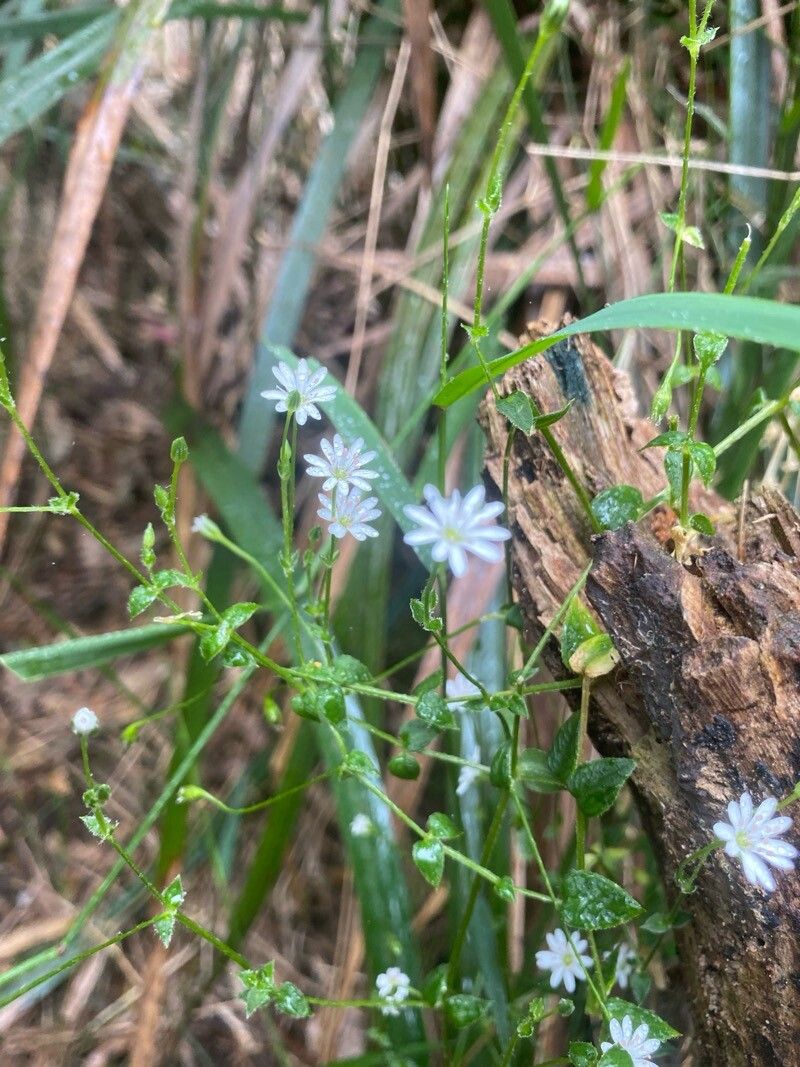
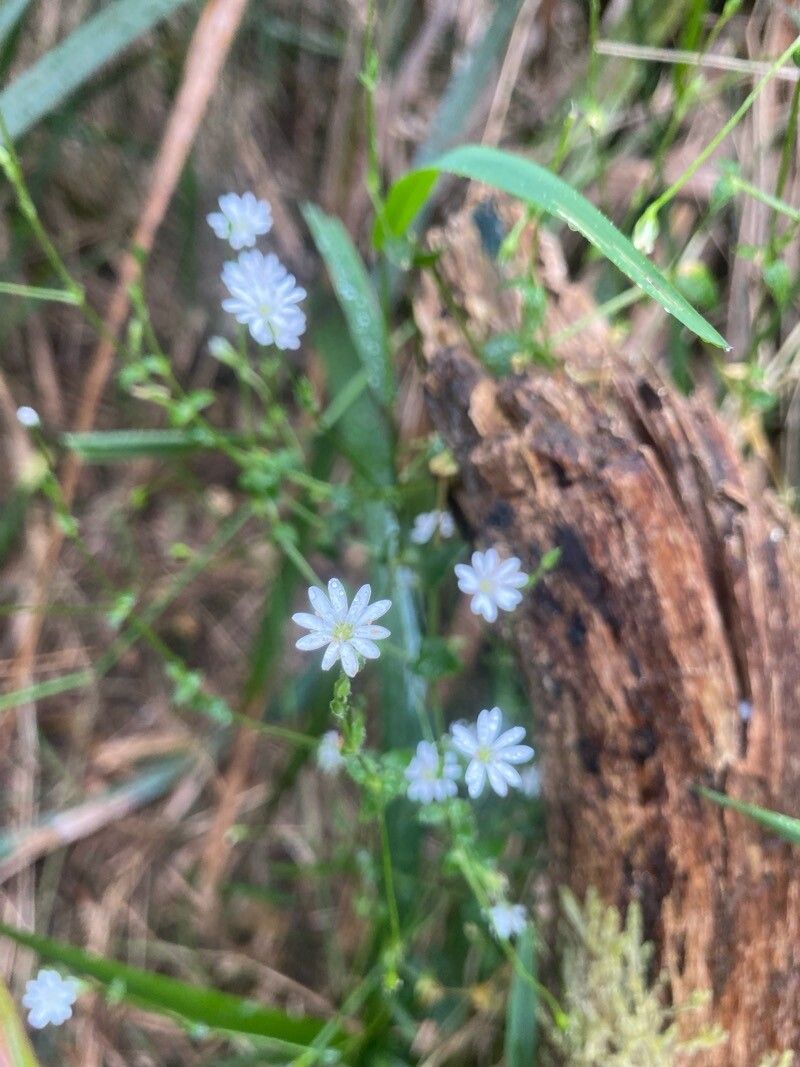
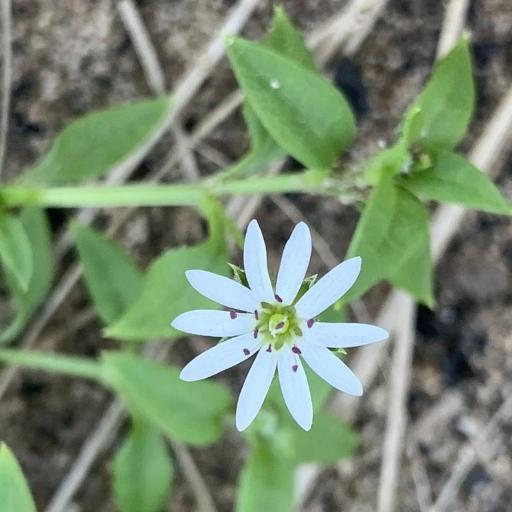
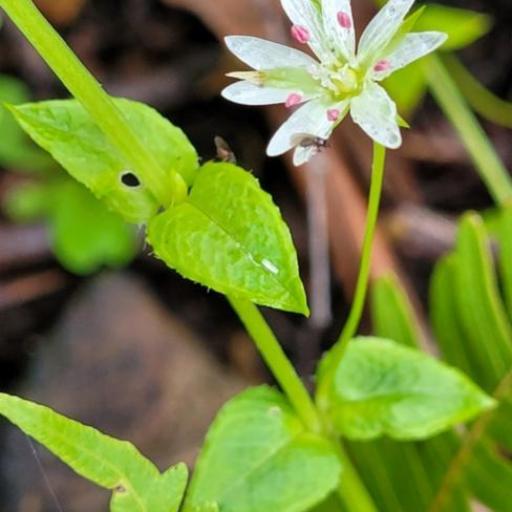
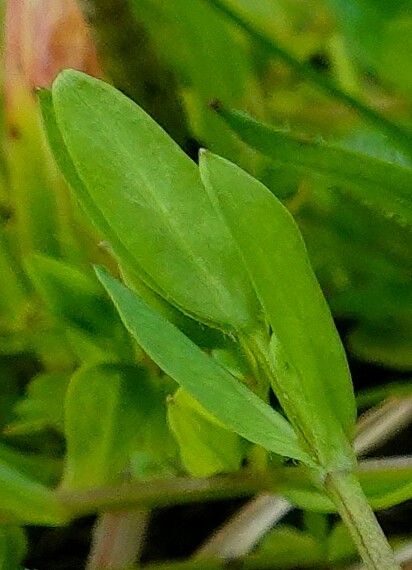
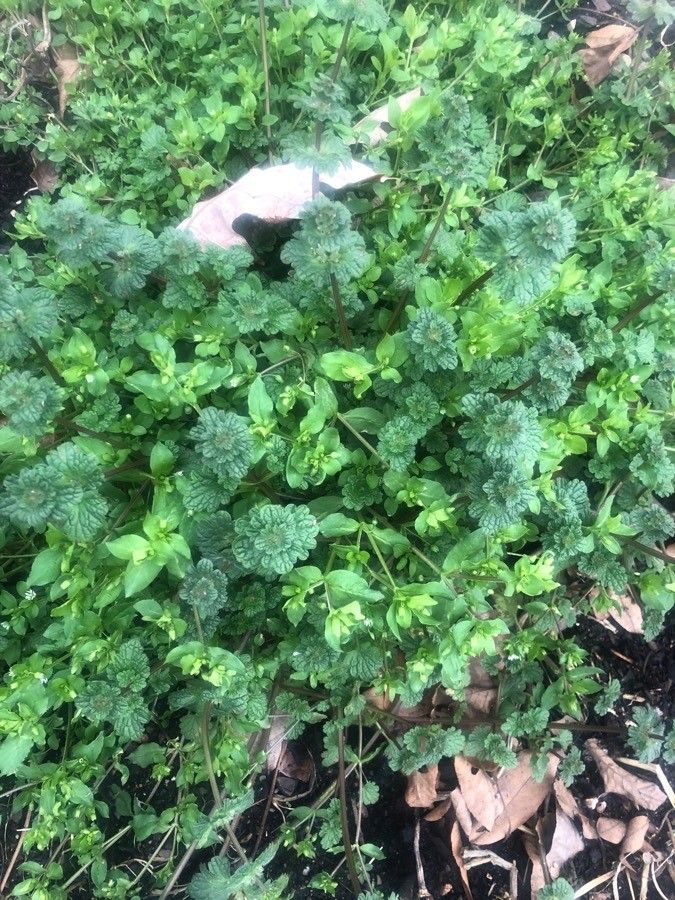
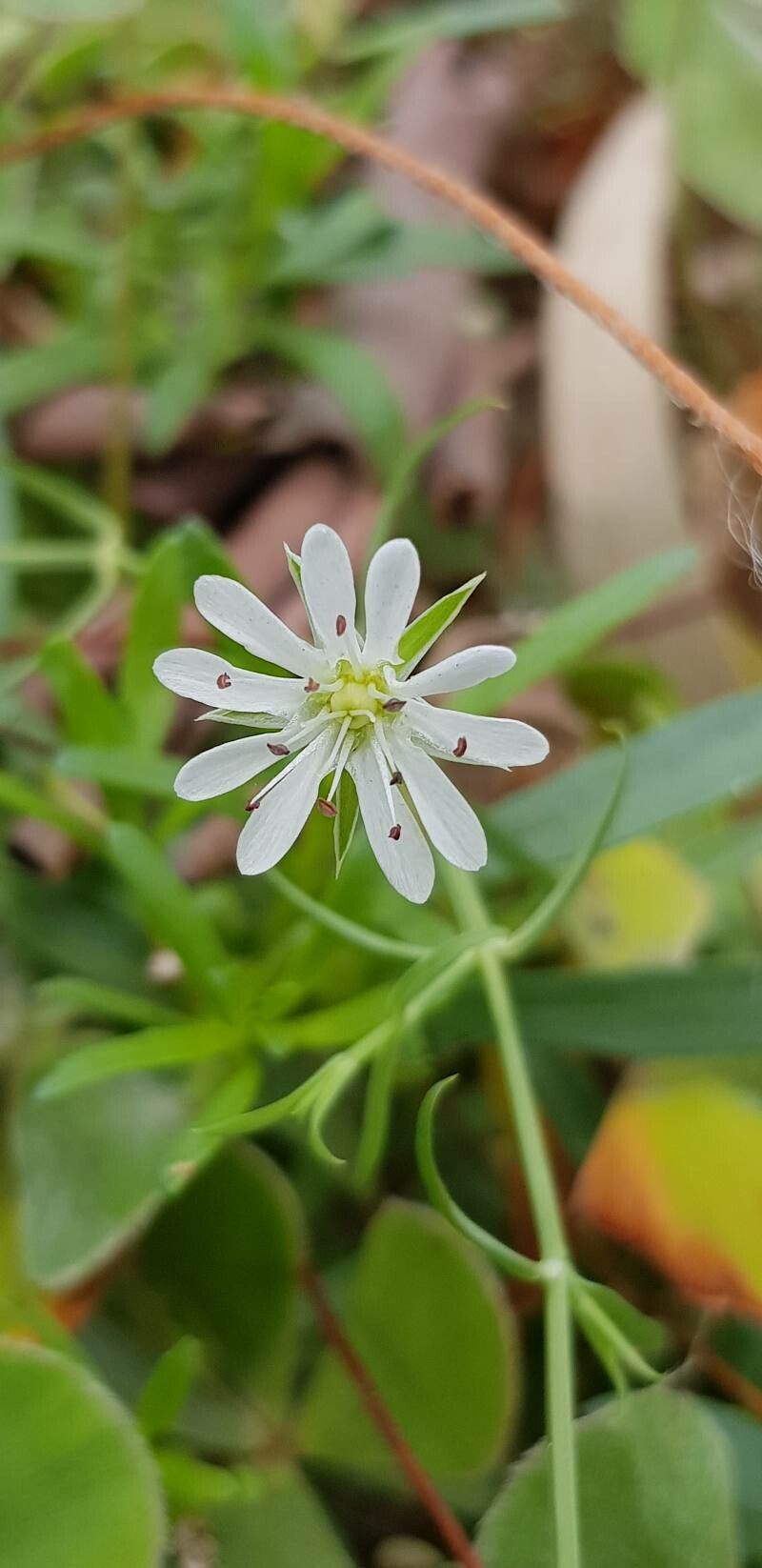
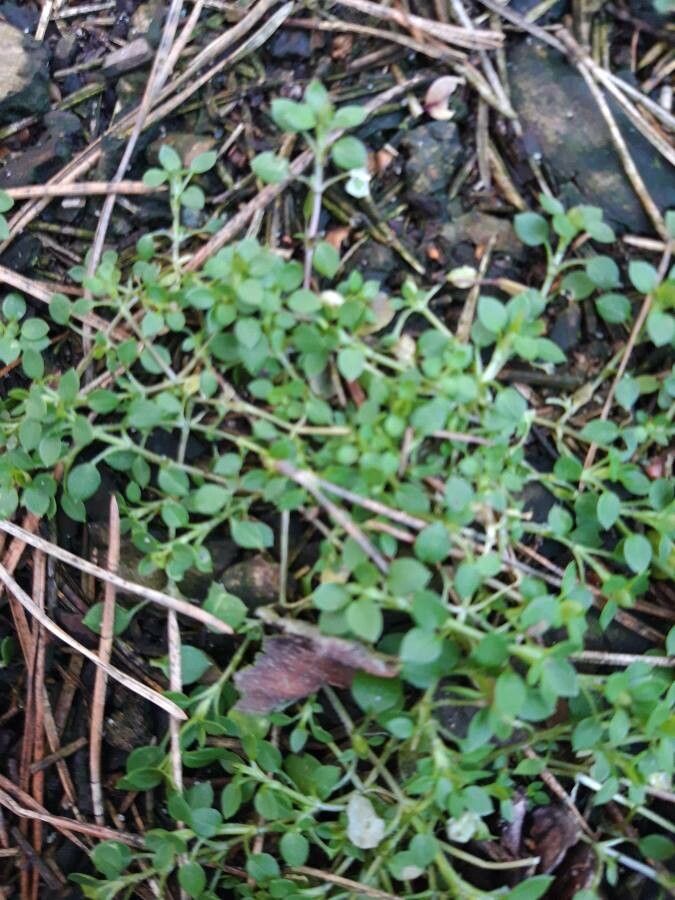
Stellaria flaccida, the forest starwort, is a wildflower found in eastern and southern Australia. A small ground covering plant. It may grow to 50 cm tall, but usually seen shorter than this. A perennial or annual, with weak stems. Sometimes it roots from the nodes. White hairs form on new growth. It features five petaled flowers, (each petal is split in two). Flowering occurs from September to February. Flowers are white with purple. It is found on the coast and ranges, often in moist shady places in forest, or on the edge of rainforests. Leaves are lanceolate to ovate in shape, 7 to 18 mm long and 2 to 8 mm wide. The fruit is a small ovoid shaped capsule containing a small number of seeds. The generic name Stellaria refers to the star like flowers, and the specific epithet flaccida refers to the weak and small form of the plant.
Grass-like starwort is largely resistant to disease and typically not liable to illness. Still, it can be affected by pests and diseases found nearby. Such infections tend to be mild. Regarding care, this plant is moderately demanding. It should be pruned on a regular basis to preserve a neat appearance and healthy growth. Applying fertilizer can also encourage flowering. Grass-like starwort is appropriate for anyone with an outdoor area, like a garden or patio, and does not need extensive care experience. It may call for extra attention when kept indoors.
How to keep Stellaria Flaccida.
Light
Grass-like starwort grows best when exposed to plenty of sunlight during the day, though it can survive with only limited sun. In its native habitats, this plant often does well under open skies. Reduced sunlight exposure can result in slower growth or diminished vibrancy.
Temperature
Grass-like starwort is often found in areas where temperatures generally range from 41 to 89.6 °F (5 to 32 °C). The plant usually prefers cooler conditions. To ensure healthy growth, it is advisable to adjust the temperature in line with seasonal changes.
Fertilizer
Usually a single fertilizer application in spring is enough for Grass-like starwort, but additional feedings can boost growth. Feed every month to every month and a half. Fertilization improves the leaves' appearance and function, helping maintain uniform color and a healthy texture. It also promotes root development and nutrient uptake, supporting long-term plant health.
Botanical profile.
- Plant Type
- Herb
- Life Cycle
- Perennial
- Genus
- Stellaria
- Family
- Caryophyllaceae
- Hardiness Zone
- 4-8
- Mature Height
- 91 cm
- Mature Spread
- 20 cm
- Leaf Color
- Green, Blue
- Leaf Type
- Deciduous
- Flower Color
- White
- Flower Size
- 0.76 cm
- Bloom Time
- Late spring, Early summer, Mid summer
- Planting Time
- Spring, Summer, Autumn
- Harvest Time
- Early summer, Mid summer
- Native Area
- India, Austria, Turkey, Sweden, Slovakia, Montenegro, Pakistan, Croatia, Slovenia, Belarus, Russia, Germany, Iceland, Estonia, Romania, Latvia, Belgium, Portugal, Nepal, Netherlands, France, Czech Republic, Bulgaria, Poland, Greece, Ukraine, Serbia, China, Lithuania, Norway, Afghanistan, Italy, Kazakhstan, Spain, Switzerland, Denmark, Finland, Iran, Albania, Ireland, United Kingdom, Hungary, Azerbaijan