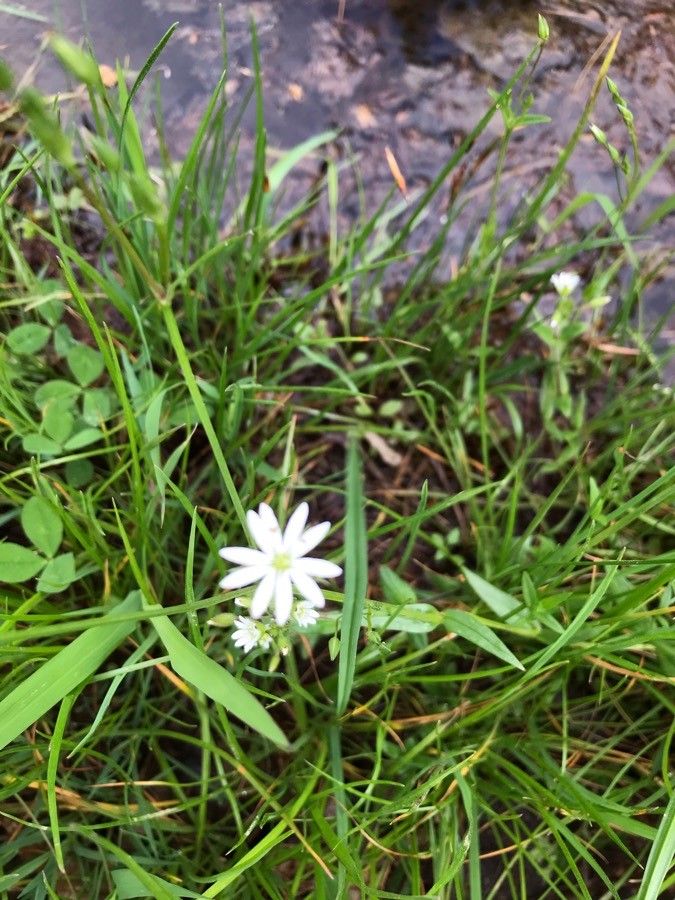
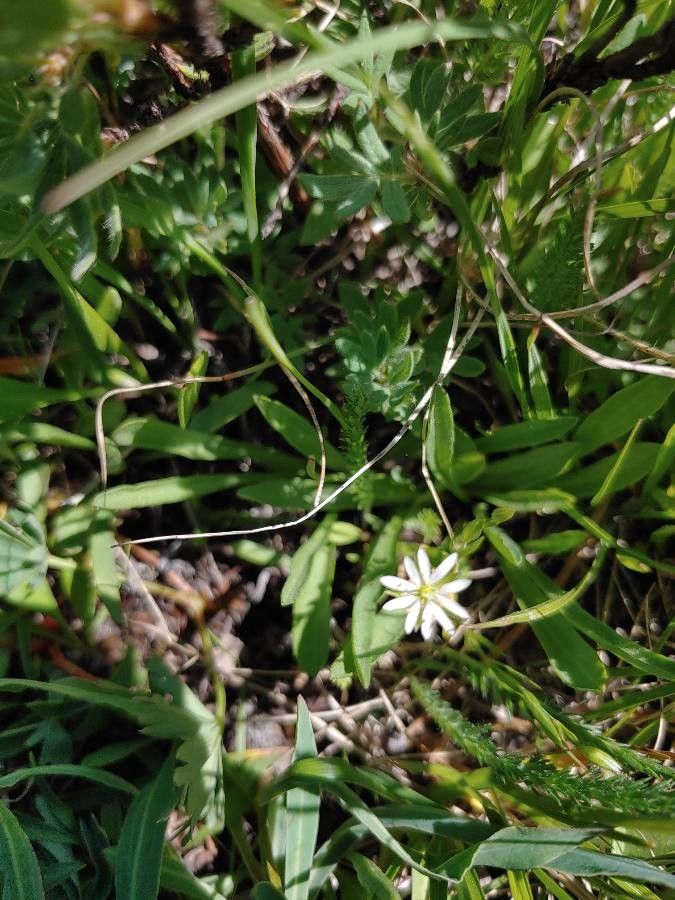
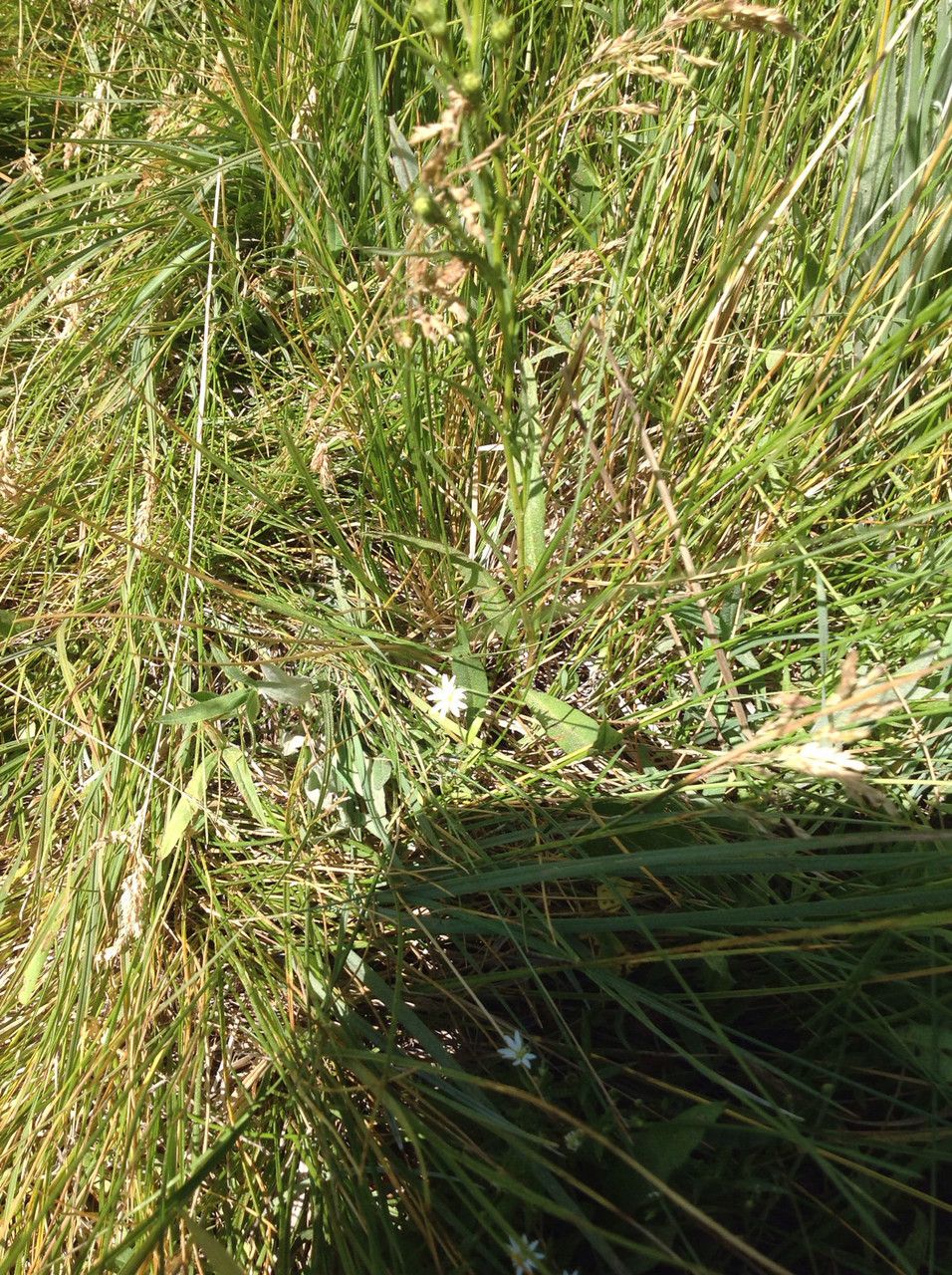
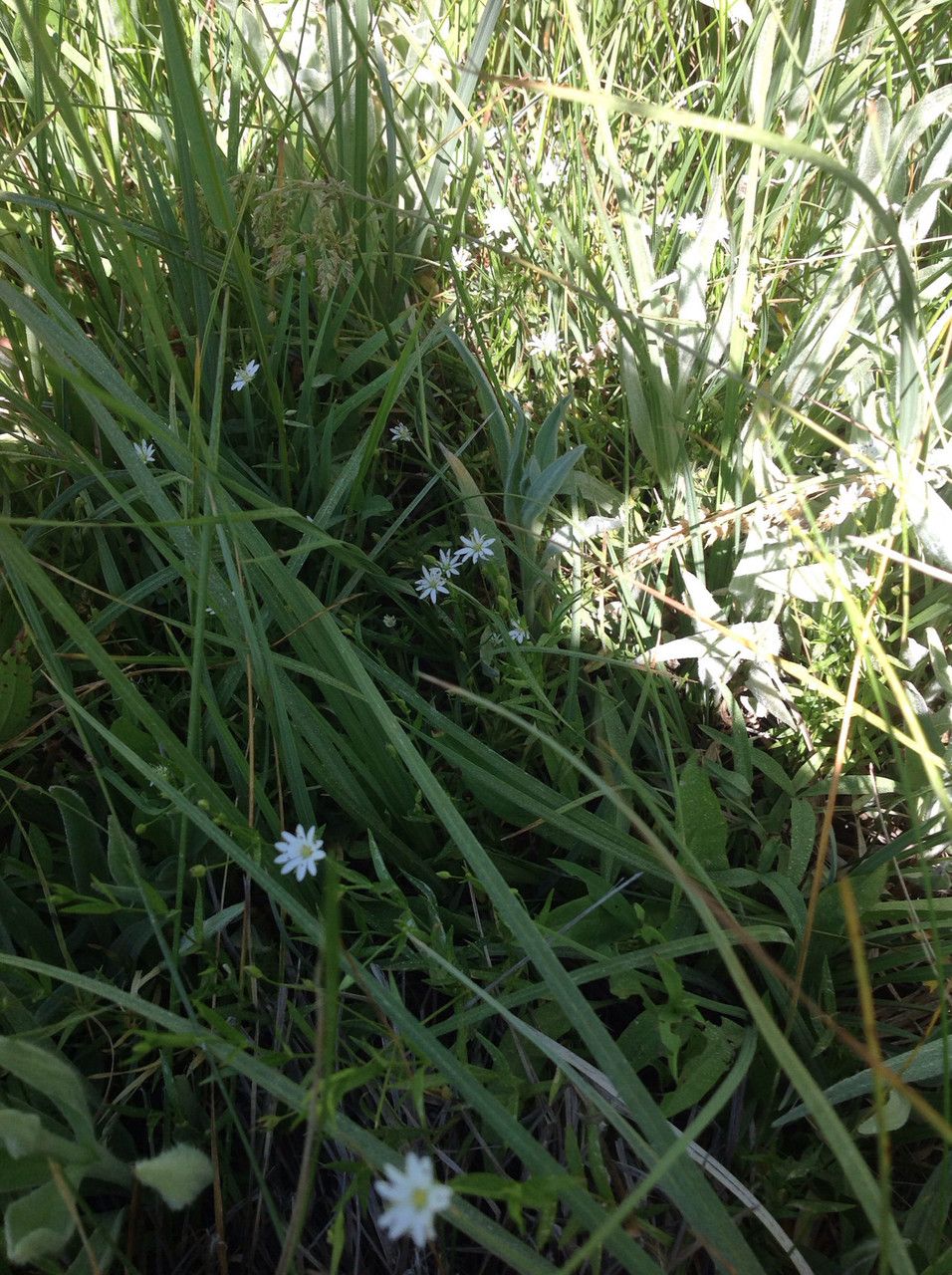
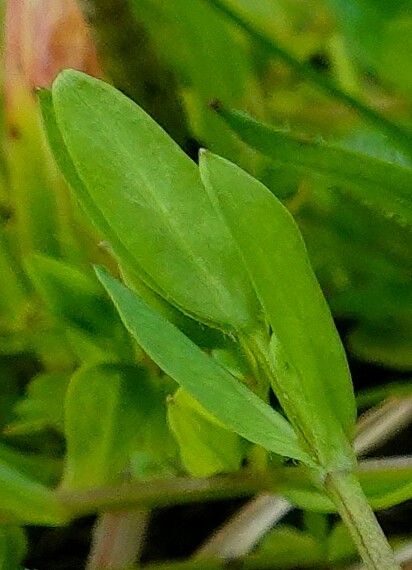
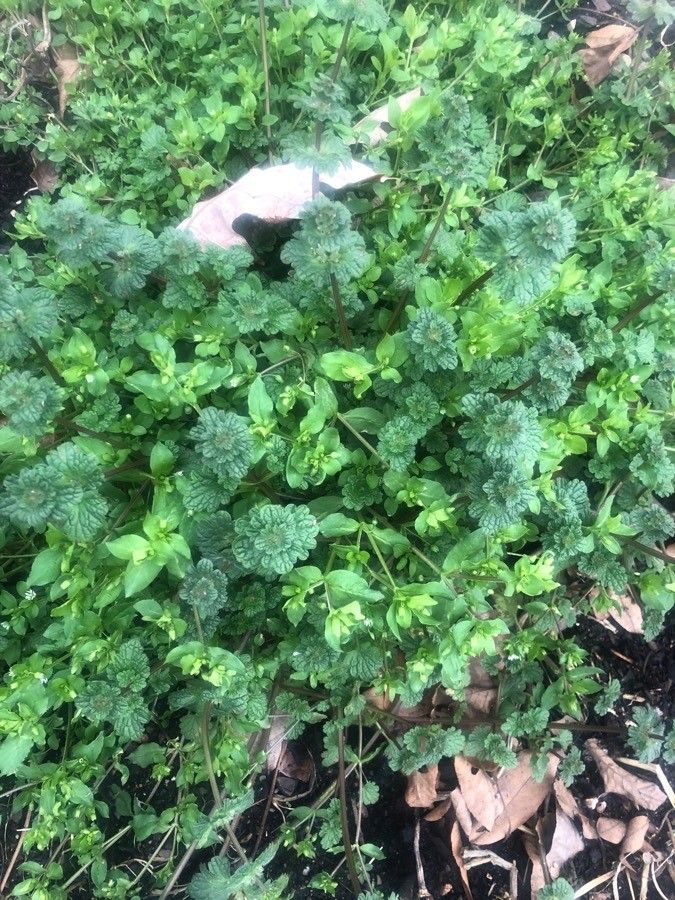
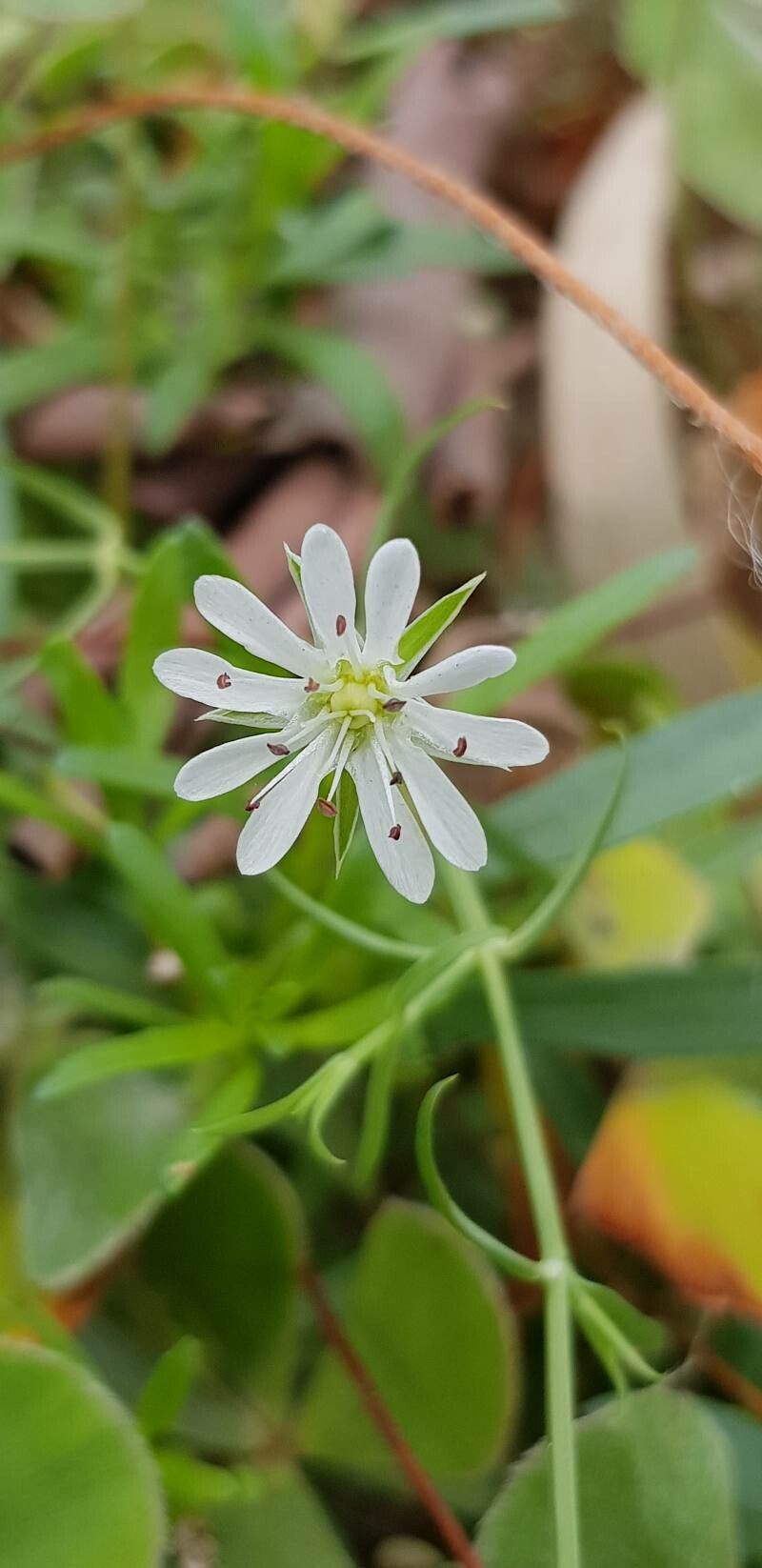
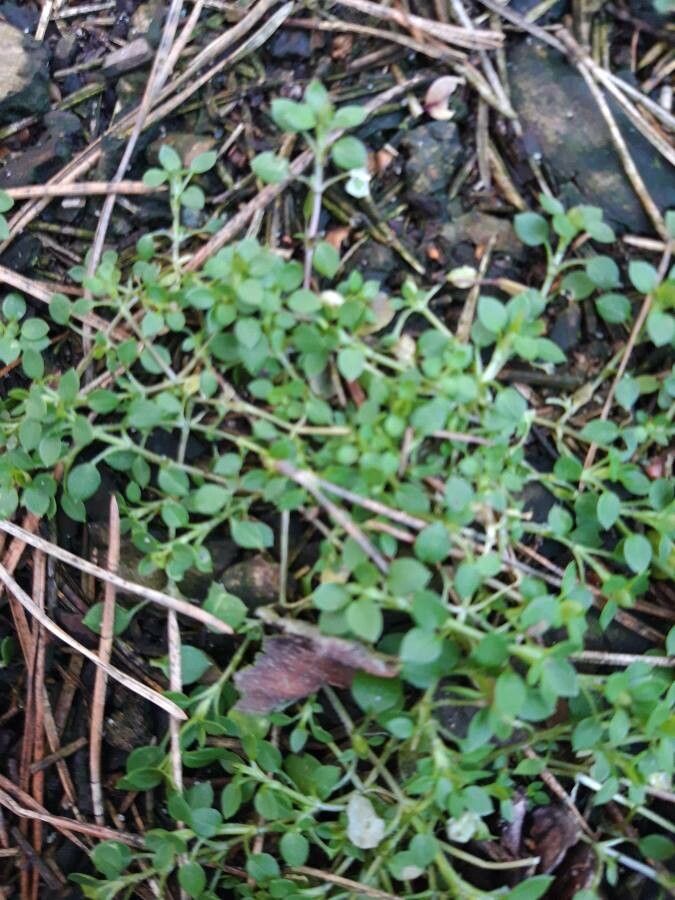
Stellaria longipes is a species of flowering plant in the family Caryophyllaceae known by the common names longstalk starwort and Goldie's starwort. It has a circumpolar distribution, occurring throughout the northernmost latitudes of the Northern Hemisphere. It is a perennial herb that grows in a wide variety of habitat types, including tundra and taiga and many areas farther south with subalpine and alpine climates. It is extremely variable in morphology, its form depending on both genetic makeup and environmental conditions. It has a widely varying number of chromosomes. In general, it is a rhizomatous perennial herb forming mats or clumps, or growing erect. The stems may be short and simple or with sprawling and highly branched. The linear to lance-shaped leaves are usually 1 to 4 centimeters long and are oppositely arranged in pairs. The inflorescence bears one or more flowers, each on a short pedicel. The flower has five pointed green sepals each a few millimeters long. There are five white petals each divided into two lobes, sometimes shallowly, but often so deeply there appear to be two petals. The plant is gynodioecious, with some flowers having functional male and female reproductive parts and others being only female.There are two subtaxa. The rarer of the two, subsp. arenicola, is limited to the sand dunes adjacent to Lake Athabasca in central Canada.
Longstalk starwort is fairly resistant to disease and generally does not tend to get sick. However, it can be vulnerable to pests and diseases found in its environment. These problems are typically mild. For care, this plant requires moderate maintenance. It should be pruned regularly to keep a tidy appearance and encourage healthy growth. Fertilizing can also help stimulate flowering. Longstalk starwort is well suited to anyone with outdoor space, such as a garden or patio, and does not demand extensive care experience. It may need more attention if grown indoors.
How to keep Stellaria Longipes.
Light
Longstalk starwort does best with abundant light but can tolerate moderate exposure. It comes from habitats soaked in sunlight and prospers under those conditions. However, too much light can damage the plant, while too little can restrict its growth and flowering.
Temperature
Longstalk starwort naturally occurs in habitats with temperatures between 32 and 70°F (0 to 21°C). It prefers cooler conditions and does best in places where temperatures stay consistently within that range. Seasonal adjustments are necessary to maintain vigorous growth.
Fertilizer
A single fertilizer application in spring is generally enough for Longstalk starwort, although multiple feedings can boost growth. Feed once every month to a month and a half. Fertilizing improves leaf appearance and function, helping maintain even color and a healthy texture. It also encourages root growth and nutrient uptake, supporting the plant's long-term health.
Pruning
The Longstalk Starwort has slender stems and small, star-shaped flowers. To encourage growth and prevent the plants from becoming leggy, prune them from early to late spring. Make sure to remove any dead stems and thin out the plants to improve air circulation. However, be careful not to over-prune, as this can affect blooming.
Botanical profile.
- Plant Type
- Herb
- Life Cycle
- Perennial
- Genus
- Stellaria
- Family
- Caryophyllaceae
- Hardiness Zone
- 1
- Mature Height
- 10 cm to 30 cm
- Mature Spread
- 10 cm to 20 cm
- Leaf Color
- Green
- Leaf Type
- Deciduous
- Flower Color
- White
- Flower Size
- 2.54 cm
- Bloom Time
- Mid spring, Late spring, Early summer
- Planting Time
- Spring
- Harvest Time
- Summer
Other names.
Reader questions.
What are the sunlight requirements for Longstalk starwort?
Longstalk starwort requires full sun, meaning it needs above 6 hours of sunlight daily, but it can also thrive in partial sun, which is about 3-6 hours of sunlight. It's important to observe how sunlight moves through your garden to select the best spots that provide a balance of light and shade, ensuring the optimal growth and happiness of your plants.
What is the ideal temperature range for Longstalk starwort?
Longstalk starwort thrives in cooler climates, with an ideal temperature range from 32 to 70°F (0 to 21°C). It is native to environments that maintain these temperatures, and consistent conditions within this range are essential for its vigorous growth. These plants are highly cold-tolerant, making them well-suited for cooler environments without the need for additional frost protection measures. However, it is recommended to water the plant generously before the first freeze in autumn to ensure the soil remains moist and enters a frozen state, which helps prevent drought and water scarcity during winter and early spring.
What are the essentials for growing Longstalk starwort?
Longstalk starwort flourishes under a lot of light but tolerates moderate light exposure as well. It originates from sunny environments and prefers such conditions for optimal growth. However, too much or too little light exposure can be detrimental to its health. If natural sunlight is insufficient for indoor plants, especially during winter or in less sunny spaces, artificial lighting can be a viable solution. Opt for LED lights, ensuring to provide 30-50W/sq ft for full sun plants, 20-30W/sq ft for partial sun plants, and 10-20W/sq ft for full shade plants. The artificial lighting source should be placed 12-36 inches above the plant, mimicking natural daylight hours, with plants generally requiring 8-12 hours of light per day.
How does Longstalk starwort react to low temperatures?
Longstalk starwort displays an incredible tolerance to cold temperatures, capable of withstanding winter conditions well above -45°C without the need for special care. Despite its resilience, if temperatures fall below this threshold, there may be a decrease in sprouting or no sprouting at all come spring. To manage this, in spring, it is advised to remove any parts of the plant that have failed to sprout, ensuring the healthy growth of the remainder.
What are the signs of improper lighting for Longstalk starwort?
When Longstalk starwort is exposed to inadequate lighting, several symptoms may occur. Small, new leaves might grow smaller than previous ones; the plant may display leggy or sparse growth, indicating a stretched appearance due to longer spaces between leaves or stems; there could be faster leaf drop as the plant sheds older leaves early; slower or no new growth, as the plant halts leaf production; lighter-colored new leaves or chlorosis can appear, signifying a lack of chlorophyll; sunscald might occur, damaging leaves or stems with intense sunlight exposure; leaf curling as a defense mechanism against extreme sunlight; wilting due to loss of turgor pressure; and leaf scorching, indicated by brown, dry, and crispy leaf edges, all of which can be harmful to the plant's overall health.
What should I do if Longstalk starwort is exposed to high temperatures?
Longstalk starwort struggles in high temperatures, particularly those exceeding 21°C, at which point its growth halts, and it becomes more prone to rot. To mitigate damage from excessive heat, it's recommended to trim away sunburned and dried-up parts of the plant. You should also move the plant to a shaded area or utilize shade cloth to protect it from the midday and afternoon sun. Keeping the soil moist by watering the plant in the morning and evening is also beneficial.
How can I remedy light-related issues for Longstalk starwort?
To address light-related issues with Longstalk starwort, start by gradually moving the plants to sunnier locations each week until they receive at least 6 hours of direct sunlight daily, maximizing sunlight exposure through a south-facing window. For indoor plants that are large or not easily movable, consider using artificial lighting for at least 8 hours a day, potentially investing in professional plant grow lights. Outdoors, it's crucial to move plants to optimal sunlight spots gradually to avoid sudden changes that could result in sunburn. Additionally, minimize obstructions like branches and leaves blocking sunlight and consider transplanting smaller plants to sunnier locations during their dormant periods for better sunlight exposure and drainage.
What is the botanical name of Longstalk starwort?
The botanical name of Longstalk starwort is Stellaria longipes.