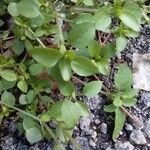
Stellaria media
گندمک رایج · Chickweed · Common chickweed · Nodding Chickweed · Chickweed Starwort
Description
Source: leafsnapStellaria media, commonly known as chickweed, is a small annual plant that belongs to the Caryophyllaceae family. Native to Europe and Asia, this plant has now spread worldwide. Chickweed has a prostrate growth habit and can grow up to 40 cm in length. The leaves are small, oval-shaped, and arranged opposite each other on the stem. From March to October, chickweed produces tiny white flowers with five petals. These flowers are hermaphroditic and self-fertile, meaning they can pollinate themselves without the need for external pollinators. Chickweed prefers moist soil conditions and can be found in gardens, fields, lawns, and waste areas. It is edible and commonly used as a salad green or cooked vegetable due to its high nutritional value. In traditional medicine practices such as Ayurveda and Chinese medicine, chickweed has been used for its anti-inflammatory properties to treat skin conditions like eczema and psoriasis, as well as respiratory issues like coughs and bronchitis. Overall, Stellaria media is an interesting herb with many uses, both culinary and medicinal. It remains an important part of many cultures and continues to be used by herbalists around the globe today.
🌳 Although often seen as a nuisance, common chickweed has traditionally been used to enhance skin beauty. Regarded by gardeners as an unwanted plant, it historically harbored a secret for soft, wrinkle-free skin in its distilled form. In the kitchen, common chickweed stands out for its nutrient-packed leaves. Those leaves, rich in vitamin C, add nutritional value to salads and can also be cooked. Furthermore, because common chickweed contains saponins, there is growing interest in its potential as a natural soap substitute.
🎭 an appointment or meeting
Care Guide
💧 Water Every 3 days
Common chickweed thrives in temperate regions and prefers soil that is consistently moist. It benefits from weekly watering to maintain its natural moisture balance. Additionally, chickweed is resilient during rainy seasons, which makes it well-suited for climates with regular precipitation.
When Should I Water My Common Chickweed?
Proper and timely watering is critical for the health and growth of common chickweed. It's important to feel the soil moisture; if the soil is dry 1-2 inches down, it's time to water. Wilting or drooping leaves, changing leaf color to yellow or brown, and stunted growth are indicators that your plant needs water. Morning dew absence on leaves can also signal the need for watering. However, avoid both overwatering, which can cause root rot, and underwatering, which stresses the plant. Observing these signs helps manage the watering schedule effectively, promoting the plant's longevity and health.
How Should I Water My Common Chickweed?
Common chickweed has specific watering needs that require attention to avoid foliar diseases. Watering from the bottom by placing the pot in a tray of water allows roots to absorb moisture without wetting the leaves, thus preventing fungal diseases. It's advisable to use a narrow spout watering can to direct water to the base of the plant and avoid the foliage. Misting is not recommended for common chickweed. The plant should be watered when the top inch of the soil feels dry, avoiding a rigid schedule due to varying environmental conditions.
How Much Water Does Common Chickweed Really Need?
Common chickweed, adapted to cool and temperate environments, prefers damp conditions but can withstand dry spells. Its watering needs are generally low; a 20cm pot typically needs about 200ml of water per watering session. Ensure the water penetrates at least 5cm into the soil to reach the roots effectively. Vibrantly green leaves indicate adequate watering, while dull or wilted leaves suggest under-watering. Balancing water input according to these signs prevents root rot and dehydration.
What Kind of Water is Best for Common Chickweed?
Common chickweed prefers distilled water, free from impurities and minerals that could negatively impact its growth. Rainwater and filtered water are suitable alternatives, providing essential nutrients without harmful contaminants. Tap water is the least preferred due to its potential chlorine and fluoride content, which can stress the plant. To mitigate this, let tap water sit for 24 hours before use to evaporate chlorine or use a filter. Water temperature should be cool to moderate, ideally at room temperature.
How Do Common Chickweed's Watering Needs Change with the Seasons?
Seasonal changes affect common chickweed's watering needs. In spring, increased growth demands regular watering, ensuring the soil is consistently moist. Summer's heat necessitates frequent watering to combat evaporation and maintain soil moisture. As growth slows in autumn, reduce watering frequency while keeping the soil lightly moist. During winter, water moderately, allowing the soil to dry out slightly between sessions to prevent root diseases while supporting underground development.
☀️ Light Full sun
Common chickweed thrives in places that are highly illuminated, meaning, regions that are exposed to sunlight for the major part of the day. It can survive in spaces with less sunlight, where the shadows are intermittent, but may not achieve optimal growth. An alteration in its growth can be a result of excessive sunshine or its shortage, either of which can pose a risk to the health of the plant.
What are the sunlight requirements for Common chickweed (Stellaria media)?
Common chickweed thrives best in environments that are well-lit, preferring areas that receive sunlight for most of the day, categorized as being in full sun for above 6 hours of sunlight. It can survive in partial sun, which means about 3 to 6 hours of sunlight, but may not reach its maximum health or growth potential. Insufficient or excessive sunlight can negatively impact the plant's health, leading to various growth issues.
How can artificial lighting be used for Common chickweed indoors?
Artificial lighting can be a vital solution for growing Common chickweed indoors, especially in conditions where natural sunlight is insufficient, like during winter or in less sunny spaces. For optimal growth under artificial lights, select the right type of light such as LED lights which can be customized for the plant's needs. Full sun plants require 30-50 watts per square foot, partial sun plants need 20-30 watts per square foot, and full shade plants require 10-20 watts per square foot. The light source should be placed 12-36 inches above the plant to mimic natural sunlight, and the duration should mimic natural daylight hours, usually between 8-12 hours per day.
What are the common symptoms of improper lighting in Common chickweed?
Common chickweed shows several symptoms when grown under improper lighting conditions. Indoor cultivation with inadequate light can lead to small leaves, leggy or sparse growth, faster leaf drop, slower or no new growth, and lighter-colored new leaves. Excessive sunlight exposure can cause chlorosis, sunscald, leaf curling, wilting, and leaf scorching. These symptoms indicate stress due to too little or too much light, affecting the plant's ability to photosynthesize and maintain health.
What solutions can be applied to improve light conditions for Common chickweed?
To optimize growth for Common chickweed, gradually move the plant to sunnier locations until it receives at least 6 hours of direct sunlight daily. For indoor plants that are large or difficult to move, consider using artificial lighting, such as a desk or ceiling lamp for at least 8 hours a day or professional plant grow lights. Outdoors, move your plants to better sunlit spots gradually to prevent sunburn. Reducing obstructions like pruning trees or transplanting smaller plants to sunnier areas can help improve sunlight access. However, it's important to note that parts of the plant affected by insufficient sunlight may not recover, but new growth should be healthier after improving light exposure.
🌡️ Temperature 5–35°C
The common chickweed is indigenous to temperate regions and thrives in climates with temperatures ranging from 20 to 35 ℃ (68 to 95 °F). During the changing seasons, it's crucial to maintain common chickweed within this temperature bracket for the best growth.
What is the native environment of common chickweed?
Common chickweed, or Stellaria media, is native to temperate regions. It thrives in environments where the temperature ranges between 68 to 95 °F (20 to 35 °C). The plant has a preference for this temperature spectrum to ensure optimal growth.
Does common chickweed need frost protection during winter?
Common chickweed exhibits strong cold resistance, negating the need for special frost protection measures in most cases. However, in conditions where winter temperatures are expected to plummet below -30°C, it's crucial to provide cold protection. This can be done by covering the plant with insulating materials such as soil or straw. Additionally, watering the plant abundantly before the first freeze in autumn helps keep the soil moist, which is beneficial as it enters a frozen state, thereby aiding the plant in preventing drought and water scarcity during winter and early spring.
How does common chickweed respond to low temperatures?
Common chickweed is well-adapted to cold temperatures and thrives best when the mercury stays above 20°C. During winter, it is important to ensure the temperature doesn't fall below 0°C. At temperatures lower than -30°C, while there may not be noticeable effects in the winter, it could lead to a decrease in sprouting or a complete halt during spring. To mitigate this, removing parts that have failed to sprout in spring is advised.
What happens to common chickweed in high temperatures?
In the summer months, it's crucial to keep common chickweed's surrounding temperature below 35°C to avoid stress. Should the temperature exceed 41°C, the plant's leaves might turn lighter in color, become prone to curling, suffer from sunburn, and in severe cases, the whole plant might wilt and dry out. Remedial measures include trimming sunburned and dried-up parts, relocating the plant to a shaded area, or using a shade cloth to protect it from the midday and afternoon sun. Furthermore, watering the plant during the cooler morning and evening hours will help maintain soil moisture levels.
💨 Humidity normal (40-60%)
This plant will thrive in moderate humidity, which is probably the level in your home. However, misting it a few times a week can be very beneficial. Make sure the room has good ventilation.
🪴 Soil 6-7
🌱 Fertilizer
Frequent application of mild fertilizer can enhance the leaf growth of Common chickweed. It is recommended to fertilize Common chickweed around once a month during the summer period. Nitrogen is essential for the plant's leaf development and using a supplement rich in nitrogen supports the thriving of Common chickweed.
🪴 Pot & Repot Every 12 months
✂️ Pruning
These pants typically do not need active pruning as they are pruned during the harvest. However, in the spring or fall, prune back your chickweed to encourage vigorous growth.
🌿 Propagating
🐛 Diseases & pets
☠️ Toxicity
Characteristics
- Plant Type
- Herb
- Life Cycle
- Annual, Biennial, Perennial
- Genus
- Stellaria
- Family
- Caryophyllaceae
- Hardiness Zone
- 4-10
- Mature Height
- 10 cm to 30 cm
- Mature Spread
- 10 cm to 30 cm
- Leaf Color
- Green
- Leaf Type
- Deciduous
- Flower Color
- White
- Flower Size
- 0.20 cm to 0.51 cm
- Bloom Time
- Spring, Early summer, Fall
- Planting Time
- Spring, Autumn
- Harvest Time
- Mid spring, Late spring, Early summer, Mid summer, Mid fall, Late fall, Winter
- Native Area
- Sri Lanka, Libya, Turkey, Sweden, India, United Arab Emirates, Slovakia, Montenegro, Pakistan, Slovenia, Morocco, Croatia, Belarus, Germany, Koppen, Romania, Latvia, Belgium, Portugal, Netherlands, Saudi Arabia, Tunisia, Philippines, Cyprus, Bulgaria, Ukraine, Lebanon, China, Syria, Kyrgyzstan, Kazakhstan, Italy, Japan, Finland, Iran, Azerbaijan, Kuwait, Egypt, Austria, Yemen, Uzbekistan, Russia, Iraq, Iceland, Estonia, Oman, South Korea, France, Nepal, Tajikistan, Czech Republic, Armenia, Poland, Greece, Serbia, Lithuania, Norway, Spain, Switzerland, Denmark, Bhutan, Albania, Ireland, United Kingdom, Hungary, Algeria, Thailand