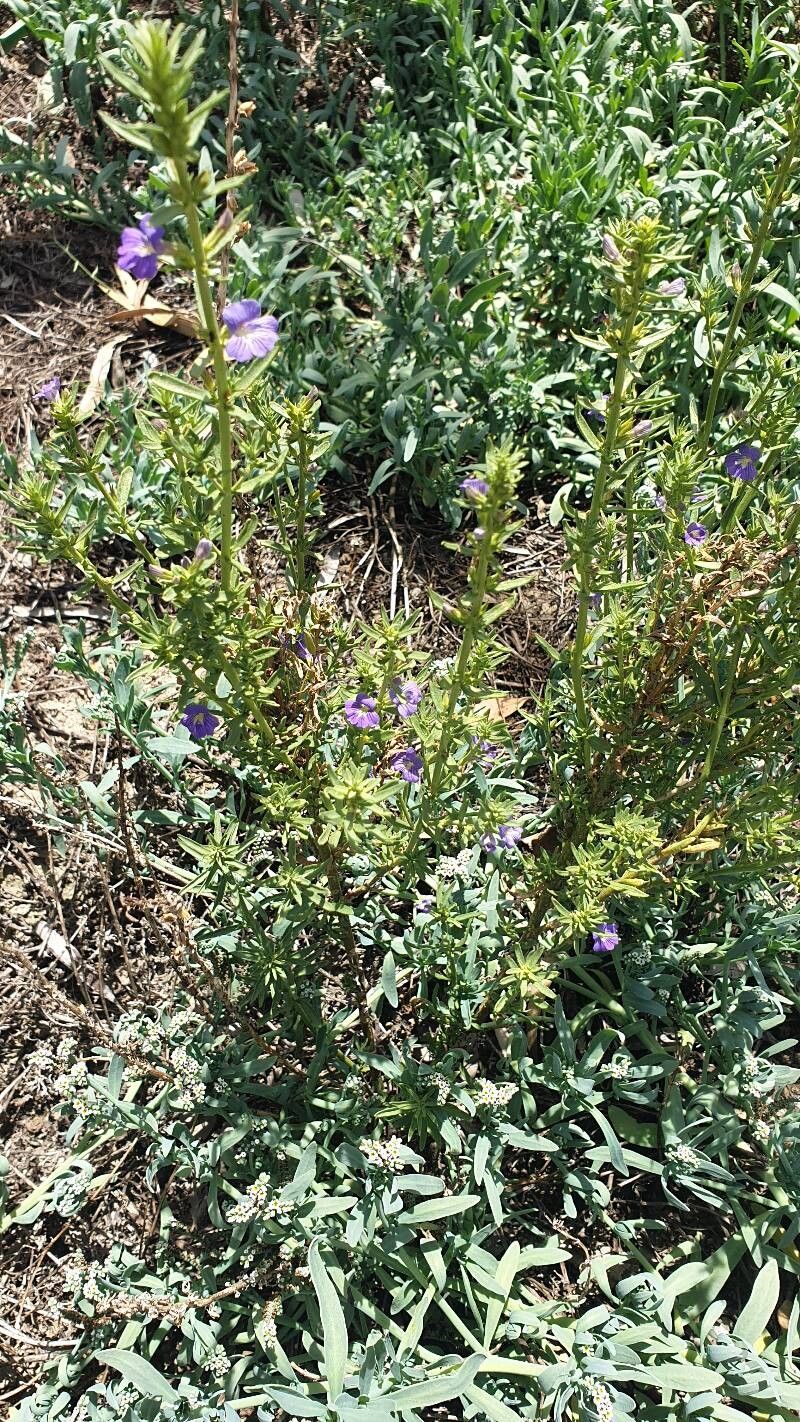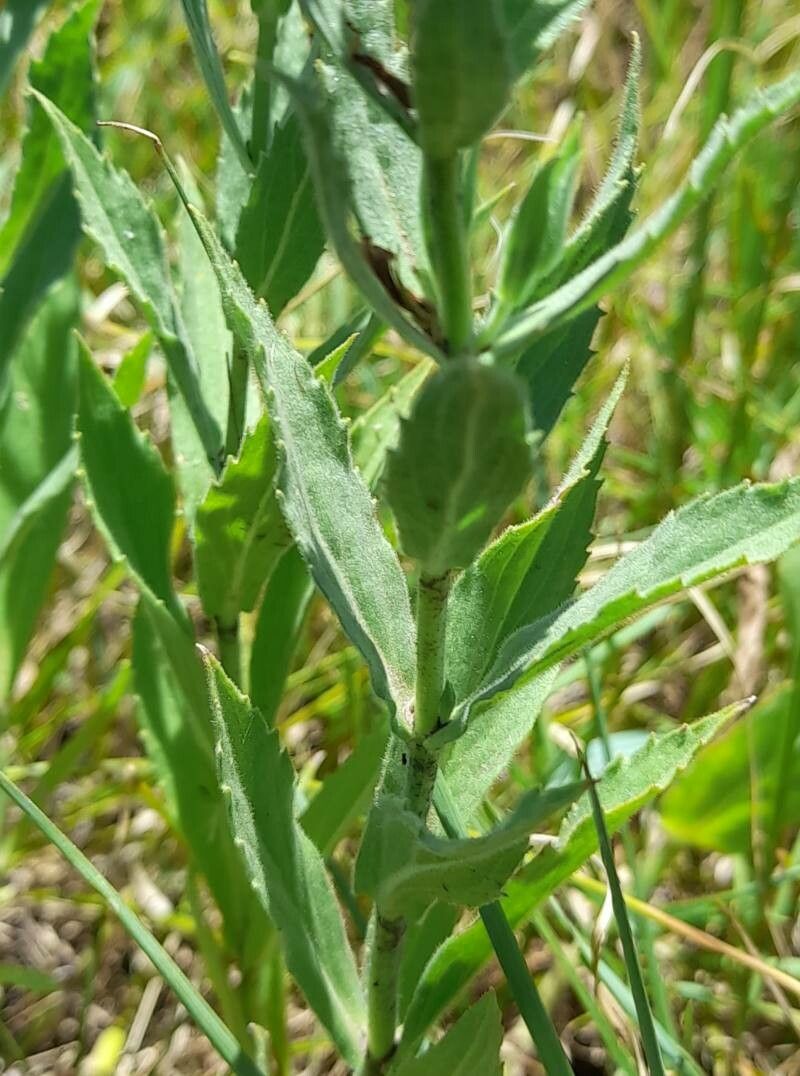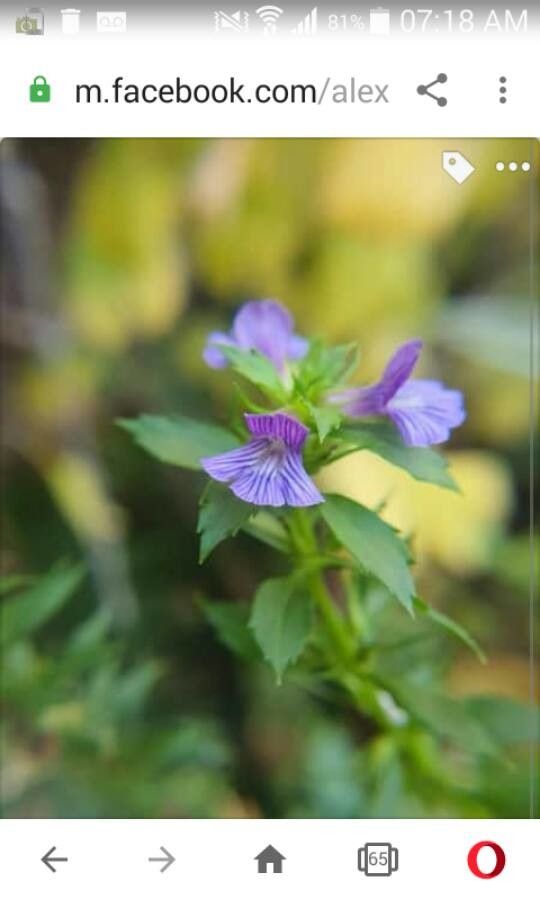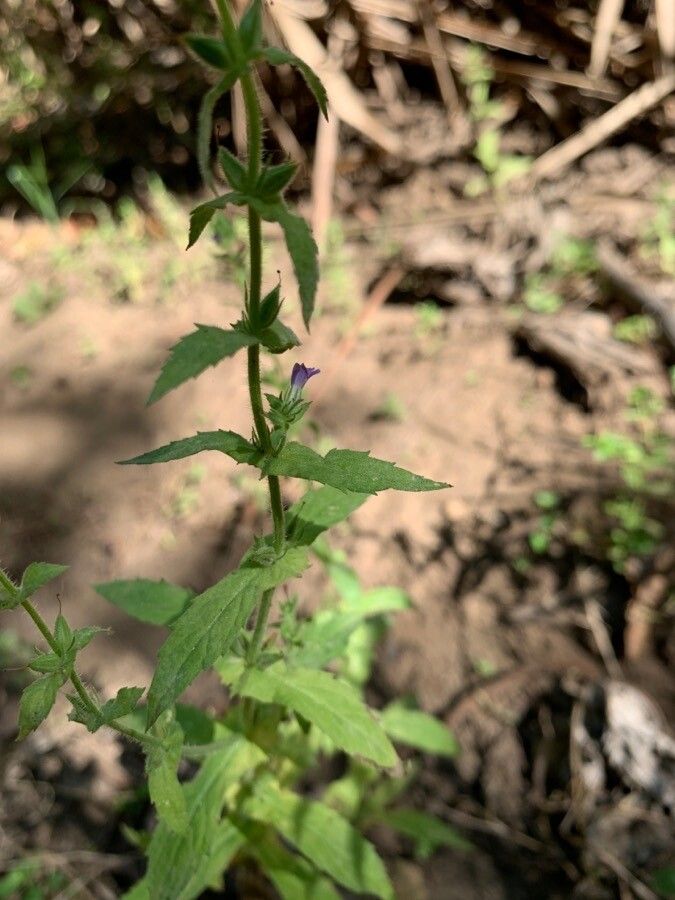
Stemodia durantifolia is a species of flowering plant in the plantain family known by the common names whitewoolly twintip and purple stemodia. It is native to parts of the Americas, including Mexico and the deserts of California and Arizona. It grows in riparian habitat. It is a perennial herb producing a hairy, glandular, erect stem 10 to 50 centimeters tall. The toothed lance-shaped leaves are found in pairs or triplets at stem nodes, their bases often clasping the stem. The inflorescence is a raceme of violet flowers, each centimeter-long corolla held in a calyx of hairy, pointed sepals. The plant can be seen in bloom throughout most of the year.
White woolly stemodia is fairly disease-resistant and typically not prone to illnesses. However, it can be affected by pests and diseases present in its surroundings. Such infections are generally not severe. Regarding care, the plant requires moderate maintenance. Regular pruning is necessary to preserve a good appearance and support healthy growth. Applying fertilizer can also help encourage flowering. White woolly stemodia is suitable for anyone with an outdoor area, such as a garden or patio, and does not demand extensive plant-care experience. It may need more attention when grown indoors.
How to keep Stemodia Durantifolia.
Light
White woolly stemodia is native to bright, open habitats and performs best in full sun. Although it will tolerate partial sun, it prefers direct sunlight for optimal growth. This plant, which can be annual or biennial, is recognized for its sun-loving character.
Water
White woolly stemodia is native to regions with sporadic rainfall, making it well-suited to dry conditions and drought-tolerant. It requires weekly watering. To cultivate it successfully, it's important to mimic its natural watering patterns. The plant grows best when it can take advantage of seasonal rains during its growing season.
Temperature
White woolly stemodia is quite adaptable to temperature, able to withstand high heat and wide temperature swings. When temperatures are elevated, attention should be paid to watering and providing suitable shade to avoid sunburn. However, White woolly stemodia is relatively intolerant of low temperatures; it can tolerate some cold, but excessively cold conditions may cause frost damage.
Fertilizer
When most of the White woolly stemodia blooms have opened to full size, resume fertilizing. At the peak flowering period, feed the plant every three to four weeks, weather permitting. When the White woolly stemodia begins to produce fewer new blooms, stop fertilizing; there is no need to feed it once it can no longer generate additional flowers.
Pruning
To promote healthier growth and robust blooming, prune white woolly stemodia from early to late spring. Start by removing any dead or damaged branches. This approach not only shapes the plant for aesthetic purposes but also prevents it from becoming too leggy. Be sure to use clean, sharp tools to avoid infections.
Botanical profile.
- Plant Type
- Herb
- Life Cycle
- Annual
- Genus
- Stemodia
- Family
- Plantaginaceae
- Hardiness Zone
- 9-11
- Mature Height
- 30 cm to 61 cm
- Mature Spread
- 20 cm to 40 cm
- Leaf Color
- Green, Dark Green
- Leaf Type
- Semi-evergreen
- Flower Color
- Lavender
- Flower Size
- 0.51 cm to 1.02 cm
- Bloom Time
- Mid spring, Late spring, Summer, Fall
- Planting Time
- Spring, Summer, Autumn
- Harvest Time
- Summer, Fall, Early winter
- Native Area
- Belize, Honduras, Mexico, Guatemala, Peru, Panama, Jamaica, Colombia, Bahamas, Cuba, Venezuela, El Salvador, Nicaragua, Ecuador, Costa Rica
Other names.
Reader questions.
What are the sunlight requirements for White woolly stemodia?
White woolly stemodia thrives best in environments that mirror its natural habitat, which is bright and open, requiring full sun exposure for optimal growth. This plant prefers to be under direct sunlight for more than 6 hours each day but can also tolerate partial sun, where it receives about 3-6 hours of sunlight. Ensuring your garden has the perfect balance of light and shade is crucial for the happiness of your plants. Keep an eye on how sunlight moves through your garden to identify the best spots.
Can artificial light support the growth of indoor White woolly stemodia?
Yes, artificial lighting can be a vital solution for growing White woolly stemodia indoors, especially when natural sunlight is insufficient, such as during winter or in less sunny spaces. LED lights are a popular choice because they can be customized to provide specific wavelengths of light that plants need. Full sun plants, including White woolly stemodia, require 30-50W/sq ft of artificial light; partial sun plants need 20-30W/sq ft, and full shade plants need 10-20W/sq ft. The light source should be placed 12-36 inches above the plant to mimic natural sunlight, ensuring the plant receives 8-12 hours of light per day for most species.
What are the symptoms of light deficiency in White woolly stemodia?
Indoor White woolly stemodia suffering from inadequate light may exhibit several symptoms indicating light deficiency. These include smaller new leaves compared to those that have matured, leggy or sparse growth resulting in a thin and stretched-out appearance, faster drop of older leaves as the plant conserves resources, slowed or ceased growth as the plant enters survival mode, lighter-colored new leaves indicating a lack of chlorophyll, and symptoms like chlorosis, sunscald, leaf curling, wilting, and leaf scorching from either excessive sunlight or insufficient light exposure.
How can light conditions be improved for White woolly stemodia?
Improving light conditions for White woolly stemodia involves a few strategic actions. Gradually moving the plant to a location that receives at least 6 hours of sunlight daily is crucial for both indoor and outdoor plants. Using a south-facing window or artificial lighting like desk lamps or professional plant grow lights can help indoor plants. Outdoor and ground plants benefit from reducing obstructions, such as pruning trees to allow more sunlight through, and transplanting smaller plants to sunnier locations with good drainage. It's important to avoid sudden changes in light exposure to prevent sunburn. While parts of the plant that have suffered might not recover, new, healthy growth will appear with improved light conditions.