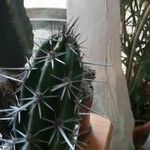
Stenocereus gummosus
Pitaya Agria · Dagger cactus
Care Guide
💧 Water
The galloping cactus is drought-tolerant and only needs thorough watering when the soil is dry. During the growing seasons (spring through fall), water the cactus once or twice a week. In winter, reduce watering to about once a week. It’s best to use rainwater or distilled water to avoid soil compaction caused by tap water.
☀️ Light Full sun
Originating from arid areas, the Galloping cactus does best in full sun, as its native habitat has strong sunlight and little shade. It can also tolerate partial sun, providing some flexibility in its growth.
🌡️ Temperature 20–37.8°C
Galloping cactus does well in warm settings and needs higher temperatures during the growing season to encourage growth and metabolic activity. It prefers plenty of sunlight, suitable moisture, and adequate airflow. However, it can be harmed by temperatures that are too low and by excessive watering. It is also important to maintain balance and avoid temperatures that are too high or conditions that are too dry.
What is the Galloping Cactus?
The Galloping Cactus, known botanically as Stenocereus gummosus, is a unique plant species. Unfortunately, there is no detailed information provided on its characteristics, symptoms of its presence, or essential facts. For more specific information, one might need to consult dedicated botanical sources or databases.
💨 Humidity
🪴 Soil 0-0
🌱 Fertilizer
For Galloping cactus, light doses of fertilizer once or twice a year during the growing season are enough. Avoid fertilizing in winter and summer when it is dormant. Use less fertilizer for repotted plants and wait a couple of months after repotting before applying fertilizer. Fertilizing supports healthy growth and encourages blooms.
🪴 Pot & Repot Every 3 years
✂️ Pruning
Pruning a galloping cactus is an essential task that should be done in early spring. This process helps remove damaged parts of the plant and encourages healthy new growth. To prevent infection, make sure to use sterilized tools, and wear protective gloves to avoid injury from the cactus spines. By performing regular pruning, you can enhance the cactus's appearance and support robust flowering and fruiting, which helps maintain the plant's overall vitality.
🌿 Propagating
🐛 Diseases & pets
☠️ Toxicity
Characteristics
- Plant Type
- Succulent
- Life Cycle
- Perennial
- Genus
- Stenocereus
- Family
- Cactaceae
- Hardiness Zone
- 9-11
- Mature Height
- 2.13 m to 3.96 m
- Mature Spread
- 1.52 m to 3.05 m
- Leaf Color
- Dark Green, Forest Green
- Leaf Type
- Evergreen
- Flower Color
- Pink, Lavender
- Flower Size
- 7.62 cm to 11.43 cm
- Bloom Time
- Summer
- Planting Time
- Spring, Summer
- Harvest Time
- Late summer, Early fall, Mid fall
- Native Area
- Mexico