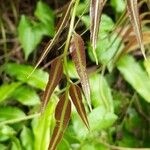
Stenochlaena palustris
Lambhibing · Climbing fern
Description
Source: leafsnapStenochlaena palustris (Vietnamese: choại, Tagalog: dilimán or hagnaya) is an edible medicinal fern species. In the folk medicines of India and Malaysia, the leaves of this fern are used as remedies for fever, skin diseases, ulcers, and stomachache.This plant is a long-climbing fern with thin black scales and stems that can reach up to 20 m. It has pinnate fronds that are 30–100 cm long, petioles that are 7–20 cm long, and ovate lanceolate pinnae that are 10–15 cm long and 1.5–4.5 cm wide. The fern's sporophylls are long and narrow, and have brownish sori underneath.Acylated flavonol glycosides isolated from the fern were found to have antibacterial activities. Crude and partially purified extracts prepared from the fern have been shown to exhibit antifungal, antioxidant, and antiglucosidase activities. The district of Diliman in Quezon City, one of the Philippines' most important educational districts, is named after this fern. The species epithet palustris is Latin for "of the marsh" and indicates its common habitat.
Care Guide
💧 Water
Climbing fern, which comes from humid environments, thrives in conditions with high humidity and consistent moisture. To keep it healthy, it's important to water it weekly, ensuring the soil remains evenly moist. Being an evergreen plant, it requires a steady water supply to support its growth throughout the year. This is particularly crucial in indoor settings that aim to replicate its native tropical habitat.
☀️ Light Partial sun
The climbing fern flourishes in locations with average sun exposure to sustain healthy development. The plant is native to areas with similar lighting conditions, which makes it adaptable to different levels of sun exposure, though intense light might restrain its growth. It's pivotal in each stage of growth to have a balanced light absorption, as inadequate or excessive sunlight can hinder its growth.
What are the sunlight requirements for a Climbing fern?
The Climbing fern (Stenochlaena palustris) thrives in moderate sun exposure, requiring about 3-6 hours of sunlight daily. It's important to observe the movement of sunlight through your garden to find the ideal balance of light and shade for the plant. Extreme light conditions should be avoided as they may inhibit the fern's growth. In their natural habitat, Climbing ferns are accustomed to variable intensities of sunlight, making them adaptable to a range of lighting conditions. However, each growth stage of the plant necessitates a balanced intake of light, as both insufficient and excessive sunlight can negatively impact its development.
How can artificial lighting support Climbing fern growth indoors?
Indoor Climbing ferns require adequate lighting to grow optimally, especially when natural sunlight is insufficient, such as during winter or in less sunny spaces. Artificial lights, like LED lights, can be tailored to provide specific wavelengths needed by the plants. For full sun plants, 30-50W/sq ft of artificial light is recommended, partial sun plants need 20-30W/sq ft, and full shade plants require 10-20W/sq ft. The light source should be placed 12-36 inches above the plant, mimicking natural sunlight. Additionally, most plants benefit from 8-12 hours of light per day to simulate natural daylight hours effectively.
What are the symptoms of inadequate lighting in Climbing ferns?
Climbing ferns may exhibit several symptoms if they're not receiving enough light, such as the growth of smaller leaves, leggy or sparse growth, faster leaf drop, slowed or halted growth, and lighter-colored new leaves. On the flip side, excessive sunlight can lead to chlorosis, sunscald, leaf curling, wilting, and leaf scorching. These symptoms indicate either a lack of chlorophyll and essential nutrients due to insufficient light or damage caused by intense sunlight exposure.
What solutions can improve light conditions for Climbing ferns?
To optimize light conditions for Climbing ferns, gradually adapt them to sunlight by shifting them to sunnier spots each week until they receive the necessary 3-6 hours of direct sunlight. For indoor plants that are large or not easily moved, consider using artificial light sources like desk or ceiling lamps for at least 8 hours a day, or invest in professional plant grow lights. If plants are grown outdoors, avoid sudden changes in light intensity to prevent sunburn. Reducing obstructions like pruning trees can also help increase sunlight exposure. For plants that are mobile, transplanting during their dormant period to a location with ample sunlight and good drainage is beneficial. Note that parts of the plant that have been negatively impacted by poor lighting may not recover, but new growth should be healthy.
🌡️ Temperature 20–37.8°C
Climbing fern naturally flourishes in temperatures between 68 and 100 °F (20 to 38 ℃). It prefers hotter climates that mimic its native environment. Adjustments may be needed in its seasonal care to replicate this temperature range.
What is the ideal temperature range for Climbing Fern?
Climbing Fern thrives best in temperatures ranging from 68 to 100 °F (20 to 38 °C), reflecting its indigenous, warmer climate. It is crucial to maintain this temperature range as much as possible, especially during seasonal changes. This may involve bringing the plant indoors during autumn to protect it from cold temperatures and ensuring it is placed near a bright window but at a safe distance from heaters. Keeping the temperature above 20°C during winter supports the plant's growth, while temperatures around 15°C or lower can be harmful.
How does low temperature affect Climbing Fern, and what can I do?
Low temperatures are detrimental to Climbing Fern, a plant that prefers warm environments. Should temperatures fall below 10°C, the leaves might lighten in color, and exposure to frost can turn them brown or black, leading to wilting and drooping. To prevent cold damage, trim the frost-damaged parts, and immediately move the plant to a warmer indoor setting. Placing the plant near a south-facing window ensures it receives ample sunlight, but keep it away from heaters or air conditioning vents to avoid excessively dry air.
What should I do if my Climbing Fern experiences high temperatures?
During summer, it is important to ensure that Climbing Fern does not get exposed to temperatures above 38°C. If temperatures soar above 43°C, leaves may lighten and become more prone to sunburn. In such cases, trim away the sunburned or dried parts of the plant. Relocate it to a shaded area, especially away from the midday and afternoon sun. Adequately water the plant during the mornings and evenings to maintain soil moisture and prevent further stress from heat.
💨 Humidity
🪴 Soil 6-7
🌱 Fertilizer
The climbing fern requires the highest amount of fertilizer throughout its period of active growth, predominantly in the spring, summer, and beginning of fall. Fertilization is essential to supply crucial nutrients that may not be available in the soil and this encourages healthy root and stem growth, along with pleasing leafage, a distinctive attribute of this specific plant.
🪴 Pot & Repot
✂️ Pruning
Climbing fern flourishes in moist environments and benefits greatly from pruning in the early to late spring. Be sure to remove any dead or damaged fronds and thin out overcrowded areas to improve air circulation and lower the risk of disease. Regular pruning helps control the plant's growth, maintains its aesthetic appeal, and prevents it from becoming invasive.
🌿 Propagating
🐛 Diseases & pets
☠️ Toxicity
Characteristics
- Plant Type
- Herb
- Life Cycle
- Perennial
- Genus
- Stenochlaena
- Family
- Blechnaceae
- Hardiness Zone
- 12
- Mature Height
- 20.12 m
- Mature Spread
- 0.91 m to 2.13 m
- Leaf Color
- Green
- Leaf Type
- Evergreen
- Flower Size
- 1.52 cm to 4.57 cm
- Planting Time
- Summer
- Native Area
- Nepal, Sri Lanka, India, Malaysia, Philippines, Bangladesh, Laos, Fiji, China, Indonesia, Cambodia, Vietnam, Myanmar, Singapore, Thailand