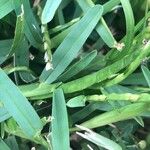
Stenotaphrum secundatum
St. Augustine grass · Pimento grass · Buffalo grass · Buffalo turf · Cape quickgrass
Description
Source: leafsnapStenotaphrum secundatum, commonly known as St. Augustine grass, is a warm-season grass native to the Gulf Coast region of North America. It is widely favored as a turfgrass due to its ability to tolerate shade and salt spray, making it particularly suitable for coastal areas. St. Augustine grass features broad leaves and a coarse texture, with a dark green color that can vary depending on the cultivar and growing conditions. This grass thrives in warm climates with high humidity and can endure temperatures up to 100°F (38°C). While it requires moderate watering, it is also capable of withstanding short periods of drought thanks to its deep root system. Stenotaphrum secundatum is low-maintenance but does require regular mowing during the growing season as it grows rapidly in warm weather. Additionally, it benefits from fertilization during its growth period. Overall, Stenotaphrum secundatum is an excellent choice for homeowners seeking an attractive turfgrass that can endure harsh coastal environments and requires minimal maintenance.
💡 To nourish buffalo grass effectively, apply a well-balanced fertilizer, such as a 13-13-13 blend, every two weeks during its summer blooming period. Ensure that the fertilizer is non-acidic to avoid damaging the plant. The amount needed depends on the height of the plant; typically, you'll need 1 cup of fertilizer for every 1.5 meters of plant height. Distribute the fertilizer evenly near the drip line of the plant.
🌳 One interesting feature of st. Augustine grass is how commonly it is used for lawns, especially in warm areas, because it tolerates heat and needs little upkeep. Many homeowners do not realize their lush lawns consist of this durable grass. Beyond its visual appeal, st. Augustine grass contributes to the ecosystem by serving as fodder for wildlife, suggesting it could have various uses, including bio-energy production given its fast growth.
🎭 Psychic abilities, protection. It represents food, concealment and resilience.
Care Guide
💧 Water Every 7 days
Buffalo grass flourishes in tropical climates that offer high humidity and regular rainfall. It requires a moderate amount of moisture and should ideally be watered twice a week. As an outdoor grass, it also collects dew for additional hydration, which lessens the need for frequent manual watering.
When Should I Water My Buffalo Grass?
Watering your buffalo grass is essential for its health and development. The ideal time to water is when the top 1 to 2 inches of the soil feel dry. Look out for signs such as yellowing or browning leaves, wilting, grass blades folding or curling, and footprint retention, which indicate the grass is thirsty. Watering frequency should increase during high temperatures or extended sunlight exposure. However, be mindful of the risks of overwatering and underwatering, as both can adversely affect the plant's health.
How Should I Water My Buffalo Grass?
Watering buffalo grass effectively involves using a watering can with a long, narrow spout or a moisture meter to prevent over or under-watering. Water at the plant's base to minimize the risk of leaf and stem diseases. Employing a deep watering technique encourages deeper root growth, enhancing drought resilience. Morning watering is advisable to allow excess moisture to evaporate, reducing disease risk. Avoid watering during rainy periods to prevent waterlogging.
How Much Water Does Buffalo Grass Really Need?
Buffalo grass requires around 2.5 to 3 centimeters of water per week, depending on factors such as pot size, root depth, and plant size. Signs of proper hydration include a vibrant green color and erect, healthy-looking foliage. It is important to avoid both over-watering and under-watering to prevent issues like root rot or dehydration. Watering deeply but infrequently promotes a resilient and drought-tolerant lawn.
What Kind of Water is Best for Buffalo Grass?
The best water for buffalo grass is distilled, as it is free from contaminants. Rainwater and filtered water are also suitable. Buffalo grass has moderate sensitivity to chlorine and fluoride, which can cause leaf burn or stunted growth, so if using tap water, it's best to dechlorinate or use a reverse osmosis system. Moderate water temperature (around 68-72°F or 20-22°C) is preferred to avoid shocking the plant.
How Do Buffalo Grass's Watering Needs Change with the Seasons?
Seasonal changes affect how you should water buffalo grass. In spring, increase watering to support growth, supplementing rainfall as needed. During summer, water deeply once a week unless there is adequate rainfall. Reduce watering frequency in autumn and further decrease or stop watering during the dormant winter months, unless conditions are dry. Adjust watering practices based on rain and temperature for optimal grass health.
☀️ Light Full sun
St. Augustine grass prefers plenty of sunlight for best growth, though it can tolerate moderate light. Originating from habitats with abundant sun, its health and growth rate are closely tied to light levels. If light is inadequate, the plant's vigor may decline; if it's excessive, the grass can display signs of stress.
What are the sunlight requirements for Buffalo grass?
Buffalo grass requires above 6 hours of sunlight to be considered in full sun and about 3-6 hours to be in partial sun. It is important to watch how sunlight moves through your garden to ensure you choose spots that provide the perfect balance of light and shade for your plants, optimizing their growth and health.
What are the essentials for growing Buffalo grass effectively?
For optimal growth, Buffalo grass favors abundant light exposure, though it tolerates moderate light as well. Originating from sunny habitats, its health and growth are strongly correlated with light levels. Insufficient light may reduce the plant's vigor, while too much light may induce stress. When natural sunlight is lacking, indoor plants can benefit from artificial lighting, which supports faster, healthier growth. LED lights are a preferred choice, offering customization to meet specific plant needs: 30-50W/sq ft for full sun plants, 20-30W/sq ft for partial sun plants, and 10-20W/sq ft for full shade plants. It's also important to mimic natural daylight hours, typically providing 8-12 hours of light per day.
What are the signs of inadequate lighting in Buffalo grass?
The symptoms of light deficiency in Buffalo grass include smaller new leaves, leggy or sparse growth, early shedding of older leaves to conserve resources, delayed or halted growth, lighter-colored new leaves, and conditions such as chlorosis and sunscald from excessive sunlight. Signs of overexposure include leaf curling, wilting, and leaf scorching. These symptoms indicate a need to adjust the plant’s exposure to sunlight or artificial lighting to maintain optimal health.
How can I address Buffalo grass's light-related issues?
To ensure optimal growth, gradually increase sunlight exposure for indoor Buffalo grass by moving it closer to a sunny window each week, aiming for at least 6 hours of direct sunlight. Alternatively, use artificial lights, such as desk lamps or professional grow lights, for at least 8 hours a day. For outdoor plants, gradually move them to sunnier spots to prevent shock. If sunlight is blocked by obstructions like trees, consider pruning to improve light penetration. For small plants, transplanting during a dormant period with careful handling of roots can help relocate them to a sunnier location with good drainage. Remember, parts of the plant affected by insufficient light may not recover, but new growth should be healthy with improved lighting conditions.
🌡️ Temperature 15–37.8°C
St. Augustine grass does best with temperatures from 59 to 100°F (15 to 38°C). It is native to warm-climate areas and flourishes in full sun. During the summer, keeping the soil moist is important to avoid damage from high temperatures. In winter, it can tolerate light frost and prefers cooler conditions.
What is the preferred temperature range for Buffalo grass?
Buffalo grass prefers a temperature range between 59 to 100°F (15 to 38°C). Native to warm climates, it thrives in full sun exposure and requires maintained soil moisture during the summer to prevent damage from high temperatures. Despite its cold tolerance, it generally does not require protective measures if the temperature is above -5°C. However, for temperatures expected to drop below -5°C, temporary measures such as wrapping with plastic film or fabric are advised until it warms again.
How does Buffalo grass react to low temperatures?
Buffalo grass has moderate tolerance to low temperatures, flourishing best when above 15°C and maintaining resilience down to -5°C. Should temperatures fall below -10°C, the grass's leaves may droop, and in mild cases, they can recover, but severe cold can cause the leaves to wilt and eventually fall off. The recommended solution for frost damage involves trimming the frost-damaged parts and wrapping the plant with materials like non-woven fabric or cloth, alongside constructing a wind barrier to protect from cold winds.
What should be done if Buffalo grass is exposed to high temperatures?
During the summer, it's crucial to keep Buffalo grass below 38°C to prevent stress from high temperatures. Exceeding 43°C can lead to lighter leaf coloration, dry and withered leaf tips, curling leaves, and increased susceptibility to sunburn. To mitigate these issues, trim away sunburned and dried parts of the plant, relocate it to a shaded area or use a shade cloth to protect it from midday and afternoon sun. Additionally, watering the plant in the morning and evening to maintain soil moisture can help alleviate stress from heat.
What are the botanical characteristics of Buffalo grass?
Buffalo grass, scientifically known as Stenotaphrum secundatum, is well-adapted to warm climates and known for its resilience in both high and moderate temperatures. It requires full sun exposure and benefits from soil moisture conservation during hot periods while being able to withstand light frosts in winter due to its cold tolerance.
💨 Humidity high (>60%)
This plant needs special care because it loves high humidity levels of 60-80% or more. The best way to achieve this is by placing a humidifier near the plant. Daily misting is also essential! Make sure the room has good ventilation.
🪴 Soil 5-7
🌱 Fertilizer
St. Augustine grass is a warm-season grass that flourishes in summer and becomes dormant in winter. Fertilizing is essential for dense growth, a vibrant green color, and resilience to stressors such as heat, drought, and cold. Neglected lawns weaken and thin, allowing unwanted grasses, weeds, insects, and diseases to take hold.
Why do I have to put fertilizer on my Buffalo grass?
To ensure strong and thick growth of Buffalo grass, it is important to fertilize it regularly. A well-nourished lawn not only maintains its density and vibrant green color, but also recovers well from insect or mechanical damage. Moreover, it becomes more resilient to seasonal stress factors such as heat, drought, and cold temperatures. On the other hand, neglecting to fertilize the lawn leads to a gradual loss of density, resulting in thinning over time and allowing unwanted grasses and weeds to take over. Additionally, under-nourished lawns are more susceptible to insect infestations and diseases.
When should I fertilize my Buffalo grass?
Buffalo grass is a warm-season grass that grows the most during the hottest part of summer. It becomes dormant during the cooler winter season. To match its growth pattern, you should fertilize it right after it comes out of dormancy and continue through the growing season. Stop fertilizing just before it goes dormant again in the fall.
When is it not a good time to fertilize my Buffalo grass?
Fertilizer can sometimes harm Buffalo grass if the plant is already stressed. To avoid further weakening the grass, do not fertilize if it is struggling with diseases like leaf spot, pythium, large patch, brown patch, or fairy rings, or if it has insect problems like grubs, chinch bugs, or armyworms. Additionally, do not fertilize the grass during its dormant period in winter. Wait until the grass is actively growing. During hot summer days, avoid fertilizing during the hottest part of the day to prevent fertilizer burn. Also, after a rainstorm, allow the soil to dry out for a day or two before applying fertilizer to minimize runoff and potential contamination of water sources.
What kind of fertilizer should I use for my Buffalo grass?
When fertilizing Buffalo grass, it is best to use lawn or turf fertilizers specifically made for the purpose. Avoid using all-purpose garden fertilizers such as a 12-12-12 blend. Turf blends are formulated to have higher levels of nitrogen, along with lower levels of phosphorus and potassium. This balance of nutrients is ideal for the health of your lawn and helps to prevent damage. Lawn fertilizers also contain nutrients that are released slowly over time, providing steady nourishment for the grass. Of these nutrients, nitrogen is the most important for established lawns as it promotes growth and maintains a vibrant green color. However, Buffalo grass also requires phosphorus and potassium to develop strong stems and roots, withstand drought and extreme temperatures, and have a natural defense against pests and diseases.
How do I make my Buffalo grass grow better?
To keep your lawn healthy and green, follow these simple steps for fertilizing. As soon as your lawn comes out of its winter dormancy and turns green again in early spring, it's time to fertilize. Throughout the spring, summer, and early fall, continue applying fertilizer every four to eight weeks. However, as the Buffalo grass starts to go dormant in the fall or about four weeks before the first autumn frost, it's best to stop fertilizing. And always remember to follow the recommended rates on the label or apply fertilizer based on soil test recommendations. Lastly, make sure to water the product into the soil after fertilizing for optimum results.
🪴 Pot & Repot Every 12 months
✂️ Pruning
Buffalo grass benefits from regular pruning in the early to late spring. Cutting away dead or diseased areas, and trimming to control growth, can improve air circulation and help prevent pest infestations. Be sure to use sharp tools and avoid cutting more than one-third of the grass's height to maintain its health and appearance.
🌿 Propagating
🐛 Diseases & pets
☠️ Toxicity
Characteristics
- Plant Type
- Grass
- Life Cycle
- Perennial
- Genus
- Stenotaphrum
- Family
- Poaceae
- Hardiness Zone
- 8-11
- Mature Height
- 10 cm to 30 cm
- Mature Spread
- 91 cm
- Leaf Color
- Green, Blue
- Leaf Type
- Evergreen
- Flower Color
- Green, Brown
- Flower Size
- 1.02 cm
- Bloom Time
- Mid spring, Late spring, Summer
- Planting Time
- Spring, Summer
- Harvest Time
- Late spring, Summer, Early fall
- Native Area
- Sri Lanka, Burkina Faso, Belize, India, Mexico, Guatemala, Namibia, Dominican Republic, Nigeria, Jamaica, Benin, Uruguay, Cuba, Paraguay, Sierra Leone, Haiti, Equatorial Guinea, Cameroon, Liberia, Argentina, Venezuela, Brazil, Ghana, Ethiopia, Suriname, Congo, Chile, Honduras, Georgia, Peru, South Africa, Panama, Chad, Colombia, Bahamas, Bolivia, Japan, Togo, Guyana, Senegal, Eswatini, Nicaragua, Ecuador, Côte d'Ivoire, Costa Rica, Gabon