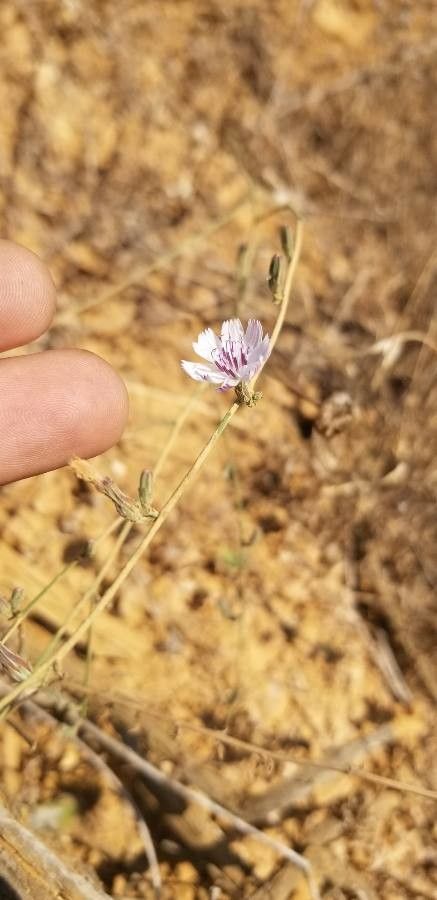
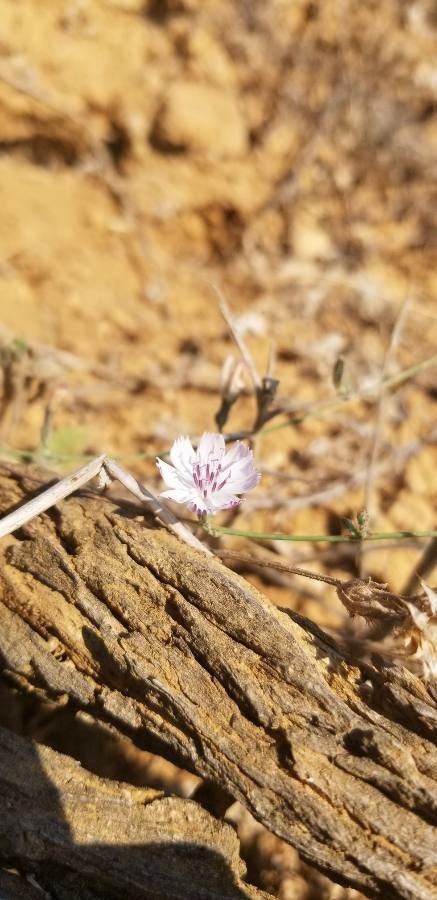
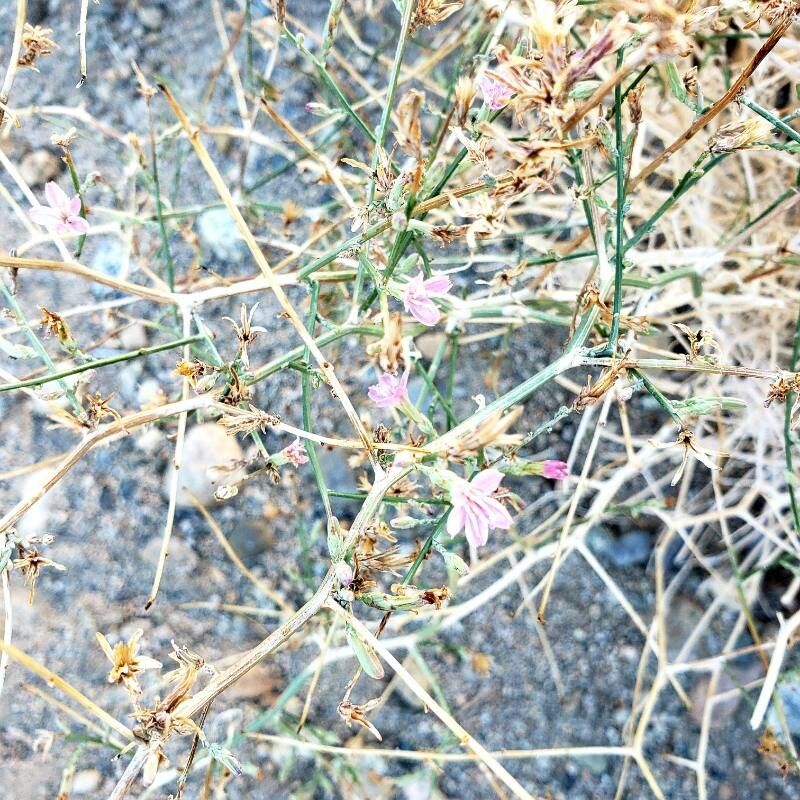
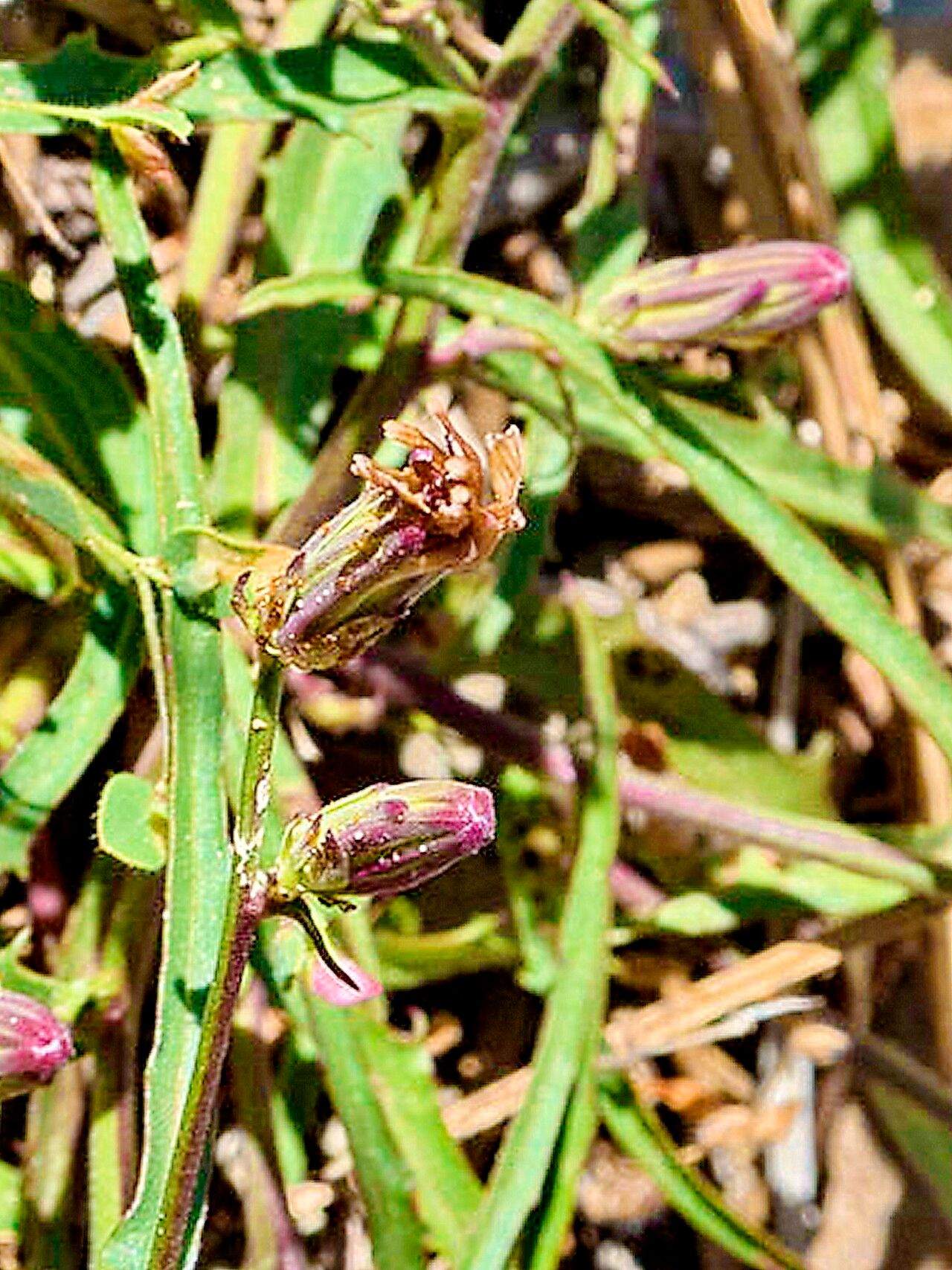
Stephanomeria diegensis, commonly known as San Diego wirelettuce, is a perennial herbaceous plant belonging to the Asteraceae family. Native to California, it thrives in various habitats, including coastal sage scrub, chaparral, and grasslands.
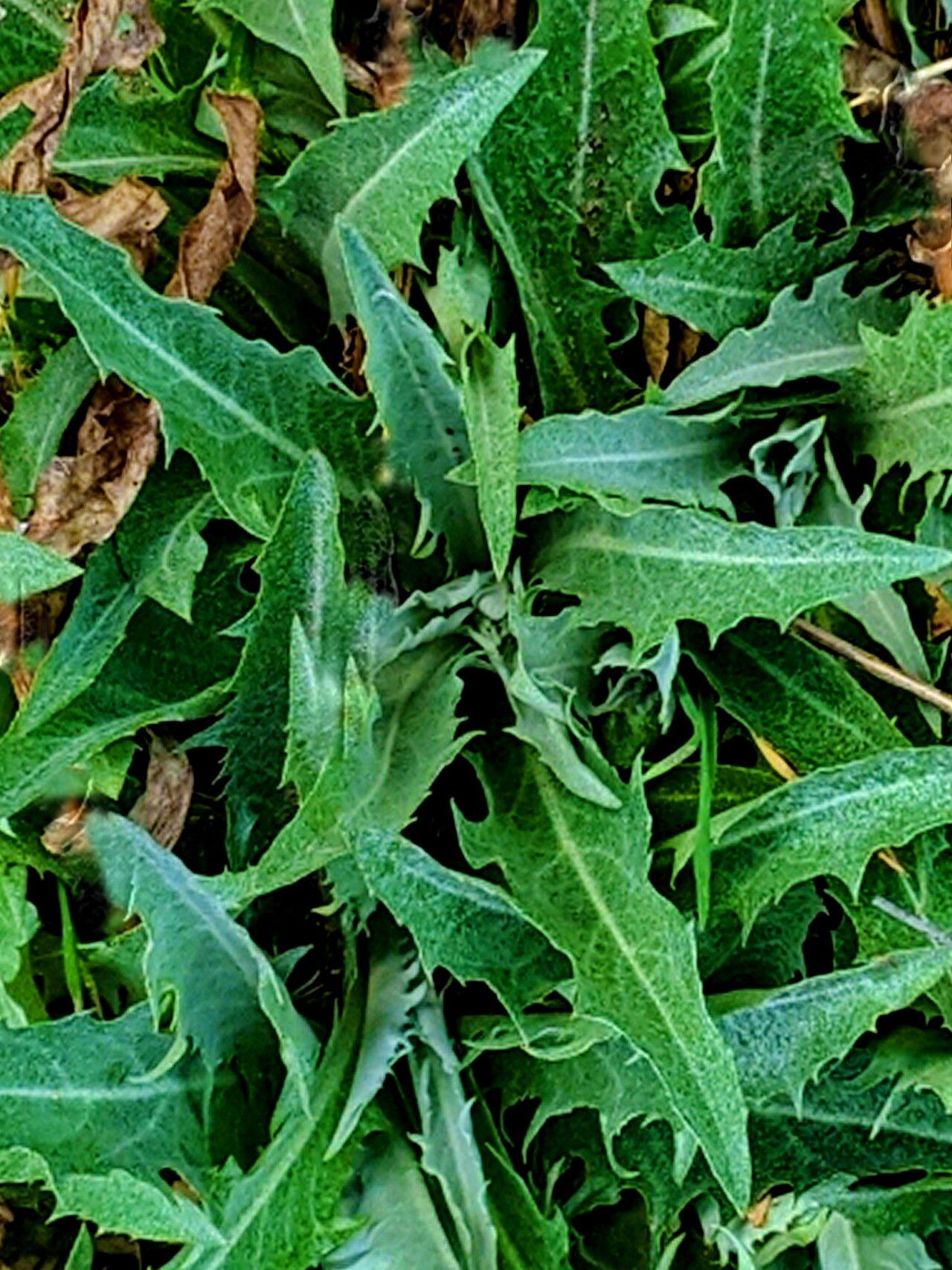
The plant can grow up to 1 meter tall and has a woody base with multiple stems covered in fine hairs. Its narrow, elongated leaves have toothed edges, giving them a fern-like appearance. The flowers, which are small and either white or pinkish, have five petals and form clusters at the top of each stem.
San Diego wirelettuce blooms from May through September, attracting a variety of pollinators such as bees, butterflies, moths, and flies.
Native Americans have historically used this plant for medicinal purposes to treat stomach ailments, including diarrhea and constipation.
Stephanomeria diegensis plays a crucial role in its ecosystem by providing food for wildlife such as rabbits and deer, and serving as a habitat for insects like butterflies and bees.
Overall, Stephanomeria diegensis is an important native California species, contributing significantly to its ecosystem while also holding cultural significance due to its medicinal uses by Native Americans.
How to keep Stephanomeria Diegensis.
Pruning
San Diego wirelettuce features slender stems and delicate flowers. To encourage healthier growth and better airflow, prune the plant from early to late spring by removing dead or weak stems. Avoid heavy pruning to minimize stress on the plant. Always use clean tools to prevent disease, as regular pruning promotes vigorous flowering and enhances the plant's overall vitality.
Botanical profile.
- Life Cycle
- Annual
- Genus
- Stephanomeria
- Family
- Asteraceae
Other names.