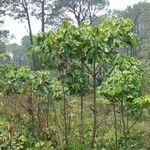
Sterculia foetida
ఈనుగు బాదం చెట్టు · Indian-almond · Java-olive · Hazel Sterculia · Wild Indian almond
Description
Source: leafsnapSterculia foetida, commonly known as the Java olive or stink bean tree, is a tropical species belonging to the Malvaceae family. Native to Southeast Asia, it can be found in countries such as Indonesia, Malaysia, Thailand, and the Philippines. This impressive tree can grow up to 25 meters tall and features a broad crown with large, dark green leaves. The Java olive produces small yellow flowers that develop into large pods containing seeds. These seeds, known as stink beans due to their strong odor, are edible and are valued in Southeast Asian cuisine for their unique flavor. In traditional medicine, the plant is used to treat various ailments, including diarrhea, fever, and skin infections. It is also known for its anti-inflammatory properties. Sterculia foetida is highly valued for its durable wood, which is resistant to termites and decay. This makes it an important timber species, with the wood commonly used in construction for making furniture and boats. In conclusion, Sterculia foetida is significant both for its role in traditional medicine and cuisine, and for providing valuable timber resources to local communities in Southeast Asia.
Care Guide
💧 Water Every 7 days
Hazel sterculia, a plant native to tropical regions, thrives in warm and humid conditions and is also drought-tolerant. For optimal care, water the plant every 1 to 2 weeks, ensuring the soil dries out slightly between waterings. When grown outdoors, its growth is significantly boosted by the rainy season.
What is the best way to water my Hazel sterculia plant?
To promote root growth, place a garden hose at the base of your plants, avoiding direct spraying on the leaves. If the plants are outdoors and in direct sunlight, the leaves will need more water. You can also utilize bubblers or soaker hoses to keep the roots moist. When adding or removing plants, use soaker hoses that cover the entire garden or bed to ensure deep root penetration. After watering, drain any excess water and allow the soil to dry before watering again. Watering at ground level helps prevent diseases. On sunny days, consider spraying the whole bush with water. Whether potted or in-ground, keep in mind that Hazel sterculia plants prefer deep watering rather than light sprinkling.
What should I do if I give the Hazel sterculia plant too much or too little water?
If you overwater a Hazel sterculia, its leaves may turn yellow, drop off, and wilt. The plant may also look unhealthy, with mushy stems. When you notice these signs, it's best to adjust your watering schedule. Conversely, wilting can also indicate under watering, with leaves becoming crispy and dry. If the soil is dry and watering alone isn't sufficient, give the plant a thorough watering. Although this will help the Hazel sterculia recover, it may still have dry, yellow leaves for a few days due to root damage. As the plant returns to normal, the yellowing of leaves will stop. If you have a Hazel sterculia indoors, regularly check the moisture levels in the pot and avoid overwatering. Look for black spots which may indicate the need for the soil to dry out by withholding water for a few days. Overwatering can lead to root rot, in which case it may be necessary to transfer the plant to a different pot, especially if the roots appear discolored and slimy. Always try to prevent root rot by avoiding overly soggy soil. When planting a Hazel sterculia outdoors, ensure that the soil is adequately watered. Test the soil by feeling with your fingers, and if it is too dry, the plant may be underwatered. Providing adequate water will help the plant recover.
How regularly should I water my Hazel sterculia?
The Hazel sterculia prefers deep and infrequent watering, especially when planted in pots. Watering should be done with a gallon of water each time, as the water storage in pots is limited and the soil dries out quickly. In cold regions, watering is needed every 3 to 5 days. It is best to water in the morning when the soil is dry, whether indoors or outdoors. You can also check if watering is needed by examining the soil. When the top 2-3 inches of soil are dry, it's time for a thorough watering. On hot days, check the moisture daily as the soil can dry out rapidly. If you have a garden, irrigation of the soil is necessary. In a hot climate, water once a week when the soil is about 2 to 3 inches dry. Avoid adding water if there is enough rainfall to prevent root rot. Hazel sterculia plants typically grow in spring and fall, so adding mulch 3 to 4 inches deep when they are outdoors helps conserve water. Sandy soil requires more frequent watering due to faster drainage, while clay soil requires less frequent watering to avoid root rot. It can be helpful to mark watering dates on a calendar and pay attention to drooping leaves as a sign of needing water.
How much water should I give my Hazel sterculia?
The Hazel sterculia plant generally needs about a gallon of water on a regular schedule. For potted plants, it's best to water them deeply until you see water dripping from the bottom of the pot. Then, wait for the soil to dry before watering again. To determine how much water you've given your plant in a week, you can use a water calculator or a moisture meter. During the flowering period, be sure to provide plenty of water, but allow the moisture to evaporate afterwards to prevent root rot. If the Hazel sterculia is planted outdoors and receives adequate rainfall, it may not need additional watering. However, when the plant is young or newly planted, it's important to ensure it gets 1-2 inches of rain per week. As the Hazel sterculia grows, it can rely on rainfall alone. Only when the weather is extremely hot or there hasn't been any rainfall for 2-3 weeks, should you consider giving the plant a full watering during the cooler part of the day to avoid heat damage. Additional watering may be necessary during prolonged dry spells.
Should I change how often I water my Hazel sterculia plant based on the time of year or the weather conditions?
To keep the Hazel sterculia healthy, it is important to provide the right amount of water depending on the season. During the spring and fall growing seasons, the soil should be kept moist but not soggy. Alternating between dry and moist soil conditions will promote optimal growth. In the summer, hot weather can cause water to evaporate quickly, so it may be necessary to water more frequently to keep the soil moist. During the winter, the Hazel sterculia will need less water as it goes dormant and loses its leaves. It is advisable to use a well-draining soil mixture when planting the Hazel sterculia in a pot, ensuring that the drainage is good. The plant should be watered deeply once or twice a week, avoiding shallow sprinkles that only reach the leaves and encourage fungal growth. However, the plant should not be allowed to dry out completely, even during dormancy. It is also important to avoid overwatering, as sitting in water for too long can harm the plant, especially during winter. Applying mulch can help reduce water stress and promote healthy blooms.
☀️ Light Full sun
Hazel sterculia prospera en ambientes donde los rayos solares sin obstáculos están disponibles de manera continua. La luz del sol impulsa su desarrollo saludable y estimula su ciclo de crecimiento. Originaria de hábitats expuestos a abundante luz, puede presentar crecimiento retardado o follaje pálido si se le niega una iluminación suficiente.
What are the sunlight requirements for Hazel Sterculia?
Hazel Sterculia, known scientifically as Sterculia foetida, flourishes in conditions where it receives full sun, which is defined as more than 6 hours of sunlight daily. It's crucial for its health and growth to ensure it is placed in an area that receives unobstructed solar rays consistently. The plant originates from habitats that are exposed to plentiful sunlight. If deprived of sufficient light, it might experience retarded growth or exhibit pale foliage. It’s recommended to observe how sunlight moves through your garden to select spots that offer a perfect balance of light and shade, ensuring the plants’ well-being.
What are the essential needs of Hazel Sterculia in terms of lighting?
Hazel Sterculia requires consistent access to full sunlight for optimal growth and health. In environments with insufficient natural sunlight, particularly during winter or in spaces that don't receive enough sun, artificial lighting can serve as a vital enhancement. Indoor plants benefit from LED lights, which can be adjusted to provide the specific wavelengths needed by the plant. For indoor growing, it's recommended to provide 30-50W/sq ft for full sun plants, 20-30W/sq ft for partial sun plants, and 10-20W/sq ft for full shade plants. The artificial light source should be placed 12-36 inches above the plant and turned on for 8-12 hours per day to mimic natural daylight hours effectively.
What symptoms indicate Hazel Sterculia is not receiving enough light when grown indoors?
When Hazel Sterculia is grown indoors and does not receive adequate light, it may exhibit several symptoms. These include smaller new leaves compared to the older ones, leggy or sparse growth, a faster rate of leaf drop, slower or halted new growth, and lighter-colored new leaves. These symptoms are subtle signs of light deficiency and should prompt an evaluation of the plant’s lighting conditions and potential adjustments to its environment to ensure it receives enough light for healthy growth.
How can I address the symptoms of light deficiency in Hazel Sterculia?
To address light deficiency symptoms in Hazel Sterculia, ensure the plant receives at least 6 hours of direct sunlight daily by gradually moving it to a sunnier location each week. For indoor plants that are large or not easily movable, consider using artificial light, keeping a desk or ceiling lamp on for at least 8 hours daily or investing in professional plant grow lights. If the plant is outdoors, similarly move it gradually to a brighter spot to avoid sunburn. Reducing obstructions by pruning obstructing trees or transplanting smaller plants during their dormant period can also help increase sunlight exposure. It's important to note that parts of the plant affected by insufficient sunlight may not recover, but new growth should be healthy with increased light exposure.
🌡️ Temperature 20–35°C
Hazel sterculia naturally occurs in environments with temperatures ranging from 68 to 95 °F (20 to 35 ℃). It favors warmth and may require extra protection during colder periods.
What is the ideal temperature range for Hazel Sterculia?
Hazel sterculia thrives in environments where temperatures fluctuate between 68 to 95 °F (20 to 35 °C). The plant has a strong preference for warmth, meaning it is essential to maintain temperatures above 20°C, especially during the winter to support its growth. It is crucial to ensure that the minimum temperature remains above the freezing point to prevent damage to the plant.
What should I do to protect Hazel Sterculia during winter?
To protect Hazel sterculia during winter, it's advisable to bring the plant indoors or provide protection when outdoor temperatures approach -5°C (25°F). You can set up a temporary greenhouse or use materials such as plastic film or fabric to wrap the plant, preventing it from freezing damage. Keeping temperatures above 5°C is beneficial to avoid any adverse effects due to cold.
How does low temperature affect Hazel Sterculia, and what are the solutions?
Hazel sterculia has moderate tolerance to low temperatures but thrives best within 20°C to 35°C. Exposure to temperatures below 1°C may cause the leaves to darken, and in severe cases, water-soaked necrosis, wilting, and drooping occur with the leaves gradually turning brown. To combat these symptoms, trim away the frost-damaged parts and immediately move the plant to a warm environment or set up a makeshift greenhouse. Ensure the plant is placed near a south-facing window for sufficient sunlight or use supplemental lighting if natural light is inadequate.
How does high temperature affect Hazel Sterculia, and what are the solutions?
During summer, it's crucial to keep Hazel sterculia's temperature below 35°C. Exposure to temperatures above 41°C can slow down growth, lighten the leaf color, and increase susceptibility to sunburn. In such cases, trim away the sunburned and dried-up parts, move the plant to a shaded location, particularly from the afternoon sun, and water the plant in the morning and evening to maintain soil moisture.
💨 Humidity
🪴 Soil 6-7
🌱 Fertilizer
When feeding Hazel sterculia, use organic or commercial fertilizers high in nitrogen for leaf development, phosphorus for root and flower formation, and potassium to support photosynthesis and maximize fruit yield. Plant in spring, improve the soil with compost or manure, and fertilize seedlings when they reach a height of 2-4 inches. A shortage of macronutrients results in slow growth, wilting, and reduced fruit quality.
🪴 Pot & Repot
✂️ Pruning
Prune hazel sterculia in late winter to improve its health and appearance. Concentrate on removing dead or diseased branches, thinning out crowded areas to improve air circulation, and shaping the canopy. Pruning at this time allows the tree to heal before the growing season begins, encouraging strong new growth and reducing the risk of pest infestations.
🌿 Propagating
🐛 Diseases & pets
☠️ Toxicity
Characteristics
- Plant Type
- Tree
- Life Cycle
- Perennial
- Genus
- Sterculia
- Family
- Malvaceae
- Hardiness Zone
- 10
- Mature Height
- 30.48 m to 35.05 m
- Mature Spread
- 11.89 m
- Leaf Color
- Dark Green
- Leaf Type
- Deciduous
- Flower Color
- Red
- Flower Size
- 2.54 cm to 5.08 cm
- Bloom Time
- Late spring, Early summer, Mid summer
- Planting Time
- Spring, Summer, Autumn
- Harvest Time
- Late summer, Early fall, Mid fall
- Native Area
- Sri Lanka, India, Malaysia, Indonesia, Cambodia, Vietnam, Myanmar, Philippines, Bangladesh, Laos, Thailand