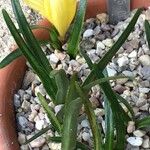
Sternbergia lutea
Lily-of-the-field · Winter-daffodil · Lily of the Field · Common Sternbergia · Yellow Autumn Crocus
Description
Source: leafsnapSternbergia lutea, commonly known as the autumn daffodil or yellow autumn crocus, is a perennial plant with bulbous roots belonging to the Amaryllidaceae family. Native to the Mediterranean region, it thrives in rocky areas, meadows, and woodlands. This plant produces bright yellow flowers in late summer or early autumn, which resemble daffodils or crocuses. The trumpet-shaped flowers feature six petals and a central cup-like structure. Its narrow, strap-like leaves grow up to 30 cm long from the plant's base. Sternbergia lutea prefers well-drained soil with full sun exposure but can also tolerate partial shade. Although drought-tolerant once established, it requires regular watering during its active growth period in spring and summer. Historically, the bulbs of Sternbergia lutea have been used for their anti-inflammatory properties. However, it is important to remember that all parts of this plant are toxic if ingested. Overall, Sternbergia lutea is an attractive ornamental plant that adds a burst of color to gardens in late summer and early fall when most other plants have finished blooming.
🌳 Besides being appreciated for its bright yellow flowers, the winter daffodil can serve as an unexpected substitute for saffron in various cuisines. Although not widely used, its potential in the culinary arts as both a coloring and flavoring agent is noteworthy. Moreover, the winter daffodil is often employed in ornamental gardens to add bursts of color during the fall, enhancing the aesthetic appeal of landscapes.
Care Guide
💧 Water Every 7 days
The winter daffodil, native to the Mediterranean, flourishes in well-drained soils and dry climates. It is drought-tolerant and requires minimal watering, typically about once a week. During its dormant period, the winter daffodil needs even less water to avoid bulb rot and promote healthy growth cycles.
How should I water my Winter daffodil?
To properly water the Winter daffodil, it is best to use filtered water at room temperature. Tap water may contain harmful particles that can damage the plant. Similarly, the water should be at room temperature or slightly warmer because the Winter daffodil is accustomed to warmer environments and cold water can be a shock to its system. Additionally, overhead watering should be avoided as it can cause issues with the foliage. Instead, it is recommended to apply filtered room temperature water directly to the soil until it is fully soaked. This method benefits the plant by moistening the roots and allowing them to spread throughout the soil to gather essential nutrients.
What should I do if I give my Winter daffodil too much water or not enough water?
When caring for your Winter daffodil, both overwatering and underwatering can harm its health, but overwatering is more common. Too much water can cause wilting and yellowing of the stems and leaves, and it can also lead to diseases like root rot, mold, and mildew, which can be fatal. Underwatering is less likely, as Winter daffodils can tolerate drought quite well. However, if underwatering does occur, you may notice that the leaves become dry and brown. It's important to promptly recognize the signs of overwatering when caring for your Winter daffodil. Some diseases caused by overwatering, such as root rot, may be irreversible if not addressed quickly. If you notice early signs of overwatering, reduce your watering immediately. Additionally, check the quality of the soil where your Winter daffodil is planted. If the soil drains poorly, replace it with a loose, well-draining potting mix. If you see signs of underwatering, simply water more regularly until the signs subside.
How frequently do I need to water my Winter daffodil?
If your Winter daffodil is in a pot, the best way to determine if it needs water is by checking the soil with your finger. If the top layer of soil (around two to three inches) is dry, it's time to water it. If you have your Winter daffodil planted outdoors, you can use the same method to test the soil. When the top few inches of soil are dry, it's time to water. Usually, during spring and early fall, you'll need to water this plant approximately once each week. In hotter weather, you may need to water it twice or more per week. However, it's worth noting that mature, well-established Winter daffodils can handle drought well.
How much water does my Winter daffodil require?
To properly water your Winter daffodil, don't be timid about the amount of water you provide. Make sure the top two to three inches of soil are dry before watering. Aim for a thorough watering that completely saturates the soil. You'll know you've added enough water when you see excess water flowing through the drainage holes at the bottom of the pot. If there's no excess water, it means you haven't given enough water and may be underwatering your plant. However, be careful not to let water accumulate inside the soil as it can harm the plant. On the other hand, if water doesn't drain properly from the pot, it suggests that the soil has poor drainage, which is not good for the plant's health. When it's outside, receiving 1 inch of rain per week should be enough for the Winter daffodil.
How do I water my Winter daffodil when it's growing in different stages?
The water needs of the Winter daffodil can vary based on its growth stages. In the first few years and after transplanting, it requires more water because it focuses on developing new roots for future growth. These young roots perform better with additional moisture. As the plant matures, it needs less water. Another stage that requires increased watering is the bloom period, as flower development consumes a significant amount of moisture.
☀️ Light Full sun
Winter daffodil grows best in places where sunlight fully bathes its foliage all day. Its origins lie in sun-drenched habitats, indicating the plant's preference for plenty of light. Insufficient light slows its growth, while excessive exposure can damage its foliage.
What are the sunlight requirements for Winter daffodil?
Winter daffodil requires full sun to thrive well, which means it needs above 6 hours of sunlight each day. It's important to observe how sunlight moves through your garden to ensure that you select locations that provide a good balance of light and shade, catering to your plant's needs for optimal growth.
Are there any essentials to know about Winter daffodil's sunlight needs?
Yes, the Winter daffodil thrives best in areas with full sun exposure throughout the day. Originally from sun-drenched environments, this plant prefers ample light for growth. Lack of sufficient sunlight will slow its growth, while too much direct sunlight can also damage the foliage. When natural sunlight is not available, especially during winter or in less sunny areas, artificial lighting can serve as an essential substitute to promote healthy growth. LED lights are recommended for their ability to provide specific wavelengths needed by plants, with varying requirements based on whether the plant prefers full sun, partial sun, or full shade.
What are the common symptoms of improper lighting for Winter daffodil?
Improper lighting can cause several symptoms in Winter daffodil. Symptoms of insufficient light include smaller new leaves, leggy or sparse growth, faster leaf drop, slower or no new growth, and lighter-colored or pale new leaves. Too much direct sunlight can lead to chlorosis (leaves turning yellow due to chlorophyll breakdown), sunscald, leaf curling, wilting, and leaf scorching. Each symptom reflects the plant's struggle to adapt to its lighting conditions.
How can I provide the best light conditions for Winter daffodil?
To ensure optimal growth for Winter daffodil, it's suggested to gradually move plants to locations with at least 6 hours of direct sunlight daily. In case of large indoor plants or those that cannot be easily moved, consider using artificial light, such as desk or ceiling lamps for at least 8 hours a day or professional plant grow lights. Outdoors, avoid abrupt changes in light exposure to prevent sunburn. For plants affected by insufficient sunlight, new growth should appear healthy once proper light exposure is ensured. Additionally, you may need to reduce obstructions that block sunlight or consider transplanting smaller plants during their dormant period to a spot with better light conditions and drainage.
🌡️ Temperature 15–35°C
Winter daffodil is a plant native to habitats with temperatures ranging from 59 to 95 °F (15 to 35 °C). It does best in moderate heat. Changes toward cooler temperatures in fall or winter should be managed to maintain optimal growth.
What is the ideal temperature range for growing Winter Daffodil?
Winter Daffodil, or Sternbergia lutea, thrives in environments where the temperature ranges between 59 to 95 °F (15 to 35 °C), making it suited to moderate heat. It possesses strong cold resistance, typically not requiring frost protection measures in the winter. However, in regions where temperatures fall below -15°C, it's crucial to provide cold protection by covering the plant with materials like soil or straw. For optimal growth, adjusting to cooler temperatures during fall or winter and watering the plant abundantly before the first freeze in autumn to keep the soil moist is beneficial.
How does low temperature affect Winter Daffodil, and what are the solutions?
Winter Daffodil is cold-tolerant, performing best when the temperature stays above 15°C. During winter, it's important to ensure the temperature remains above -10°C. When the temperature drops below -15°C, though the plant may not show immediate damage, there could be a decrease in or absence of sprouting in spring. If parts of the plant fail to sprout in spring, those parts should be removed as part of the plant's care.
How does high temperature affect Winter Daffodil, and what should be done?
During summer, it's essential to keep the Winter Daffodil's temperature below 35°C. Exposure to temperatures above 38°C can cause the leaves to lighten in color, curl, become prone to sunburn, and, in severe cases, result in the plant wilting and drying. To manage such stress, sunburned and dried parts of the plant should be trimmed away. The plant should be moved to a location with shade from the midday and afternoon sun, or a shade cloth can be used. Additionally, watering the plant in the morning and evening to maintain soil moisture is advisable.
💨 Humidity normal (40-60%)
This plant will thrive in moderate humidity, which is probably the level in your home. However, misting it a few times a week can be very beneficial. Make sure the room has good ventilation.
🪴 Soil 6-7
🌱 Fertilizer
For Winter daffodil, the primary time to apply fertilizer is in early spring while the flowers are forming. The proper fertilizer promotes better blooms and helps the Winter daffodil produce attractive flowers. Fertilizing in early spring guarantees excellent flowers during the season and supplies energy for its dormant growth phases.
Why should I put fertilizer on my Winter daffodil?
Fertilization is important for the Winter daffodil because it provides essential nutrients for the plant's growth above and below the ground. Although the fertilization needs of the Winter daffodil are generally low, it can still survive without fertilization. However, annual fertilization can greatly benefit the Winter daffodil, helping it stay alive and produce longer-lasting flowers. Therefore, those who want their Winter daffodil to look its best should prioritize annual fertilization.
When should I fertilize my Winter daffodil?
To give your Winter daffodil the best start for the season, it's recommended to fertilize it in late winter to early spring. This is when the plant is transitioning from its dormant phase to active growth. Fertilizing at this time promotes healthy growth. While early spring is the best time to fertilize, it is also acceptable to do so in the fall. Avoid fertilizing in summer and winter as it is not beneficial for the Winter daffodil.
When is it best not to fertilize my Winter daffodil?
To properly care for your Winter daffodil, it is important to fertilize it only during the late winter and early spring. This plant does not require frequent fertilization, so a single annual feeding is sufficient. Overfertilization can occur if you continue to fertilize throughout spring, summer, and fall. However, if you forgot to fertilize in the spring, it is acceptable to feed the plant in the fall. It is also unnecessary to fertilize the Winter daffodil during the winter months because it is in a dormant growth phase and does not produce new growth.
What kind of fertilizer does my Winter daffodil require?
A general-purpose fertilizer with a balanced amount of the main plant nutrients will work well for a Winter daffodil. However, using a nutrient blend with higher phosphorus levels may provide even better results. Applying a phosphorus-rich fertilizer is recommended for flowering plants like the Winter daffodil. Granular or liquid form fertilizers can both be used as long as they contain enough nutrients. In addition to manufactured fertilizers, organic materials like compost and manure can also improve the soil for your Winter daffodil. Using these materials will contribute to creating a healthy growing medium for your flower.
How can I make my Winter daffodil grow better?
To fertilize a Winter daffodil, the most common method is using granular or pellet fertilizer applied to the soil around the plant. Remember to fertilize when the plant is transitioning from winter dormancy to active growth. In early spring, wait until shoots emerge from the soil before applying fertilizer. Alternatively, some people prefer using liquid fertilizer, which should be diluted with water before application. Regardless of the type of fertilizer used, it is important to moisten the soil before, during, and after applying it.
🪴 Pot & Repot
✂️ Pruning
The winter daffodil boasts vibrant yellow flowers and requires minimal pruning. To promote healthy growth and improve air circulation, trim away any dead or damaged leaves in early to mid-spring, after the blooming period. Be sure to use clean, sharp tools to prevent infections, helping your winter daffodils stay healthy and visually appealing.
🌿 Propagating
🐛 Diseases & pets
☠️ Toxicity
Characteristics
- Plant Type
- Herb
- Life Cycle
- Perennial
- Genus
- Sternbergia
- Family
- Amaryllidaceae
- Hardiness Zone
- 7-9
- Mature Height
- 15 cm
- Mature Spread
- 8 cm
- Leaf Color
- Green
- Leaf Type
- Deciduous
- Flower Color
- Gold, Yellow
- Flower Size
- 2.54 cm to 5.08 cm
- Bloom Time
- Mid summer, Late summer
- Planting Time
- Spring
- Harvest Time
- Early winter, Mid winter