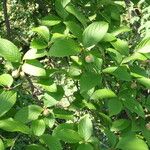
Stewartia pseudocamellia
Korean stewartia · Japanese stewartia · Deciduous camellia · Japanese silky camellia
Description
Source: leafsnapStewartia pseudocamellia, commonly known as the Japanese stewartia, is a deciduous tree native to Japan and Korea. It is a slow-growing species that can reach up to 40 feet in height and 20 feet in width. The tree's bark is smooth and grayish-brown, with patches of orange-brown that peel away to reveal a smoother surface underneath. The leaves of the Japanese stewartia are dark green with serrated edges and turn brilliant shades of red, orange, or yellow in autumn. The tree produces large, white, camellia-like flowers that appear in early summer and last for several weeks. The Japanese stewartia prefers moist, well-drained soil and thrives in either partial shade or full sun. It is relatively low-maintenance but does require regular pruning to maintain its shape. This plant is valued for its ornamental appeal, owing to its attractive bark texture and showy summer flowers, making it an excellent choice for landscaping or as an accent plant in gardens. Additionally, it has been used traditionally by herbalists for its medicinal properties, such as anti-inflammatory effects on skin conditions like eczema or psoriasis when applied topically to the affected areas.
Care Guide
💧 Water Every 7 days
The Japanese silky camellia thrives in conditions that mimic its native woodlands, preferring evenly moist soil and moderate humidity. To care for this plant, water it every 1 to 2 weeks, adjusting your watering schedule according to the season. When grown outdoors, applying mulch can help retain moisture, especially during the active growing season when optimal flower development is desired.
☀️ Light Partial sun
Japanese silky camellia naturally grows in places like forest understories or rocky terrain, where it receives natural shade. It prefers partial sun but can tolerate full sun or full shade, showing its versatility and hardiness.
What are the sunlight requirements for Japanese Silky Camellia?
Japanese Silky Camellia thrives in partial sun, requiring about 3-6 hours of sunlight daily. However, it's also capable of growing in full shade, demonstrating its adaptability to different light conditions. The plant is indigenous to areas like forest understories and rocky terrains, where it naturally experiences shade. It's essential to observe the movement of sunlight through your garden to select spots that offer a balanced exposure to light and shade, ensuring the plant's well-being.
How can artificial lighting support plant growth indoors?
When natural sunlight is lacking, especially during winter or in less sunny locations, artificial lighting becomes crucial for the growth of indoor plants. LED lights are recommended due to their ability to be tailored to the specific light wavelengths needed by plants. The intensity of light should be adjusted based on the plant's requirements: full sun plants need 30-50W/sq ft, partial sun plants need 20-30W/sq ft, and full shade plants require 10-20W/sq ft. Proper distance (12-36 inches above the plant) and duration (8-12 hours per day) of light exposure are key factors to mimic natural sunlight and promote healthy plant development.
What symptoms indicate light deficiency in Japanese Silky Camellia?
Light deficiency in Japanese Silky Camellia manifests through several symptoms, including smaller new leaves, leggy or sparse growth, premature leaf drop, slowed or halted growth, lighter-colored or pale new leaves, chlorosis, sunscald, leaf curling, wilting, and leaf scorching. These signs suggest that the plant is not receiving adequate light, leading to various stress responses and potential health issues.
What solutions can mitigate light deficiency issues?
To address light deficiency, gradually increase the plant's exposure to sunlight by moving it to sunnier spots weekly until it receives the desired 3-6 hours of direct sunlight daily. This gradual adaptation prevents shock and sunburn. For large or immovable plants, supplementing with artificial light for at least 8 hours a day can be beneficial. Outdoors, gradually relocating plants to optimal sunlight areas and reducing obstructions such as overhanging branches can improve light exposure. For smaller plants, consider transplanting during their dormant period to a location with better sunlight and drainage. Note that while increasing light exposure improves growth, parts of the plant that were previously affected might not recover, but new growth should be healthy.
🌡️ Temperature 5–32.2°C
The Japanese silky camellia is highly adaptable to a variety of climate conditions, from intense summer heat to cold winter weather. Still, it needs a certain optimal temperature range to thrive. If temperatures rise too high, the plant can experience heat and humidity stress that may kill it. In places where temperatures approach the lower limit of its cold tolerance, providing insulation is important to protect the plant.
💨 Humidity
🪴 Soil 5-6
🌱 Fertilizer
Proper timing matters for fertilizing the Japanese silky camellia. Apply fertilizer in early spring and continue monthly through early summer. Fertilizer promotes attractive blooms and supplies energy during both dormant and active growth phases.
🪴 Pot & Repot Every 12 months
✂️ Pruning
The Japanese silky camellia features elegant white blooms and vibrant autumn foliage. To maintain its shape and health, prune in early spring by removing any dead or crossing branches. Thinning the plant improves air circulation, while minimal shaping helps preserve its natural form. Avoid heavy pruning to prevent stress, and consult care guides for optimal maintenance practices.
🌿 Propagating
🐛 Diseases & pets
☠️ Toxicity
Characteristics
- Plant Type
- Tree
- Life Cycle
- Perennial
- Genus
- Stewartia
- Family
- Theaceae
- Hardiness Zone
- 5-8
- Mature Height
- 3.66 m to 12.19 m
- Mature Spread
- 2.44 m to 7.62 m
- Leaf Color
- Red, Green, Orange
- Leaf Type
- Deciduous
- Flower Color
- White
- Flower Size
- 2.54 cm to 7.62 cm
- Bloom Time
- Early summer, Mid summer
- Planting Time
- Spring, Autumn
- Harvest Time
- Late summer, Early fall, Mid fall
- Native Area
- Japan, South Korea