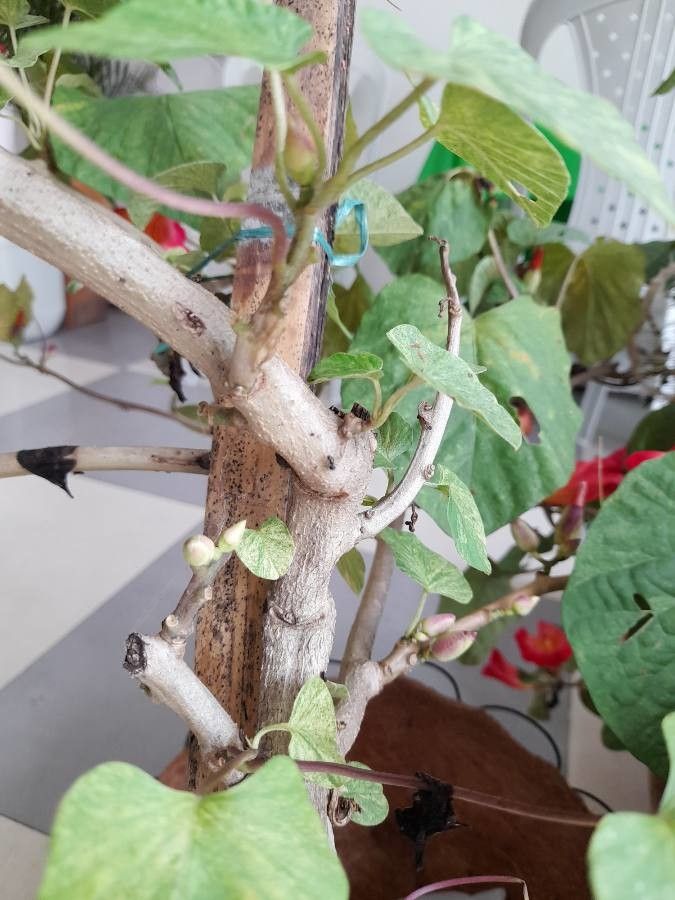
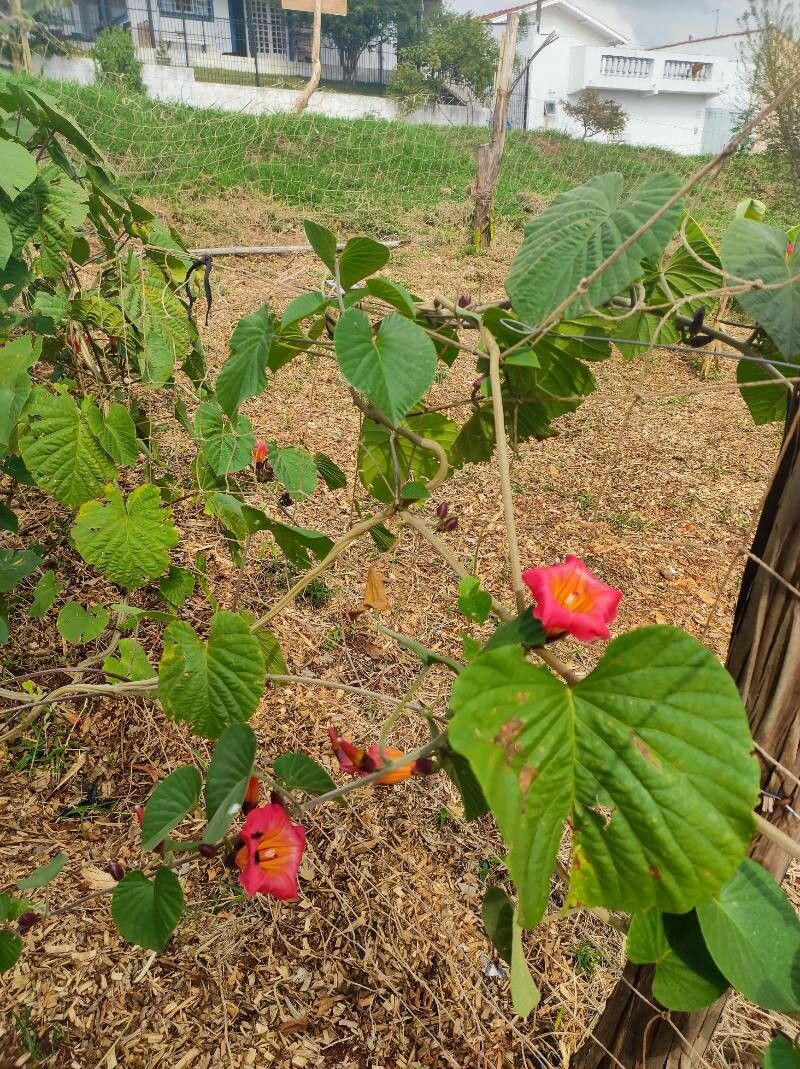
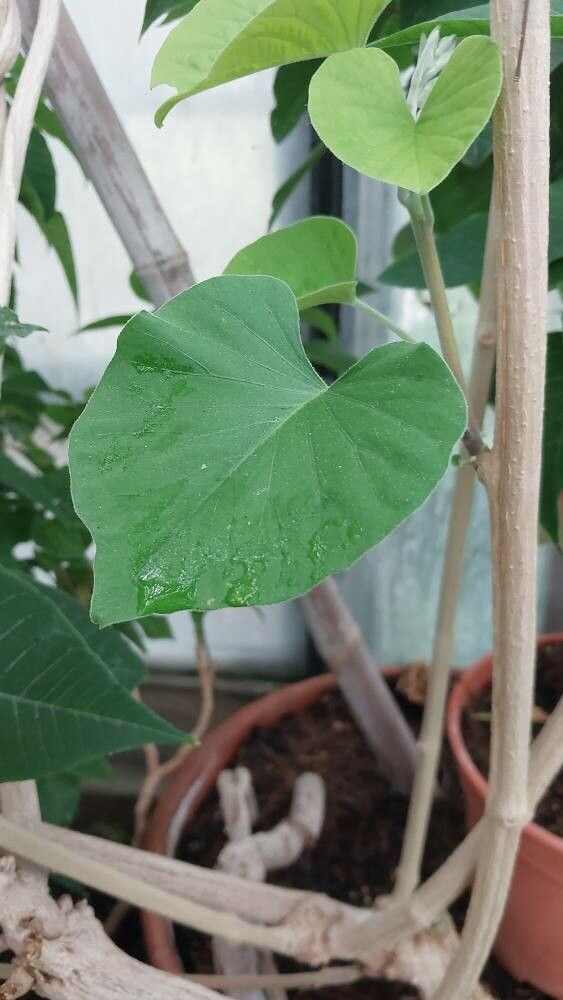
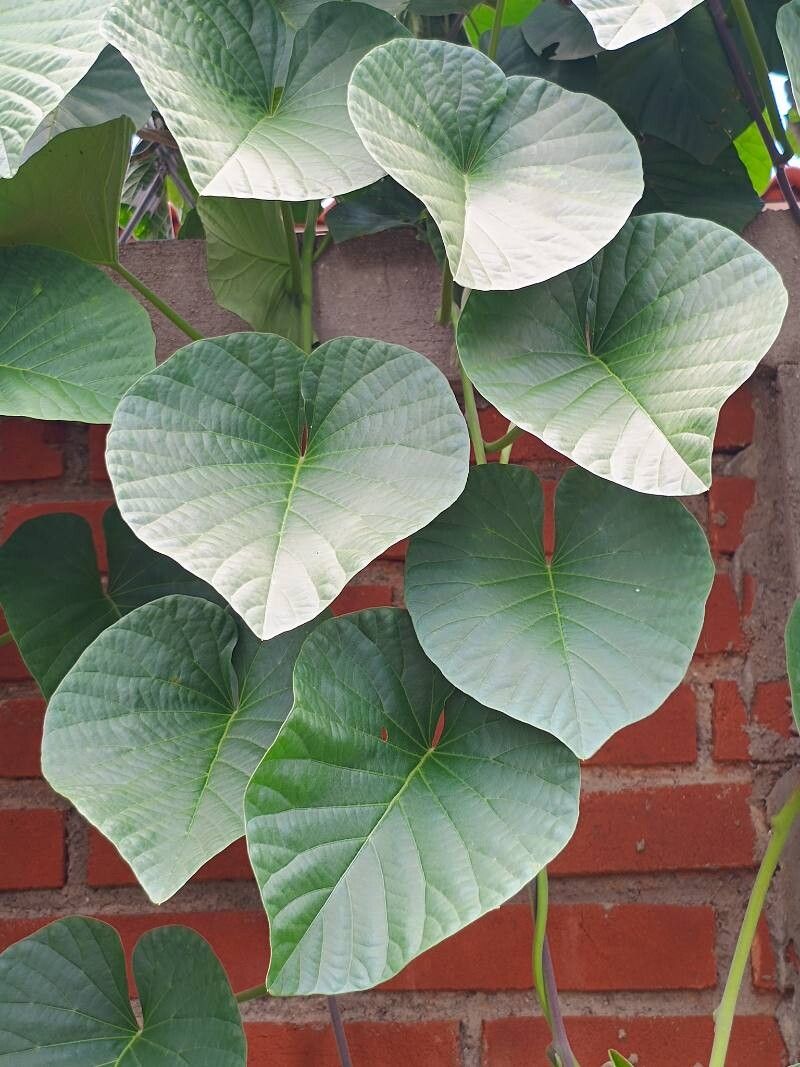
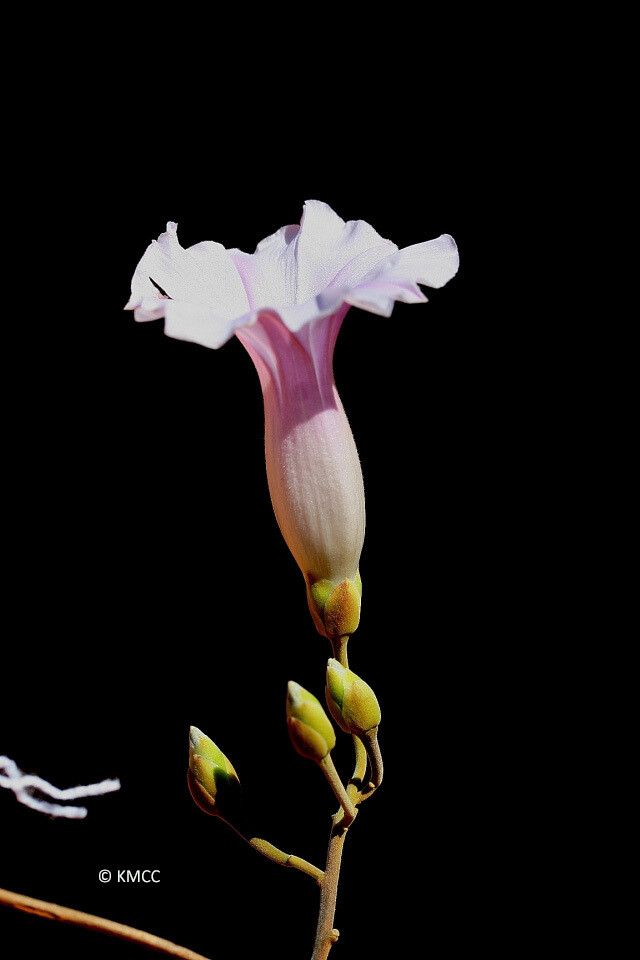
Stictocardia tiliifolia, commonly known as the Hawaiian sunset vine or wild bignonia, is a fast-growing perennial vine in the morning glory family. Native to the tropical regions of Africa and Asia, it has been introduced and naturalized in many parts of the world, including Hawaii.
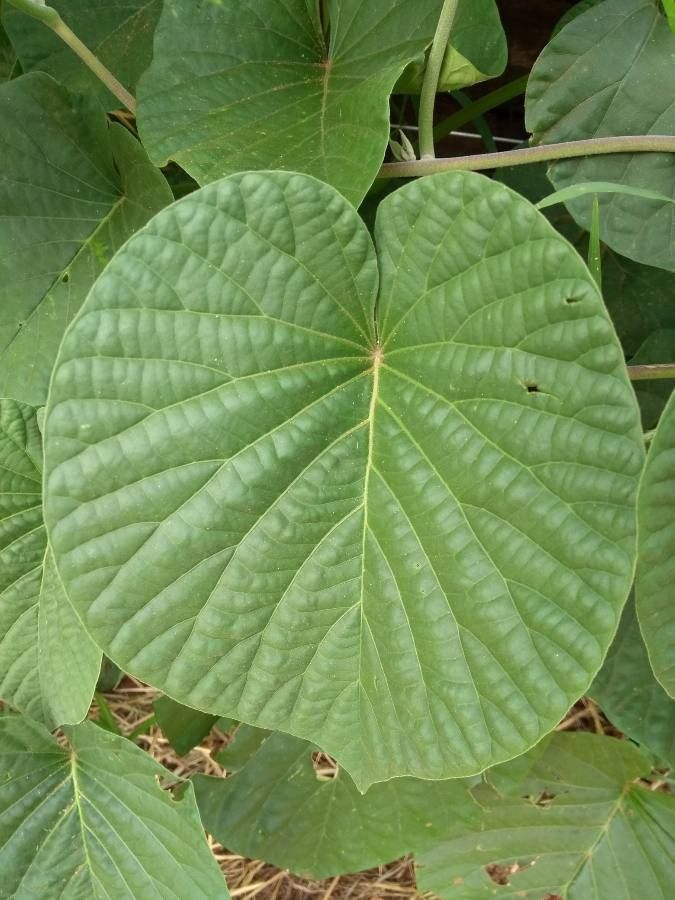
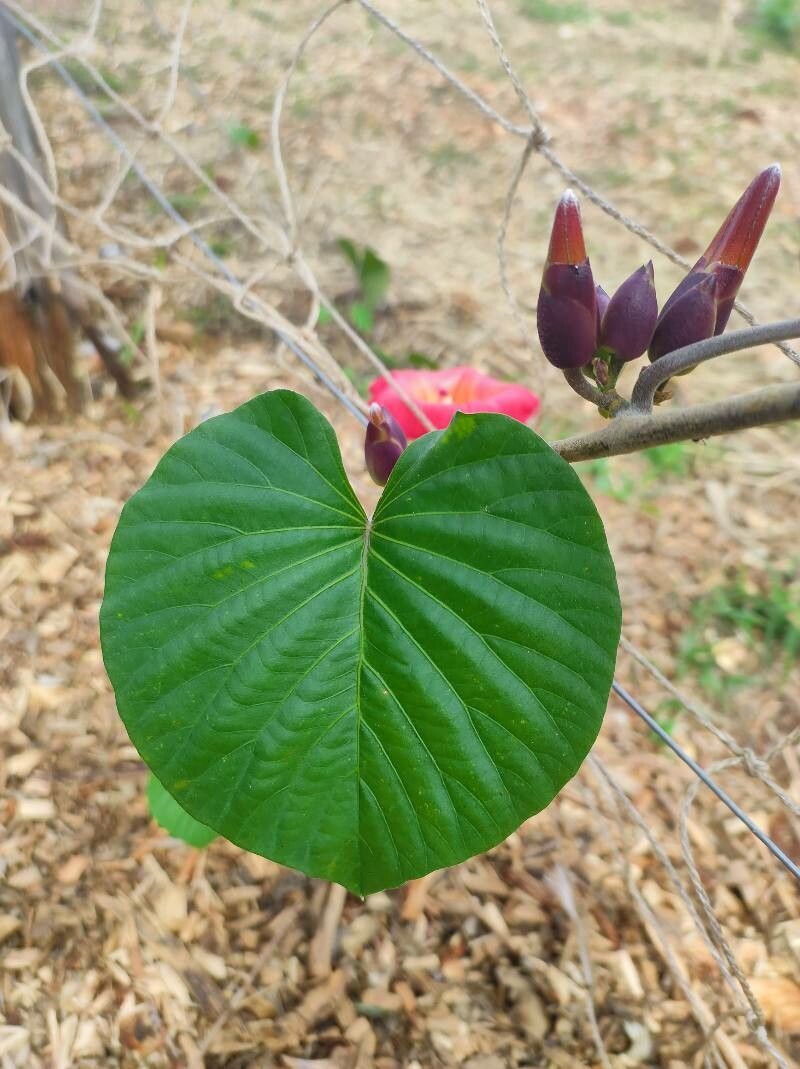
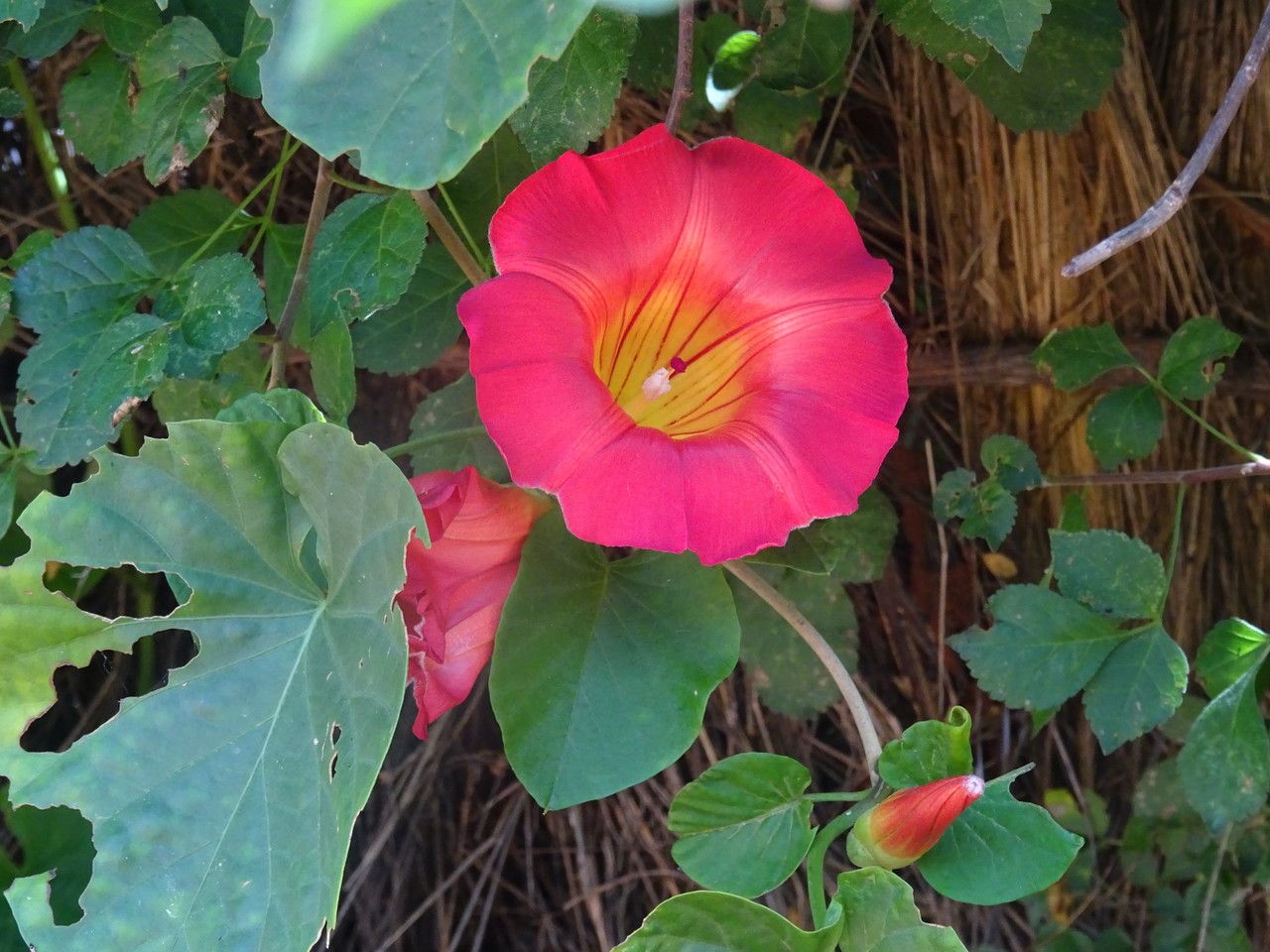
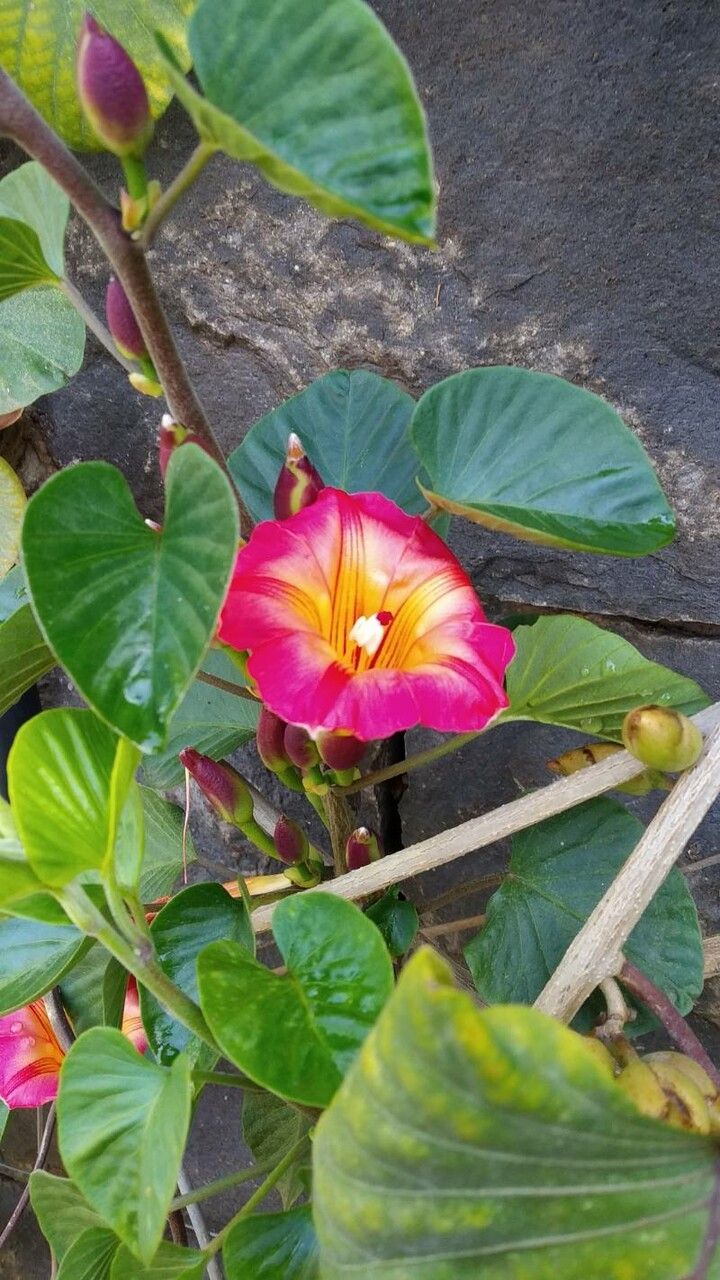
This plant features large, heart-shaped leaves that are velvety to the touch and can grow up to 20 cm in length. Its trumpet-shaped flowers exhibit a bright orange-red color that fades to yellow towards the center, blooming in clusters during the summer and fall.
Due to its attractive foliage and vibrant flowers, the Hawaiian sunset vine is a popular ornamental plant. It can be grown as an annual or a perennial depending on climate conditions, but it prefers warm temperatures and full sun exposure.
In traditional medicine, various parts of Stictocardia tiliifolia have been used for their medicinal properties, such as treating fever and inflammation, and providing pain relief, among other uses.
However, it is important to note that all parts of this plant are toxic if ingested by humans or animals due to its alkaloid content, which can cause vomiting or diarrhea if consumed in large quantities. Therefore, caution should be exercised when planting it around children's play areas or within reach of pets.
Overall, Stictocardia tiliifolia is an attractive ornamental plant for gardeners who desire fast-growing vines with vibrant colors. It also holds traditional medicinal uses when employed appropriately under medical supervision.
Spottedheart has strong resistance to disease and is generally not susceptible to illnesses. In terms of care, this plant is fairly low-maintenance. When grown outdoors it needs little watering, and larger plants typically do not require pruning. Smaller plants, however, should be pruned after they have finished blooming. Spottedheartt is appropriate for anyone with an outdoor area, such as a garden or deck, and does not demand extensive experience in plant care.
How to keep Stictocardia Tiliifolia.
Light
Spottedheart comes from open habitats, such as sunny meadows and forest edges, which provide abundant light. It prefers Full Sun but can also tolerate Partial Sun, remaining adaptable to a range of sunlight conditions.
Water
Spottedheart, a plant native to tropical regions, thrives best in high humidity and consistent moisture. While it can withstand moderate drought, it reaches its full potential with watering every two weeks. Usually cultivated outdoors, spottedheart benefits from rainwater during its growing season, which fosters lush foliage and robust growth.
Temperature
Spottedheart comes from tropical areas, which generally have warm, humid climates. Consequently, it is well adapted to high temperatures and humidity. It does not tolerate abrupt temperature changes and prefers a stable thermal environment, so it is important to avoid indoor temperature fluctuations. It generally cannot withstand cold conditions and requires warmer temperatures for growth. If the surrounding temperature falls too low, the plant may stop growing or even die.
Fertilizer
The best time to fertilize a Spottedheart is in early spring, as it breaks dormancy. This supports overall growth and flower development. Fertilization improves foliage, stems, and branches and encourages flowers that are large, vibrant, and long-lasting. It helps transfer nutrients from the roots to the flowers and enhances the plant’s health and resistance to disease.
Pruning
Spottedheart, admired for its heart-shaped leaves and vibrant flowers, benefits greatly from pruning in early spring. To encourage growth and maintain its shape, start by removing any dead branches. Trimming back overgrown stems will improve both the foliage and the blooms. Be sure to sterilize your tools to prevent any spread of disease. When pruning, avoid cutting too close to the main stem to ensure a clean trim.
Botanical profile.
- Plant Type
- Vine
- Life Cycle
- Perennial
- Genus
- Stictocardia
- Family
- Convolvulaceae
- Hardiness Zone
- 10-12
- Mature Height
- 4.88 m
- Mature Spread
- 2.13 m to 4.88 m
- Leaf Color
- Green
- Leaf Type
- Deciduous
- Flower Color
- Pink
- Flower Size
- 5.08 cm to 7.62 cm
- Bloom Time
- All year round
- Planting Time
- Spring, Summer
- Harvest Time
- All year round
- Native Area
- Sri Lanka, India, Malaysia, Indonesia, Vietnam, Japan, Papua New Guinea, Philippines, Madagascar, Timor-Leste, Bangladesh, Thailand, China
Other names.