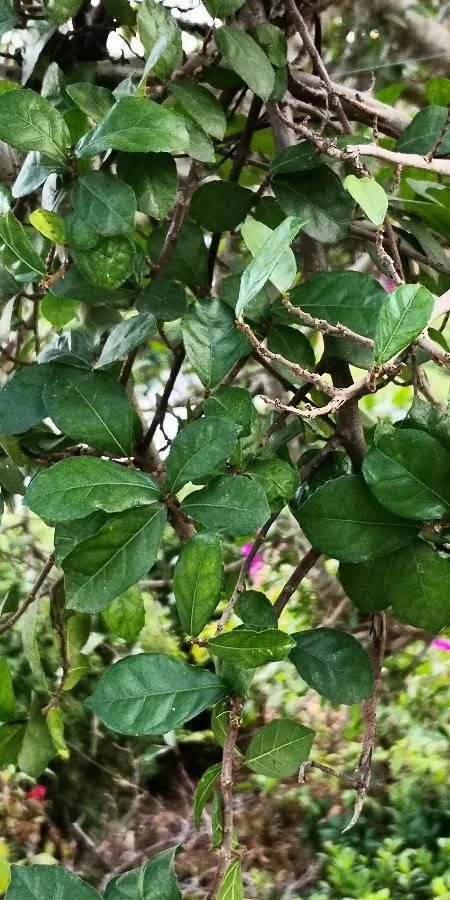
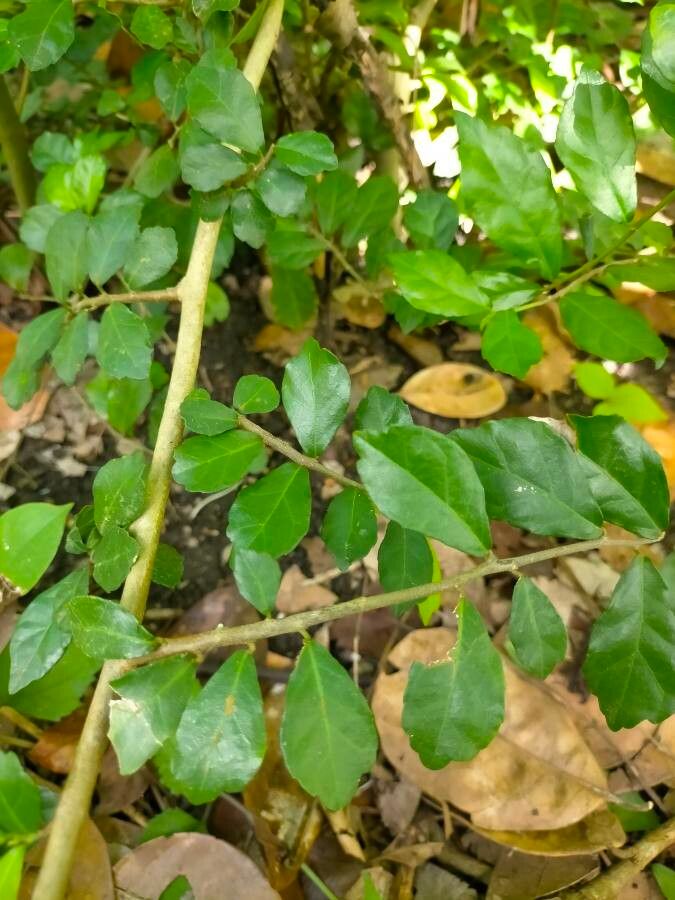
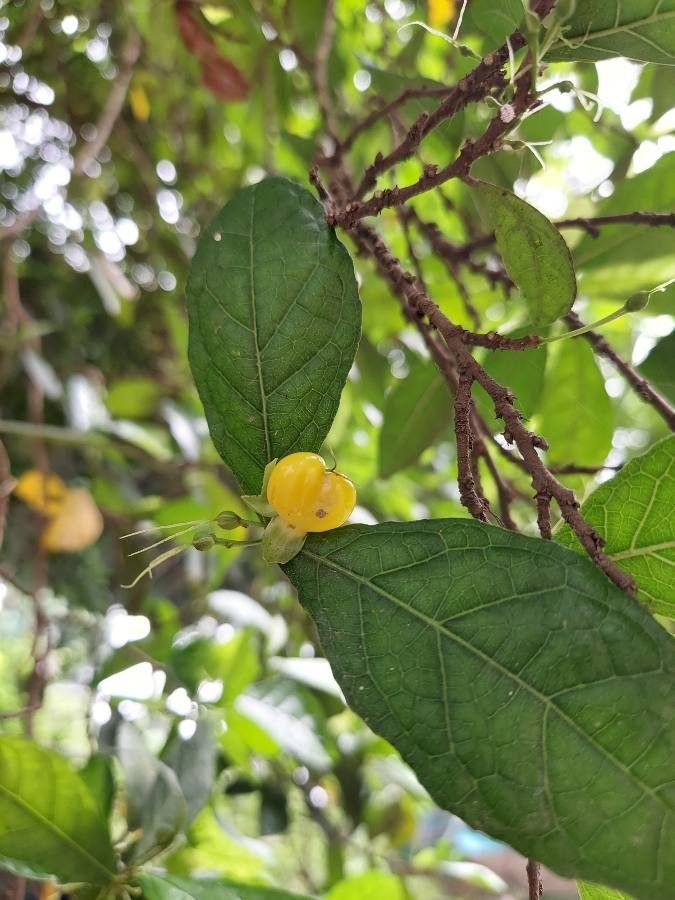
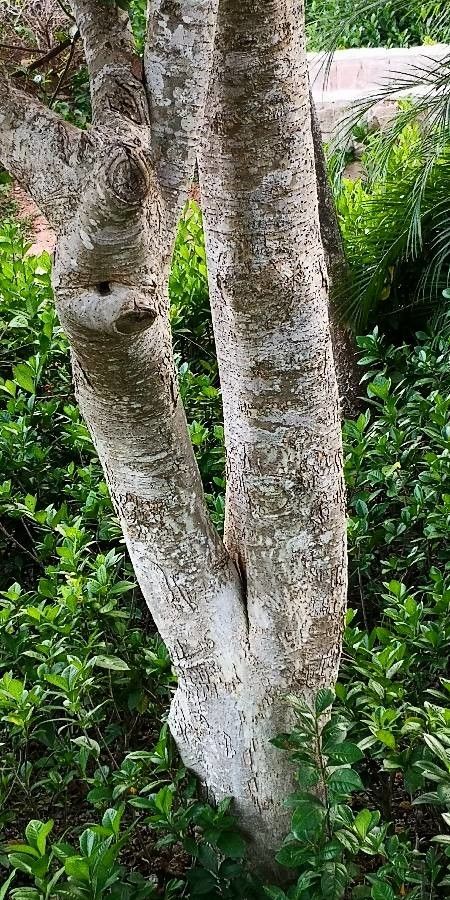
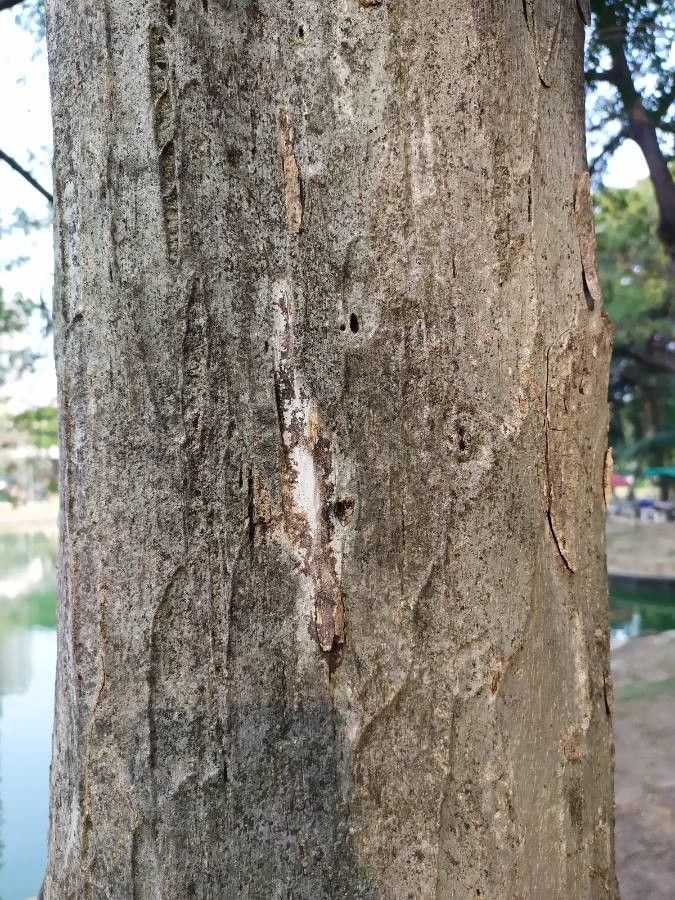
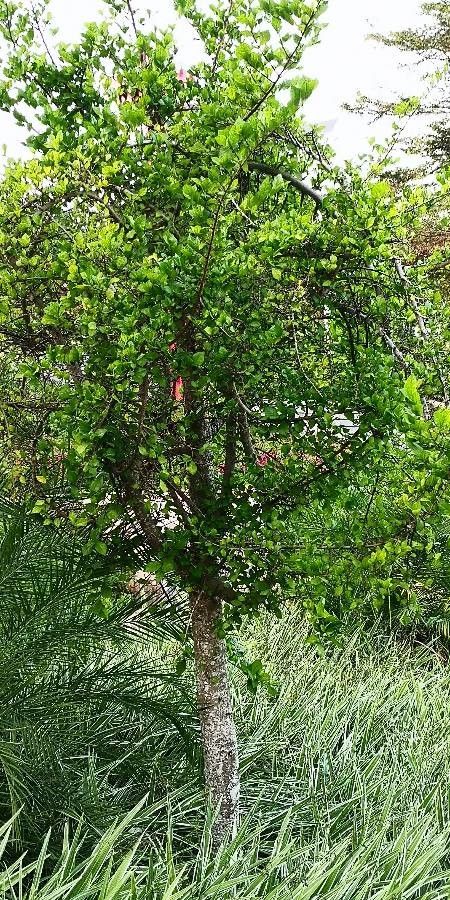
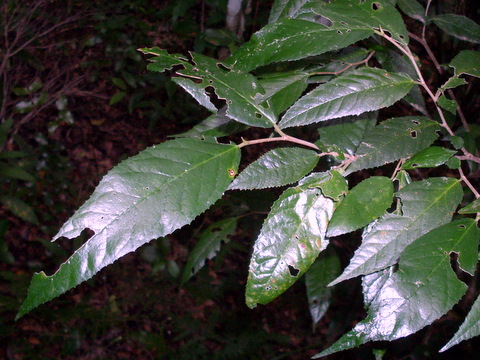
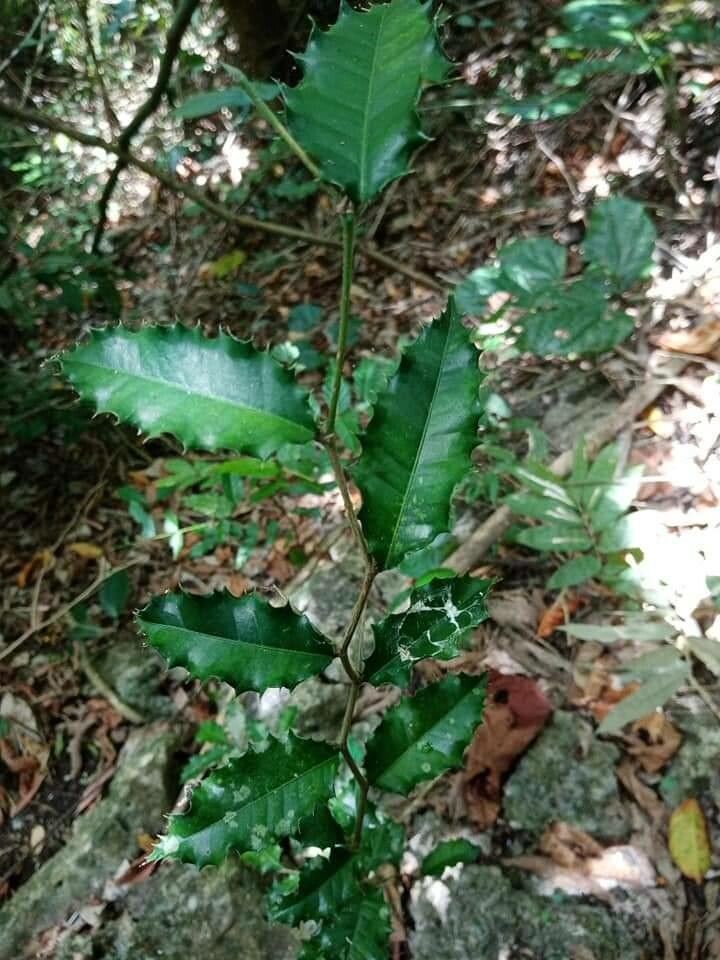
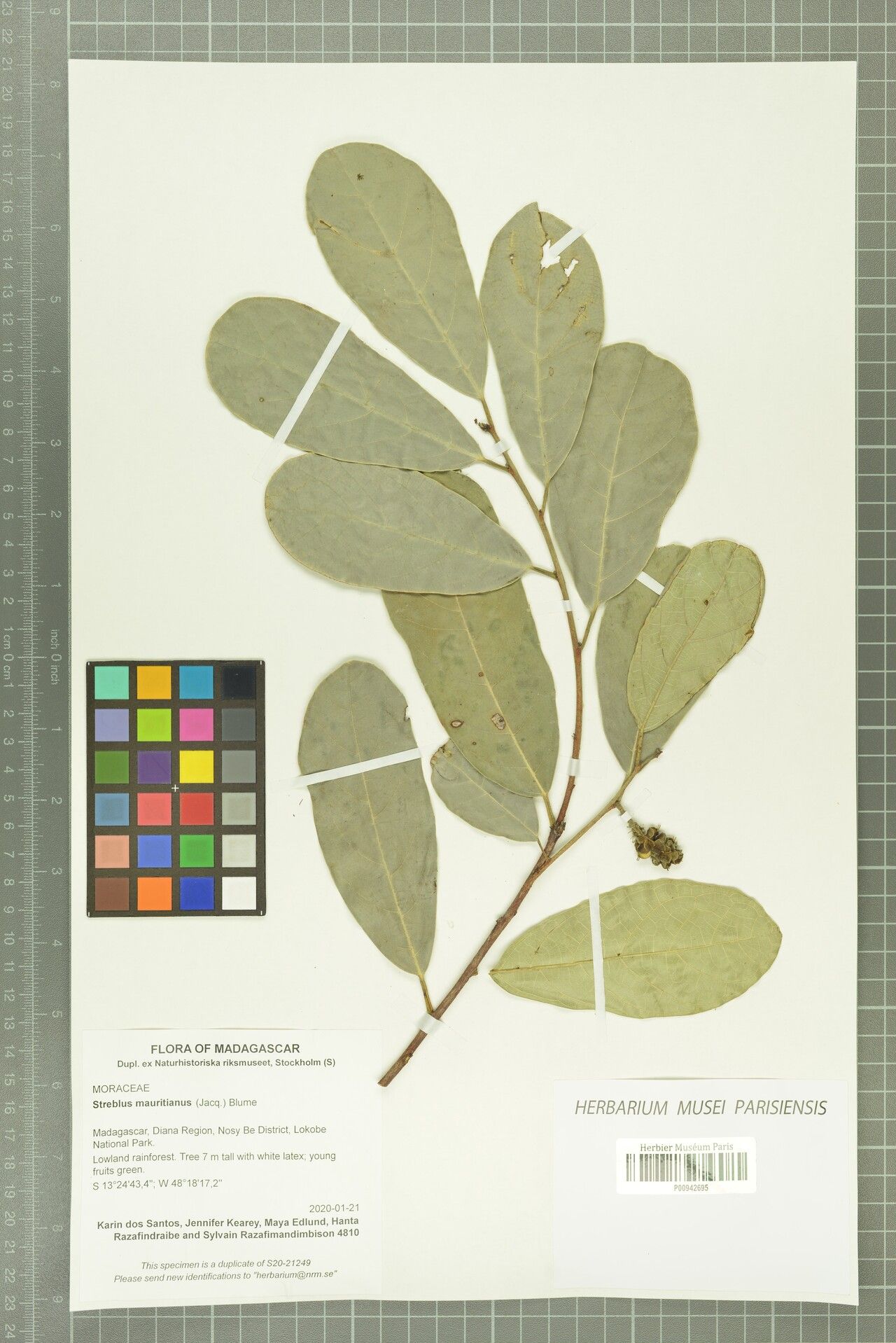
Streblus asper is a small to medium-sized tree that belongs to the Moraceae family. It is commonly found in tropical and subtropical regions of Asia, Africa, and Australia. The tree has a straight trunk with grayish-brown bark that peels off in flakes. Its leaves are simple, alternate, and ovate with serrated margins.
The plant produces small, greenish-yellow flowers arranged in clusters on the axils of the leaves. The fruit is an edible drupe that changes from green to yellow when ripe.
Streblus asper is known for its various medicinal properties and has been traditionally used to treat ailments such as diarrhea, dysentery, fever, coughs, and colds. It also possesses anti-inflammatory properties, making it useful for treating arthritis.
The wood of Streblus asper is hardy, making it valuable for producing furniture, tool handles, or walking sticks.
Overall, Streblus asper holds significant medicinal and economic importance due to its versatile uses, making it an essential plant species from an ecological perspective as well!
The Siamese rough bush demonstrates strong resistance to disease and is generally not susceptible to illnesses. In terms of care, the plant is fairly low-maintenance. When grown outdoors it needs only minimal watering, and larger specimens typically do not require pruning. Smaller plants, however, should be pruned after they finish blooming. The Siamese rough bush is well suited for anyone with an outdoor area, such as a garden or a deck, and does not demand extensive gardening experience.
How to keep Streblus Asper.
Light
Siamese rough bush flourishes under plentiful light comparable to the high intensity provided by the sun. This preference comes from its native habitats, where light is abundant. However, excessive exposure to very intense light can damage the plant's structure and inhibit its growth.
Water
The Siamese rough bush thrives in tropical, humid environments and has moderate tolerance to drought. It should be watered every 1-2 weeks to ensure a balance between hydration and drainage. When grown outdoors in warm climates, using mulch can help retain moisture during hot weather, as the plant's growth is closely linked to water availability.
Temperature
Siamese rough bush comes from tropical areas, where the climate is usually warm and humid. Therefore, it is well adapted to high temperatures and humidity. It does not like sudden temperature shifts and prefers a steady temperature environment, so it's important to avoid temperature fluctuations indoors. It typically cannot tolerate cold temperatures and needs higher temperatures to grow. If the ambient temperature falls too low, the plant may stop growing or even die.
Fertilizer
Fertilization is essential for caring for the Siamese rough bush. Regular feeding during the growing season helps maintain the energy needed for its showy leaves and supports overall growth. Failing to fertilize can lead to unhealthy leaves, reduced ornamental appeal, and stunted or weak growth that is prone to breakage.
Pruning
The Siamese rough bush is a hardy plant known for its rough bark and dense foliage. To keep it healthy, prune the plant from early to late winter by removing dead branches and thinning out crowded areas to improve air circulation. Timely pruning helps the plant resist diseases, encourages healthier growth, and preserves its natural shape.
Pot & Repot
When repotting Siamese rough bush, select a pot 1–2 inches (2.5–5.1 cm) larger with good drainage. Use a well-draining potting mix. Repot in spring or fall, making sure the root ball is slightly lower than the rim of the flower pot. Water thoroughly after repotting and put it in a warm location with indirect sunlight.
Botanical profile.
- Plant Type
- Tree, Shrub
- Life Cycle
- Perennial
- Genus
- Streblus
- Family
- Moraceae
- Hardiness Zone
- 10-12
- Mature Height
- 3.96 m to 10.06 m
- Mature Spread
- 30 cm
- Leaf Color
- Dark Green, Forest Green
- Leaf Type
- Evergreen
- Flower Color
- Yellow, Green
- Flower Size
- 0.51 cm to 0.76 cm
- Bloom Time
- Late spring, Early summer, Mid summer
- Planting Time
- Spring, Autumn
- Harvest Time
- Mid summer
- Native Area
- Nepal, Sri Lanka, India, Malaysia, Indonesia, Cambodia, Vietnam, Myanmar, Philippines, Bhutan, Bangladesh, Laos, Thailand, China
Other names.
Reader questions.
What are the sunlight requirements for Siamese rough bush?
The Siamese rough bush requires above 6 hours of sunlight to thrive, as it prefers abundant light similar to its original growing habitats. Observing how sunlight moves through your garden is crucial for picking spots that provide the right balance of light and shade, ensuring the plant's happiness and healthy growth.
What is the Siamese rough bush?
The Siamese rough bush, known botanically as Streblus asper, is a plant species recognized for its unique characteristics. Unfortunately, further details on its essentials or symptoms were not provided.
How essential is sunlight for the growth of Siamese rough bush?
Sunlight is essential for the Siamese rough bush, with its growth and health heavily dependent on exposure to light equivalent to the high intensity given by the sun. However, too much direct sunlight can damage the plant. When natural sunlight is insufficient, especially in winter or less sunny spaces, artificial lighting can be a vital solution for indoor plants, with LED lights being a popular choice due to their customizable wavelengths. Appropriate artificial lighting should be 30-50W/sq ft for full sun plants, 20-30W/sq ft for partial sun plants, and 10-20W/sq ft for full shade plants. The light source should be placed 12-36 inches above the plant, for 8-12 hours per day to mimic natural daylight hours.
What are the symptoms of light deficiency or overexposure in Siamese rough bush?
Symptoms of light deficiency in Siamese rough bush include smaller new leaves, leggy or sparse growth, faster leaf drop, slower or no new growth, and lighter-colored new leaves. Excessive sunlight can cause chlorosis, sunscald, leaf curling, wilting, and leaf scorching. These symptoms reflect the plant's struggle with inadequate or excessive light, manifesting in growth issues and physical damage to the plant tissue.
How can I manage light exposure for Siamese rough bush indoors and outdoors?
To manage light exposure for Siamese rough bush, gradually increase sunlight exposure to at least 6 hours daily, utilizing south-facing windows for indoor plants and moving plants to sunnier outdoor locations weekly to avoid sunburn. If natural light is insufficient or the plant isn't easily movable, use artificial light sources such as desk lamps or professional grow lights for at least 8 hours daily. Minimize obstructions like trees that block sunlight by pruning, and consider transplanting smaller plants to sunnier locations with ample sunlight and good drainage during their dormant period, usually late winter or early spring. Note that parts of the plant affected by insufficient sunlight may not recover, but new growth should be healthy with increased light exposure.