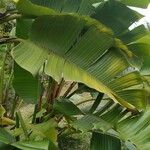
Strelitzia nicolai
White Bird of Paradise · Giant Bird of Paradise · Bird-of-paradise -tree · Bird-of-paradise tree · White bird-of-paradise
Description
Source: leafsnapStrelitzia nicolai, commonly known as the giant white bird of paradise or wild banana, is a tropical plant native to South Africa. It belongs to the Strelitziaceae family and is closely related to the more familiar Strelitzia reginae, also known as the bird of paradise plant. The giant white bird of paradise can grow up to 30 feet tall and features large, paddle-shaped leaves that can reach up to 10 feet in length. These glossy green leaves have a waxy texture and are arranged alternately along the stem. During its blooming season from late winter through early summer, the plant produces large clusters of white flowers that resemble birds' heads with orange beaks. These flowers are followed by green fruit capsules that turn brown as they mature. Strelitzia nicolai prefers full sun but can tolerate partial shade, and it requires well-draining soil with regular watering during its growing season. It is often used as an ornamental plant in tropical gardens or as an indoor potted plant due to its striking foliage and unique flowers. Overall, Strelitzia nicolai is a stunning tropical plant that adds drama and interest to any landscape or indoor space it inhabits.
💡 Strelitzia nicolai attracts a variety of animals. The nectar from its flowers draws in sunbirds, particularly Olive Sunbirds and Grey Sunbirds. Additionally, Vervet and Samango monkeys enjoy feeding on the flowers and seeds of the Strelitzia nicolai.
🌳 Aside from its striking appearance, the wild banana has traits that can be useful in construction. Its strong, fibrous leaves could be incorporated into eco-friendly building materials, delivering both sustainability and durability. Although this use is not widespread at present, ongoing research into plant fibers for construction suggests the wild banana might become a practical resource in green architecture.
Care Guide
💧 Water Every 7 days
Wild bananas thrive in humid tropical environments with abundant rainfall. They require a balanced level of moisture, needing to be watered every 1-2 weeks. As evergreen plants best suited for outdoor growth, wild bananas benefit greatly from regions that experience consistent annual rainfall.
☀️ Light Full sun
Wild banana does best when exposed to large amounts of sunlight, matching its native habitats that are rich in light. It can also tolerate moderate sun, demonstrating its adaptability. Too much sun may stress the plant, causing leaf scorch or early wilting, while too little light can hinder its optimal growth and flowering.
What are the sunlight requirements for Wild Banana (Strelitzia nicolai)?
Wild Banana, or Strelitzia nicolai, thrives best under full sun conditions, requiring over 6 hours of direct sunlight daily. It can also adapt to partial sun, benefiting from about 3-6 hours of sunlight. However, it's crucial to observe how sunlight moves through your garden to find spots that provide the perfect balance for your plants. Too much exposure can stress the plant, leading to issues like leaf burn or premature wilting, while insufficient sunlight may hinder growth and flowering. For indoor conditions or less sunny spaces, artificial lighting can compensate for natural light deficiencies, supporting optimal growth. Recommended artificial light intensity varies by plant needs: 30-50W/sq ft for full sun plants, 20-30W/sq ft for partial sun plants, and 10-20W/sq ft for full shade plants.
What are important symptoms of incorrect sunlight exposure in Wild Banana?
Wild Banana may exhibit several symptoms if it receives incorrect sunlight exposure. These include smaller new leaves, leggy or sparse growth, faster leaf drop, slower or no new growth, lighter-colored new leaves, chlorosis (leaves turning yellow), sunscald (pale, bleached areas on leaves or stems), leaf curling (a defense mechanism against excessive sunlight), wilting (loss of turgor pressure causing droopiness), and leaf scorching (brown, dry, and crispy leaf edges). These symptoms can arise from both too much and too little sunlight, indicating the plant's struggle to adapt to its light environment.
How should I care for a Wild Banana plant with symptoms of improper lighting?
To care for a Wild Banana with symptoms of improper lighting, gradually adjust the plant to the desired light conditions. For indoor plants, this means moving them closer to a windowsill that receives at least 6 hours of direct sunlight daily or supplementing with artificial light for 8 hours a day. Outdoor plants should be similarly transitioned to a sunnier spot each week to prevent shock. Minimize light obstructions by pruning nearby foliage if outside and consider transplanting smaller plants to more suitable locations during their dormant periods. Note that damaged parts may not recover, but new growth will be healthier with proper light exposure.
🌡️ Temperature 20–37.8°C
Wild banana is native to temperate regions and prefers temperatures from 59 to 95 °F (15 to 35 ℃). In colder months, indoor heating may be required to maintain this range. During hotter periods, adjustments should be made to prevent overheating.
What are the essential care instructions for Wild Banana?
Wild Banana, botanically known as Strelitzia Nicolai, is native to temperate regions and flourishes within a temperature range of 59 to 95 °F (15 to 35 °C). To ensure its well-being, it's crucial to maintain this temperature range, especially during colder seasons, by possibly using indoor heating. Similarly, during hotter periods, measures should be taken to avoid overheating. Wild Banana possesses some degree of cold tolerance, managing well above -5°C without needing special protection. However, when temperatures are forecasted to drop below -5°C, temporary protective measures like wrapping the plant in plastic film, fabric, or other insulating materials are recommended until warmer temperatures resume.
How does Wild Banana react to low temperatures, and what solutions are recommended?
Wild Banana has a moderate level of tolerance to low temperatures, thriving best above 15°C and generally staying resilient down to -5°C. If temperatures fall below -10°C, its leaves may droop; while they can recover after mild exposure, severe cold may cause leaves to wilt and drop. To mitigate frost damage, trimming off frost-affected parts and wrapping the plant with non-woven fabric or cloth, and setting up a wind barrier for protection against cold winds are effective solutions.
What should be done if a Wild Banana experiences high temperatures?
During the hotter summer months, it's important to keep the Wild Banana below 35°C to prevent stress. Exposure to temperatures above 41°C can lead to leaf discoloration, dry and withered leaf tips, curling of the leaves, and increased susceptibility to sunburn. To help the plant cope, remove any sunburned or dried parts, relocate it to a shaded area away from the harsh midday and afternoon sun, or use a shade cloth. Additionally, watering the plant in the morning and evening will help keep the soil moist and reduce heat stress.
💨 Humidity high (>60%)
This plant needs special care because it loves high humidity levels of 60-80% or more. The best way to achieve this is by placing a humidifier near the plant. Daily misting is also essential! Make sure the room has good ventilation.
🪴 Soil 6-7
🌱 Fertilizer
The best time to fertilize a Wild banana is in early spring, when it comes out of dormancy. This supports overall growth and the development of flowers. Fertilization improves the foliage, stems, and branches, and encourages flowers that are large, vibrant, and long-lasting. It also helps move nutrients from the roots to the flowers and enhances the plant’s health and resistance to disease.
🪴 Pot & Repot 2-3 years
Repot your wild banana every 2-3 years during the spring, using a pot that is 1-2 sizes larger than the previous one. After repotting, place the plant in indirect light and water it consistently. Be patient, as the wild banana needs time to adjust and thrive in its new environment.
✂️ Pruning
The wild banana plant features large, banana-like leaves and striking white and blue flowers. To maintain its size and remove any damaged leaves, it is best to prune in early spring or late winter. Use sharp tools to minimize the risk of disease. Keep in mind that the wild banana is a slow-growing plant, so avoid heavy pruning. For detailed instructions on pruning techniques, refer to horticultural guides.
🌿 Propagating
🐛 Diseases & pets
☠️ Toxicity
Bird of paradise can be potentially poisonous to humans and pets. This plant's leaves, stems, flowers, and seeds contain harmful substances that can result in various reactions when ingested. Toxicity symptoms include diarrhea, vomiting, dizziness, and drowsiness among others,
Characteristics
- Plant Type
- Herb
- Life Cycle
- Perennial
- Genus
- Strelitzia
- Family
- Strelitziaceae
- Hardiness Zone
- 8-10
- Mature Height
- 6.1 m
- Mature Spread
- 3.35 m
- Leaf Color
- Green, Silver
- Leaf Type
- Evergreen
- Flower Color
- White, Blue, Black, Purple
- Flower Size
- 45.72 cm
- Bloom Time
- All year round
- Planting Time
- Spring, Summer, Autumn
- Harvest Time
- All year round
- Native Area
- South Africa, Mozambique, Botswana, Zimbabwe