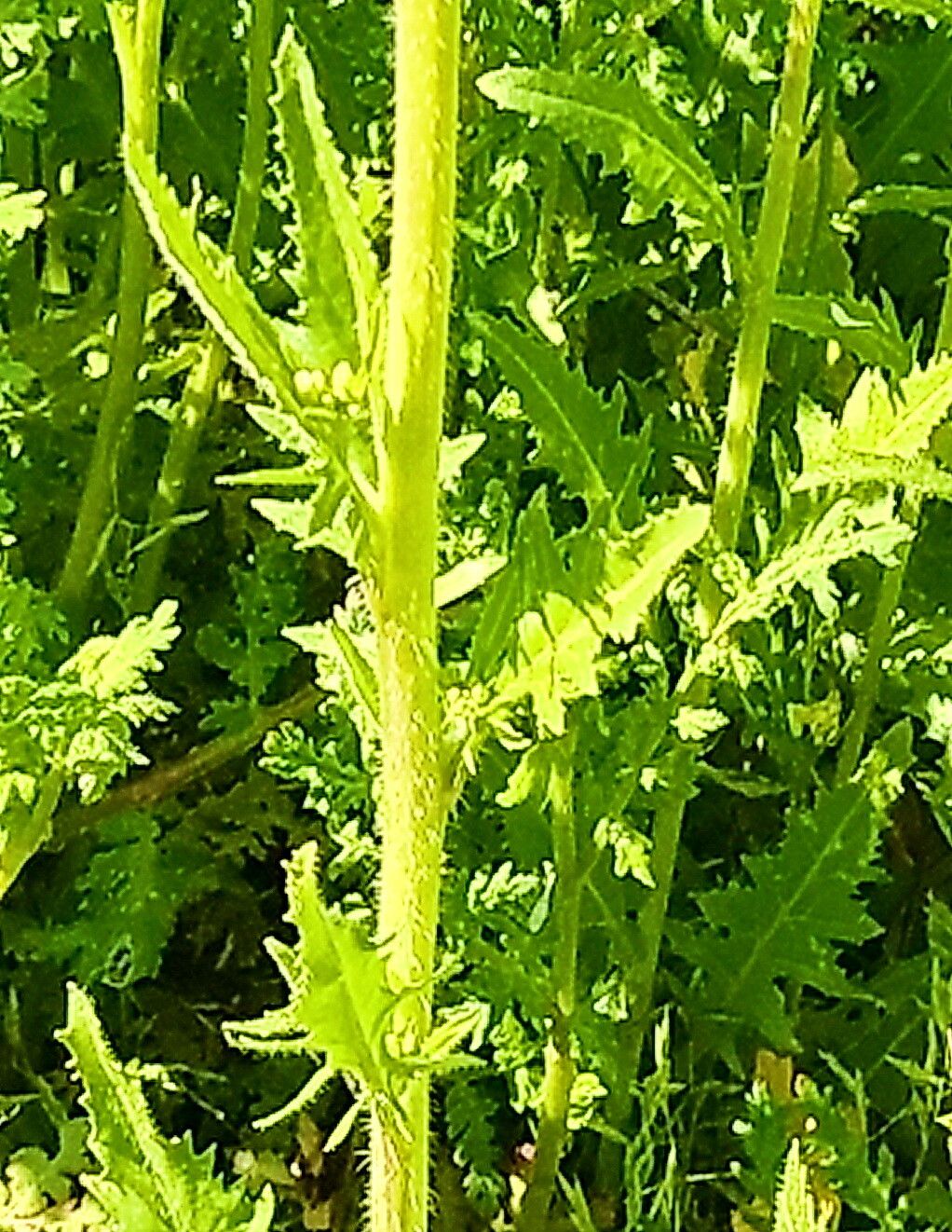
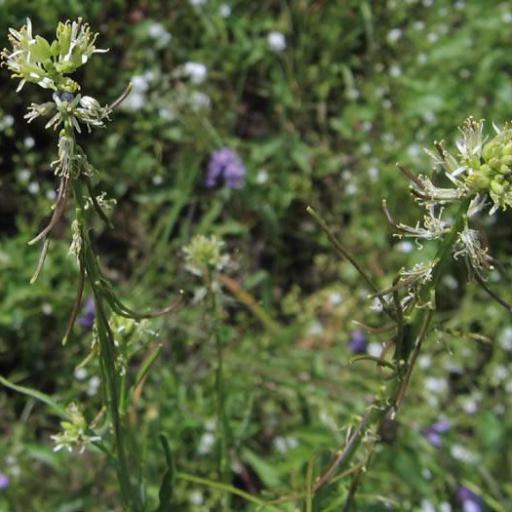
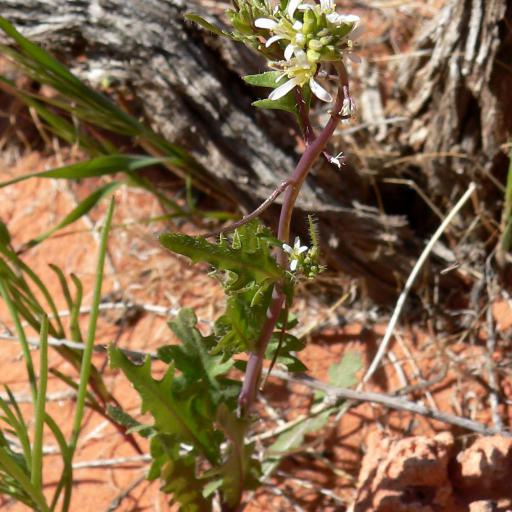
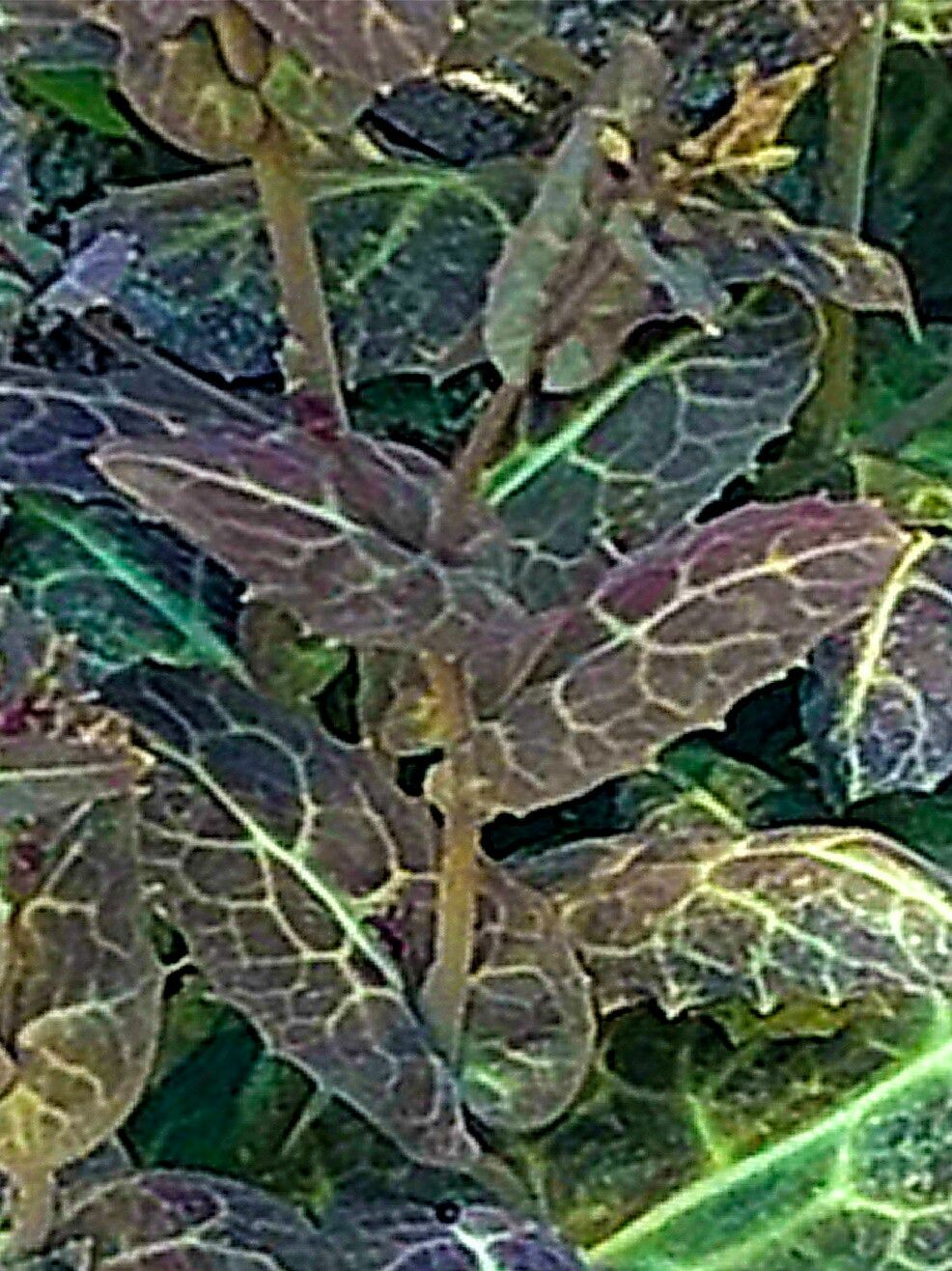
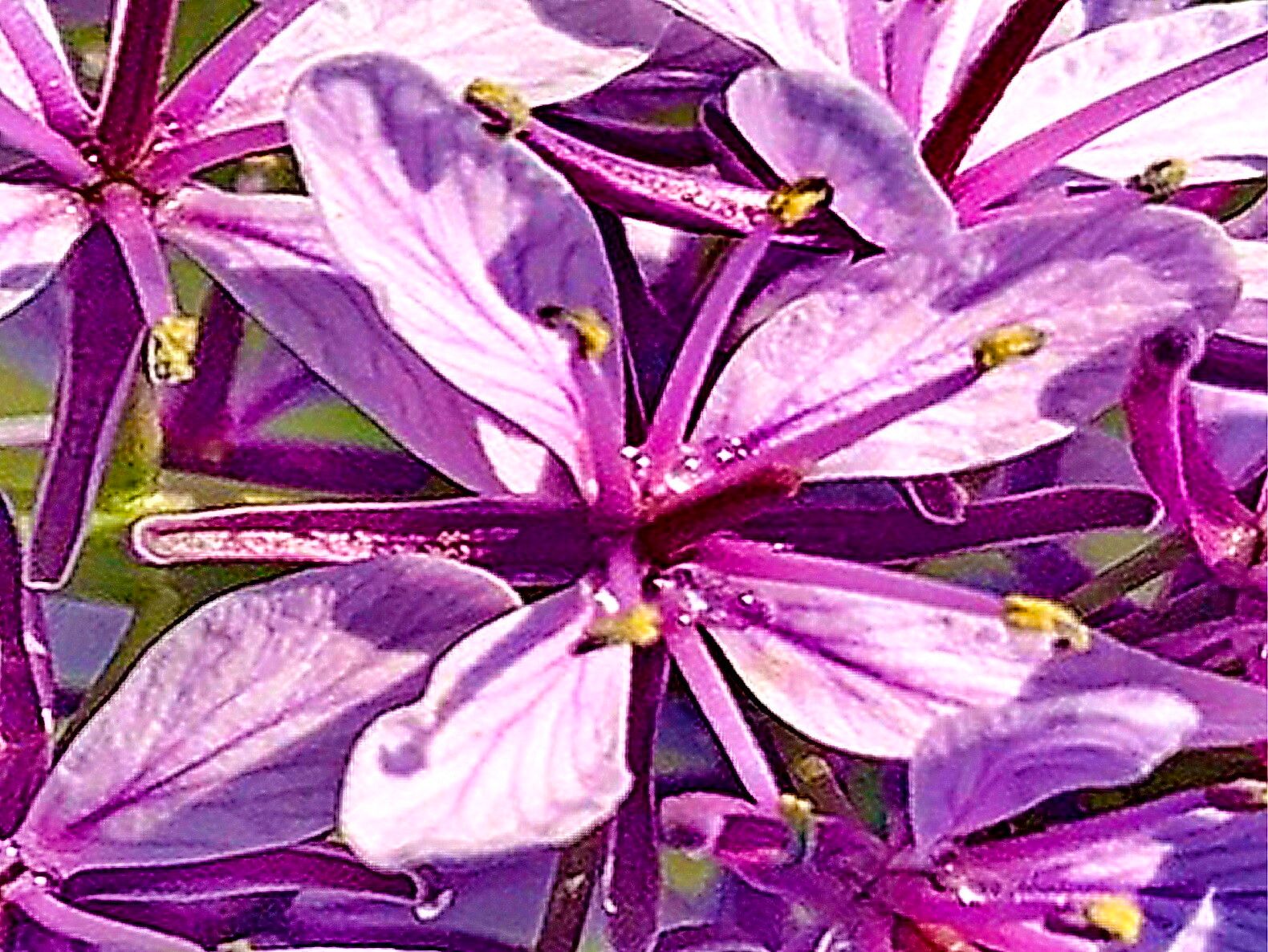
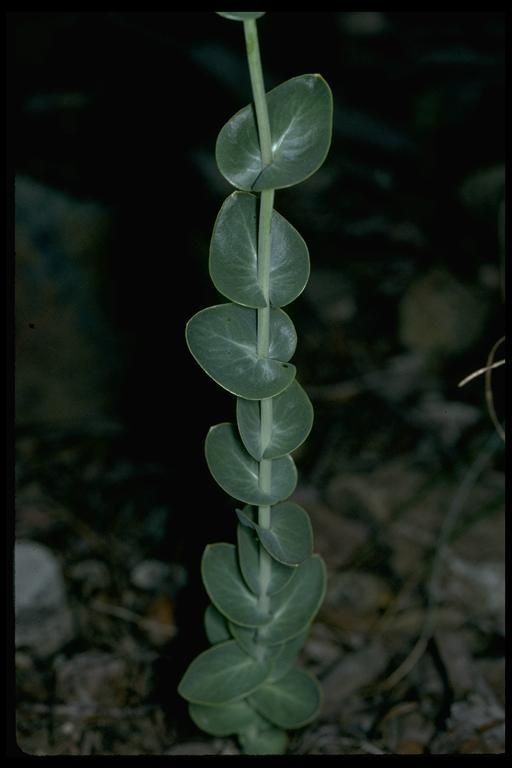
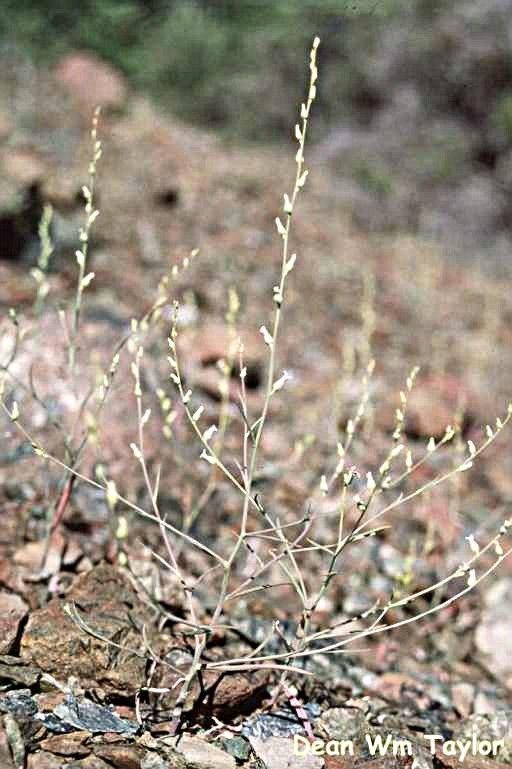
Streptanthus lasiophyllus, many synonyms including Guillenia lasiophylla, is a species of mustard plant known by the common names California mustard and slenderpod jewelflower. It is native to western North America from British Columbia to northern Mexico. It can be found in a variety of habitats such as desert flats, gravelly areas, limestone rocks, talus slopes, sandy banks, and grassy fields. This is a thin-stemmed erect annual herb with long lobed, toothed leaves surrounding the base of the plant and smaller leaves lining the stem. The top of the plant is occupied by an inflorescence of flowers, each with widely spaced oval-shaped white or yellowish petals half a centimeter long. The fruit is a flat, narrow silique up to 7 centimeters long which hangs downward from the stem. Flowers bloom March to June.
California mustard has good resistance to disease and is generally not prone to illnesses. However, it can be vulnerable to pests and diseases present in its environment. These infections are typically mild. This plant requires moderate maintenance. It should be pruned regularly to keep a neat appearance and support healthy growth. Fertilizing can also help encourage flowering. California mustard is appropriate for anyone with outdoor space, such as a garden or patio, and does not demand extensive care experience. It may need extra attention if grown indoors.
How to keep Streptanthus Lasiophyllus.
Light
California mustard comes from bright, open habitats and grows best in full sun. It can tolerate partial sun but favors direct sunlight for optimal growth. As an annual or biennial, the plant is recognized for its sun-loving nature.
Temperature
California mustard can tolerate a wide range of temperatures, but its range may still be constrained by different combinations of moisture and heat. It grows best in warm summers with adequate rainfall or irrigation. Long stretches of cloudy, wet weather or extended high temperatures make the plant more likely to die. In winter, shielding it from cold can improve its chances of survival.
Fertilizer
California mustard benefits from regular, light applications of fertilizer to encourage healthy leaf development. Fertilize California mustard about once a month during the summer. Nitrogen is important for foliage, and providing nitrogen-rich sources helps California mustard thrive.
Botanical profile.
- Plant Type
- Herb
- Life Cycle
- Annual
- Genus
- Streptanthus
- Family
- Brassicaceae
- Hardiness Zone
- 7-10
- Mature Height
- 0.08 m to 1.52 m
- Mature Spread
- 15 cm to 30 cm
- Leaf Color
- Green, Dark Green
- Leaf Type
- Deciduous
- Flower Color
- White
- Flower Size
- 1.02 cm
- Bloom Time
- Early spring, Mid spring
- Planting Time
- Spring
- Harvest Time
- Late spring, Early summer