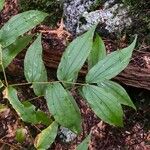
Streptopus lanceolatus
Twistedstalk · Rose Twisted-stalk · Rose Mandarin · Rosy Twisted-stalk · Sessile-leaved Twisted-stalk
Description
Source: leafsnapStreptopus lanceolatus, commonly known as twistedstalk or lance-leaved twistedstalk, is a herbaceous perennial plant in the family Liliaceae. Native to North America, it thrives in moist forests and shaded areas, particularly in the Pacific Northwest region of the United States and Canada. The plant can grow up to 60 cm tall, featuring a slender stem with alternate leaves. These leaves are lance-shaped with pointed tips, measuring up to 15 cm in length and 5 cm in width. Small greenish-white flowers dangle from short stalks located beneath the leaves. By late summer or early fall, Streptopus lanceolatus produces bright red berries. Although these berries are edible, they are not commonly consumed by humans due to their small size. Indigenous peoples have utilized Streptopus lanceolatus for medicinal purposes for centuries. The roots served as an antiseptic for treating wounds, and tea made from the roots was used as a diuretic and laxative. In modern times, Streptopus lanceolatus has become popular among gardeners for its attractive foliage and unique flowers. It prefers moist soil but can tolerate some drought once established. Overall, Streptopus lanceolatus is an intriguing plant with both medicinal properties and ornamental value, making it a great addition to both indoor and outdoor gardens.
🎭 Love, Psychic Abilities, Healing
Care Guide
💧 Water Every 7 days
Twistedstalk thrives in moist woodland settings, preferring soil that remains consistently damp. While it can tolerate some drought, it should be watered weekly for the best results. As an understory plant, twistedstalk benefits from higher humidity levels, making it ideal for indoor growth in dappled light to ensure optimal health.
How should I water my Twistedstalk plant?
To ensure the health of the Twistedstalk plant, it is recommended to use filtered water at room temperature. Tap water may contain harmful particles that can negatively affect the plant. It is important to avoid using cold water as the Twistedstalk is accustomed to warmer environments and cold water may shock its system. Additionally, overhead watering should be avoided as it can cause problems with the foliage. Instead, it is advisable to directly apply the filtered room temperature water to the soil until it is completely soaked. This ensures that the roots are well-moistened and able to spread through the soil to collect necessary nutrients for the plant's growth.
What should I do if I give my Twistedstalk plant too much water or too little water?
Overwatering is a more common issue for Twistedstalk plants, and it can cause wilting, yellowing of the stems and leaves, and even diseases like root rot, mold, and mildew that can be fatal for the plants. However, underwatering is less common but still possible. In such cases, you may notice that the leaves become brittle and brown. It's important to be attentive to the signs of overwatering and take action promptly. If you notice these signs, reduce your watering schedule immediately and check the soil quality. If the soil doesn't drain well, replace it with a loose and well-draining potting mix. On the other hand, if you notice signs of underwatering, increase your watering frequency until the signs disappear.
How frequently should I water my Twistedstalk?
If your Twistedstalk plant is in a pot, you can determine if it needs water by checking the soil. Stick your finger into the soil and if the top two to three inches are dry, it's time to water. The same method can be used if you have your Twistedstalk planted outdoors in the ground. If the soil's top few inches become dry, it's time to water. Typically, you'll need to water this plant about once a week during spring and early fall. In extremely hot weather, you may need to water it twice a week or more. However, mature and well-established Twistedstalk plants have the ability to endure droughts.
How much water does my plant, the Twistedstalk, need?
To ensure your Twistedstalk plant stays properly hydrated, don't hold back on the amount of water you give it. Wait until the top two to three inches of soil are dry, then give it a good, deep watering. Make sure to soak the soil completely, allowing excess water to drain out through the pot's drainage holes. If you don't see any excess water draining, you may not have given enough water. However, be careful not to let water accumulate in the soil, as this can be harmful to the plant. Similarly, if water doesn't drain well, it's a sign of poorly-draining soil, which is not good for the plant's health. If the plant is outdoors, about 1 inch of rainfall per week should be enough.
How do I water my Twistedstalk at different stages of growth?
The water requirements of the Twistedstalk can vary depending on its growth stages. When the plant is in its first few years or has recently been transplanted, it will need more water than usual. This is because during these stages, the Twistedstalk focuses its energy on developing new roots, which require additional moisture for optimal growth. As the plant matures, its water needs decrease. Another growth stage that may require increased watering is during the bloom period, as the development of flowers utilizes a significant amount of moisture. Therefore, it may be necessary to provide more water to the Twistedstalk during this time.
☀️ Light Partial sun
Twistedstalk does best in spots that receive a moderate amount of sunlight. While it can tolerate a lack of light, the plant performs better when provided with adequate filtered sunlight. Excessive or insufficient light can negatively affect twistedstalk's overall wellbeing and growth.
What are the sunlight requirements for Twistedstalk?
Twistedstalk, or Streptopus lanceolatus, requires a moderate amount of sunlight to thrive. While it can survive in full shade with less than 3 hours of sunlight, it develops better with about 3-6 hours of partial sun. It's important to observe the movement of sunlight through your garden to find the ideal spot that balances light and shade, ensuring the plant's wellbeing. When natural light is insufficient, especially indoors or during winter, artificial lighting can be a valuable solution. LED lights, with specific wattages based on the plant's sunlight needs, should be placed 12-36 inches above the plant and turned on for 8-12 hours per day to mimic natural sunlight conditions.
Are there any symptoms of improper light exposure in Twistedstalk?
Yes, Twistedstalk can exhibit several symptoms when it receives improper light exposure. In low light, the plant might develop smaller leaves, experience leggy or sparse growth, have faster leaf drop, and show slower or no new growth. Leaves might become lighter-colored or show signs of chlorosis, indicating a lack of chlorophyll and essential nutrients. Sunscald, leaf curling, wilting, and leaf scorching can occur due to excessive sunlight, affecting the plant's health and its ability to carry out photosynthesis efficiently.
What are the solutions for light-related issues in Twistedstalk?
To address light-related issues in Twistedstalk, gradual adaptation to changing light conditions is crucial. For indoor plants, consider shifting them to sunnier spots weekly until they receive 3-6 hours of direct sunlight daily or use artificial lighting, such as desk lamps or grow lights, for at least 8 hours daily. For outdoor plants, move them to sunnier locations gradually to avoid sunburn. Removing obstructions like branches that block sunlight can help, and for smaller plants, mindful transplanting during their dormant period ensures they receive enough sunlight and good drainage. Note that parts of the plant damaged by insufficient light may not recover, but new growth will be healthier after adjusting light exposure.
🌡️ Temperature 10–25°C
Twistedstalk comes from native habitats with moderate temperatures. It prefers temperatures between 50 and 77 °F (10 to 25 °C). In seasons with extreme temperatures, adjustments may be needed to ensure the plant's survival.
What are the ideal temperature conditions for Twistedstalk?
Twistedstalk thrives in moderate temperatures, favoring a range from 50 to 77 °F (10 to 25 °C). It is essential to adjust care during seasons with extreme temperatures to ensure the plant's well-being. Despite its high tolerance to cold, special attention should be given to ensure the soil is moist before the first freeze of autumn. This preparation helps prevent drought and water scarcity during the colder months.
How should Twistedstalk be cared for in very cold temperatures?
Twistedstalk has a remarkable tolerance to cold weather, capable of withstanding temperatures down to -25°C without needing extra frost protection. However, if temperatures fall below this threshold, adverse effects might not be immediately noticeable but could lead to decreased or even absent sprouting in spring. To mitigate this, any parts of the plant that have failed to sprout by spring should be removed.
What precautions should be taken for Twistedstalk in high temperatures?
Twistedstalk does not fare well in high temperatures, particularly when the mercury rises above 25°C. High temperatures halt its growth and increase its susceptibility to rot. To protect Twistedstalk in such conditions, trim any sunburned or dried parts, relocate the plant to a shaded area, or employ a shade cloth to shield it from the intense midday and afternoon sun. Ensure the soil remains moist by watering the plant during cooler times of the day, such as in the morning or evening.
💨 Humidity
🪴 Soil 5-7
🌱 Fertilizer
For Twistedstalk, the primary time to apply fertilizer is in early spring when flowers are forming. The appropriate fertilizer promotes better blooms and helps Twistedstalk produce attractive flowers. Fertilizing in early spring ensures excellent flowers throughout the season and supplies energy for dormant growth phases.
🪴 Pot & Repot
✂️ Pruning
Twistedstalk is characterized by its delicate, arching stems and bell-shaped flowers. For best results, prune the plant from early to late spring to remove any dead stems and to shape it. Be careful not to prune too heavily, as this can discourage flowering. Regular pruning helps improve air circulation, reduce disease risk, and promote healthy growth and vibrant blooms.
🌿 Propagating
🐛 Diseases & pets
☠️ Toxicity
Characteristics
- Plant Type
- Herb
- Life Cycle
- Perennial
- Genus
- Streptopus
- Family
- Liliaceae
- Hardiness Zone
- 6
- Mature Height
- 15 cm to 30 cm
- Mature Spread
- 15 cm to 30 cm
- Leaf Color
- Green, Blue
- Leaf Type
- Deciduous
- Flower Color
- Purple, Red, White, Pink
- Flower Size
- 2.54 cm
- Bloom Time
- Mid spring, Late spring
- Planting Time
- Spring
- Harvest Time
- Mid summer, Late summer, Early fall