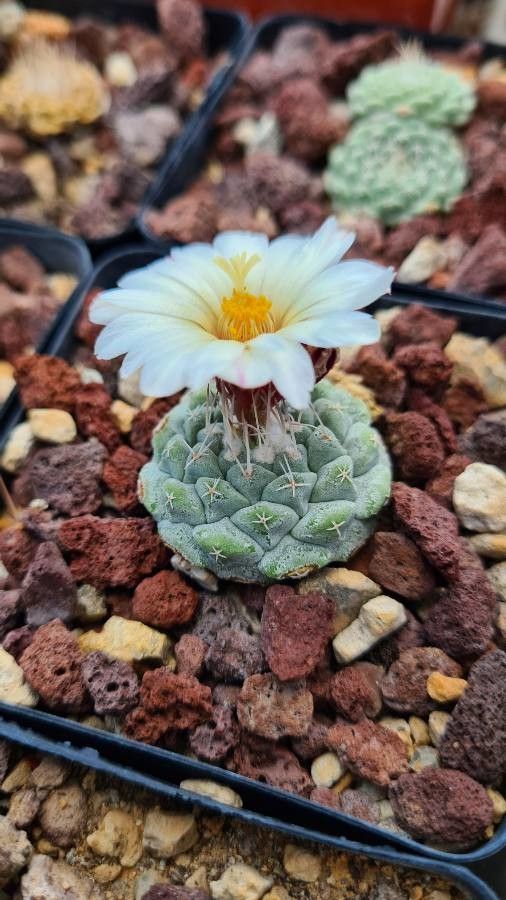
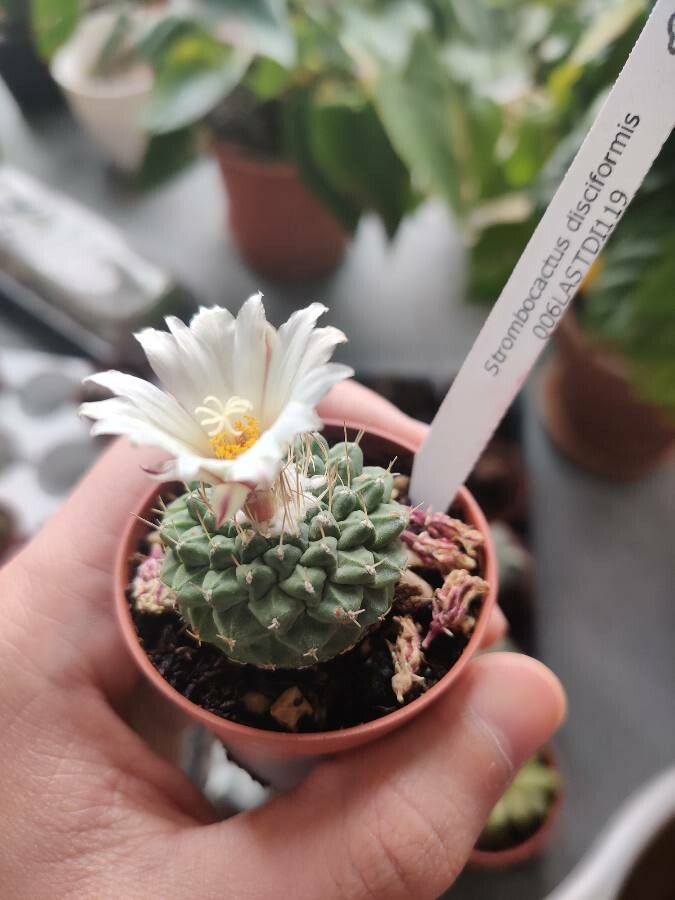
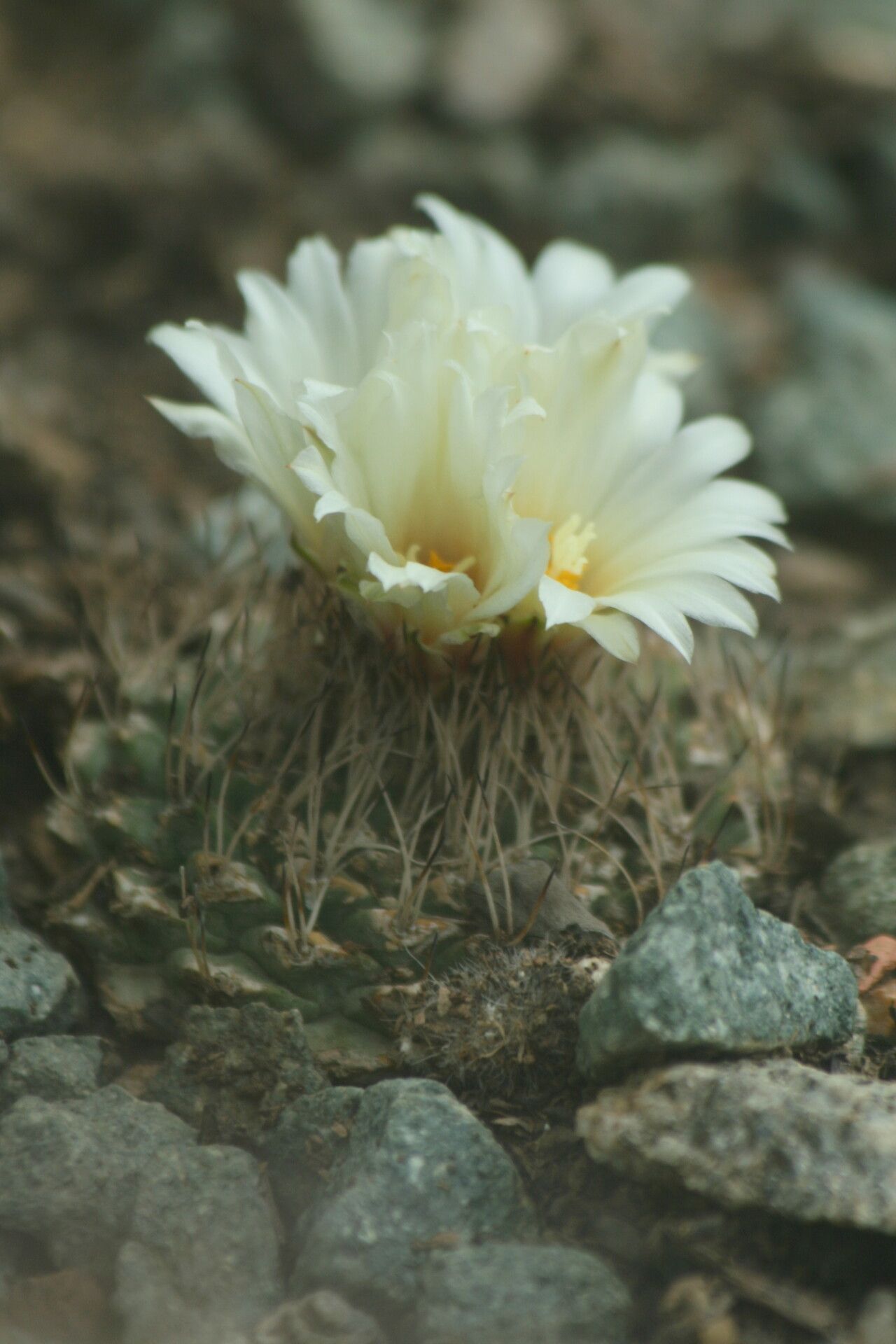
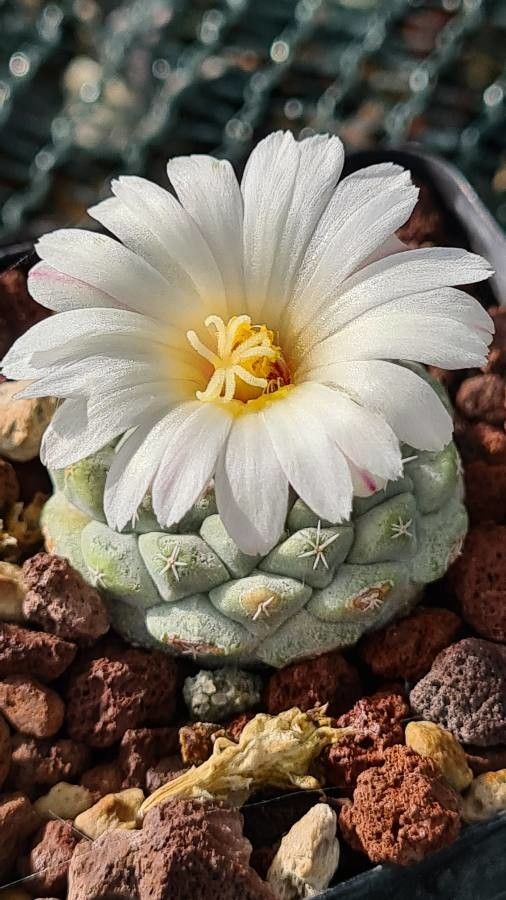
Strombocactus disciformis, commonly known as the disc cactus or button cactus, is a small and slow-growing cactus species native to Mexico. This plant belongs to the Cactaceae family and features a distinct flattened, round shape, growing up to 10 cm in diameter. Its bluish-green color is complemented by prominent ribs covered in small spines.
The disc cactus showcases beautiful pink or yellow funnel-shaped flowers that bloom from late spring through summer, reaching up to 3 cm in diameter.
For optimal growth, Strombocactus disciformis prefers well-draining soil with low moisture content and requires bright sunlight. It is well-suited for indoor cultivation since it does not demand frequent watering or fertilization.
Unfortunately, this species has been classified as endangered due to habitat loss driven by human activities such as agriculture, urbanization, and mining. Conservation efforts by various organizations are ongoing to preserve this unique cactus species from extinction.
Top cactus has good resistance to disease and tolerates normal care without becoming sick easily. However, it may be vulnerable to mealybugs; these pests can cause some damage but are typically not a serious threat. Concerning care, Top cactus is drought tolerant and does not require frequent watering. It can endure long stretches without irrigation and needs little fertilizer. Nevertheless, it is highly susceptible to root rot if lighting is poor and it is overwatered. Overall, Top cactus is appropriate for people who want to spend less time tending their plants, though it is important to know and meet its basic needs. It is especially well suited to those who are often away for long periods and might forget to water regularly.
How to keep Strombocactus Disciformis.
Light
The top cactus tends to prefer environments that are continuously exposed. Its native habitat shows this trait, promoting its healthy development. Across various stages of growth, uniform light exposure remains constant. Excessive or insufficient sunlight can jeopardize the plant's well-being, causing stress or hindering growth.
Water
The Top cactus thrives in arid climates thanks to its exceptional ability to tolerate drought. It requires watering only once every two weeks, making it an excellent choice for xeriscaping or rock gardens. Its efficient water uptake adaptation allows it to flourish in rocky areas where rainfall is scarce.
Temperature
Although Top cactus can tolerate some heat, it does best and grows during the cooler seasons and goes dormant in summer. In very hot summer conditions, give it shade to prevent scorching from intense sunlight. Watering should be reduced or stopped during the hottest part of the year to avoid root rot. Top cactus grows vigorously in winter and spring, and as long as temperatures do not fall too low, it will continue to grow steadily.
Fertilizer
For Top cactus, small amounts of fertilizer once or twice a year during the growing season are adequate. Do not fertilize in winter or summer when the plant is dormant. Use less fertilizer for recently repotted plants and wait a couple of months after repotting before applying fertilizer. Fertilizing supports healthy growth and encourages blooms.
Pruning
Cacti require very little pruning. Simply remove dead flowers and branches to allow the plant to direct nutrients towards healthy growth.
Pot & Repot
Repot Top cactus during spring or summer, selecting a pot slightly larger than the current one that has good drainage. Use a sandy or gritty cactus mix that drains well. Handle with care to avoid spikes. Let the cactus dry out before repotting to reduce the risk of root rot. After repotting, wait for a week before watering to give the roots time to heal.
Botanical profile.
- Plant Type
- Succulent
- Life Cycle
- Perennial
- Genus
- Strombocactus
- Family
- Cactaceae
- Hardiness Zone
- 9-11
- Mature Height
- 5 cm to 10 cm
- Mature Spread
- 5 cm to 8 cm
- Leaf Color
- Green Yellow, Dark Olive Green
- Leaf Type
- Evergreen
- Flower Color
- White, Yellow
- Flower Size
- 2.03 cm to 3.05 cm
- Bloom Time
- Mid spring, Late spring, Early summer
- Planting Time
- Spring, Summer
- Harvest Time
- Summer
Other names.
Reader questions.
What are the sunlight requirements for the Top cactus (Strombocactus disciformis)?
The Top cactus, known botanically as Strombocactus disciformis, requires more than 6 hours of sunlight daily to thrive, demonstrating a preference for continuously exposed environments akin to its natural habitat. This constant exposure to uniform light is crucial throughout different growth stages for healthy development. Insufficient or excessive sunlight can stress the plant, potentially compromising its well-being. It's beneficial to observe the sunlight movement through your garden to ensure a harmonious balance of light and shade, fostering the plant's happiness.
What are the essential care tips for a Top cactus?
The Top cactus, or Strombocactus disciformis, thrives in warm environments and requires high temperatures during the growing season to promote growth and metabolism. It benefits from ample sunlight, appropriate moisture levels, and good ventilation. This heat-loving plant gradually stops growing and enters a dormant state in winter. It's crucial to avoid excessively low temperatures and overwatering. When outdoor temperatures drop below 5°C, it's advisable to move the cactus indoors, preferably near a south-facing window for maximum sunlight. Supplemental lighting may be necessary if natural light is insufficient. Below 20°C, reduce or stop watering to prevent root rot. For outdoor plants, halt watering in low temperatures entirely, and consider using insulation methods, such as a temporary greenhouse or wrapping materials, during cold weather.
What should I do if natural sunlight is insufficient for my Top cactus?
When natural sunlight is insufficient, especially during winter or in less sunny spaces, artificial lighting becomes a critical solution for the Top cactus. It promotes faster, healthier growth by mimicking natural sunlight conditions. Opt for LED lights as they can be customized to provide specific wavelengths necessary for the plant. The requirement for artificial light varies: full sun plants need 30-50W/sq ft, partial sun plants require 20-30W/sq ft, and full shade plants need 10-20W/sq ft. The light source should be placed 12-36 inches above the plant, and adjusted to mimic natural daylight hours, usually between 8-12 hours per day.
How should I care for my Top cactus in low temperatures?
The Top cactus performs best in high temperatures and is not tolerant of low temperatures, thriving above 20°C and requiring temperatures to be kept above 5°C during winter. Exposure to temperatures below 1°C can weaken the plant, causing wilting and a higher risk of root rot. If the plant suffers mild frost damage, symptoms may not appear immediately, but the plant will progressively wither after a week. To mitigate frost damage, trim the frostbitten areas and check for root rot. If roots have rotted, they should be removed, and the plant can be propagated through cuttings. Move the plant to a warm environment indoors and place it near a south-facing window to ensure ample sunlight. If necessary, use supplemental lighting.
What are some symptoms of inadequate lighting in Top cacti?
Top cacti may exhibit several symptoms when exposed to suboptimal lighting conditions, including smaller new leaves, leggy or sparse growth, faster leaf drop, slower or ceased growth, lighter-colored new leaves, and a range of other issues such as chlorosis, sunscald, leaf curling, wilting, and leaf scorching. These symptoms indicate stress from either insufficient or excessive light, affecting the plant's ability to photosynthesize and maintain overall health.
What should I do if my Top cactus experiences high temperatures?
In the summer, it's important to keep the Top cactus below 41°C. Temperatures exceeding 45°C can halt the plant's growth, leading to water loss, wilting, and an increased risk of sunburn. To address these issues, remove sunburned and rotten parts of the plant. Protect the cactus from direct afternoon sunlight until it shows signs of recovery and new growth. Additionally, if the cactus suffers from root rot, water should be withheld until new roots develop.
How can I address inadequate sunlight exposure for Top cacti?
To combat inadequate sunlight exposure for Top cacti, gradually increase their light exposure to at least 6 hours of direct sunlight daily. For indoor plants, consider moving them to a south-facing window or using artificial light if they're not easily movable. Keep a lamp on for at least 8 hours a day or invest in professional grow lights. For outdoor plants, move them weekly to sunnier spots, avoiding sudden changes to prevent sunburn. If certain plants are in the ground and obstructed by elements like trees, consider pruning or transplanting during the dormant period for better sunlight access. Note that parts of the plant damaged by insufficient light might not recover, but new growth will be healthy with increased light exposure.