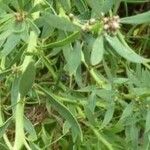
Stylosanthes guianensis
Stylo · Brazilian lucerne · Common stylo · Cook stylo · Fine stem stylo
Description
Source: leafsnapStylosanthes guianensis, the stylo, is a species of flowering plant in the family Fabaceae. It is native to the New World Tropics and Subtropics, and has been introduced to Puerto Rico, the Windward Islands, Trinidad and Tobago, most of Sub‑Saharan Africa, Madagascar, Mauritius, Réunion, Rodrigues, the Indian Subcontinent, Sri Lanka, Thailand, southeast China, Hainan, Taiwan, New Guinea, Queensland, New Caledonia, and the Cook Islands. An important forage and fodder species, its palatability to livestock increases as the plant matures, making it an unusual, and valuable, deferred feed. It has high genetic diversity between and among its named varieties.
Care Guide
💧 Water
Brazilian lucerne is native to tropical savannas, where it thrives in conditions of high humidity and periodic rainfall. For optimal moisture balance, it prefers to be watered weekly, although it can also tolerate short dry spells. The rainy season has a major impact on the growth cycle of Brazilian lucerne, leading to periods of vigorous growth and flowering.
☀️ Light Full sun
Brazilian lucerne is a sun-loving perennial herbaceous species native to open habitats, frequently growing in meadows and grasslands. It prefers full sun but can also tolerate partial sun.
What are the sunlight requirements for Brazilian lucerne (Stylosanthes guianensis)?
Brazilian lucerne, or Stylosanthes guianensis, has specific sunlight requirements to thrive. It requires 'full sun', which is defined as receiving above 6 hours of sunlight per day. However, it can also tolerate 'partial sun', meaning it can grow with about 3-6 hours of sunlight daily. When planning where to plant your Brazilian lucerne, it's important to observe the patterns of sunlight in your garden, aiming to find locations that offer a harmonious balance between light and shade to ensure the plant's wellbeing.
🌡️ Temperature 20–37.8°C
Brazilian lucerne comes from regions where temperatures commonly lie between 68 and 100°F (20 to 38 ℃). It grows best within that temperature band. When temperatures fall outside this range, seasonal adjustments to care may be necessary.
What is the native environment of Brazilian lucerne?
Brazilian lucerne, or Stylosanthes guianensis, thrives in environments where temperatures typically range from 68 to 100°F (20 to 38°C). This temperature range is ideal for its optimal growth, indicating that it is native to warmer climates. Depending on the season and local conditions, it may be necessary to adjust care practices for Brazilian lucerne if temperatures fall outside this range.
💨 Humidity
🪴 Soil 5-7
🌱 Fertilizer
Brazilian lucerne needs the most fertilizer during its active growth period, which occurs mainly in spring, summer, and early autumn. Fertilization supplies essential nutrients that the soil might lack, encouraging strong root and stem development as well as attractive foliage, an important trait of this plant.
🪴 Pot & Repot
✂️ Pruning
Pruning Brazilian lucerne is essential for promoting healthy growth and preventing diseases. The best time for pruning is from early to late spring. Use techniques such as lightly trimming dead branches and shaping the plant to encourage bushier growth. This improves airflow and light penetration, which enhances the plant's vigor and allows Brazilian lucerne to thrive in various environments.
🌿 Propagating
🐛 Diseases & pets
☠️ Toxicity
Characteristics
- Plant Type
- Herb, Shrub
- Life Cycle
- Perennial
- Genus
- Stylosanthes
- Family
- Fabaceae
- Hardiness Zone
- 10-12
- Mature Height
- 91 cm
- Mature Spread
- 30 cm to 61 cm
- Leaf Color
- Green, Dark Green
- Leaf Type
- Semi-evergreen
- Flower Color
- Yellow
- Flower Size
- 1.02 cm to 1.52 cm
- Bloom Time
- Summer, Early fall, Mid fall
- Planting Time
- Spring, Summer, Autumn
- Harvest Time
- Late summer, Fall, Early winter
- Native Area
- Colombia, Belize, Honduras, Mexico, Guatemala, Bolivia, Venezuela, Peru, Guyana, Brazil, Nicaragua, Ecuador, Costa Rica, Panama