Suaeda australis
Southern seepweed
Description
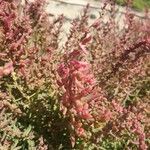
Source: leafsnapSuaeda australis, the austral seablite, is a species of plant in the family Amaranthaceae, native to Australia. It grows to 10 to 90 cm (4 to 35 in) in height, with a spreading habit and branching occurring from the base. The leaves are up to 40 mm in length and are succulent, linear and flattened. They are light green to purplish-red in colour.The species occurs on shorelines in coastal or estuarine areas or in salt marshes. It is native across Australia including the states of Queensland, New South Wales, Victoria, Tasmania, South Australia and the south-west of Western Australia.In irrigated areas, the species is known as a salinity indicator plant and is referred to as redweed.
Care Guide
💧 Water
Austral sea-blite is a drought-tolerant evergreen plant, making it perfect for arid conditions. It needs watering only every 2 to 3 weeks and keeps its foliage year-round. This makes it an excellent choice for indoor container gardening and ensures it remains resilient during periods of limited rainfall.
☀️ Light Full sun
Austral sea-blite comes from open habitats, such as sunny meadows and forest edges, which offer abundant light. It does best in Full Sun but can also tolerate Partial Sun, adapting well to a range of sunlight conditions.
What kind of sunlight does Austral sea-blite require?
Austral sea-blite, with its origins in open environments such as sunny meadows and forest edges, thrives best in full sun conditions, requiring more than 6 hours of sunlight daily. However, it is also capable of tolerating partial sun, managing well with about 3-6 hours of sunlight. It's vital to monitor the movement of sunlight through your garden carefully to choose the optimal spots that balance light and shade adequately, ensuring your plants remain healthy and happy.
How can artificial lighting be used for indoor Austral sea-blite plants?
For Austral sea-blite plants kept indoors, adequate lighting is crucial, especially when natural sunlight is lacking. Artificial lighting becomes a vital solution under such circumstances, promoting healthier and faster growth. Opt for LED lights as they can be tailored to provide the specific light wavelengths needed by your plants. Full sun plants require about 30-50W per square foot, partial sun plants need 20-30W per square foot, and full shade plants about 10-20W per square foot of artificial light. The light source should be placed 12-36 inches above the plant to simulate natural sunlight conditions, and plants typically require 8-12 hours of light per day to mimic natural daylight hours effectively.
What are the symptoms of light deficiency in Austral sea-blite?
When Austral sea-blite doesn't receive adequate light, several symptoms can occur: New leaves might grow smaller than the preceding ones, and the plant may experience leggy or sparse growth, signifying longer spaces between leaves or stems. This extended appearance makes the plant appear sparse and fragile. Early leaf drop can also occur as the plant tries to conserve resources, which impacts new growth leading to a halt or delay in the production of new leaves. Additionally, leaves may develop a paler color or even chlorosis, a condition where leaves lose their green hue and turn yellow due to the breakdown of chlorophyll. Exposure to excessive sunlight, on the other hand, can lead to sunscald, leaf curling, wilting, and leaf scorching, all of which are harmful to the plant's overall health.
How can I address Austral sea-blite's light requirements and deficiencies?
To ensure Austral sea-blite meets its light requirements, gradually introduce the plant to more sunlight by placing it in progressively sunnier locations each week until it gets at least 6 hours of direct sunlight a day. For indoor plants, especially those that are large or not easily movable, supplementing with artificial light for at least 8 hours a day can be beneficial. For outdoor plants, it's essential to move them gradually to avoid sudden exposure that could lead to sunburn. Reducing obstructions is vital for both indoor and outdoor plants; engage in practices like pruning to increase sun exposure. When transplanting smaller plants, do so during their dormant period and to a location that offers ample sunlight and good drainage. Note that while parts of the plant affected by insufficient sunlight may not recover, new growth should emerge healthily with corrected light exposure.
🌡️ Temperature 15–37.8°C
Austral sea-blite shows good temperature adaptability, tolerating higher heat and broader temperature swings. In hot weather, care should be taken with watering and providing suitable shade to prevent sunburn. Conversely, Austral sea-blite is comparatively sensitive to low temperatures. While it can endure a certain amount of cold, overly cold conditions can cause frost damage.
💨 Humidity
🪴 Soil 6-8
🌱 Fertilizer
Fertilize your Austral sea-blite in early spring to encourage healthy growth. Regular feeding improves overall health, leading to vigorous growth, increased tolerance of harsh conditions, and enhanced resistance to pests and diseases. Keep to a specific fertilization schedule for your Austral sea-blite to maintain vibrant, deeply colored foliage and a lush appearance.
🪴 Pot & Repot
✂️ Pruning
The Austral sea-blite is a salt-tolerant plant with succulent foliage that benefits from pruning between early and late winter. To encourage growth and increase density, trim any dead stems and cut back up to one-third of the plant. Be sure to use sharp, sterilized tools to promote healing and reduce the risk of disease.
🌿 Propagating
🐛 Diseases & pets
☠️ Toxicity
Characteristics
- Plant Type
- Shrub
- Life Cycle
- Perennial
- Genus
- Suaeda
- Family
- Amaranthaceae
- Hardiness Zone
- 8-11
- Mature Height
- 10 cm to 91 cm
- Mature Spread
- 91 cm
- Leaf Color
- Green, Dark Green
- Leaf Type
- Evergreen
- Flower Color
- Yellow, Green
- Flower Size
- 0.25 cm
- Bloom Time
- Late summer, Early fall, Mid fall
- Planting Time
- Spring, Autumn
- Harvest Time
- Mid fall, Late fall, Early winter
- Native Area
- Indonesia, Japan, China, South Korea