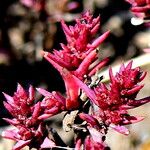
Suaeda calceoliformis
Pursh seepweed · Pursh's seepweed · Broom seepweed · Horned sea-blite · Sea-blite
Description
Source: wikipedia (CC BY-SA)Suaeda calceoliformis is a species of flowering plant in the family Amaranthaceae known by several common names, including Pursh seepweed and horned seablite.
Care Guide
💧 Water
☀️ Light Full sun
Pursh seepweed grows in bright, open areas and does best in full sun. It can tolerate partial sun but favors direct sunlight for optimal growth. This annual and biennial plant is known for its sun-loving nature.
🌡️ Temperature 5–35°C
Pursh seepweed can tolerate a wide range of temperatures, but its distribution may still be restricted by different combinations of water and heat conditions. It performs best in warm summer climates with adequate rainfall or watering. Extended periods of cloudy, rainy weather or prolonged high temperatures can raise the chance of Pursh seepweed dying. In winter, proper protection from cold can increase the plant’s survival rate.
💨 Humidity
🪴 Soil 6-8
🌱 Fertilizer
Frequent and mild applications of fertilizer can be advantageous for the healthy growth of Pursh seepweed leaves. During the summertime, Pursh seepweed should be fertilized roughly once per month. Nitrogen plays a vital role in leaf development, and incorporating nitrogen-abundant sources will assist the Pursh seepweed in flourishing.
🪴 Pot & Repot
✂️ Pruning
🌿 Propagating
🐛 Diseases & pets
☠️ Toxicity
Characteristics
- Plant Type
- Herb
- Life Cycle
- Annual, Perennial
- Genus
- Suaeda
- Family
- Chenopodiaceae
- Hardiness Zone
- 5-9
- Mature Height
- 8 cm to 76 cm
- Mature Spread
- 20 cm to 49 cm
- Leaf Color
- Green, Dark Green
- Leaf Type
- Evergreen
- Flower Color
- Green
- Flower Size
- 0.10 cm to 0.20 cm
- Bloom Time
- Mid summer, Late summer, Early fall
- Planting Time
- Spring, Summer, Autumn
- Harvest Time
- Fall