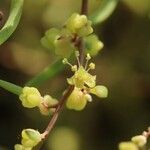
Suaeda glauca
Asian common seepweed
Care Guide
💧 Water
☀️ Light Full sun
The asian common seepweed flourishes in abundant sunlight during its entire life span, as it is indigenous to habitats with plentiful sun exposure. Inadequate or excessive sunlight could obstruct its wellness or development. While it can cope with decreased light conditions, being exposed to significant amounts of sunlight facilitates ideal growth.
🌡️ Temperature 10–35°C
The adaptability of Asian common seepweed allows it to endure a broad spectrum of temperature situations, yet its dispersal can still be constrained by various mixes of water and thermal circumstances. It flourishes optimally in the summer's warm environments with sufficient amounts of rainfall or hydration. Extended durations of cloudy and wet weather, together with protracted episodes of elevated temperatures, can elevate the probability of the plant's demise. During winter, ensuring appropriate safeguard from cold can enhance the survival probability of the plant.
💨 Humidity
🪴 Soil 6-8
🌱 Fertilizer
Maintaining the healthy growth of Asian common seepweed leaves can be achieved by providing periodic, mild amounts of fertilizer. In the summer, applying fertilizer to Asian common seepweed about once monthly is advisable. The role of nitrogen is significant for the plant’s leaves, and using supplements rich in nitrogen can aid the thriving of Asian common seepweed.
🪴 Pot & Repot
✂️ Pruning
🌿 Propagating
🐛 Diseases & pets
☠️ Toxicity
Characteristics
- Plant Type
- Herb
- Life Cycle
- Annual
- Hardiness Zone
- 6-10
- Mature Height
- 91 cm
- Mature Spread
- 20 cm to 49 cm
- Leaf Color
- Light Green, Gray
- Leaf Type
- Evergreen
- Flower Color
- Yellow, Green
- Flower Size
- 0.10 cm to 0.20 cm
- Bloom Time
- Late summer, Early fall, Mid fall
- Planting Time
- Spring
- Harvest Time
- Mid fall, Late fall, Early winter
- Native Area
- Russia, Japan, Mongolia, Koppen, South Korea, China