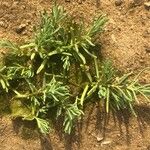
Suaeda maritima
Annual seablite · Herbaceous Seablite · Sea Blite · White Sea-blite · Herbaceous Seepweed
Description
Source: leafsnapSuaeda maritima, commonly known as sea-blite, is a halophytic plant species belonging to the Amaranthaceae family. This small annual herb typically grows up to 30 cm in height and features succulent leaves. It is commonly found in coastal areas and salt marshes around the world, including regions in Europe, Asia, Africa, and North America. Sea-blite has adapted to saline environments by developing specialized structures, such as salt glands on its leaves that excrete excess salt from its tissues. Additionally, the plant boasts a deep root system, enabling it to access water from deeper soil layers. In coastal ecosystems, sea-blite plays a crucial role in stabilizing soil and preventing erosion. It also provides habitat for various species of insects and birds. Traditionally, the plant has been used for medicinal purposes, such as treating skin diseases, rheumatism, and fever. Due to its high nutritional value, it is also utilized as a food source for livestock. Overall, Suaeda maritima is an important halophytic species with unique adaptations that enable it to thrive in saline environments. It provides significant ecological benefits and serves various human needs.
Care Guide
💧 Water Every 7 days
Annual seablite is well-suited to arid conditions due to its remarkable drought tolerance. Native to regions with low rainfall, it requires weekly watering to maintain its health and support growth. This plant is best adapted to dry climates, making it an excellent choice for outdoor cultivation in areas where rain is infrequent.
How should I water my Annual seablite plant in the best way possible?
To properly care for the Annual seablite, it is recommended to use filtered water at room temperature. Tap water may contain harmful particles, so filtered water is the better choice. The temperature of the water is important because the plant is accustomed to a warm environment, and cold water can be stressful for it. It's also best to avoid overhead watering, as it can lead to issues with the foliage. Instead, water the plant by applying filtered room temperature water directly to the soil until it is fully saturated. This helps moisten the roots and allows them to spread and absorb necessary nutrients from the soil.
What should I do if I give my Annual seablite too much or too little water?
Both overwatering and underwatering can harm the health of your Annual seablite, but overwatering is more commonly encountered. When this species gets too much water, its stems and leaves may droop and turn yellow. Continuous overwatering can also promote diseases like root rot, mold, and mildew, which can be fatal for the plant. Underwatering is less likely for the Annual seablite because it tolerates drought fairly well. However, underwatering is still possible, and in such cases, you may notice brittle, brown leaves on your plant. It is important to quickly identify signs of overwatering when caring for your Annual seablite. Some diseases resulting from excessive watering, like root rot, cannot be reversed if left unaddressed for too long. If you notice early signs of overwatering, reduce your watering immediately. You should also check the soil quality in which your Annual seablite is growing. If the soil drains poorly, replace it with loose, well-draining potting mix. If you observe signs that your Annual seablite is not receiving enough water, simply water it more regularly until those signs disappear.
How often should I give water to my Annual seablite?
If your Annual seablite is in a pot, the most accurate way to determine if it needs water is by checking the soil with your finger. If the top two to three inches of soil are dry, it's time to water it. If your Annual seablite is grown outdoors in the ground, you can use a similar method to test the soil. Once you notice the top few inches of soil have dried out, it's time to water. Usually, during the spring and early fall, watering once a week using this method will suffice. However, in extremely hot weather, you may need to water your plant two or more times a week. It's worth noting that mature, well-established Annual seablite plants have a remarkable ability to tolerate drought.
How much water does my Annual seablite require?
When watering your Annual seablite, it's important to be generous with the amount of water you give. Make sure the top two to three inches of soil are dry before watering. Give the plant a thorough watering, making sure to completely soak the soil. You should add enough water that it causes excess water to drain out of the bottom of the pot. If you don't see any excess water draining, it's likely that you haven't watered enough. However, be careful not to let water accumulate inside the soil, as this can harm the plant. On the other hand, if water isn't draining through the pot, it could indicate that the soil doesn't drain well, which is not good for the plant's health. If the plant is outside, receiving 1 inch of rain per week should be enough.
How should I water my Annual seablite as it grows?
The water needs of the Annual seablite can vary depending on its growth stages. When the plant is in the early years or has just been transplanted, it requires more water to support root development. This is because the plant invests a lot of energy in sprouting new roots, which are essential for future growth. Mature plants, on the other hand, require less water. Another stage that may require increased watering is during the bloom period when flower development demands more moisture.
☀️ Light Full sun
Annual seablite grows best when given abundant sunlight, echoing its native habitat which is typically sunny. This light exposure is essential for its healthy growth. However, both excessive and inadequate sun can hinder its development, although it shows considerable tolerance to these extremes.
What are the sunlight requirements for Annual Seablite?
Annual Seablite thrives best with exposure to full sunlight, specifically above 6 hours of sunlight daily. It's important to monitor the movement of sunlight through your garden to identify areas that offer the right balance of light and shade, ensuring the happiness of your plants. Overexposure or insufficient exposure to sunlight can affect the plant's growth, despite its resistance to these conditions.
How does artificial lighting benefit indoor Annual Seablite plants?
When natural sunlight is insufficient, especially in winter or less sunny spaces, artificial lighting becomes crucial for the optimal growth of indoor Annual Seablite plants. LED lights are recommended as they can provide specific wavelengths needed by the plants. Full sun plants require 30-50W/sq ft, partial sun plants need 20-30W/sq ft, and full shade plants 10-20W/sq ft of artificial light. The light source should be placed 12-36 inches above the plant to mimic natural sunlight and turned on for 8-12 hours per day to replicate natural daylight hours.
What are the symptoms of inadequate lighting in Annual Seablite?
Indicators of light deficiency in Annual Seablite include smaller new leaves, leggy or sparse growth, faster leaf drop, slower or no new growth, and lighter-colored new leaves. Excessive sunlight can lead to chlorosis, sunscald, leaf curling, wilting, and leaf scorching. These symptoms signify that the plant is either not receiving enough light or is being overexposed to it.
What solutions can combat inadequate lighting for Annual Seablite?
To address inadequate lighting, gradually acclimate your plants to receive at least 6 hours of direct sunlight daily through incremental weekly adjustments. Ensure maximum sunlight exposure by using south-facing windows and keeping curtains open. If the plant is large or not easily movable, supplement with artificial lighting for at least 8 hours daily. When dealing with outdoor or ground-planted Annual Seablite, it's crucial to move the plants gradually to sunnier spots, avoid drastic changes to prevent sunburn, and consider pruning or transplanting to reduce obstructions and ensure ample sunlight.
🌡️ Temperature 5–32.2°C
Annual seablite is a plant that does well in temperate climates, preferring temperatures from 68 to 95 °F (20 to 35 ℃). Its native growing habitat reflects these temperature preferences. Seasonal adjustments in temperature may be necessary to keep conditions within this range.
What is the preferred temperature range for annual seablite growth?
Annual seablite, known botanically as Suaeda maritima, prefers a temperate climate with temperatures ranging from 68 to 95 °F (20 to 35 °C) for optimal growth. Its native environment typically reflects these conditions, and seasonal adjustments may be necessary to maintain this temperature range. Despite its preference for milder temperatures, annual seablite possesses a high degree of cold tolerance and does not require special frost protection measures during the winter season.
How does annual seablite cope with cold temperatures and what are the recommended care tips before the first freeze of winter?
Annual seablite exhibits remarkable tolerance to cold temperatures, capable of withstanding conditions above -30°C without the need for additional frost protection. To prepare for winter and the first freeze of autumn, it is advisable to water the plant generously. This ensures that the soil remains moist and transitions into a frozen state smoothly. Adequate watering before the freeze helps prevent drought and water scarcity for the plant during the colder months and into the early spring.
What should be done if the temperature falls below annual seablite's cold tolerance level or if it fails to sprout in spring?
If the temperature dips below annual seablite's cold tolerance threshold of -30°C, the plant may experience a decrease in sprouting or even fail to sprout at all during springtime. In such instances, the recommended course of action is to remove any parts of the plant that have failed to sprout as the warmer weather returns. This helps to encourage regeneration and maintain the health of the remaining plant.
How does annual seablite react to high temperatures and what measures can be taken to protect it?
Annual seablite is not tolerant of high temperatures, particularly those exceeding 35°C. Exposure to excessive heat can halt its growth and make it more susceptible to rot. To protect the plant under such conditions, it is advisable to trim away any sunburned and dried-up parts. Relocating the plant to a shaded area or using a shade cloth can provide protection from the harsh midday and afternoon sun. Moreover, watering the plant in the morning and evening can help keep the soil adequately moist, mitigating the stress caused by high temperatures.
💨 Humidity
🪴 Soil 7-8
🌱 Fertilizer
One application of fertilizer in spring is generally enough for Annual seablite, though several feedings can boost growth. Apply fertilizer every month to every month and a half. Fertilization improves the leaves' appearance and function, encouraging even color and a healthy texture. It also promotes root development and nutrient uptake, supporting the plant's long-term health.
🪴 Pot & Repot
✂️ Pruning
Annual seablite thrives with minimal pruning, which should ideally be done from early to late spring. Pruning helps promote new growth and maintain the plant's shape. To improve air circulation, focus on thinning out dense areas. Make sure to use sterilized tools to ensure clean cuts, as this enhances growth and prevents disease.
🌿 Propagating
🐛 Diseases & pets
☠️ Toxicity
Characteristics
- Plant Type
- Herb
- Life Cycle
- Perennial, Annual
- Genus
- Suaeda
- Family
- Amaranthaceae
- Hardiness Zone
- 2
- Mature Height
- 34 cm
- Mature Spread
- 61 cm
- Leaf Color
- Dark Green, Olive Drab
- Leaf Type
- Deciduous
- Flower Color
- Green
- Flower Size
- 0.20 cm to 0.25 cm
- Bloom Time
- Summer
- Planting Time
- Spring, Summer, Autumn
- Harvest Time
- Late summer, Early fall, Mid fall
- Native Area
- Sri Lanka, Libya, Egypt, India, Sweden, Austria, Morocco, Belarus, Russia, Germany, Romania, Belgium, Portugal, France, Saudi Arabia, Netherlands, Tunisia, Mauritania, Cyprus, Bulgaria, Bangladesh, Turkmenistan, Greece, Ukraine, China, Norway, Afghanistan, Italy, Spain, Vietnam, Japan, Finland, Denmark, Senegal, Iran, Albania, Ireland, United Kingdom, Hungary, Algeria, Thailand