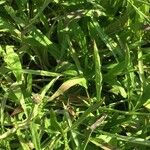
Succisella inflexa
Frosted Pearls · Southern succisella · Devil's bit
Description
Source: leafsnapSuccisella inflexa, commonly known as Fleabane, is a perennial herbaceous plant that belongs to the Asteraceae family. Native to Europe and Asia, it thrives in damp meadows, marshes, and along riverbanks. The plant can reach a height of up to 1 meter and features a basal rosette of lance-shaped, toothed leaves. Its erect, branched stem bears small clusters of pinkish-purple flowers, each with a central disk surrounded by ray florets. Succisella inflexa blooms from July to September, attracting bees, butterflies, and other pollinators. Historically, Fleabane has been valued for its medicinal properties. Its anti-inflammatory effects can help relieve pain from arthritis and other inflammatory conditions. Additionally, it has been used as a herbal remedy for digestive issues such as bloating and constipation. Succisella inflexa prefers moist soil conditions but can tolerate partial shade, making it an excellent choice for wetland gardens or naturalized areas. It not only attracts pollinators but also adds visual interest throughout its blooming season. Overall, Succisella inflexa is an attractive perennial that offers both aesthetic appeal and medicinal benefits. It is a valuable addition to any garden, providing beauty and functionality for gardeners seeking a versatile plant for their collection.
Care Guide
💧 Water Every 7 days
Southern succisella is well-suited for dry habitats and demonstrates a high tolerance for drought. It needs watering only once every 1-2 weeks. This outdoor plant excels in xeric landscapes, thriving in fast-draining soils, which makes it perfect for regions focused on water conservation.
☀️ Light Full sun
Southern succisella is a sun-loving perennial herbaceous plant native to open habitats, commonly occurring in meadows and grasslands. It prefers full sun but can also tolerate partial sun.
🌡️ Temperature 5–35°C
Southern succisella can adjust to a broad range of temperature conditions, yet its distribution may still be constrained by particular combinations of moisture and heat. It does best in warm summer climates with sufficient rainfall or watering. Extended periods of cloudy, rainy weather, as well as prolonged high temperatures, can increase the likelihood of Southern succisella dying. In winter, adequate protection from cold can improve the plant’s survival rate.
💨 Humidity
🪴 Soil 6-8
🌱 Fertilizer
The best time to fertilize a Southern succisella is in early spring, as it comes out of dormancy and begins active growth. Fertilization supplies essential nutrients needed for healthy development. Although Southern succisella requires relatively little fertilizer, applying it annually can improve survival and encourage better, longer-lasting flowers.
🪴 Pot & Repot
✂️ Pruning
To keep Southern succisella healthy and thriving, it is beneficial to prune it in the spring. Start by removing spent blooms and any dead stems. This not only improves the plant's appearance but also promotes its overall health. You should trim about one-third of the plant to encourage new growth. Pruning during the plant's dormant period helps reduce stress, enhances its aesthetic appeal, and supports vigorous new growth and increased flowering potential.
🌿 Propagating
🐛 Diseases & pets
☠️ Toxicity
Characteristics
- Plant Type
- Herb
- Life Cycle
- Perennial
- Genus
- Succisella
- Family
- Caprifoliaceae
- Hardiness Zone
- 5-9
- Mature Height
- 76 cm
- Mature Spread
- 49 cm
- Leaf Color
- Green
- Leaf Type
- Deciduous
- Flower Color
- Lavender
- Flower Size
- 0.51 cm to 1.02 cm
- Bloom Time
- Mid summer, Late summer, Early fall
- Planting Time
- Spring, Autumn
- Harvest Time
- Early fall, Mid fall
- Native Area
- Russia, Lithuania, Germany, Austria, Italy, Slovakia, Romania, Albania, Poland, Hungary, Croatia, Slovenia, Ukraine, Belarus, Serbia