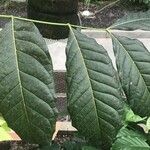
Swietenia mahagoni
Cuban mahogany · West Indian mahogany · Spanish mahogany · Mahogany · West-indies-mahogany
Description
Source: leafsnapSwietenia mahagoni, commonly known as West Indian mahogany, is a tropical tree species native to the Caribbean islands and southern Florida. Belonging to the family Meliaceae, it is highly valued for its beautiful wood, which has been used for furniture making and decorative purposes for centuries. The tree can grow up to 30 meters tall, with a trunk diameter of up to one meter. Its leaves are compound, featuring 4 to 8 leaflets that are dark green and glossy. The flowers of Swietenia mahagoni are small and white or pinkish and grow in clusters at the ends of branches during the spring or summer months. The fruit is a large woody capsule that contains numerous winged seeds, which can be dispersed by wind or water currents. Swietenia mahagoni prefers well-drained soils with high organic matter but can tolerate some degree of salt spray from coastal areas and occasional flooding from heavy rains during hurricane season. Due to overexploitation for its valuable wood, Swietenia mahagoni has become endangered in some parts of its natural range. However, various organizations worldwide have initiated conservation efforts to protect this valuable species from extinction.
🌳 Aside from its well-known role in fine furniture, west indian mahogany also has a lesser-known but interesting use in music. Historically, builders sought west indian mahogany for its resonant qualities, making it well-suited for crafting high-quality musical instruments. Guitars and violins that incorporate west indian mahogany parts are admired for their clarity of sound and visual appeal. This has created a small yet devoted demand among musicians and collectors.
🎭 Power and stamina
Care Guide
💧 Water Every 7 days
West Indian mahogany flourishes in environments with high humidity and consistent moisture. It ideally should be watered every 1-2 weeks. While it can endure short periods of drought, the plant prefers a steady supply of moisture. When grown outdoors, using mulch can help retain soil moisture during its active growing season.
What's the best way to water my West Indian mahogany tree?
To ensure excellent root development, place a garden hose at the base of the plant instead of directly spraying the leaves. If the leaves are exposed to direct sunlight outdoors, they will need more watering. You can also use bubblers for each plant to keep the roots moist. Soaker hoses can be used to cover the entire garden or bed, especially when adding or removing plants, to help the roots penetrate deep into the soil. After watering, make sure to drain any excess water and let the soil dry before watering again. To prevent diseases, water at ground level rather than spraying the leaves. On a sunny day, it might be beneficial to spray the entire bush with water. Whether potted or in-ground, please remember that West Indian mahogany prefers deep watering instead of light sprinkling.
What should I do if I give too much or too little water to West Indian mahogany trees?
When a West Indian mahogany is overwatered, it shows signs such as yellowing, dropping off, and wilting of leaves. The plant may also appear dull and unhealthy, with mushy stems. If you notice these signs, adjust your watering schedule accordingly. Wilting can also be a sign of under watering, which is characterized by crispy and dry leaves. In this case, check the soil for dryness and give the plant a full watering when necessary. Although enough water will help the West Indian mahogany recover, it may still have dry and yellow leaves due to the damaged root system. Once the plant returns to normal, the yellowing of leaves will stop. Indoors, always check the moisture levels in the pot and avoid overwatering. Look for signs of black spots, and if present, allow the soil to dry by refraining from watering for a few days. Overwatering can lead to root rot, so if you observe discolored and slimy roots, consider transferring the plant to a different pot. Preventing root rot involves avoiding excessively soggy soil. When planting the West Indian mahogany outdoors, ensure the soil is adequately watered. If you find the soil dry when checking with your fingers, it may indicate underwatering. Provide adequate watering to help the plant recover.
How often should I give water to my West Indian mahogany?
The West Indian mahogany prefers deep and infrequent watering, especially when it's in pots. To ensure proper hydration, soak them in a gallon of water per watering. Potted plants dry out more quickly due to limited water storage, so they should be watered every 3 to 5 days in cold regions. Water them in the morning when the soil is dry, both indoors and outdoors. To determine if watering is necessary, check the top 2-3 inches of soil. If it's dry, give the plant a thorough watering. During hot days, check the moisture daily as heat can quickly dry out the soil in the pot. If you have a garden, irrigation of the soil is also necessary. In hot climates, watering once a week is adequate. Only water when you notice that about 2 to 3 inches of soil has become too dry. Take into account the amount of rainfall the plant receives and avoid overwatering to prevent root rot. If there is ample rainfall, additional watering may not be necessary. West Indian mahogany mainly grows during spring and fall. When planted outdoors, add a layer of mulch around 3 to 4 inches deep to help retain water. In sandy soil, watering should be more frequent as it drains faster. On the other hand, clay soil requires less frequent watering, allowing for a 2-3 day interval to dry the plant without risking root rot. To keep track of watering, mark the date on the calendar and observe the plant's leaves. Drooping leaves may indicate that watering is overdue.
How much water should I give my West Indian mahogany tree?
The West Indian mahogany generally needs about a gallon of water on a set schedule. If you have potted plants, water them deeply until you see water dripping from the bottom of the pot. Wait for the soil to dry before watering again. You can use a water calculator or moisture meter to determine the amount of water your plant needs each week. During the flowering period, provide plenty of water but allow the moisture to evaporate to prevent root rot. If the West Indian mahogany is planted outdoors with sufficient rainfall, it may not require additional watering. However, when it is young or newly planted, make sure it receives 1-2 inches of rain per week. As it grows, it can rely solely on rainfall. Only in extremely hot weather or if there is no rain for 2-3 weeks, consider giving the West Indian mahogany a thorough watering during cooler times of the day to avoid heat damage. Additional watering will be necessary during extended dry spells.
Should I water my West Indian mahogany tree more or less depending on the time of year or the weather conditions?
The West Indian mahogany is an outdoor plant that prefers rainwater but may need additional watering during dry spells. It thrives in moist soil, but not overly saturated. During the summer, the hot weather may cause the water to evaporate quickly, so regular watering is necessary to keep the soil moist. In contrast, during the winter, the plant requires less water as it goes into a dormant state and can rely on rainfall. Terracotta pots can help with drainage during this time. In the spring, when the weather warms up, you can encourage growth and flowering by providing adequate water. Good drainage is crucial throughout the year to prevent ponding or drought, particularly in winter. If the plant is in a pot, it will have limited root growth and should be watered more frequently in the summer. Deep soakings once or twice a week are recommended, avoiding shallow sprinklings that may encourage fungal growth. It is important to keep the West Indian mahogany from drying out completely, even during dormancy. However, overwatering should be avoided, as it can lead to root rot. Applying mulch can help conserve water and promote healthy blooms.
☀️ Light Full sun
West Indian mahogany favors locations that get sunlight for most of the day but can also do well in spots with less sun. It comes from habitats abundant in sunlight. Too much sun can cause leaf scorch, while too little light may inhibit growth.
What are the sunlight requirements for West Indian Mahogany?
West Indian Mahogany prefers areas where it can receive sunlight throughout the day, making it ideal for places with full sun, which is above 6 hours of sunlight. It can also thrive in partial sun, about 3-6 hours of sunlight. It's important to observe how sunlight moves through your garden to place your plants in locations that offer a balance of light and shade, ensuring their health and happiness.
Can West Indian Mahogany be grown indoors and how?
Yes, West Indian Mahogany can be grown indoors, especially in conditions where natural sunlight is insufficient, such as during winter or in less sunny spaces. In such cases, artificial lighting becomes crucial for optimal growth. LED lights are recommended because they can be customized to provide necessary wavelengths. The light intensity should range from 10-50W/sq ft depending on whether the plant is full sun, partial sun, or full shade. The artificial light source should be placed 12-36 inches above the plant for 8-12 hours per day to mimic natural daylight conditions.
What are the symptoms of insufficient light in West Indian Mahogany?
Symptoms of light deficiency in West Indian Mahogany include smaller new leaves, leggy or sparse growth, faster leaf drop, slower or no new growth, and lighter-colored new leaves. Conditions such as chlorosis, sunscald, leaf curling, wilting, and leaf scorching may also manifest due to insufficient or excessive sunlight. These symptoms indicate the plant's need for better light management.
What solutions can be applied to manage insufficient light for West Indian Mahogany?
For indoor plants suffering from light deficiency, gradually moving the plant to a sunnier location or using artificial light can help. Plants should be exposed to at least 6 hours of sunlight or artificial light daily. For outdoor plants, adjusting the location gradually each week until the plant adapts to the optimal sunlight condition is recommended. Addressing obstructions by pruning or transplanting can also allow more sunlight to reach the plant. It's crucial to avoid sudden changes in light to prevent sunburn.
🌡️ Temperature 20–37.8°C
The native habitat of west indian mahogany is in subtropical and tropical regions, where average temperatures range from 20 to 38 ℃ (68 to 100.4 ℉). It prefers warm conditions and cannot tolerate frost or very cold weather. In colder months it may need extra protection or to be moved indoors to a warmer place. In warmer months, providing moderate shade is advisable to prevent burning from direct sunlight.
What is the native environment of the West Indian Mahogany?
The native growth environment of West Indian Mahogany is located in subtropical and tropical areas, where the average temperatures range from 20 to 38°C (68 to 100.4°F). This species thrives in warm temperatures and does not tolerate frost or extreme cold weather well. It prefers moderate shade during warmer months to prevent damage from direct sunlight and requires protection or indoor relocation during colder months to maintain a suitable temperature above 20°C, especially as temperatures approaching 5°C can be detrimental.
How should I care for West Indian Mahogany during cold weather?
During cold weather, it's important to protect West Indian Mahogany from low temperatures. The plant prefers temperatures above 20°C and should be kept above 5°C during winter. Exposure to temperatures below 1°C may cause the leaves to lighten in color, eventually turning brown or black after frost damage, accompanied by wilting and drooping. To protect your plant, trim off frost-damaged parts and move it indoors to a warm spot. Ensure it's placed near a south-facing window for sufficient sunlight but keep it away from heaters or air conditioning vents to avoid excessively dry air.
What precautions should be taken for West Indian Mahogany during hot weather?
In hot weather, it's crucial to ensure that West Indian Mahogany is not exposed to temperatures above 38°C, as exceeding 43°C can lighten the leaf color and increase susceptibility to sunburn. To care for the plant during high temperatures, trim away sunburned and dried parts. Move the plant to a shaded location, particularly away from the harsh midday and afternoon sun. Watering the plant in the morning and evening helps to keep the soil moist and supports the well-being of the plant in hot conditions.
What are the botanical details of West Indian Mahogany?
West Indian Mahogany, known botanically as Swietenia mahagoni, thrives in subtropical and tropical climates. Favored for its resilience in warm environments, it requires specific attention to temperature and sunlight to flourish properly, reflecting its origins and unique growth preferences.
💨 Humidity
🪴 Soil 6-7
🌱 Fertilizer
Fertilization is essential for the care of West Indian mahogany. Regular feeding throughout the growing season maintains the energy required for its showy foliage and supports overall growth. Failing to fertilize can lead to unhealthy leaves, reduced ornamental value, and stunted or weak growth that is more susceptible to breaking.
Why should I put fertilizer on my West Indian mahogany?
Regular fertilization is necessary for West Indian mahogany because their showy leaves require a lot of energy to produce and maintain. However, this presents a challenge as the tree needs to allocate enough energy not only for leaf maintenance but also for the growth of its stems, branches, roots, and other important structures. Neglecting fertilization can result in two likely outcomes. Firstly, the leaves will lose their natural color and texture, making the tree look unhealthy and unattractive. Secondly, the overall growth of the tree may slow down or produce weak growth that is susceptible to breakage.
When should I put fertilizer on my West indian mahogany tree?
West Indian mahogany plants need occasional feedings, so there is no need to set a specific feeding schedule when first planting them. One simple way to fertilize your West Indian mahogany is to apply fertilizer while watering the plant occasionally. During the growing season, it is important to provide a sufficient amount of water to your West Indian mahogany. You can feed the plant every two to three weeks, and this feeding frequency should continue as long as the plant is producing new growth.
When is the wrong time to fertilize my West Indian mahogany?
You can maintain a regular fertilization schedule for your West Indian mahogany for most of the year. This includes the active growing season of spring, summer, and early fall. However, during the winter, it's important not to give the plant any fertilizer. This is because the West Indian mahogany goes into a dormant growth phase during this time, where it either doesn't grow at all or only grows a little. Since the plant is using less energy during this phase, it doesn't need fertilizer.
What kind of fertilizer does my West Indian mahogany tree need?
The fertilizer for a West Indian mahogany needs a specific blend of nutrients, but in relatively low amounts. Ideally, the fertilizer should have an N-P-K ratio of 3-1-2. However, a general-purpose fertilizer with an even blend of nutrients can also work well. When using a balanced fertilizer, make sure the ratio number for each nutrient is 3 or lower. You can choose between a granular or liquid-based fertilizer. If you opt for a liquid-based fertilizer, it's generally better to dilute the strength by half. Granular fertilizer doesn't have many downsides, but using liquid fertilizer is often more practical, especially when watering your West Indian mahogany.
How can I give my West Indian mahogany plant the necessary nutrients to help it grow?
There are two easy ways to fertilize a West Indian mahogany. The first method is to feed it whenever you water it. To do this, you will need fertilizer and a water container, like a watering can. Mix the fertilizer with water to dilute it and then pour it onto the soil, allowing it to soak down to the roots. The second method is to use a granular fertilizer. Simply sprinkle the fertilizer on the soil where your West Indian mahogany is planted. Granular fertilizers are slow-release, so you won't need to fertilize as often compared to using a liquid fertilizer. Regardless of the method you choose, it is important to water the plant while you feed it.
🪴 Pot & Repot
✂️ Pruning
West Indian mahogany is a durable tropical hardwood. To encourage healthy growth, prune it in early spring by removing dead or overcrowded branches. Focus on maintaining a strong central leader, and use clean, sharp tools to minimize damage. This practice enhances the tree's overall health and boosts its resistance to pests.
🌿 Propagating
🐛 Diseases & pets
☠️ Toxicity
Characteristics
- Plant Type
- Tree
- Life Cycle
- Perennial
- Genus
- Swietenia
- Family
- Meliaceae
- Hardiness Zone
- 10-11
- Mature Height
- 10.97 m to 21.95 m
- Mature Spread
- 11.89 m to 14.94 m
- Leaf Color
- Green, Yellow
- Leaf Type
- Semi-evergreen
- Flower Color
- White
- Flower Size
- 2.54 cm
- Bloom Time
- Early summer, Mid summer
- Planting Time
- Autumn
- Harvest Time
- Mid summer, Late summer, Early fall
- Native Area
- Bahamas, Cuba, Jamaica