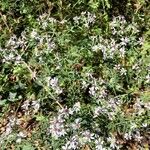
Symphyotrichum cordifolium
Blue Wood Aster · Beeweed · Common Blue Heart-leaf Aster · Common Blue Wood Aster · Heart-leaf Aster
Description
Source: leafsnapSymphyotrichum cordifolium, commonly known as the heart-leaved aster, is a perennial herbaceous plant belonging to the Asteraceae family. Native to North America, it thrives in various habitats such as woodlands, meadows, and along stream banks. This plant can grow up to 3 feet tall and features heart-shaped leaves measuring 2-4 inches in length. The leaves are alternately arranged on the stem and have toothed margins. Symphyotrichum cordifolium blooms in late summer or early fall, producing clusters of blue or purple flowers with yellow centers at the top of the stem. The heart-leaved aster is a popular garden plant due to its attractive flowers and foliage. While it prefers moist soil, it can tolerate some drought once established. It also attracts pollinators, including bees, butterflies, and hummingbirds. In traditional medicine practices, some Native American tribes, such as the Cherokee, used this plant to treat various ailments like coughs and colds. However, its medicinal properties have not been scientifically proven. Overall, Symphyotrichum cordifolium is an appealing native perennial with beautiful blue-purple flowers that can add color to any garden or natural area while also providing habitat for pollinators during the late summer and fall seasons.
🌳 Blue wood-aster is commonly noted for its ecological importance because it provides a reliable habitat and a nectar source for pollinators, including bees and butterflies. It has also been observed to signal the presence of certain metals in the soil, such as zinc or lead, by bioaccumulating them in its tissues. This has prompted discussion about its potential use in phytoremediation, a technique that could offer an environmentally friendly way to monitor and restore contaminated sites.
🎭 Affection
Care Guide
💧 Water Every 7 days
The common blue wood-aster flourishes in moist woodland environments, favoring consistently damp soil to avoid drought stress. To maintain its lush foliage and vibrant blooms, it is important to provide weekly watering, particularly during its active growth phase.
How should I water my Common blue wood-aster plants?
To ensure the health of the Common blue wood-aster when watering, it is best to use filtered water at room temperature. Tap water may contain harmful particles for this plant. It is important to avoid cold water, as it can be a shock to the plant since it thrives in warm environments. Additionally, overhead watering should be avoided as it may cause problems with the foliage. Instead, gently apply filtered room temperature water directly to the soil until it is completely soaked. This will benefit the plant by moistening the roots and aiding in nutrient absorption.
What should I do if I give too much or too little water to my Common blue wood-aster plant?
Overwatering is a more common problem than underwatering for the Common blue wood-aster. When this plant is overwatered, its stems and leaves may wilt and turn yellow. Overwatering for a long time can also cause diseases like root rot, mold, and mildew, which can be fatal for the plant. While underwatering is less common for this plant, it can still happen. In such cases, you will notice brittle and brown leaves. It is crucial to identify the signs of overwatering early on. Some diseases caused by overwatering, like root rot, cannot be fixed if not addressed promptly. If you notice early signs of overwatering, reduce your watering schedule immediately. Also, check the soil drainage and replace it with a well-draining potting mix if necessary. On the other hand, if you see signs of underwatering, water the plant more regularly until the signs disappear.
How frequently do I need to water my Common blue wood-aster?
If your Common blue wood-aster is in a pot, the most accurate way to determine if it needs water is by checking the moisture level in the soil. Just stick your finger in the soil and if the top two to three inches are dry, it's time to water it. The same method can be used if you are growing the Common blue wood-aster outdoors in the ground. Once again, if the top few inches of soil have dried out, it's time for watering. Typically, during spring and early fall, watering once a week is sufficient. However, in extremely hot weather, you may need to water twice a week or even more. It's worth noting that mature and well-established Common blue wood-asters can tolerate drought quite well.
How much water does my Common blue wood-aster plant need?
When watering your Common blue wood-aster, it is important to be generous with the amount of water you give. Wait until the top two to three inches of soil are dry, and then give the plant a thorough watering. Make sure the water soaks the soil completely, and enough water is used to cause excess water to flow out of the drainage holes at the bottom of the pot. If you don't see excess water draining, you may have not used enough water. However, be cautious of letting water accumulate in the soil, as this can harm the plant. Additionally, if you notice water is not draining well through the pot, it may indicate poor soil drainage, which can be harmful to the plant's health. If the plant is outside, 1 inch of rain per week should be enough.
How should I water my Common blue wood-aster as it grows?
The water needs of the Common blue wood-aster can change depending on its growth stages. When it is in the first few years of its life or if it has just been transplanted, it will require more water than usual. During these stages, the plant puts a lot of energy towards sprouting new roots that will support future growth, so they need more moisture. After a few seasons, the water needs will decrease. Another growth stage that requires more water is during the bloom period, as flower development requires a significant amount of moisture.
☀️ Light Partial sun
The blue wood-aster does best with moderate sunlight, yet extreme exposure is not damaging. This preference stems from its native habitat, which offers a balance of shade and sun. An excess or shortage of solar exposure could upset its healthy growth.
What are the sunlight requirements for the Common Blue Wood-Aster?
The Common Blue Wood-Aster thrives under moderate exposure to sunlight, requiring about 3-6 hours of sunlight daily (partial sun) to prosper, but it can also handle more than 6 hours of sunlight (full sun) without any adverse effects. Watching how sunlight moves through your garden and choosing spots that offer a balanced mix of light and shade can significantly contribute to the plant's health and happiness. It's crucial to adapt the plant gradually to changing light conditions to avoid stress.
Can artificial lighting be used for Common Blue Wood-Aster, and if yes, how?
Yes, artificial lighting can be effectively used for growing Common Blue Wood-Aster indoors, especially when natural sunlight is insufficient, like in winter or less sunny spaces. LED lights are recommended because they can be customized to provide specific wavelengths needed by plants. Full sun plants require 30-50W/sq ft, partial sun plants need 20-30W/sq ft, and full shade plants require 10-20W/sq ft of artificial light. The light source should be placed 12-36 inches above the plant, mimicking natural sunlight duration, which is typically 8-12 hours per day. This approach promotes faster and healthier growth, compensating for the lack of natural sunlight.
What are the common symptoms of insufficient or excessive light exposure in Common Blue Wood-Aster?
Common Blue Wood-Aster may exhibit several symptoms due to insufficient or excessive light. Insufficient light can lead to small leaves, leggy or sparse growth, faster leaf drop, slower or no new growth, and lighter-colored new leaves, indicating a need for more light. Excessive sunlight can cause chlorosis (leaves turning yellow), sunscald, leaf curling, wilting, and leaf scorching, indicating that the plant is receiving too much light. These symptoms highlight the plant's need for an optimal balance of light to maintain health and vigor.
How can lighting conditions be optimized for Common Blue Wood-Aster?
To optimize lighting conditions for Common Blue Wood-Aster, it's important to gradually adapt the plant to its ideal sunlight exposure. For indoor plants, shift them to sunnier spots each week until they receive the ideal 3-6 hours of direct sunlight daily. If the plant is large or not easily movable, consider supplementing with artificial light for at least 8 hours daily. For outdoor plants, also move them to sunnier locations gradually to prevent sunburn. Reducing obstructions that block sunlight, like pruning trees or moving plants to less obstructed areas, can help. In severe cases, transplanting the plant during its dormant period to a location with better sunlight and drainage may be beneficial. Remember, while parts of the plant affected by insufficient sunlight may not recover fully, encouraging new growth through better light exposure can lead to a healthier plant.
🌡️ Temperature 0–32.2°C
The blue wood-aster grows best in temperatures between 32℉ (0℃) and 86℉ (30℃). It is native to temperate regions and can tolerate both warm and cold conditions. In winter the blue wood-aster enters dormancy and can survive extreme cold down to 14℉ (-10℃).
What temperatures can the Common Blue Wood-Aster tolerate?
The Common Blue Wood-Aster, also known by its botanical name, Symphyotrichum cordifolium, thrives in temperatures ranging from 32°F (0°C) to 86°F (30°C). It is well-suited to temperate climates and exhibits remarkable tolerance to both high and low temperatures. During the winter months, it enters a dormant state, allowing it to withstand extreme cold down to 14°F (-10°C). Despite its strong resistance to cold, protection measures should be taken if temperatures are expected to fall below -35°C, including insulating the plant with soil or straw. To prepare for winter, it is advisable to water the plant generously before the first freeze of autumn, ensuring the soil is moist and protective against potential drought and water scarcity throughout the winter and into early spring.
What should I do if the Common Blue Wood-Aster experiences low temperatures?
The Common Blue Wood-Aster is quite resilient to cold and performs best when the temperature stays above 0°C. If winter temperatures are expected to stay above -30°C, the aster should manage well, but it is crucial to protect it if the mercury drops below -35°C. In such cold conditions, you might not observe any immediate damage during the winter months; however, you may notice a decrease in the plant's ability to sprout or, in some cases, a failure to sprout at all come spring. To address this issue, trim any parts of the plant that have failed to sprout in the spring.
How should I care for Common Blue Wood-Aster in high temperatures?
In the warmer summer months, it is essential to keep the Common Blue Wood-Aster's surrounding temperature below 86°F (30°C). If temperatures soar above 95°F (35°C), the plant's leaves may lighten in color, become prone to curling, suffer from sunburn, and in extreme cases, the plant might wilt and dry out completely. To alleviate these issues, you should trim away any sunburned or dried-up parts of the plant. Additionally, relocate the plant to a shadier spot, away from the harsh midday and afternoon sunlight, or use a shade cloth to provide necessary shade. Watering the plant in the morning and evening hours will also help maintain moist soil conditions and support the plant's health during high temperature periods.
💨 Humidity
🪴 Soil 6-7
🌱 Fertilizer
One fertilizer application in spring is generally enough for Blue wood-aster, though repeated feedings can enhance growth. Apply every month to every month and a half. Fertilizing improves leaf appearance and function, helping maintain even color and a healthy texture. It also encourages root development and better nutrient uptake for long-term plant health.
🪴 Pot & Repot 2-3 years
When repotting Blue wood-aster, select a pot 1–2 inches (2.5–5.1 cm) larger with ample drainage. Use a well-draining potting mix. Repot in spring or fall, making sure the root ball sits slightly lower than the rim of the flower pot. Water thoroughly after repotting and place it in a warm spot with indirect sunlight.
✂️ Pruning
To promote healthy growth and flowering of the common blue wood-aster, prune it in early to late spring. Start by removing any dead stems and thinning out crowded areas to improve air circulation. Regular pruning not only enhances the plant’s appearance but also helps prevent disease. Be sure to use clean tools to avoid introducing infections.
🌿 Propagating
🐛 Diseases & pets
☠️ Toxicity
Characteristics
- Plant Type
- Herb
- Life Cycle
- Perennial
- Genus
- Symphyotrichum
- Family
- Asteraceae
- Hardiness Zone
- 3-8
- Mature Height
- 0.3 m to 1.22 m
- Mature Spread
- 46 cm to 61 cm
- Leaf Color
- Green
- Leaf Type
- Deciduous
- Flower Color
- Lavender
- Flower Size
- 2.54 cm
- Bloom Time
- Mid summer, Late summer
- Planting Time
- Spring
- Harvest Time
- Late summer, Early fall
- Native Area
- North America