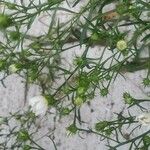
Symphyotrichum pilosum
Awl Aster · Frost Aster · Frost-weed Aster · Hairy Aster · Hairy White Oldfield Aster
Description
Source: leafsnapSymphyotrichum pilosum (formerly Aster pilosus) is a perennial, herbaceous, flowering plant in the Asteraceae family native to central and eastern North America. It is commonly known as hairy white oldfield aster, frost aster, white heath aster, heath aster, hairy aster, common old field aster, old field aster, or steelweed. It may reach 20 to 120 centimeters (8 to 47+1⁄3 inches; 2⁄3 to 4 feet) tall, and its flowers have white ray florets and yellow disk florets.
🌳 The hairy aster amazes by blooming in late fall, when most plants are preparing to rest. It appears brightly against autumn’s faded tones and provides food for pollinators. Its unusual flowering time can also improve garden looks by adding a burst of color as the year winds down.
🎭 Affection
Care Guide
💧 Water Every week
The frost aster thrives in moderate moisture and well-drained soil, needing weekly watering without becoming oversaturated. Its growth is influenced by seasonal rainfall patterns, highlighting its adaptation to temperate regions. This plant prefers outdoor habitats such as meadows and open fields.
How should I water my Frost aster?
To ensure the Frost aster's well-being, it's ideal to water it using room temperature filtered water. Unlike tap water, filtered water is free from harmful particles that may affect the plant's health. The Frost aster thrives in warmer environments, so it's essential to avoid using cold water as it may shock the plant. Additionally, it's advisable not to water the plant from overhead as it may lead to problems with its foliage. Instead, gently apply filtered room temperature water to the soil until it becomes saturated. This method benefits the plant by providing moisture to the roots, allowing them to spread and gather essential nutrients from the soil.
What should I do if I give my Frost aster too much or too little water?
Overwatering is a common issue for Frost aster and can cause wilting, yellowing leaves, and various diseases that can kill the plant, such as root rot, mold, and mildew. Underwatering is less common but can cause brittle, brown leaves. It's important to notice signs of overwatering early to prevent irreversible damage. If you see signs of overwatering, reduce watering immediately and ensure the soil drains well. If the plant is receiving too little water, increase watering until the signs subside.
How frequently should I give water to my Frost aster?
If your Frost aster is in a pot, the most precise way to determine if it needs water is by checking the soil. Stick your finger into the soil and if the top couple of inches are dry, it's time to water it. If you have planted your Frost aster outdoors in the ground, you can use a similar method. When the first few inches of soil are dry, it's time to water. Typically, during the spring and early fall, you'll need to water this plant about once a week using this method. However, during extremely hot weather, you may need to water it twice a week or even more. It's worth noting that mature, well-established Frost asters can handle drought quite well.
How much water does my Frost aster plant need?
To properly water your Frost aster, it is important to provide an adequate amount of water. When the top two to three inches of soil are dry, give the plant a deep watering. Make sure the soil becomes completely saturated. You'll know you've added enough water when you see excess water draining out of the pot's drainage holes. If there is no drainage, it means you haven't watered enough. However, be careful not to let water accumulate in the soil, as this can harm the plant. Additionally, if there is no drainage, it may indicate that the soil doesn't drain well, which is not good for the plant's health. If the plant is outdoors, about 1 inch of rain per week should be sufficient.
How do I water my Frost aster as it grows different stages?
The water needs of the Frost aster can vary depending on its growth stages. When the Frost aster is in its first few years or if it has recently been transplanted, it will require more water than usual. During these stages, the plant focuses on developing new roots to support future growth, and these roots need extra moisture. However, as the Frost aster becomes more mature, it will require less water. Another growth stage that may require increased watering is during the bloom period when the plant is developing flowers. Flower development requires a significant amount of moisture, so you may need to provide extra water during this time.
☀️ Light Full sun
The hairy aster does best in areas where it gets uninterrupted sunlight for much of the day, though it can cope in spots with somewhat limited light. In its native habitat it prospers with abundant but not intense sunlight. Too much or too little light may impede its growth and vigor.
What are the sunlight requirements for Frost Aster?
Frost Aster thrives best in conditions where it can receive full sun, which is above 6 hours of sunlight per day, but it can also manage in partial sun, about 3-6 hours of sunlight. It is essential to observe the movement of sunlight through your garden to select locations that provide a good balance of light and shade, ensuring the plants' optimal growth and happiness.
How does Frost Aster perform under different lighting conditions?
The Frost Aster flourishes in areas with extensive exposure to sunlight for significant parts of the day, although it can adapt to slightly less sunny spots. In its natural habitat, it performs well under ample sunlight that isn't too harsh. Improper lighting, either too much or too little, can adversely affect its growth and health.
Can artificial lighting be used for Frost Aster, and how?
Yes, artificial lighting can be a crucial solution for indoor Frost Asters, especially when natural sunlight is not sufficient. LED lights are recommended for their ability to provide specific wavelengths needed by plants. Full sun plants require 30-50W/sq ft of artificial light, partial sun plants need 20-30W/sq ft, and full shade plants should get 10-20W/sq ft. The light source should be placed 12-36 inches above the plant, ensuring 8-12 hours of light per day to mimic natural sunlight conditions.
What symptoms indicate insufficient lighting for Frost Aster?
Symptoms of light deficiency in Frost Aster include smaller new leaves, leggy or sparse growth, faster leaf drop, slower or halted new growth, lighter-colored new leaves, and specific conditions such as chlorosis and sunscald. These signs suggest that the plant is not receiving adequate sunlight, leading to reduced health and vitality.
What are the solutions for Frost Aster facing insufficient sunlight?
To counter insufficient sunlight for Frost Aster, gradually move the plant to an area with at least 6 hours of direct sunlight daily, using a south-facing window for indoor plants. For outdoor plants, avoid sudden changes in light intensity to prevent sunburn. If trees obstruct sunlight, consider pruning them. For smaller plants, transplanting during their dormant period to a sunnier location with good drainage can be beneficial. Artificial lighting such as desk lamps or professional grow lights can also support the plant's growth indoors.
🌡️ Temperature 5–32.2°C
Hairy aster is native to temperate regions. It favors temperatures of 41 to 90 ℉ (5 to 32 ℃) and can tolerate more severe winter conditions. In colder weather, mulching or other protective measures should be used to ensure survival. During warmer periods, watering and shading may be required to prevent stress and sunburn.
What are the ideal growing conditions for Frost Aster (Symphyotrichum pilosum)?
Frost Aster, known botanically as Symphyotrichum pilosum, thrives in temperate regions and prefers a temperature range of 41°F to 90°F (5°C to 32°C). It can adapt well to harsher winter conditions. Despite its strong cold resistance, special frost protection measures might be necessary if winter temperatures are expected to drop below -30°C. Protecting the plant with mulch or similar materials and ensuring the soil remains moist before the first freeze of autumn can help prevent drought and water scarcity during the colder months. During warmer seasons, watering and providing shade can prevent stress and sunburn.
How does Frost Aster react to low temperatures, and what should be done in spring if it fails to sprout?
Frost Aster is highly cold-tolerant and performs best when the temperature stays above 5°C. It should ideally remain above -25°C during the winter. If the temperature drops below -30°C, the plant may not display immediate damage but might experience decreased sprouting or fail to sprout come spring. In such cases, removing any parts of the plant that have not sprouted in spring is the recommended solution to encourage new growth and vitality.
What symptoms can Frost Aster experience during high temperatures, and how can they be mitigated?
In the summer, Frost Aster should ideally be kept below 32°C. Exposing the plant to temperatures above 35°C might result in its leaves becoming lighter, prone to curling, and susceptible to sunburn. In severe cases, the plant may wilt and become dry. To mitigate high temperature stress, trim away any sunburned and dried-up areas of the plant, relocate it to a shaded area or use a shade cloth for protection against the midday and afternoon sun. It's also beneficial to water the plant in the morning and evening to maintain soil moisture and reduce heat stress.
💨 Humidity
🪴 Soil 6-7
🌱 Fertilizer
Typically, one application of fertilizer in spring is enough for Hairy aster, but repeated feedings can improve growth. Fertilize about every month to six weeks. Fertilization improves leaf appearance and function, helping maintain even color and a healthy texture. It also promotes root development and nutrient uptake for the plant's long-term health.
🪴 Pot & Repot Every 12 months
✂️ Pruning
To promote the health and aesthetics of frost aster, prune it from early to late spring by removing dead or damaged stems and trimming up to one-third of the plant. This practice encourages compact growth, prolongs flowering through deadheading, improves air circulation, and reduces the risk of disease.
🌿 Propagating
🐛 Diseases & pets
☠️ Toxicity
Characteristics
- Plant Type
- Herb
- Life Cycle
- Perennial
- Genus
- Symphyotrichum
- Family
- Asteraceae
- Hardiness Zone
- 4-8
- Mature Height
- 0.05 m to 1.52 m
- Mature Spread
- 30 cm
- Leaf Color
- Green, Silver, Gray
- Leaf Type
- Deciduous
- Flower Color
- White, Lavender
- Flower Size
- 1.27 cm to 1.78 cm
- Bloom Time
- Mid summer, Late summer, Early fall
- Planting Time
- Spring
- Harvest Time
- Fall
- Native Area
- North America