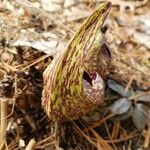
Symplocarpus foetidus
Skunk Cabbage · Polecatweed · Eastern Skunk Cabbage · Common skunk cabbage · Foetid pothos
Description
Source: leafsnapSymplocarpus foetidus, commonly known as skunk cabbage or eastern skunk cabbage (also swamp cabbage, clumpfoot cabbage, or meadow cabbage, foetid pothos or polecat weed), is a low growing plant that grows in wetlands and moist hill slopes of eastern North America. Bruised leaves present an odor reminiscent of skunk.
🌳 Skunk cabbage, a plant capable of producing its own heat, served as a survival food for Native American tribes during cold winters. It is seldom eaten because of its strong, unpleasant smell.
🎭 Fortune
Care Guide
💧 Water
Eastern skunk cabbage, which originates from wetlands, thrives in environments with consistent moisture and high humidity. While it has moderate drought tolerance, it requires watering every 1-2 weeks to maintain moist soil conditions. Typically grown outdoors, eastern skunk cabbage can regulate its temperature through a process called thermogenesis, which reflects its preference for water-rich habitats.
How should I water my Eastern skunk cabbage?
Here are some easier-to-follow instructions for watering your Eastern skunk cabbage: - If you have your plant in a small pot indoors, you can take it to the kitchen sink and use the faucet to add water. Hold the pot in your hands and stop watering when the water starts flowing out of the drainage holes. Please avoid doing this in winter or cold climates as it can harm the plant's roots. - In most cases, using the faucet is fine for watering. However, if your tap water has high levels of fluorine, chlorine, or salts, it's better to use rainwater or lake water. - Additionally, the Eastern skunk cabbage responds well to overhead watering and direct watering into the soil. You can use a watering can, hose, or any other tool that you prefer to water it.
What should I do if I give my Eastern skunk cabbage too much water or too little water?
If you realize that your Eastern skunk cabbage is not getting enough water, the first step is to give it some water. Make sure to water it deeply until water starts draining out of the container, or until the soil outside becomes completely moist. On the other hand, if you notice that your Eastern skunk cabbage is getting too much water, start by watering it less frequently. You should also check the soil and container it is in. If the soil or container is not allowing water to drain properly, it could lead to overwatering again. To fix this, you can move your plant to soil that drains better and use a container with larger drainage holes or a more porous material. Additionally, consider the location of the plant. If it is in a corner, it would be better to move it closer to a window or near a door to improve ventilation. Placing your plants in well-ventilated areas can help reduce the risk of overwatering to some extent.
How frequently should I give water to my Eastern skunk cabbage?
The Eastern skunk cabbage doesn't need constantly moist soil. In fact, it's better to let the soil dry out between waterings. If you're growing this plant in a container, a good way to tell when to water it is by checking how dry the soil is. If the top half of the soil is dry, it's time to water. You can use your fingers, sticks, or a soil moisture meter to check. If you're growing the Eastern skunk cabbage outdoors, you can water it about once every other week, unless it has recently rained.
How much water does my Eastern skunk cabbage require?
To rewater your Eastern skunk cabbage, wait until the top half of the soil is dry. Then, add enough water to make the soil moist again. The amount of water needed depends on the container size and plant size. For a small plant in a small to medium-sized container, one to two cups of water should be enough. For larger plants, more water will be needed. To check if the soil is sufficiently moist, stick your finger or a trowel into the soil. Alternatively, you can water until you see excess water draining from the bottom of the container.
How can I know if I'm giving enough water to my Eastern skunk cabbage?
Both overwatering and underwatering can harm the health of your Eastern skunk cabbage. These two problems have distinct symptoms. Insufficient water can cause yellowing leaves and brittle, brown leaf edges. On the other hand, overwatering can result in leaves with yellow and brown marks simultaneously. Moreover, overwatering can lead to diseases like root rot, which may be visible on your plant. However, knowing the signs of both overwatering and underwatering increases your chances of successfully addressing these problems.
☀️ Light Partial sun
Skunk cabbage does best in locations with moderate sunlight. It tolerates low light as well as full sun exposure. At first, sunlight promotes its growth, but too much light can impede development and cause damage. Its native habitat in forested wetlands explains its preference for variable light conditions.
What are the sun requirements for Eastern skunk cabbage?
Eastern skunk cabbage requires moderate sunlight to thrive. It can grow in partial sun, receiving about 3-6 hours of sunlight per day, or in full sun to full shade conditions, where it receives more than 6 hours of sunlight daily. Initially, sun exposure can boost the plant's growth, but excessive sunlight might inhibit its development and cause damage. Given its origin in forested wetlands, Eastern skunk cabbage prefers a variety of light conditions, adapting well to both limited light and full exposure to the sun. It's important to observe how sunlight moves through your garden to pick spots that offer the right balance of light and shade, ensuring the plant's health.
How can artificial lighting support indoor plants like Eastern skunk cabbage?
Artificial lighting is essential for the optimal growth of indoor plants, especially when natural light is insufficient, such as during winter or in less sunny spaces. Indoor Eastern skunk cabbage and other plants require adequate lighting, which can be provided through artificial sources. LED lights are recommended due to their ability to supply specific light wavelengths needed for plant growth. For full sun plants, 30-50 watts per square foot is necessary; partial sun plants need 20-30 watts per square foot, while full shade plants require 10-20 watts per square foot of artificial light. The light should be placed 12-36 inches above the plant, replicating natural sunlight conditions, and provided for 8-12 hours daily, mimicking the natural daylight hours for most plant species.
What are the symptoms of light deficiency in Eastern skunk cabbage?
When Eastern skunk cabbage is grown under insufficient light, several symptoms may indicate light deficiency. These include smaller new leaves, leggy or sparse growth, faster leaf drop, slower or no new growth, lighter-colored new leaves, chlorosis (leaves turning yellow due to the breakdown of chlorophyll), sunscald (damage from intense sunlight exposure), leaf curling (a mechanism to reduce surface area exposed to sunlight), wilting (loss of turgor pressure in leaves and stems), and leaf scorching (brown, dry, and crispy leaf edges). These symptoms reflect the plant's struggle to adapt to inadequate light conditions.
What solutions can be applied for light deficiencies in Eastern skunk cabbage?
To address light deficiencies in Eastern skunk cabbage, a series of measures can be taken. For indoor plants, gradually shifting them to sunnier spots each week until they receive 3-6 hours of sunlight daily can help, as well as using artificial light sources like desk or ceiling lamps for at least 8 hours a day or investing in professional grow lights. Outdoors, plants should be moved gradually to sunnier locations to avoid shock and sunburn. If certain parts of the garden create shade, such as trees, pruning might be necessary to improve sunlight access. For smaller plants, transplantation during the plant's dormant period into areas with ample sunlight and good drainage is recommended. Though parts of the plant damaged by low light might not recover, new, healthy growth can emerge with improved lighting conditions.
🌡️ Temperature 5–32.2°C
Skunk cabbage is native to temperate regions and prefers a temperature range of 41 to 89.6 ℉ (5 to 32 ℃). In winter it can tolerate lower temperatures by generating heat through cellular respiration. During summer it favors cooler conditions and is commonly found near streams and in wetlands. Keeping the soil consistently moist is important for optimal growth.
What is the native habitat and preferred temperature range for the eastern skunk cabbage?
The eastern skunk cabbage, botanically known as Symplocarpus foetidus, is native to temperate regions and thrives in a temperature range of 41 to 89.6 °F (5 to 32 °C). This plant is highly adaptable to varying temperatures, making significant physiological adjustments to either produce heat during the colder winter months or to seek cooler environments near streams and wetlands during the summer. To promote optimal growth, it's crucial to maintain consistently moist soil, ensuring the plant's environment aligns with its native habitat preferences.
How does the eastern skunk cabbage adapt to winter conditions and what are the recommendations for winter care?
Eastern skunk cabbage exhibits a remarkable cold tolerance, allowing it to withstand winter conditions without the need for additional frost protection. It possesses the unique ability to produce heat through cellular respiration, which helps it manage lower temperatures in winter. To prepare for the first freeze of autumn, it is advised to water the plant generously. This ensures the soil remains moist when it enters a frozen state, helping to prevent drought and water scarcity for the plant during the colder months and into early spring, thereby safeguarding its growth and health during this period.
What should be done if the eastern skunk cabbage experiences temperatures below its growth threshold during winter?
While the eastern skunk cabbage is extremely cold-tolerant, winter temperatures should ideally be maintained above its lower growth threshold. Should temperatures fall below this critical point, it may not show immediate distress, but there could be a noticeable reduction in sprouting or even no sprouting at all come spring. To mitigate this effect, it is recommended to carefully remove any parts of the plant that have failed to sprout as the weather warms, which helps promote the growth of new, healthy tissue.
How should the eastern skunk cabbage be cared for during high temperatures?
Eastern skunk cabbage is less tolerant of high temperatures. Exceeding its maximum temperature threshold halts its growth and increases its susceptibility to rot. To protect the plant during such conditions, sunburned and dried-up parts should be trimmed away. Moving the plant to a shaded location, or using a shade cloth to deflect direct midday and afternoon sun, can alleviate stress from excessive heat. Additionally, watering the plant during cooler times of the day, such as in the morning and evening, helps keep the soil adequately moist and supports the plant's overall well-being.
💨 Humidity
🪴 Soil 5-7
🌱 Fertilizer
One fertilizer application in spring is typically enough for Skunk cabbage, though multiple feedings can maximize growth. Apply fertilizer every month to month and a half. Fertilizing improves leaf appearance and function, helping maintain even color and a healthy texture. It also promotes root development and nutrient uptake for the plant's long-term health.
Why should I add fertilizer to my Eastern skunk cabbage?
The Eastern skunk cabbage relies heavily on its leaves, which are essential for its structure. Fertilization plays a crucial role in maintaining the quality and function of these leaves. By properly fertilizing, you can ensure that the leaves of your Eastern skunk cabbage remain vibrant in color and have a healthy texture. Fertilization also benefits the plant beneath the soil's surface by promoting the growth of new roots and maintaining existing ones. This not only keeps your plant healthy in the present but also enhances its ability to absorb nutrients from the soil in the long run.
When should I put fertilizer on my Eastern skunk cabbage?
If you grow your Eastern skunk cabbage outdoors each year, it will sprout new growth in early spring. This is when you should start fertilizing it for the year. Typically, one application of fertilizer in the spring is enough for the plant to thrive. However, if you want to maximize its growth, you can fertilize it multiple times throughout the spring and early summer. In this case, you can feed your Eastern skunk cabbage roughly once every month to a month and a half.
When is the best time to not fertilize my Eastern skunk cabbage?
During the late fall and winter, your Eastern skunk cabbage will become dormant and stop producing new growth. Therefore, it is important to avoid fertilizing it during this time. When spring and summer arrive, if you decide to fertilize, remember to gradually reduce the frequency as summer approaches because the growth rate of the skunk cabbage will also slow down. In general, it is not advisable to fertilize the skunk cabbage during extremely hot weather or when the soil is very dry. Fertilizing under these conditions can cause unnecessary stress and potentially lead to the premature death of the skunk cabbage.
Which fertilizer does my Eastern skunk cabbage require?
Choosing the best fertilizer for an Eastern skunk cabbage is a straightforward task. These plants will do well with a general-purpose garden fertilizer that has equal amounts of nitrogen, phosphorus, and potassium (a ratio of 10-10-10 or something similar). It is important to avoid fertilizers with high amounts of nitrogen if you're unsure. Granular fertilizers that are slow-release are typically the best choice and are easy to apply to the soil. Additionally, feeding your Eastern skunk cabbage with organic soil amendments like compost can be beneficial.
How can I feed my Eastern skunk cabbage?
To properly fertilize your Eastern skunk cabbage, wait for the plant to sprout its first leaves in early spring. Once you see this, apply a granular slow-release fertilizer with a balanced formula to the soil around the base of the plant. You can repeat this process again later in the season if desired. Remember to apply the fertilizer to the soil, not directly onto the plant. You may need to move some leaves aside to access the soil above the roots. Additionally, it is beneficial to water your Eastern skunk cabbage both before and after fertilizing.
🪴 Pot & Repot Every 12 months
✂️ Pruning
Eastern skunk cabbage has large, aromatic leaves and blooms early in the spring. It requires only minimal pruning at this time. To maintain the plant's health, remove any dead foliage, but avoid cutting the healthy leaves. Regularly inspect the plant for signs of rot. Pruning helps improve the plant's shape and airflow. Always use clean, sharp tools to ensure good hygiene.
🌿 Propagating
🐛 Diseases & pets
☠️ Toxicity
Characteristics
- Plant Type
- Herb
- Life Cycle
- Perennial
- Genus
- Symplocarpus
- Family
- Araceae
- Hardiness Zone
- 4-7
- Mature Height
- 30 cm to 91 cm
- Mature Spread
- 15 cm to 40 cm
- Leaf Color
- Green
- Leaf Type
- Evergreen
- Flower Color
- Purple
- Flower Size
- 5.08 cm
- Bloom Time
- Early spring, Winter
- Planting Time
- Autumn
- Harvest Time
- Mid spring, Late spring, Early summer
- Native Area
- Eastern North America