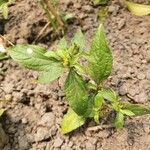
Synedrella nodiflora
Cinderella-weed · Synedrella · Nodeweed · Porterbush · Sessile-flowered synedrella
Description
Source: leafsnapSynedrella is a genus of flowering plants in the family Asteraceae.It contains only one known species, Synedrella nodiflora, native to South America, Central America, Mexico, the West Indies, and Florida. It is naturalized in much of Asia, northern Australia, some Pacific Islands, and tropical Africa. Nodeweed and Cinderella weed are common names for this species.
Care Guide
💧 Water
Nodeweed flourishes in humid tropical regions with consistent moisture, needing to be watered weekly. Its growth is closely tied to rainfall patterns, making it well-suited for areas with frequent rain. Regular hydration helps it thrive and adapt to its natural environment.
How should I water my Nodeweed plant to make it grow well?
To water Nodeweed, you have several options. You can use a garden hose with a spray nozzle, a watering can, or any other common watering tool. Nodeweed is not too particular about how it receives water - rainwater, tap water, or filtered water are all fine. However, it's best to avoid watering this plant from above as it can harm the leaves, flowers, and potentially cause disease. Using a drip irrigation system is often the most effective method for watering Nodeweed, as it applies water evenly and directly to the soil. If you have a Nodeweed in a container, you can follow a similar watering approach but adjust the tools you use. Simply use a cup, watering can, or your tap to apply water directly to the soil of the container-grown Nodeweed.
What should I do if I give my Nodeweed too much or too little water?
If you notice that your Nodeweed is not getting enough water, the solution is simple: water it more regularly. On the other hand, overwatering can be a serious problem that can lead to diseases and the plant's decline. To prevent this, choose a suitable location for your Nodeweed with ample sunlight and good drainage. If your Nodeweed is in a pot and you've been overwatering it, consider changing to a new pot with proper drainage and loose soils.
How many times should I water my Nodeweed plant?
Nodeweed requires regular watering throughout the growing season. In spring, water it about once per week. As the season progresses and gets warmer, you may need to water it two to three times per week. However, be careful not to exceed this rate as it can harm the plant. Regardless of how often you water, make sure the soil stays moist but not wet. Watering Nodeweed in a pot is slightly different. Due to the soil heating up and drying out faster, you should water it more frequently, typically a few times per week, compared to once per week for an in-ground plant.
How much water does my Nodeweed plant need?
Determining how much water to give your Nodeweed can be done in a few different ways. Some gardeners prefer to assess the soil's moisture level by feeling it with their hands. They suggest watering until the top six inches of soil feels moist. Another approach is to follow a set measurement, such as giving your Nodeweed approximately two gallons of water per week, depending on the temperature and how quickly the soil dries out. However, it's important to be cautious with this method, as it may result in overwatering if your plant doesn't require two gallons per week. When growing Nodeweed in a container, a different method is needed. In this case, you should water enough to moisten all the dry layers of soil. To check if the soil is moist, stick your finger in it. You can also water until you see a slight trickle of excess water coming out of the pot's drainage holes.
How do I know if I'm giving enough water to my Nodeweed plant?
Avoiding overwatering can be a bit challenging for Nodeweed plants. On one hand, their deep roots require weekly soil moisture. On the other hand, Nodeweed is highly prone to root rot, which can cause browning. Underwatering is less of a concern for Nodeweed as they can survive without extra watering for some time. However, if you wait too long without watering, the plant may wilt and the leaves may become dry.
☀️ Light Full sun
Nodeweed comes from bright, open habitats and performs best in full sun. It can endure partial sun but favors direct sunlight for optimal growth. This plant, which is annual and biennial, is noted for its sun-loving nature.
What are the sunlight requirements for Nodeweed?
Nodeweed thrives in environments that offer full sun exposure, meaning it prefers to receive more than 6 hours of direct sunlight daily. It can also tolerate partial sun, or about 3-6 hours of sunlight. It's important to observe how sunlight moves through your garden to find the ideal locations that provide a mix of light and shade to ensure the plant's growth and happiness.
How should I care for Nodeweed in terms of sunlight?
Originating from bright, open environments, Nodeweed is an annual and biennial plant that performs best in full sunlight but can tolerate partial sun. For those growing Nodeweed indoors or in spaces with insufficient natural light, artificial lighting can be a viable solution. It's recommended to provide 30-50W/sq ft of artificial light for full sun plants, 20-30W/sq ft for partial sun plants, and 10-20W/sq ft for full shade plants. Ensure the light source is placed 12-36 inches above the plant and mimics the natural daylight hours, usually around 8-12 hours per day.
What symptoms indicate that Nodeweed is receiving inadequate light?
Symptoms of inadequate light in Nodeweed include the growth of smaller new leaves, a leggy or sparse appearance due to stretched growth, premature leaf drop, halted or no new growth, lighter-colored or yellowing leaves (chlorosis), sunscald, leaf curling, wilting, and leaf scorching. These symptoms suggest the plant is struggling to receive the appropriate amount of sunlight essential for its growth and health.
What solutions are available for Nodeweed experiencing light deficiency?
To address light deficiency in Nodeweed, gradually acclimatize your plant to receive at least 6 hours of direct sunlight daily. For indoor plants, use a south-facing window or artificial lighting like a desk lamp or professional grow lights for at least 8 hours a day. If growing outdoors, avoid sudden exposure to intense sunlight to prevent sunburn. Manage obstructions by pruning or relocating your plants to sunnier spots. Remember, parts of the plant already affected might not recover, but new growth should be healthy with increased light exposure.
🌡️ Temperature 20–37.8°C
Nodeweed comes from tropical areas, where the weather is typically warm and humid. As a result, it is adapted to high temperatures and humidity. It does not tolerate sudden shifts in temperature and prefers a steady thermal environment, so avoiding temperature swings indoors is important. It generally cannot withstand cold and needs higher temperatures to grow. If the ambient temperature falls too low, the plant may stop growing or even die.
What is Nodeweed?
Nodeweed, scientifically known as Synedrella nodiflora, is a plant species recognized by its distinct botanic name. However, specific details about its characteristics, uses, or any particularities were not provided.
💨 Humidity
🪴 Soil 6-7
🌱 Fertilizer
Nodeweed benefits from small, frequent applications of fertilizer to encourage healthy leaf development. You should feed Nodeweed about once a month during the summer. Nitrogen is essential for foliage, and providing nitrogen-rich sources helps Nodeweed thrive.
🪴 Pot & Repot
✂️ Pruning
🌿 Propagating
🐛 Diseases & pets
☠️ Toxicity
Characteristics
- Plant Type
- Herb
- Life Cycle
- Annual, Perennial
- Genus
- Synedrella
- Family
- Asteraceae
- Hardiness Zone
- 9-12
- Mature Height
- 1.52 m
- Mature Spread
- 20 cm to 40 cm
- Leaf Color
- Green, Dark Green
- Leaf Type
- Semi-evergreen
- Flower Color
- Yellow
- Flower Size
- 0.51 cm to 0.51 cm
- Bloom Time
- All year round
- Planting Time
- Spring, Summer, Autumn
- Harvest Time
- All year round
- Native Area
- Belize, Honduras, Mexico, Peru, Philippines, Panama, Jamaica, Colombia, Bahamas, Cuba, Bolivia, Venezuela, Guyana, El Salvador, Nicaragua, Ecuador, Costa Rica