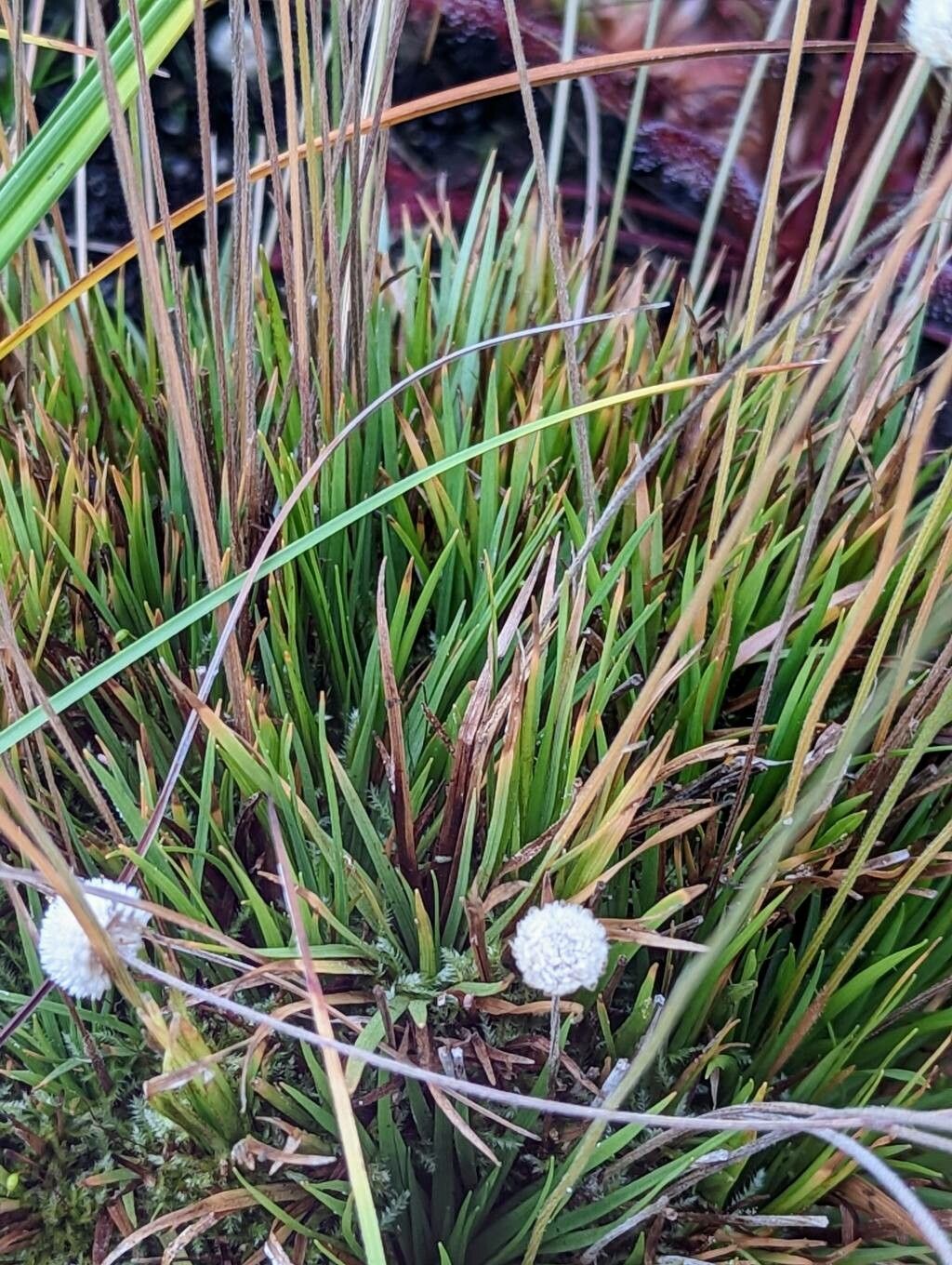
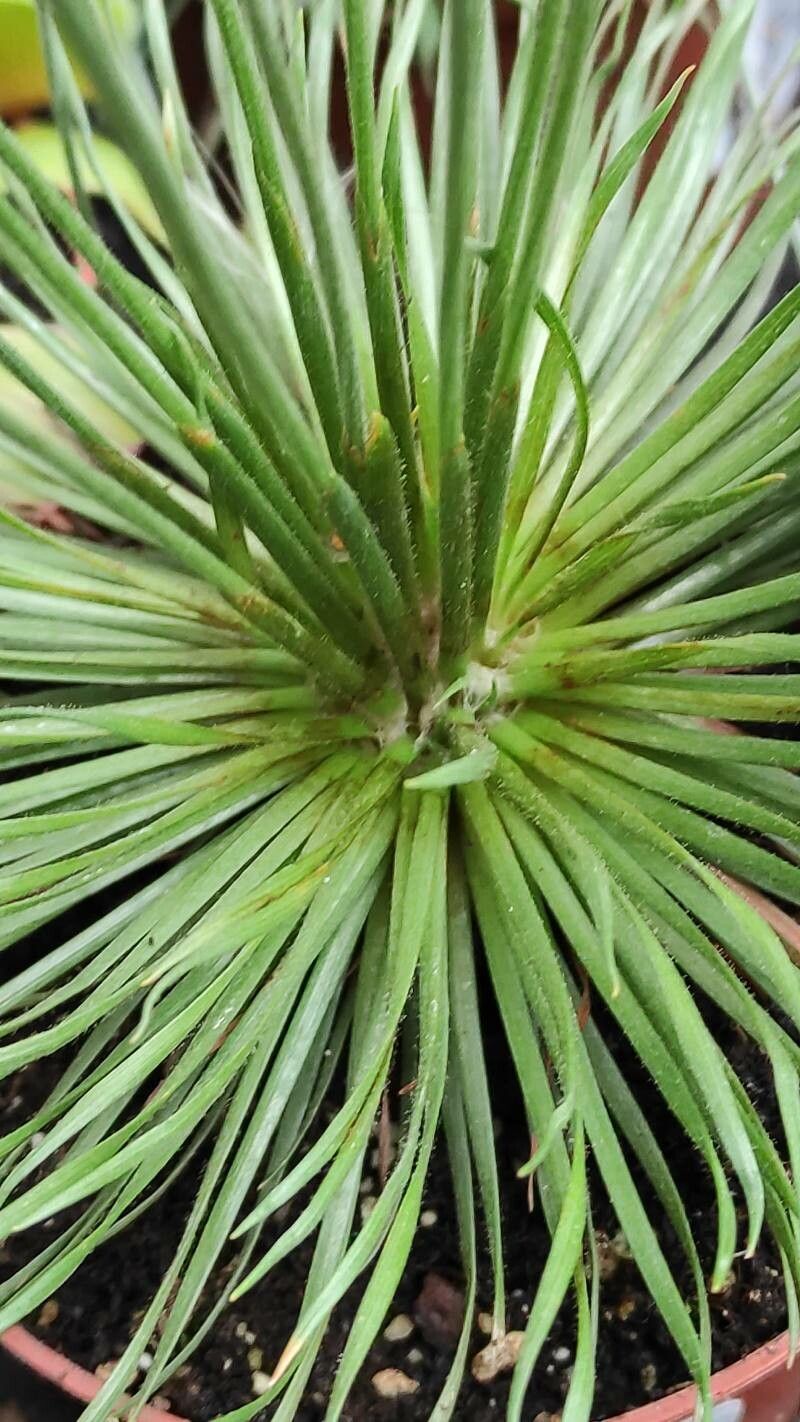
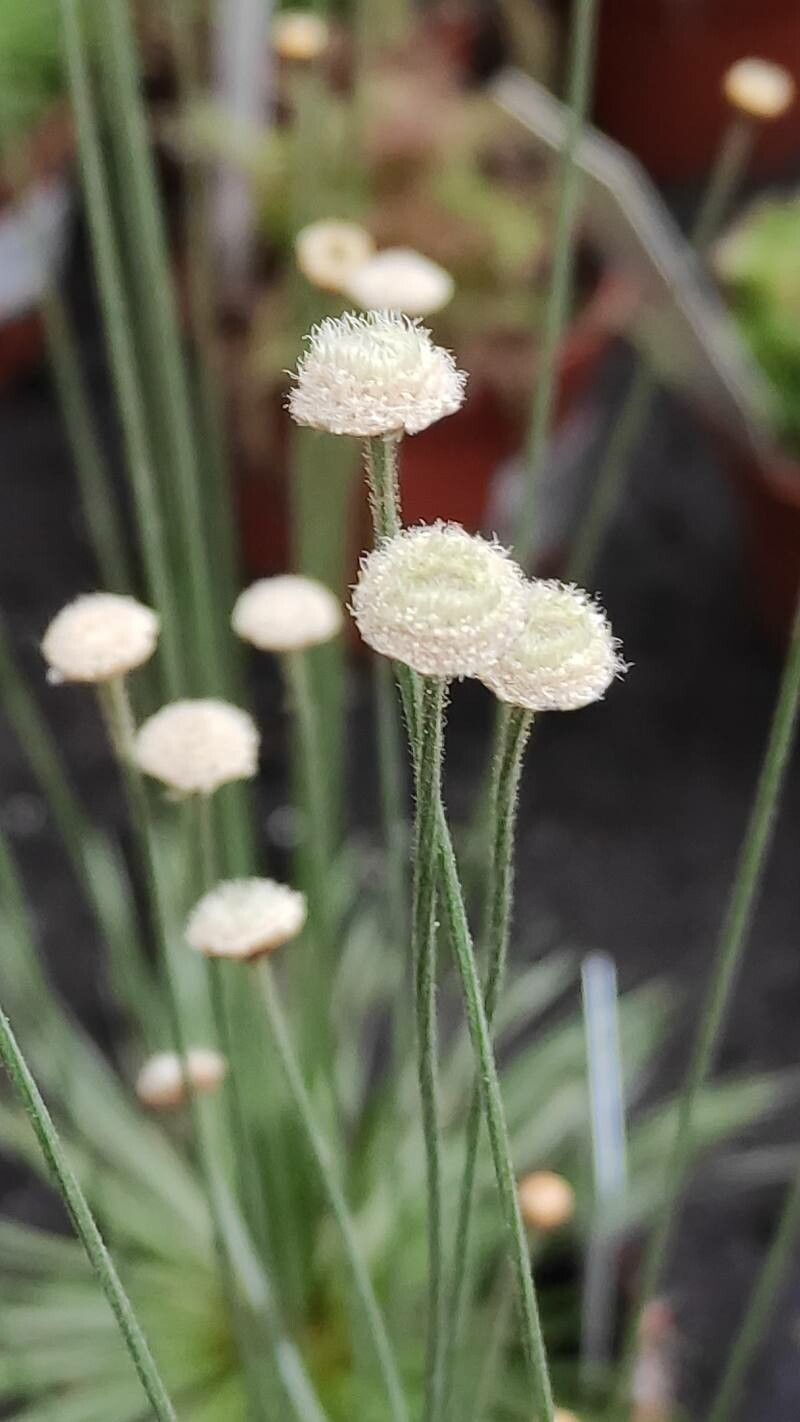
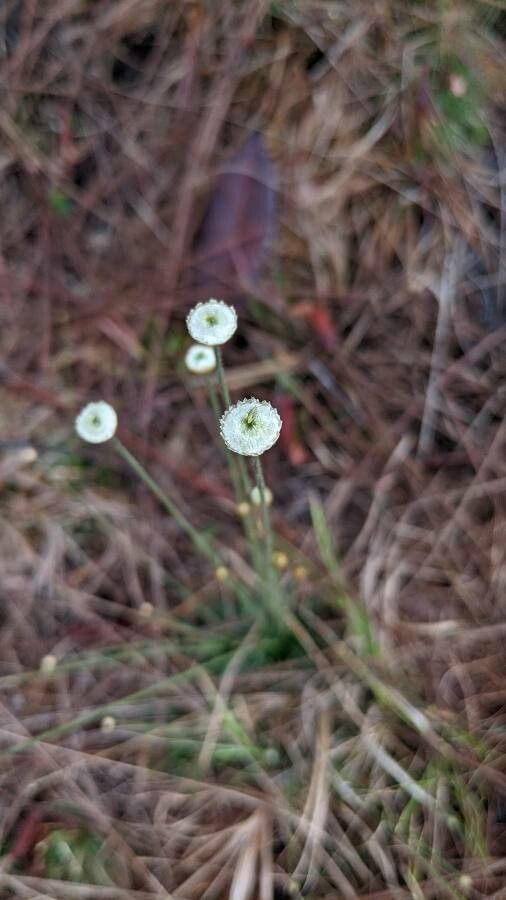
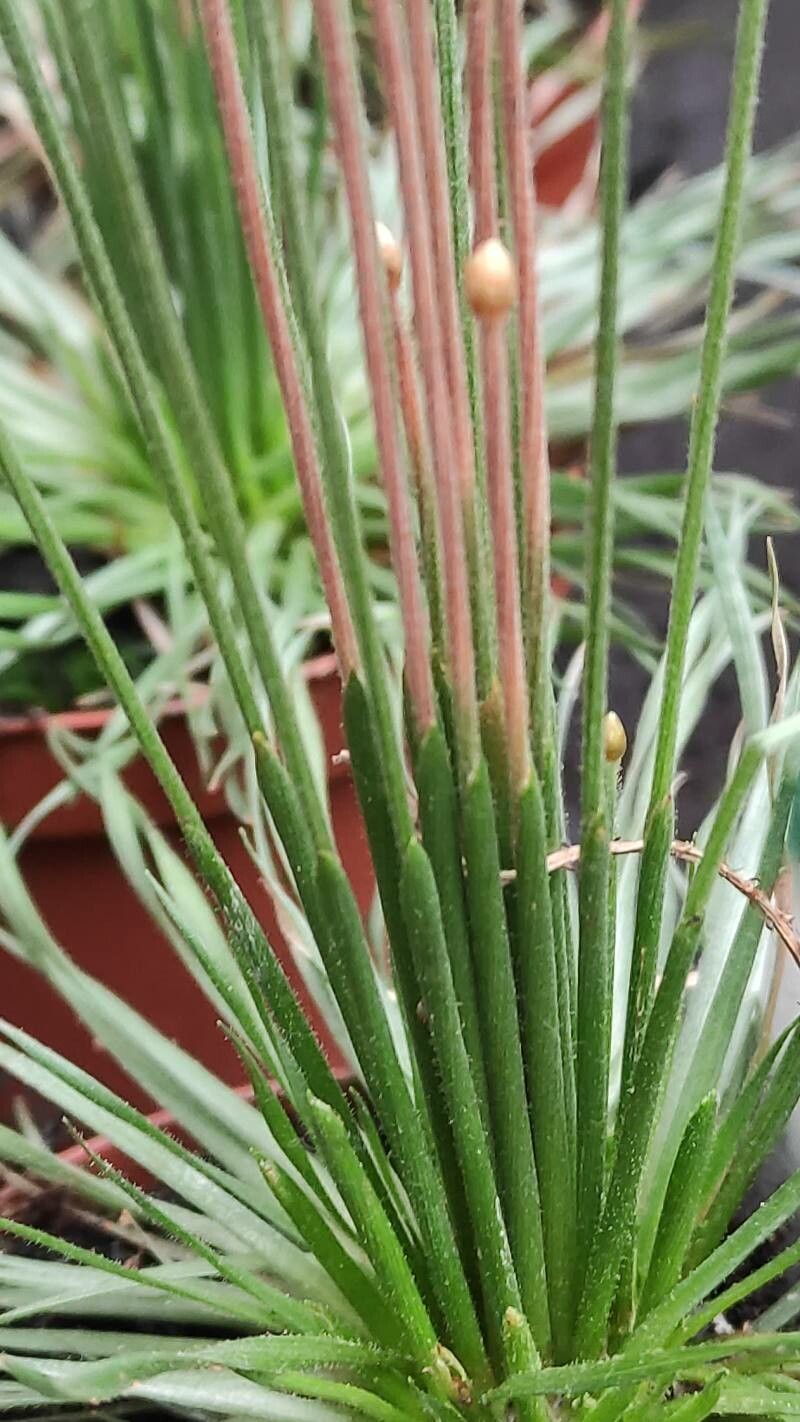
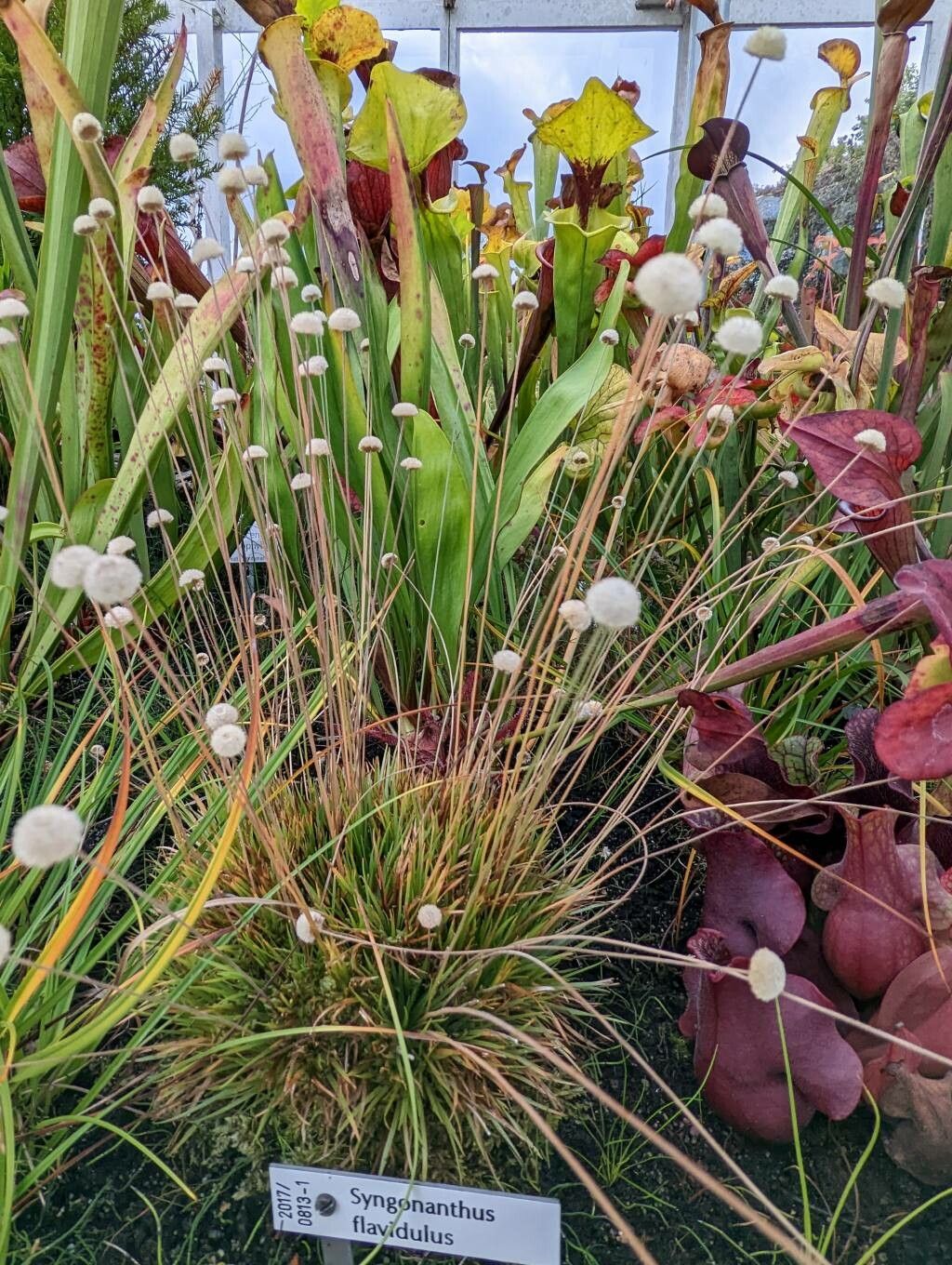
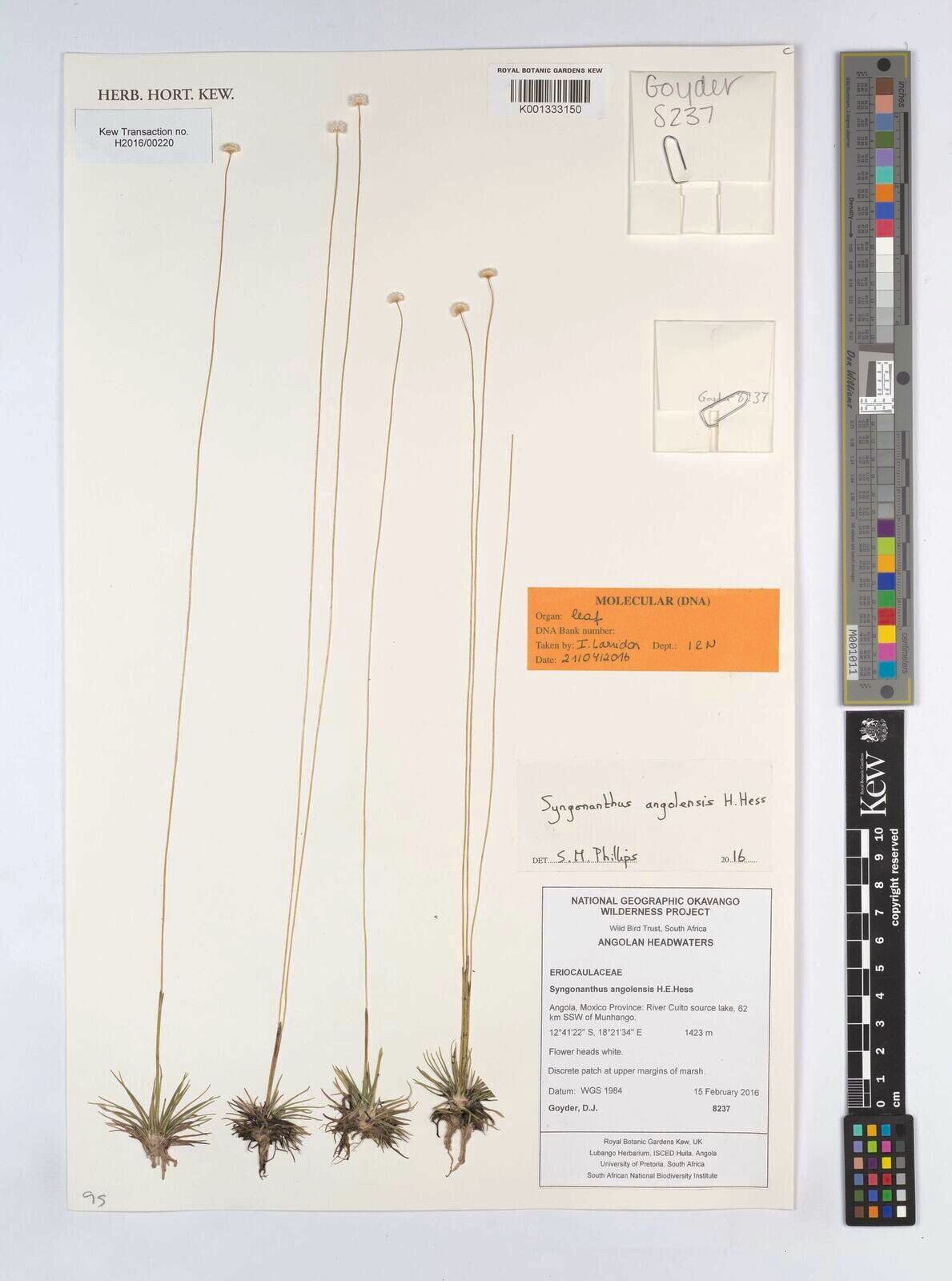
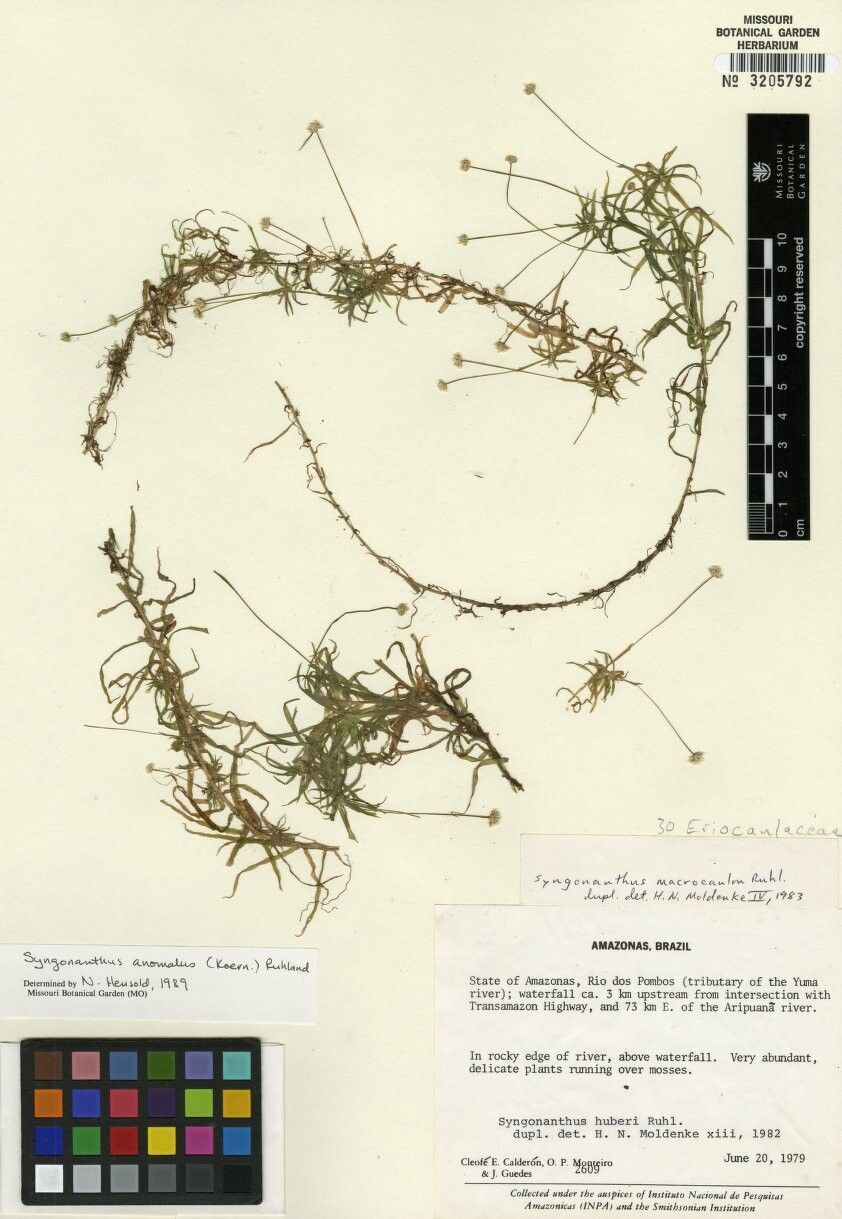
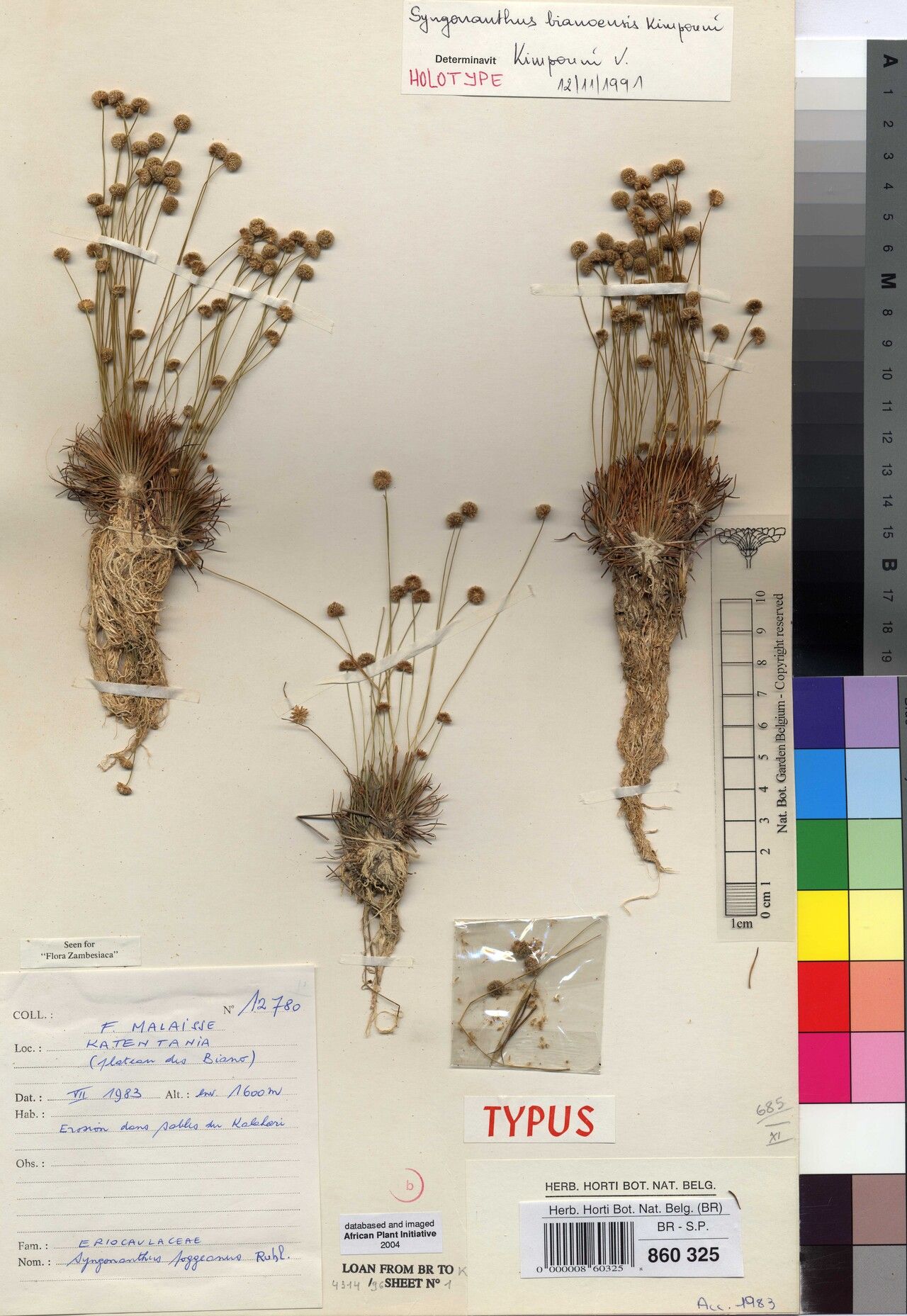
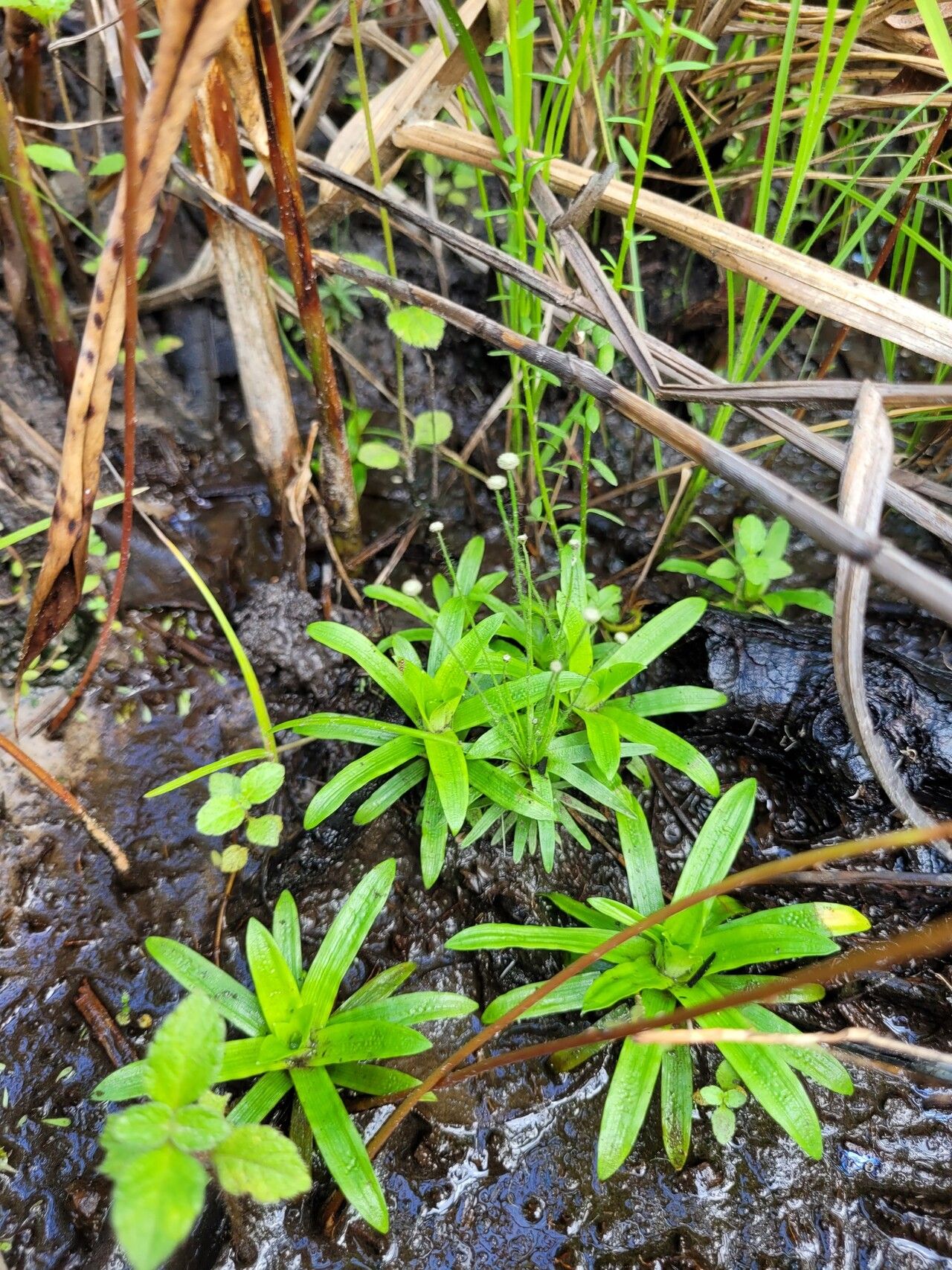
Syngonanthus flavidulus, common name yellow hatpins, is a flowering plant. It grows in the southeastern United States including Alabama, Florida, Georgia, North Carolina and South Carolina. It is in the Syngonanthus genus and pipewort family Eriocaulaceae. A perennial, it grows to about a foot in height. It grows in flatwoods, prairies, and pond margins. It has very small flowers that bloom February to July and appear as small white buttons and it has shiny leaves. Eugen Otto Wilhelm Ruhland reclassified it from Eriocaulon to Syngonanthus in 1903.
Yellow hatpins is fairly resistant to disease and generally not prone to problems. However, it can be vulnerable to pests and diseases present in its environment. These infections are typically mild. For care, this plant requires moderate maintenance. It should be pruned regularly to retain a neat appearance and support healthy growth. Fertilizing can also help encourage flowering. Yellow hatpins is appropriate for anyone with outdoor space, such as a garden or patio, and does not need a lot of care experience. It may demand more attention if grown indoors.
How to keep Syngonanthus Flavidulus.
Light
The yellow hatpins thrive best where sunlight is muted or diffused, providing steady exposure that isn't too strong. They can even flourish in places where the sun's illumination is greatly reduced. Overexposure to intense light can stress the plant, while insufficient light may hinder its growth.
Water
Yellow hatpins thrive in high humidity and consistently moist conditions, which are typical of tropical rainforests. To keep them healthy, water them weekly, ensuring the soil stays moist but not waterlogged. While they are primarily grown indoors, use well-draining soil in containers to ensure even moisture distribution throughout the growing season.
Temperature
Yellow hatpins comes from tropical areas, where the climate is generally warm and humid. Consequently, it is well suited to high heat and moisture. It is not fond of sudden temperature shifts and prefers a consistent thermal environment, so avoiding indoor temperature fluctuations is important. It typically cannot tolerate cold conditions and needs warmer temperatures to grow. If surrounding temperatures fall too low, the plant may stop growing or even die.
Fertilizer
Yellow hatpins need the most fertilizer during their active growth phase, which happens mainly in spring, summer, and early fall. Fertilizing is required to supply essential nutrients that the soil may lack, encouraging healthy root and stem development as well as attractive foliage, which is a key characteristic of this plant.
Pruning
Pruning yellow hatpins is important for maintaining their shape and health. To optimize growth and blooms, remove dead stems in early spring and trim overgrown areas later in the season. This practice enhances air circulation, reduces the risk of disease, and increases the plant's vigor. Always use clean, sharp tools when pruning.
Botanical profile.
- Plant Type
- Herb
- Life Cycle
- Perennial
- Genus
- Syngonanthus
- Family
- Eriocaulaceae
- Hardiness Zone
- 9-11
- Mature Height
- 15 cm to 30 cm
- Mature Spread
- 5 cm to 10 cm
- Leaf Color
- Light Green
- Leaf Type
- Evergreen
- Flower Color
- White
- Flower Size
- 0.51 cm to 0.76 cm
- Bloom Time
- Summer
- Planting Time
- Spring, Summer, Autumn
- Harvest Time
- Late summer, Early fall, Mid fall
Other names.
Reader questions.
What are the sunlight requirements for Yellow Hatpins?
Yellow Hatpins require specific sunlight conditions based on their location. For outdoor gardening, aim for partial sun, about 3-6 hours of sunlight, or full shade, less than 3 hours of sunlight. It's crucial to observe the movement of sunlight through your garden to find the optimal balance of light and shade. This ensures the plants are happy and healthy. Additionally, the Yellow Hatpins can thrive in conditions where sunlight is muted or scattered. They can flourish even with significant diminishment of sun's illumination. However, intense light exposure can stress the plant, while insufficient light might impede its growth.
What are Yellow Hatpins?
Yellow Hatpins, scientifically known as Syngonanthus flavidulus, are a species with notable features but specific details such as general essentials, symptoms of conditions they may indicate, or additional fascinating information were not provided in this context.
How can artificial lighting be used for Yellow Hatpins?
When natural sunlight is insufficient, especially during winter or in less sunny spaces, artificial lighting can be crucial for Yellow Hatpins' growth. Optimal growth is achieved with 8-12 hours of light per day, mimicking natural daylight hours. LED lights are ideal, providing specific wavelengths necessary for the plants. Full sun plants require 30-50W/sq ft, partial sun plants 20-30W/sq ft, and full shade plants 10-20W/sq ft of artificial light. The light source should be placed 12-36 inches above the plant, depending on its needs.
What are the symptoms of insufficient or excessive light on Yellow Hatpins?
Symptoms of light deficiency in Yellow Hatpins include smaller new leaves, leggy or sparse growth, faster leaf drop, slower or halted growth, lighter-colored or irregularly patterned new leaves, and symptoms of excessive sunlight exposure such as chlorosis, sunscald, leaf curling, wilting, and leaf scorching. Each symptom helps identify whether the plant is getting too much or too little light, enabling timely adjustments to their environment.
What are the solutions for Yellow Hatpins facing insufficient or excessive light?
To optimize Yellow Hatpins' growth in light-deficient conditions, gradually introduce them to more sunlight, aiming for 3-6 hours daily. Use artificial light as an alternative for indoor plants or those not easily moved, ensuring at least 8 hours of light exposure per day. For outdoor plants, avoid sudden changes in sunlight exposure to prevent sunburn. If sunlight is obstructed, consider pruning or transplanting to allow more light access. Always remember, parts of the plant affected by insufficient sunlight may not recover fully, but new growth should be healthy with improved light conditions.