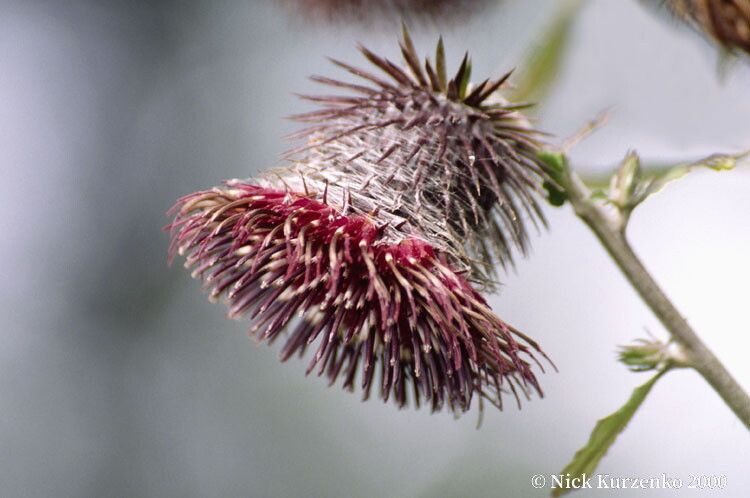
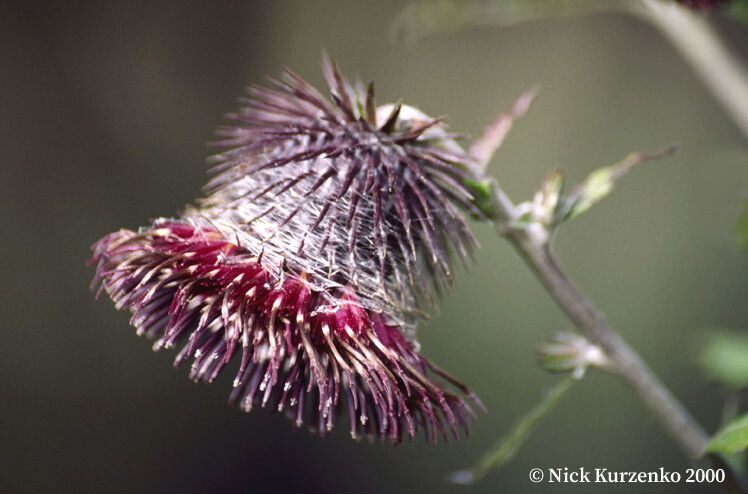
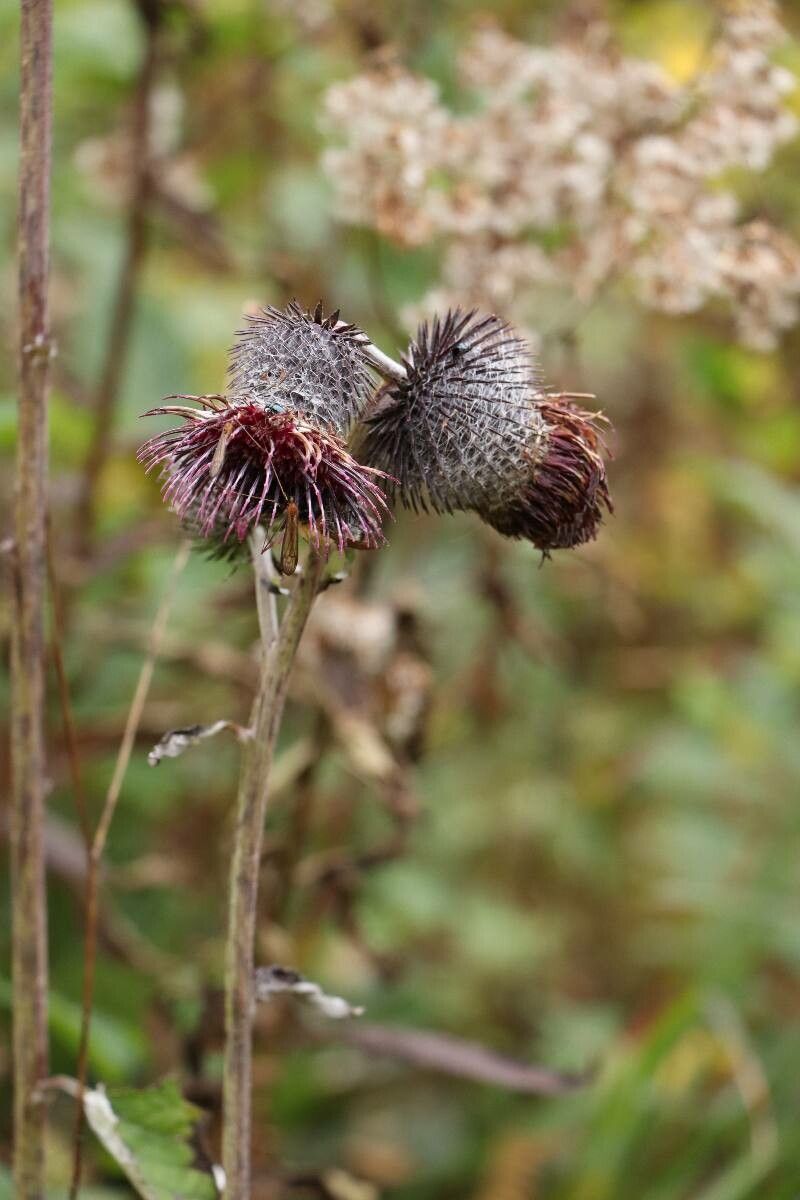
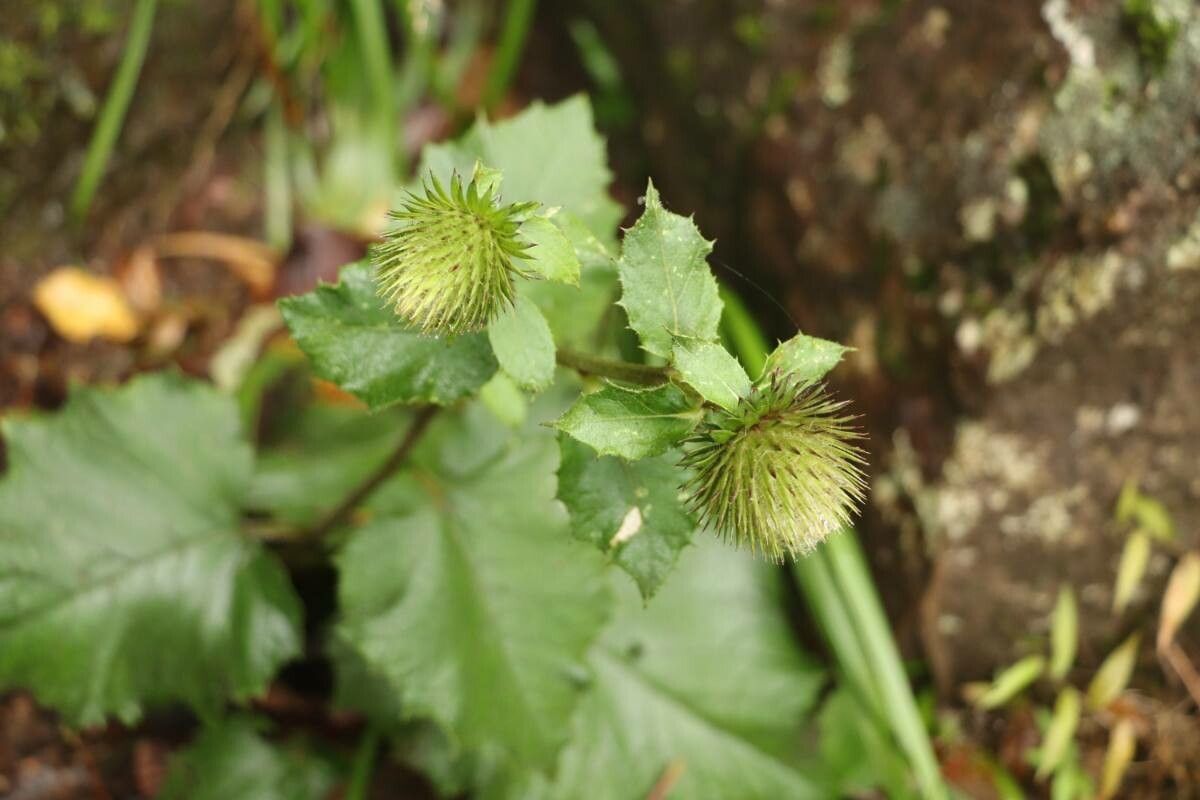
Synurus is a genus of Asian plants in the tribe Cardueae within the family Asteraceae.Synurus has a thick stem up to 1.5 meters tall. It produces large, nodding, spherical flower heads up to 6 centimeters wide with purple florets.The anti-inflammatory properties of the plant as an herbal remedy have been well studied. It is eaten as a wild vegetable in Korea. SpeciesSynurus deltoides (Aiton) Nakai - Russia (Chita, Amur, Primorye, Khabarovsk), China (Inner Mongolia, Hebei, Hubei, Sichuan, Henan, Anhui, Zhejiang, Ningxia, Heilongjiang, Jilin, Liaoning), Mongolia, Japan, Korea Synurus excelsus (Makino) Kitam. - Japan, Korea Synurus palmatopinnatifidus (Makino) Kitam. - Japan, Korea Synurus pungens (Franch. & Sav.) Kitam. - Japanformerly includedsee Olgaea
Synurus diabolicus - Olgaea lomonossowii
O-yama-bokuchi is fairly disease-resistant and typically does not develop many illnesses. Still, it can be vulnerable to pests and diseases present in its environment. When infections occur, they are generally mild. Regarding upkeep, this plant needs a moderate level of care. It should be pruned regularly to preserve a neat appearance and encourage healthy growth. Applying fertilizer can also aid in boosting flower production. O-yama-bokuchi is a good choice for anyone with outdoor areas like a garden or patio and does not demand extensive gardening experience. It may need extra attention if cultivated indoors.
How to keep Synurus Deltoides.
Light
O-yama-bokuchi thrives when it receives a plentiful amount of daily sunlight. It comes from a habitat where abundant sun exposure is the norm. Its growth could be adversely impacted by either too much or too little sunlight, but it can still adapt to different levels of light.
Water
O-yama-bokuchi flourishes in humid environments with consistently moist soil that mimics its natural East Asian forest habitat. To keep its foliage lush, it should be watered weekly. Mulching is beneficial as it helps retain moisture, similar to the conditions found on a forest floor. Although typically grown outdoors, this plant requires a humid microclimate for optimal growth.
Temperature
The O-yama-bokuchi thrives in temperate climates, specifically between 50 and 95 °F (10 to 35 ℃). For its optimal wellbeing, exposure to temperatures beyond this span should be avoided, particularly during shifts in the seasons.
Fertilizer
Typically, one springtime application of fertilizer is adequate for O-yama-bokuchi, however, repeated fertilization can expedite growth. The plant should be fed every month to month and a half. The act of fertilization improves the look and effectiveness of the leaves by encouraging steady coloration and maintaining textural health. Additionally, it instigates the development of roots and the absorption of nutrients, contributing to the plant's overall wellbeing in the long run.
Pruning
O-yama-bokuchi features broad leaves with lobes and clusters of purple flowers. To maintain its health and appearance, prune the plant from early to late spring. This timing allows you to remove dead branches, improve air circulation, and shape the plant according to its natural growth pattern. When pruning, concentrate on the older stems to rejuvenate the plant. Make sure your cuts are clean to prevent infections and promote strong, healthy growth.
Botanical profile.
- Plant Type
- Herb
- Life Cycle
- Perennial
- Genus
- Synurus
- Family
- Asteraceae
- Hardiness Zone
- 6-9
- Mature Height
- 91 cm
- Mature Spread
- 30 cm to 61 cm
- Leaf Color
- Green, Dark Green
- Leaf Type
- Deciduous
- Flower Color
- Purple, Brown
- Flower Size
- 6.35 cm
- Bloom Time
- Late summer, Early fall
- Planting Time
- Spring, Summer
- Harvest Time
- Early fall, Mid fall
- Native Area
- Russia, Japan, Mongolia, Koppen, South Korea, China
Other names.
Reader questions.
What are the sunlight requirements for O-yama-bokuchi?
O-yama-bokuchi requires a generous amount of sunlight each day, thriving best in conditions where it receives more than 6 hours of direct sunlight. This level of exposure is typical for its native environment, suggesting that while the plant is adaptable to varying light conditions, optimal growth is achieved with sufficient daily sunlight. It's crucial to observe how sunlight moves through your garden to find the perfect balance of light and shade, ensuring your plant's happiness by choosing spots that meet these requirements.
Can artificial lighting be used for O-yama-bokuchi, and if so, how?
Yes, artificial lighting can be a vital solution for growing O-yama-bokuchi indoors, especially when natural sunlight is insufficient. Adequate lighting promotes faster, healthier growth. LED lights are recommended because they can be tailored to provide specific wavelengths needed by the plant. The intensity required varies by plant type: full sun plants need 30-50W/sq ft, partial sun plants 20-30W/sq ft, and full shade plants 10-20W/sq ft. Lights should be placed 12-36 inches above the plant and turned on for 8-12 hours per day to mimic natural daylight hours.
What are the symptoms of inadequate light in O-yama-bokuchi?
Symptoms of inadequate light in O-yama-bokuchi include smaller new leaves compared to older ones, leggy or sparse growth, faster leaf drop, slower or halted new growth, and leaves developing pale or irregular color patterns indicating a lack of chlorophyll. Excessive sunlight can lead to chlorosis, sunscald, leaf curling, wilting, and leaf scorching, reflecting the plant's struggle to adapt to poor lighting conditions or excessive exposure to sunlight.
What solutions can address insufficient or excessive light exposure for O-yama-bokuchi?
To address insufficient light, gradually move O-yama-bokuchi plants to sunnier locations, ensuring they receive at least 6 hours of direct sunlight daily. Utilize south-facing windows for indoor plants, and consider artificial lighting solutions, such as keeping a lamp on for 8 hours a day or investing in grow lights. For outdoor plants, avoid sudden changes in light intensity to prevent sunburn. Minimize obstructions by pruning trees or relocating plants to areas with more sunlight. It's important to note that while affected parts might not recover, new growth will be healthy post-adjustment.