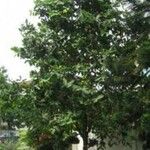
Syzygium aqueum
Watery rose apple · Bellfruit · Water Apple · Mountain apple · Watery roseapple
Description
Source: leafsnapSyzygium aqueum is a species of brush cherry tree. Its common names include watery rose apple, water apple and bell fruit, and jambu in several Indian languages. The tree is cultivated for its wood and edible fruit. The fruit is a fleshy whitish-pinkish to yellowish-pinkish or red berry which is bell shaped, waxy and crisp. Syzygium aqueum is native to tropical Asia and Queensland. The tree requires heavy rainfalls and can survive in tropical habitats, up to 1600m from sea level. In the Philippines, it is locally known as tambis and is often confused with macopa (Syzygium samarangense).The wood is hard and can be used to make tools. The bark of the tree is sometimes used in herbal medicines. It is grown in orchards and gardens and parks as an ornamental plant. The leaves are edible and are sometimes used to wrap food. The fruit has a very mild and slightly sweet taste similar to apples, and a crisp watery texture like the inside of a watermelon. It is a staple of Southeast Asian fruit stands, where it is inexpensive while in season. It does not bruise easily and may be preserved for months in a household refrigerator.
Care Guide
💧 Water
The watery rose apple, native to tropical regions, thrives in humid environments due to its high tolerance for moisture. Thanks to its efficient water retention abilities, it only needs watering every 2-3 weeks. As an evergreen plant, it is essential to maintain consistent soil moisture to ensure the health of its foliage throughout the year.
How should I water my Watery rose apple tree?
To water your Watery rose apple, you have many options for the watering tool. You can use watering cans, hoses, or even cups. Whichever tool you choose, make sure to apply the water directly to the soil. It's important to moisten all areas of the soil equally to ensure all the roots get the water they need. Using filtered water is a good idea, as tap water may contain harmful particles. It's also best to use water that is at or slightly above room temperature, as extreme temperatures can shock the plant. That said, the Watery rose apple generally responds well to any type of water you give it.
If I give my Watery rose apple plant too much or too little water, what should I do?
If you have outdoor plants, especially newly planted ones or seedlings, they may be susceptible to not getting enough water. It's important to continue watering them regularly for a few months while they are still small or newly planted. This is because once the roots are established, they can rely on rainwater most of the time. When your outdoor plant is in a pot, overwatering is more likely to happen. If you accidentally overwater your plant, you should take immediate action to fix the situation. First, stop watering the plant right away to minimize the negative effects. Then, remove the plant from its pot and check the roots. If there are no signs of root rot, you can place the plant back in its container. However, if you do find signs of root rot, trim away the affected roots and consider applying a fungicide to prevent further damage. Lastly, repot the plant in well-draining soil. In the case of underwatering your outdoor plant, simply water it more frequently. Underwatering can be easily fixed as the plant's leaves will droop, dry out, and fall off. However, once it receives sufficient watering, the leaves will quickly regain their fullness. It's important to correct your watering frequency as soon as you notice signs of underwatering.
How frequently should I water my Watery rose apple?
Growing outdoor plants usually relies on rainfall, but if your area lacks rain, you should water them every 2 weeks during spring and fall, and more often in the summer. In winter, when plants are slower in growth and need less water, you can water them less or not at all. However, if your Watery rose apple is young or recently planted, it will need more frequent watering to help it establish and become drought tolerant. For potted plants like the Watery rose apple, there are two ways to determine watering frequency. The first is to set a regular schedule, like once a week or every other week. However, this may not consider the specific conditions of your plant's environment. Alternatively, you can check the soil moisture and water when the top two to four inches have dried out. This method is especially important during summer when the plant's water needs are higher.
How much water does my rose apple tree need?
When watering your Watery rose apple plant, remember that it does not always need a lot of water. If only a few inches of soil have dried since your last watering, give it about five to ten ounces of water. You can also judge the water volume by checking the soil moisture. Look for how many inches of soil have dried between waterings. To ensure your Watery rose apple gets enough moisture, water it until all the dry soil layers are moistened. If more than half of the soil is dry, give it more water until it drains out of the pot's holes. If your Watery rose apple is planted in a rainy area outdoors, it may not need additional watering. When it is young or just getting established, make sure it receives 1-2 inches of rain per week. As it grows, it can rely on rainwater alone unless there is a long period without rainfall during hot weather. In that case, give it a full watering to prevent stress.
How can I know if I'm giving enough water to my rose apple plant?
The Watery rose apple is more likely to experience problems due to overwatering. There are clear signs to watch out for in such cases. Generally, an overwatered Watery rose apple will have yellowing leaves and may lose some leaves as well. Additionally, overwatering can lead to the plant shrinking and possibly developing root rot. Conversely, an underwatered Watery rose apple will also start to droop. Its leaves may become brown and fragile when touched. If you notice signs of overwatering or underwatering, it's important to take action promptly to revive the health of your Watery rose apple.
☀️ Light Full sun
Watery rose apple is native to open habitats, such as sunny meadows and forest margins, which offer abundant light. It grows best in Full Sun but can tolerate Partial Sun, adapting well to a range of sunlight conditions.
What are the sunlight requirements for watery rose apple?
Watery rose apple plants thrive in environments that simulate their natural habitat, which includes open areas like sunny meadows and forest edges. These conditions offer plenty of light, essential for their growth. Specifically, the plants do best under full sun conditions, which means they require more than 6 hours of direct sunlight daily. However, they can also adapt to partial sun exposure, which is about 3-6 hours of sunlight a day. It's important to observe how sunlight moves through your garden throughout the day and select locations that provide an ideal mix of light and shade, ensuring the plants stay healthy and happy.
How can artificial lighting be used for indoor watery rose apple plants?
Indoor watery rose apple plants can benefit significantly from artificial lighting, especially in scenarios where natural sunlight is insufficient, such as during winter or in less sunny areas of a home. Effective artificial lighting should simulate natural sunlight conditions to support optimal plant growth. LED lights are recommended for their efficiency and the ability to tailor the spectrum of light to the plant's needs. For full sun plants, 30-50 watts per square foot is advised, while partial sun plants require 20-30 watts per square foot. The artificial light source should be positioned 12-36 inches above the plant, mimicking the natural sunlight's distance, and the duration should align with the natural daylight hours typical for the species, generally between 8-12 hours of light per day.
What are the symptoms of inadequate light for watery rose apple?
Watery rose apple plants, when not receiving enough light, can display various symptoms indicating stress due to suboptimal lighting conditions. These symptoms include smaller new leaves, leggy or sparse growth, where the plant appears thinned out and weak, early dropping of older leaves as the plant tries to conserve resources, and a general slowdown or halt in new leaf production. Additionally, insufficient sunlight can lead to lighter-colored or irregularly patterned new leaves, indicating a lack of chlorophyll and essential nutrients. Extreme sunlight exposure can cause chlorosis, sunscald, leaf curling, wilting, and leaf scorching, further harming the plant's health and growth. Recognizing these signs early can help in taking corrective measures to ensure the plant's well-being.
What are the solutions for watery rose apple plants receiving insufficient light?
For watery rose apple plants struggling with insufficient light, both indoor and outdoor remedies can be applied. Indoors, gradually moving the plant to a location with at least 6 hours of direct sunlight daily is recommended, utilizing a south-facing window for maximum exposure. Artificial lighting, such as desk lamps or professional grow lights, can supplement sunlight, especially for large or immovable plants. Outdoor plants should also be gradually acclimated to brighter conditions to avoid sunburn. Removing obstructions to sunlight and, if possible, transplanting smaller plants during their dormant season to a sunnier location can enhance their light exposure. Unfortunately, parts of the plant already affected might not recover, but new growth should be healthier with improved lighting conditions.
🌡️ Temperature 20–35°C
Watery rose apple comes from tropical areas, where the climate is generally warm and humid. As a result, it is well suited to high temperatures and humidity. It is sensitive to abrupt temperature changes and prefers a stable thermal environment, so it is important to avoid temperature fluctuations indoors. It typically does not tolerate cold and needs relatively warm temperatures to grow. If the surrounding temperature falls too low, the plant may stop growing or even perish.
What is the botanic name of Watery Rose Apple?
The botanic name of Watery Rose Apple is Syzygium aqueum. This species is part of the broader genus Syzygium, which includes a wide variety of plants, many of which are valued for their fruit, timber, or ornamental qualities.
💨 Humidity
🪴 Soil 5-7
🌱 Fertilizer
Use organic fertilizers (e.g., fish emulsion, compost) instead of chemical ones for Watery rose apple. Supply higher nitrogen and phosphorus to young plants during spring. Incorporate compost or fertilizer into the soil before or after planting. For mature plants, supplement in spring with a balanced fertilizer or one targeting specific deficiencies. Nutrient deficiency causes small leaves, short branches, yellow/bronze leaves, acidic fruits, premature fruit fall, and splitting.
🪴 Pot & Repot
✂️ Pruning
The watery rose apple benefits greatly from winter pruning, which involves removing dead or crossing branches to enhance airflow and light penetration. Regular thinning helps prevent overcrowding and boosts fruit production. Properly shaping the plant supports balanced growth, while pruning during the dormant season minimizes stress and encourages vigorous growth in the spring, leading to a healthier and more productive plant.
🌿 Propagating
🐛 Diseases & pets
☠️ Toxicity
Characteristics
- Plant Type
- Tree, Shrub
- Life Cycle
- Perennial
- Genus
- Syzygium
- Family
- Myrtaceae
- Hardiness Zone
- 10
- Mature Height
- 3.66 m to 7.92 m
- Mature Spread
- 4.88 m to 7.92 m
- Leaf Color
- Green
- Leaf Type
- Evergreen
- Flower Color
- White
- Flower Size
- 2.54 cm to 3.56 cm
- Bloom Time
- All year round
- Planting Time
- Summer
- Harvest Time
- All year round
- Native Area
- Sri Lanka, Malaysia, Indonesia, Cambodia, Vietnam, Myanmar, Philippines, Bangladesh, Laos, Brunei, Thailand