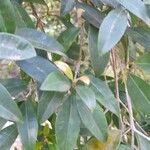
Syzygium australe
Australian brush-cherry · Australian water-pear · Brush-cherry · Creek lilly-pilly · Creek satin-ash
Description
Source: leafsnapSyzygium australe, commonly known as Brush Cherry or Creek Lilly Pilly, is a flowering plant species in the myrtle family, Myrtaceae. Native to Australia, it thrives in various habitats, including rainforests, wet sclerophyll forests, and areas along watercourses. This plant can grow up to 10 meters tall and features glossy green, oval-shaped leaves that are approximately 5-10 cm long. During spring or summer, it produces small white flowers in clusters, which are followed by edible red or purple berries about 1 cm in diameter. Syzygium australe is often used as an ornamental plant due to its attractive foliage and berries. Additionally, it has medicinal properties, with the leaves being traditionally used by Indigenous Australians to treat coughs, colds, and sore throats. The plant prefers well-drained soils with full sun exposure but can tolerate partial shade. It needs regular watering during dry periods but can withstand short droughts once established. Overall, Syzygium australe is an attractive native Australian species with both ornamental and traditional medicinal value, making it an interesting addition to any garden or landscape design project.
Care Guide
💧 Water Every 7 days
The brush cherry thrives best in subtropical conditions that provide consistent moisture and stable humidity. For optimal growth, it's ideal to water the plant every two weeks. However, during periods of active growth, more frequent watering may be necessary. Due to its size and ornamental value, the brush cherry is primarily grown outdoors.
☀️ Light Full sun
Brush cherry requires abundant light for peak health, though it is tolerant of moderately lit conditions. Coming from environments with plentiful sunlight, it depends on a large amount of light for growth. Both excessive and insufficient sunlight can harm the plant’s health and may stunt its growth.
What are the sunlight requirements for Brush Cherry?
Brush Cherry requires varying amounts of sunlight to thrive. Full sun, which entails more than 6 hours of direct sunlight a day, is ideal for optimal growth. However, it can also grow in partial sun conditions, which means about 3-6 hours of sunlight a day. It's important to observe how sunlight moves through your garden to find spots that provide the perfect balance of light and shade for Brush Cherry, ensuring the plant's happiness and health.
How essential is light for the health of Brush Cherry?
Light is crucial for the health and growth of Brush Cherry, a plant that craves abundant light, reflecting its origin from sun-abundant environments. Adequate exposure to sunlight is necessary for its growth, while both overexposure and underexposure can negatively impact the plant's health and potentially stunt its growth. In cases where natural light is insufficient, especially during winter or in less sunny spaces, artificial lighting can be a vital solution. Optimal growth can be supported by using artificial lights, such as LED lights, which can be customized to provide specific wavelengths needed by the plant. Depending on the plant's sunlight needs, artificial light ranging from 10 to 50W/sq ft can promote faster, healthier growth.
What are some common symptoms of inadequate lighting for Brush Cherry?
Brush Cherry may exhibit several symptoms when subjected to inadequate lighting conditions. These include smaller new leaves compared to mature ones, leggy or sparse growth, faster leaf drop, slower or halted growth, lighter-colored new leaves, and specific conditions like chlorosis, sunscald, leaf curling, wilting, and leaf scorching. Each of these symptoms indicates a different aspect of how insufficient or excessive sunlight affects the plant's well-being, from reduced chlorophyll and essential nutrients to physical damage and increased water loss.
What solutions exist for light-related issues in Brush Cherry?
Addressing light-related issues in Brush Cherry involves adjusting its exposure to sunlight or artificial light. If your Brush Cherry is indoor or not easily movable, gradually relocating it to a sunnier location or using artificial lighting can help. Outdoor Brush Cherries should be moved gradually to avoid shock from sudden changes in light intensity. In gardens, reducing obstructions like overhanging branches can increase sunlight exposure. For small plants, transplanting during their dormant period can be effective. It's crucial to remember that while parts of the plant that suffered from insufficient light may not recover, new growth will be healthy after adjusting light exposure.
🌡️ Temperature 10–37.8°C
Brush cherry is native to regions where temperatures range from 50 to 100.4 °F (10 to 38 °C). The plant favors these moderate conditions and does not tolerate extreme heat or cold. It is advisable to make adjustments to keep temperatures within this range, especially during winter and summer.
What is the native climate for Brush Cherry?
Brush cherry is native to climates that experience temperatures ranging from 50 to 100.4 °F (10 to 38 °C). It thrives in moderate climates that do not have extreme heat or cold. It is recommended to adjust the surrounding temperature especially during the harsh winter and summer months to maintain these conditions.
Does Brush Cherry require any special frost protection measures?
Brush cherry possesses strong cold resistance and usually does not require special frost protection measures during winter. However, if temperatures are expected to fall below -25°C, it is important to protect the plant from the cold. This can involve covering the plant with soil or straw. Additionally, watering the plant abundantly before the first freeze in autumn is recommended to ensure the soil remains moist and enters a frozen state, which helps prevent drought and water scarcity for the plant during winter and early spring.
How does Brush Cherry react to low temperatures?
Brush cherry is cold-tolerant and fares best when temperatures are above 10°C. It should be kept above -15°C during winter. If temperatures fall below -25°C, there might not be noticeable changes during winter; however, you may observe a decrease in sprouting or a complete lack of sprouting in spring. In such cases, it's advised to remove any parts that have failed to sprout come springtime.
What should be done if Brush Cherry experiences high temperatures?
During summer, it's important to ensure Brush Cherry is kept below 38°C. Should the temperature exceed 43°C, the plant's leaves may lighten in color, become prone to curling, suffer from sunburn, and in severe cases, the entire plant may wilt and dry out. To combat this, trim away the sunburned and dried-up parts of the plant. Move the plant to a shaded location away from the midday and afternoon sun, or utilize a shade cloth. Additionally, water the plant in the morning and evening to maintain soil moisture.
What is the botanical name of Brush Cherry?
The botanical name of Brush Cherry is Syzygium australe.
💨 Humidity
🪴 Soil 5-6
🌱 Fertilizer
Brush cherry plants need adequate nutrients to achieve the best fruit production. Fertilize in early spring to promote new growth and flowering. Regular feeding keeps the plant healthy, yields more tasty fruit, and prevents nutrient-deficiency problems like yellowing leaves and reduced fruit production.
🪴 Pot & Repot Every 12 months
✂️ Pruning
Brush cherry is an evergreen plant ideal for hedges. To keep it healthy, prune it between early and late spring. Focus on trimming excessive branches and removing any dead wood. Light pruning throughout the year helps manage its size, improves air circulation, and encourages dense growth. For more detailed techniques, consult horticultural sources.
🌿 Propagating
🐛 Diseases & pets
☠️ Toxicity
Characteristics
- Plant Type
- Herb
- Life Cycle
- Perennial
- Genus
- Syzygium
- Family
- Myrtaceae
- Hardiness Zone
- 6-12
- Mature Height
- 17.98 m to 35.05 m
- Mature Spread
- 3.05 m to 6.1 m
- Leaf Color
- Dark Green, Forest Green
- Leaf Type
- Evergreen
- Flower Color
- White, Yellow
- Flower Size
- 2.54 cm
- Bloom Time
- Late spring, Early summer, Mid summer
- Planting Time
- Spring
- Harvest Time
- Mid summer