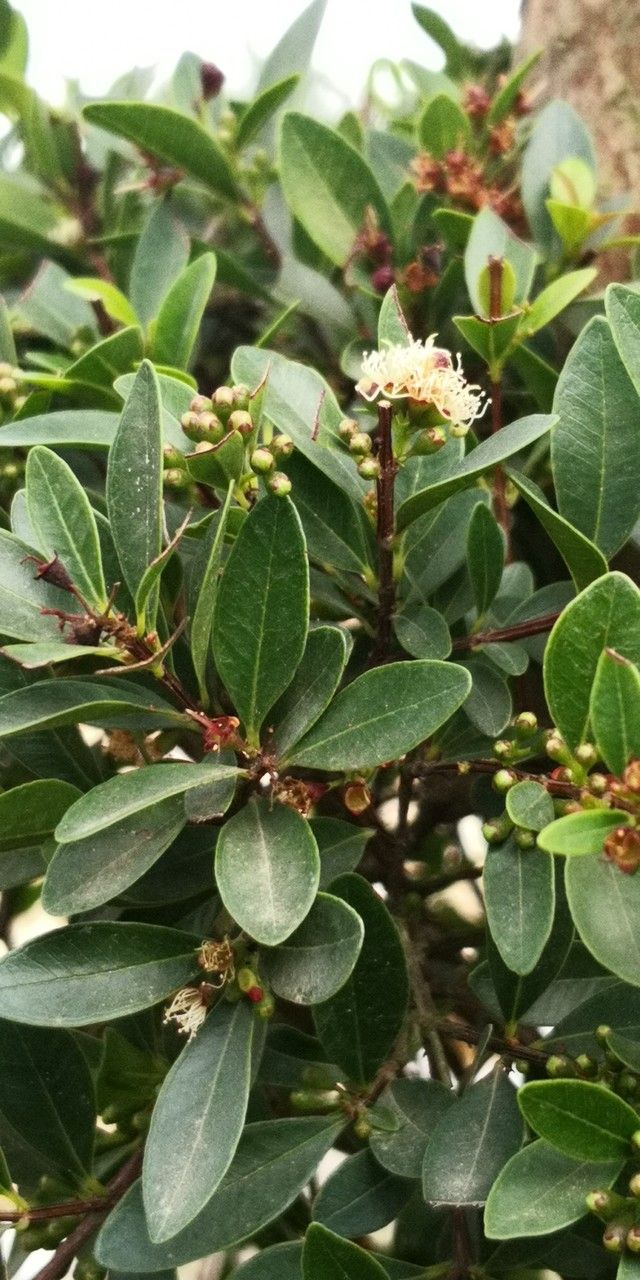
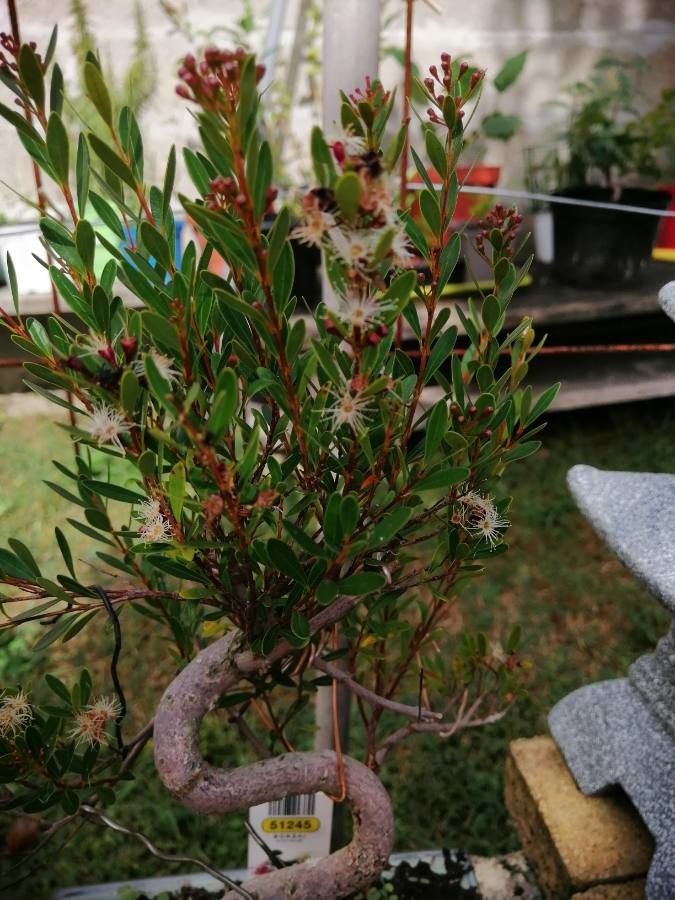
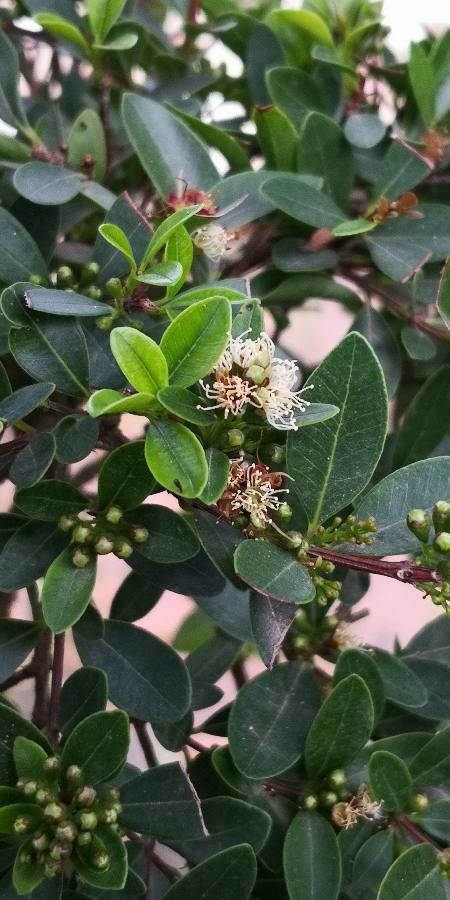
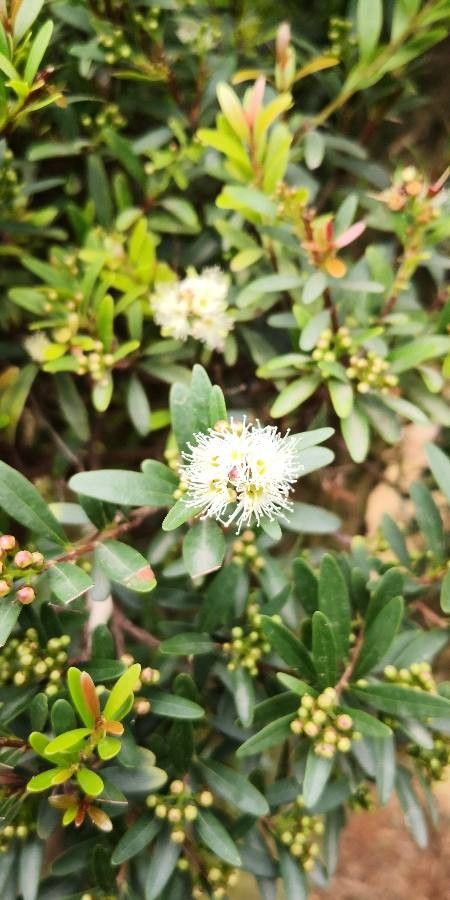
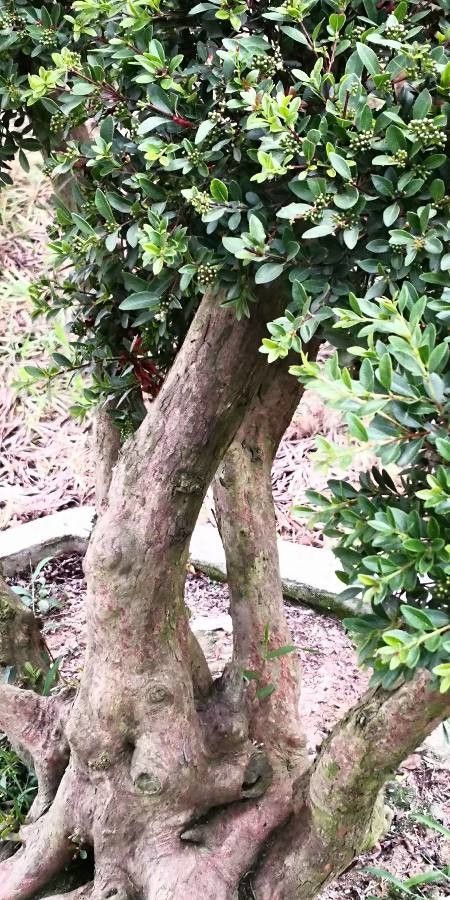
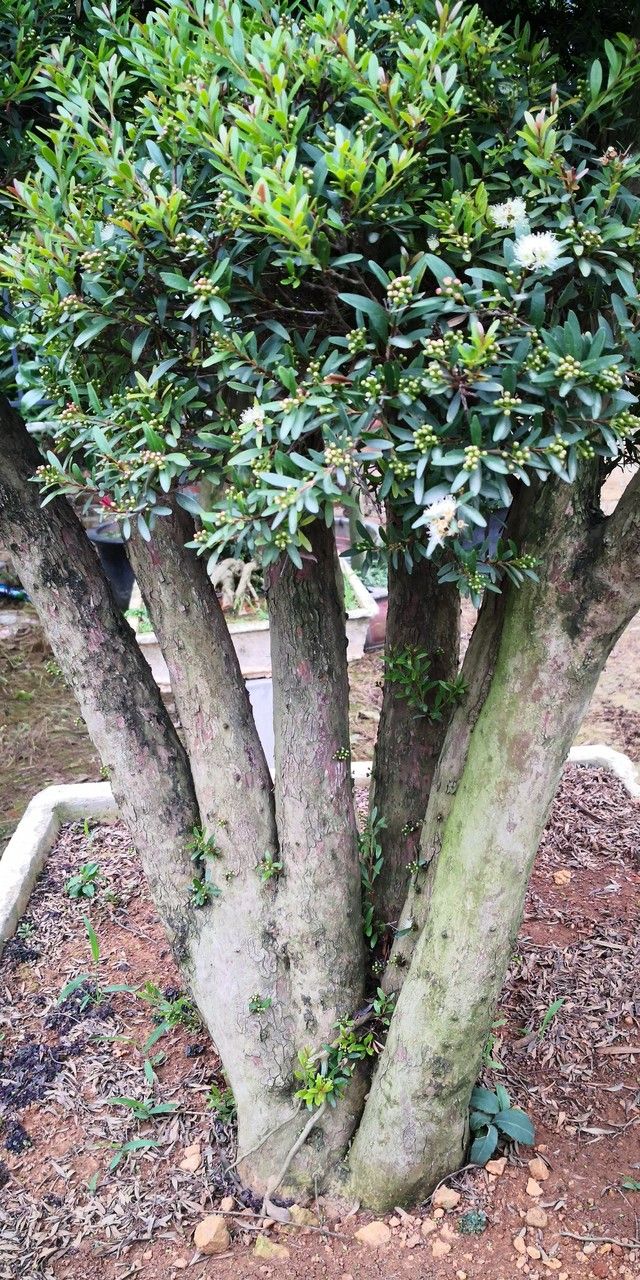
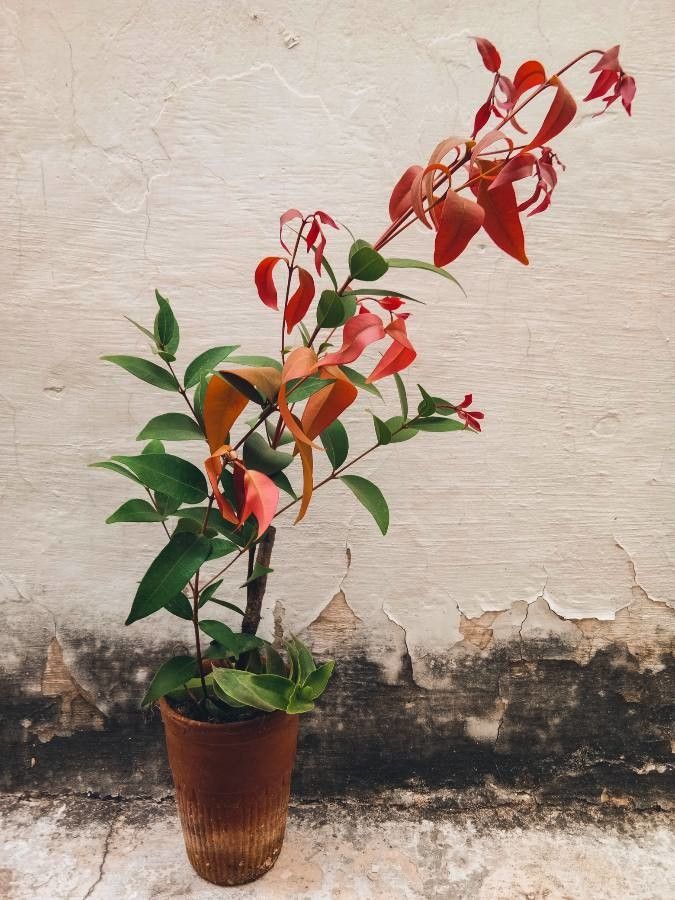
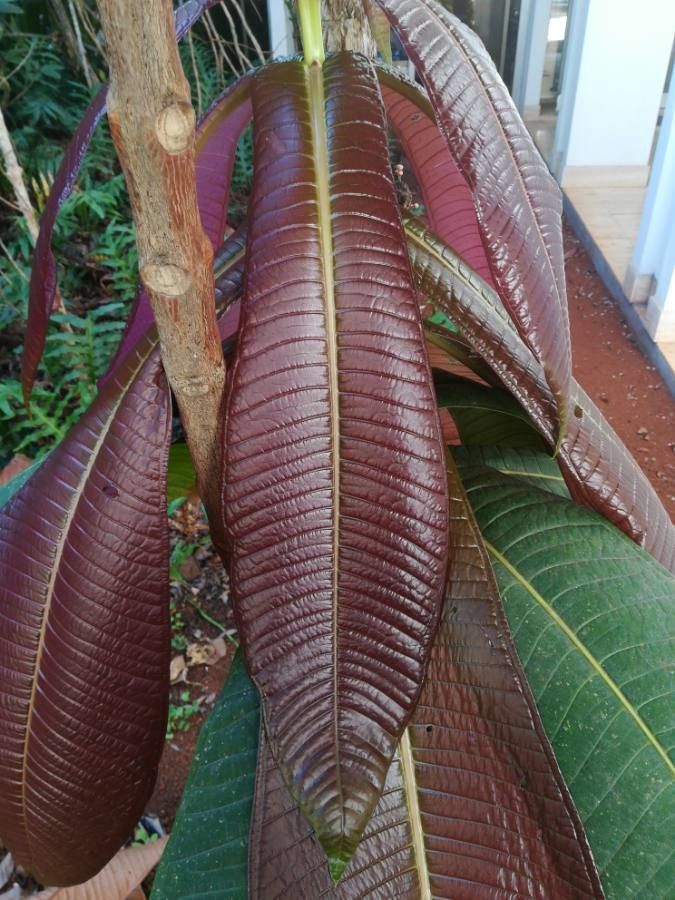
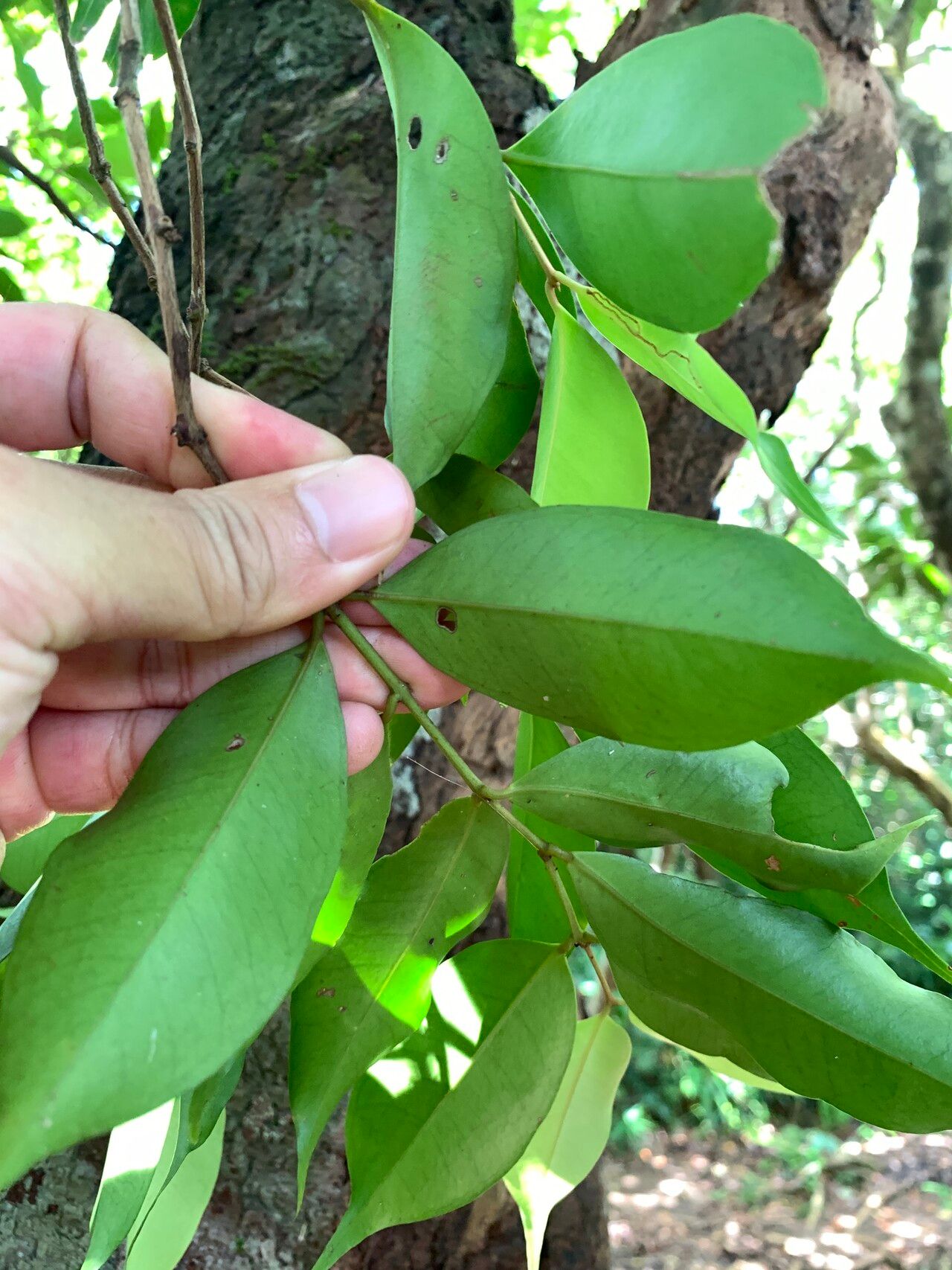
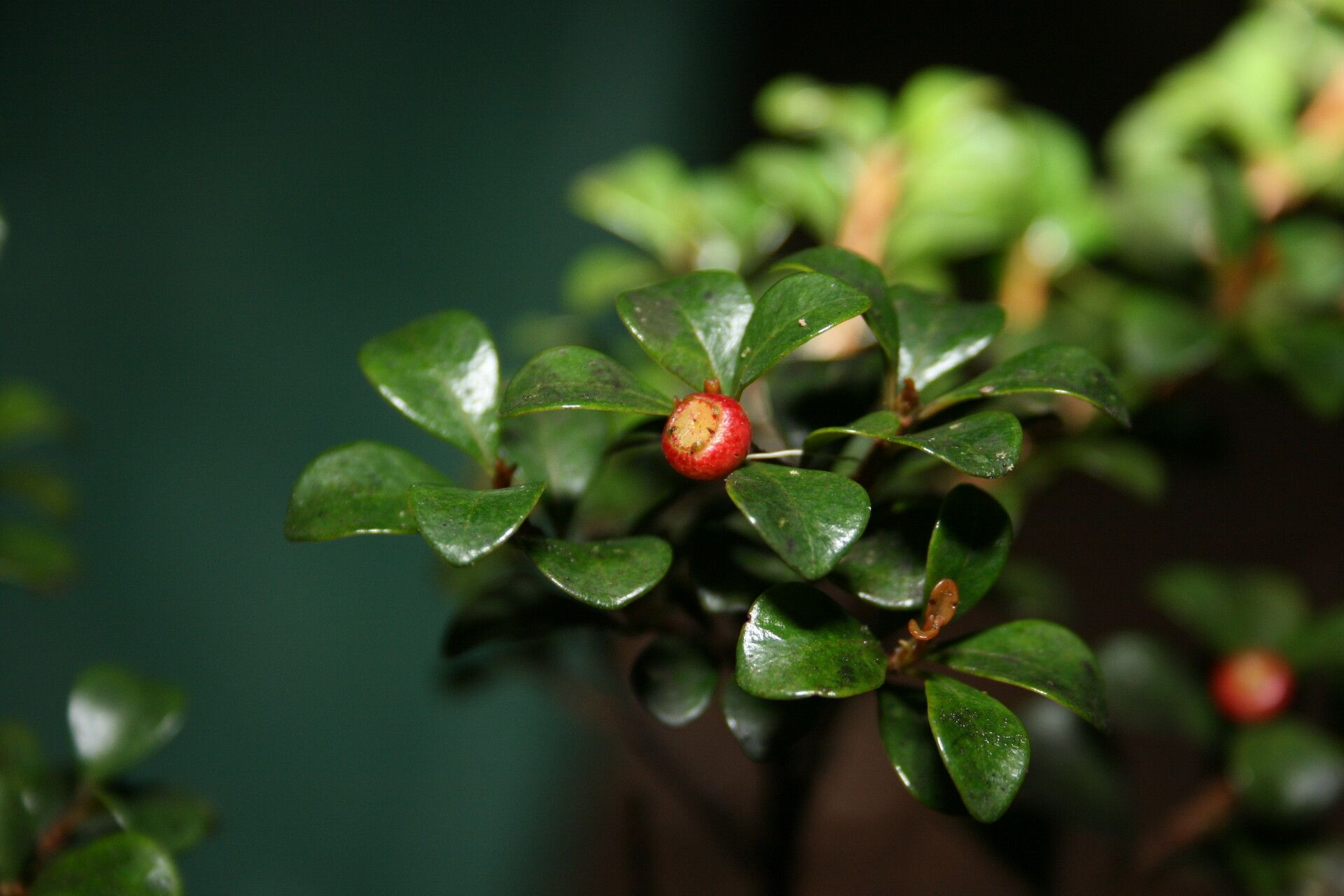
Syzygium buxifolium, the boxleaf eugenia or fish-scale bush, is a species of flowering plant in the family Myrtaceae, native to northern Vietnam, southern China, Hainan, Taiwan, the Ryukyu Islands, and southern Kyushu, Japan. A shrub or small tree, it is suitable for hedges, containers, and bonsai. It is used as a street tree in a number of southern Chinese cities.
The fish scale bush is largely disease-resistant and typically not susceptible to ailments. Regarding maintenance, this plant is fairly low-maintenance. When grown outdoors it needs only occasional watering, and larger specimens usually do not require pruning; smaller plants, however, should be trimmed after they finish blooming. The fish scale bush is suitable for anyone with an outdoor area, such as a garden or deck, and does not demand extensive care experience.
How to keep Syzygium Buxifolium.
Light
The fish scale bush does best in locations that get abundant sunlight all day. It originated in habitats with open skies overhead, so it requires those conditions for optimal growth. Too much or too little light can harm its health, causing leaf burns or stunted growth, respectively.
Water
The fish scale bush flourishes in environments that mimic the tropics, with consistent moisture and high humidity. It favors soil that remains evenly moist and should be watered every two weeks, taking care to avoid waterlogging. Being an evergreen plant often kept indoors, it benefits from regular misting to maintain its desired humidity levels.
Temperature
Fish scale bush is a plant that does well in a temperate environment. The preferred temperatures for growth are generally between 41 and 90°F (5 and 32°C). When seasons shift, small adjustments may be needed to reproduce this temperature range for optimum growth.
Fertilizer
The timing of fertilizing a Fish scale bush is critical. Apply fertilizer in early spring and continue once a month until early summer. Fertilizer encourages lovely blooms and supplies energy during both dormant and active growth phases.
Pruning
The fish scale bush is known for its compact foliage and small leaves. To ensure it thrives, it's important to prune it properly during its dormant winter months. Key pruning techniques include removing damaged branches and thinning out growth to improve air circulation. Pruning annually not only encourages robust growth but also helps maintain an attractive shape. This ensures that the fish scale bush stays healthy and vibrant.
Botanical profile.
- Plant Type
- Tree, Shrub
- Life Cycle
- Perennial
- Genus
- Syzygium
- Family
- Myrtaceae
- Hardiness Zone
- 4-8
- Mature Height
- 1.22 m to 4.57 m
- Mature Spread
- 1.52 m to 2.44 m
- Leaf Color
- Green
- Leaf Type
- Evergreen
- Flower Color
- White
- Flower Size
- 2.54 cm
- Bloom Time
- Late spring, Early summer, Mid summer
- Planting Time
- Spring
- Harvest Time
- Mid summer, Late summer, Early fall
- Native Area
- Vietnam, Japan, China
Other names.
Reader questions.
How should I water my Fish scale bush?
The Fish scale bush is not particular about how it is watered. You can use a variety of tools, such as watering cans, hoses, or even cups, to moisten its soil. It is important to water the plant directly at the soil, making sure to evenly moisten all areas to provide water to all parts of the root system. Using filtered water is recommended because tap water may contain harmful particles. The water temperature should be at or slightly above room temperature, as extremely cold or hot water can be damaging to the plant. However, the Fish scale bush usually responds well to any type of water.
Why should I put fertilizer on my Fish scale bush?
No matter what type of Fish scale bush you have, regularly fertilizing it will promote overall plant health. Providing the proper nutrients will result in stronger growth and improved resilience to difficult growing conditions, as well as better resistance against diseases and pests. The foliage of your Fish scale bush is one of its most appealing attributes, so it's important to preserve it. To achieve this, establish and follow a regular fertilization schedule tailored to your specific Fish scale bush. This will encourage the growth of vibrant, lush leaves with rich color.
How many hours should the Fish scale bush be exposed to sunlight each day to grow healthily?
To promote healthy growth, the Fish scale bush should receive a minimum of 3–6 hours of sunlight each day. While this is the minimum requirement, plants that can handle partial sunlight are often adaptable to full sunlight as well. These plants require less light for photosynthesis, making them more flexible than those that need either full sunlight or partial shade.
What temperature is best for Fish scale bush?
The ideal temperature range for Fish scale bush to thrive is between 65 and 80℉ (18-27℃). During its primary growing phase, it can tolerate temperatures as high as 95℉ (35℃) and as low as 15℉ (-10℃). This species is capable of surviving freezing winters, as it is tolerant of low temperatures. For optimal growth, the recommended temperature range is: Perfect: 65-80℉ (18-27℃), Highest: 85-95℉ (30-35℃), Lowest: -5-15℉ (-20-10℃) or below.
What should I do if I give my Fish scale bush too much water or too little water?
When it comes to outdoor plants, especially new ones or seedlings, they can easily suffer from a lack of water. Make sure to water them regularly for the first few months, until their roots are established and they can rely on rain. If you have a Fish scale bush planted in a pot, overwatering is a common issue. If you accidentally overwater your plant, take action immediately. Stop watering it right away to minimize the damage. Then, check the roots by removing the plant from its pot. If there is no root rot, you can put it back in the pot. However, if you do find root rot, trim away the affected roots and consider applying a fungicide. Finally, repot the Fish scale bush in well-draining soil. On the other hand, underwatering is an easy problem to fix. If your Fish scale bush is underwatered, its leaves will droop, dry out, and fall off. Simply water it more frequently and the leaves will regain their fullness. Adjust your watering frequency as soon as you notice underwatering.
When should I put fertilizer on my Fish scale bush?
To properly fertilize your Fish scale bush, there are a couple of key times to keep in mind. The first is late winter or early spring, when your bush needs a boost of nutrients before the weather starts warming up. This will support healthy growth. In addition, if you live in a warm climate region, it can be beneficial to provide another round of fertilizer in early fall. This not only adds nutrients for the upcoming growing season, but also helps your bush become more resilient to winter cold. By fertilizing earlier in the year, you're giving the new branches enough time to grow and better withstand the cold winter weather.
What kind of sunlight does the Fish scale bush require?
Fish scale bush thrives in full or part sun. Ideally, it should receive direct morning light for optimal performance. However, during summer, it requires protection from the intense afternoon sun. Excessive hot afternoon sun in temperate environments can scorch the leaves, affecting the plant's overall look and well-being.
Should I change the temperature for Fish scale bush when it is growing at different stages?
According to research, Fish scale bush tends to have stunted growth when exposed to extended periods of higher temperatures, particularly when axillary buds are developing and the main shoots are growing. To promote healthy growth after germination or transplanting, it is advisable to maintain consistent and cooler temperatures, ideally around 65℉(18℃).
How often should I give water to my Fish scale bush?
Growing most outdoor plants does not require additional watering if there is enough rainfall. However, if your area lacks rainfall, you should water your plants adequately every 2 weeks during spring and fall. In summer, more frequent watering is needed, while in winter, when plants require less water due to slower growth, watering should be done sparingly or not at all. If your Fish scale bush is young or newly planted, it should be watered more frequently to aid in its establishment and future adaptability to drought. For potted plants, there are two main methods to determine watering frequency. The first is setting a predetermined schedule of once a week or every other week, but this may not consider the specific growing conditions of your Fish scale bush. The other approach is to base watering frequency on soil moisture, waiting until the top two to four inches of soil have dried out before watering again.
When is it not a good idea to add fertilizer to my Fish scale bush?
There are a few specific times throughout the year when fertilizing your Fish scale bush is not recommended. The first is during the winter months, when the plant is dormant and does not require nutrients. Additionally, it is not advisable to fertilize during late spring and summer, as the weather is generally hotter and drier, which can have a detrimental effect on the plant if it is fertilized. To prevent any issues, it is best to follow a fertilization schedule that includes feeding only in the early spring and early fall.
Can too much sun harm Fish scale bush? How can I keep my Fish scale bush safe from the sun and heat damage?
If you move a Fish scale bush from indoors to outdoors, it can be easily damaged by direct sunlight. To prevent this, the best approach is to gradually move the pots from a shaded area to a brighter spot. However, even when the plants have adjusted to the sun, they can still be harmed by extreme heat. During a heatwave, it is crucial to keep the soil consistently moist to help the plants handle the excessive heat. To protect the sensitive Fish scale bush during extreme weather, you can move plants in containers to areas with afternoon shade or use a shade cloth to provide cover.
How do I keep a Fish scale bush warm in cold weather?
Fish scale bushes can tolerate freezing temperatures if planted in the ground, as long as the temperature doesn't drop below 15℉ (-10℃). However, if they are planted in pots or containers, it is important to protect their roots from the cold. You can do this by wrapping the container with a blanket or bringing it inside, where it will be completely shielded from the winter weather.