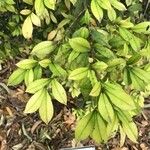
Syzygium myrtifolium
Kelat oil · Red lip
Description
Source: wikipedia (CC BY-SA)Syzygium myrtifolium, the red lip or kelat oil, is a species of flowering plant in the family Myrtaceae. It is native to Bangladesh, Myanmar, Thailand, Peninsular Malaysia, Sumatra, Java, Borneo, and the Philippines. A shrub or dense tree from 2 to 20 m tall, it is typically found in coastal areas, lowlands, and other wet tropical situations. It has found use as a garden, street, and landscaping shrub or tree, due to its colorful young leaves, amenability to pruning, and fragrant flowers.
Care Guide
💧 Water
The Red Lip plant flourishes in conditions of high humidity and moderate rainfall, requiring balanced watering. For optimal health, water it every 2 to 3 weeks. As an evergreen, the Red Lip retains its leaves throughout the year, allowing it to consistently absorb moisture from its surroundings.
☀️ Light Full sun
Red lip comes from open habitats like sunlit meadows and forest margins, where plenty of light is available. It performs best in full sun but can also withstand partial sun, showing good adaptability to different light levels.
What are the sunlight requirements for Red lip plants?
Red lip plants originate from open environments and are best grown in locations that receive full sun, meaning above 6 hours of direct sunlight daily. They can, however, adapt to partial sun conditions. It's important to observe the movement of sunlight in your garden to identify spots that offer a good balance of light and shade, ensuring the plants' growth and happiness.
How can artificial lighting benefit indoor Red lip plants?
Indoor Red lip plants can significantly benefit from artificial lighting, especially when natural sunlight is insufficient, like during winter or in spaces that receive less sunlight. Artificial lights, such as LEDs which can be customized to provide specific wavelengths of light, help in promoting faster and healthier plant growth. Full sun plants typically require 30-50W/sq ft of artificial light, partial sun plants need 20-30W/sq ft, and full shade plants can thrive with 10-20W/sq ft. The right placement of the light source should be 12-36 inches above the plant, and the duration should mimic natural daylight hours, generally between 8-12 hours per day.
What are some common symptoms of light deficiency in Red lip plants?
Red lip plants are sensitive to their light conditions and may exhibit symptoms of light deficiency when not receiving enough sunlight. Some common signs include smaller new leaves, leggy or sparse growth, early leaf drop, slower or halted growth, and lighter-colored or yellow leaves (chlorosis). Exposure to excessive sunlight can also cause issues, such as sunscald, leaf curling, wilting, and leaf scorching. These symptoms indicate the plant's struggle with the current lighting conditions, whether it be too little or too much sunlight.
How can I address sunlight-related issues with my Red lip plant?
To address sunlight-related issues in Red lip plants, gradually acclimate your plant to its ideal sunlight conditions. For indoor plants requiring more light, move them closer to a south-facing window or supplement with artificial light, ensuring they receive at least 6 hours of direct sunlight or its equivalent daily. For outdoor plants, you should also aim for a gradual transition to sunnier spots to prevent sunburn. If natural sunlight is blocked by obstructions, consider pruning or transplanting the plant to a brighter location. Note that parts of the plant that have already been affected may not recover, but new growth should be healthy with improved light conditions.
🌡️ Temperature 20–37.8°C
Red lip comes from tropical areas, where the climate is generally warm and humid. Therefore it is well suited to high temperatures and humidity. It does not tolerate sudden temperature shifts and favors a stable temperature environment, so preventing indoor temperature fluctuations is important. It typically cannot withstand cold and needs higher temperatures to grow. If the ambient temperature falls too low, the plant may stop growing or even die.
What is the common name for Syzygium myrtifolium?
The common name for Syzygium myrtifolium is Red Lip.
💨 Humidity
🪴 Soil 5-6
🌱 Fertilizer
Fertilizing a Red lip is best done in early spring as it breaks dormancy. This supports overall growth and flower development. Fertilization improves foliage, stems, and branches, and encourages flowers that are larger, more vibrant, and longer-lasting. It helps transport nutrients from the roots to the flowers and enhances the plant’s health and resistance to disease.
🪴 Pot & Repot
✂️ Pruning
Prune your red lip plant during its dormant period, which occurs from early to late winter. Use clean tools to ensure healthy cuts. Start by removing any dead or crossing branches, and then thin out the interior branches to improve air circulation, which helps reduce the risk of disease. Make your cuts just above leaf nodes to encourage bushier growth and help maintain the plant’s size and shape.
🌿 Propagating
🐛 Diseases & pets
☠️ Toxicity
Characteristics
- Plant Type
- Shrub
- Life Cycle
- Perennial
- Genus
- Syzygium
- Family
- Myrtaceae
- Hardiness Zone
- 10-12
- Mature Height
- 3.96 m
- Mature Spread
- 2.44 m
- Leaf Color
- Red, Green
- Leaf Type
- Evergreen
- Flower Color
- White
- Flower Size
- 2.03 cm to 3.05 cm
- Bloom Time
- Late spring, Early summer, Mid summer
- Planting Time
- Spring, Autumn
- Harvest Time
- Mid summer
- Native Area
- India, Malaysia, Indonesia, Myanmar, Philippines, Singapore, Thailand