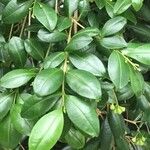
Syzygium paniculatum
Magenta lilly pilly · Australian brush-cherry · Australian water pear · Brush cherry · Magenta cherry
Description
Source: leafsnapSyzygium paniculatum, the magenta lilly pilly or magenta cherry, is a species of flowering plant in the myrtle family Myrtaceae, native to New South Wales, Australia. A broad dense bushy rainforest tree, in cultivation it grows to a height of 15 m (49 ft) with a trunk diameter up to 35 cm (14 in). The largest known example is at Ourimbah Creek, 35 m (115 ft) metres tall. The leaves are 3–9 cm (1.2–3.5 in) long, opposite, simple and slightly obovate, tapering at the leaf base. They are dark glossy green above, and paler below. White flowers are produced in clusters. The edible fruit is usually magenta, but can be white, pink or purple. Seeds are polyembroynic.A population of Syzygium paniculatum occurs on the eastern side of Jervis Bay, with trees from 20 to 30 metres tall, some with a diameter at breast height of 1.5 metres. It is commonly cultivated in eastern Australia and elsewhere. Well known as an edible wild fruit with a pleasantly sour apple-like flavour, it is eaten fresh or cooked into jams.The 1889 book 'The Useful Native Plants of Australia’ records that the synonymous Eugenia myrtifolia had common names including brush cherry and native myrtle. It also stated that "The red juice of the fruit of this tree is similar in its properties to that of red grapes. It contains free tartaric acid, cream of tartar, sugar, and red colouring matter very sensitive to the action of acids and alkalies. By fermentation it yields wine possessing a bouquet. The colouring matter, which is soluble in alcohol and ether-alcohol, but not in pure ether, is precipitated by lead-acetate, decolourised by reducing agents, and recovers its red colour on exposure to the air, just like litmus and the red colour of wine (De Luca and Ubaldini, in Watfs' Did., vi., ist Supp., 608.)."Syzygium paniculatum is commonly confused with Syzygium australe, the brush cherry.
💡 Syzygium paniculatum is easy to prune, making it suitable for hedges, containers, and topiary. It is also a popular choice for bonsai.
🌳 Brush cherry is not just recognized for its traditional uses; it also occupies a distinctive role in the furniture sector. In some parts of Australia, craftsmen use brush cherry timber to make pieces like sturdy coffee tables and fashionable chairs, appreciated for their strength, long life, and appealing cherry-like finish. The plant's sweet fruits and seeds also provide Aboriginal Australian communities with food and a natural dye used for body paint at cultural events.
Care Guide
💧 Water Every 1-2 weeks
Brush cherry flourishes in humid, subtropical climates and thrives with regular watering. It's best to water the plant every 1-2 weeks, allowing the soil to dry out slightly between waterings. To prevent root rot and encourage growth during its active season, ensure the plant has higher indoor humidity and well-draining soil.
How should I water my Brush cherry plant?
Your Brush cherry is not too particular about the method you use to water it. Common watering tools like watering cans, hoses, or even cups will all work just fine. Regardless of the tool you use, it's important to water the soil directly. Make sure to evenly moisten all areas of the soil to ensure every part of the root system receives the necessary water. Using filtered water is recommended since tap water may contain harmful particles. Additionally, using water at or slightly above room temperature is beneficial as extremely hot or cold water can be a shock to the Brush cherry. However, the plant generally responds well to any kind of water you provide.
What should I do if I give my Brush cherry plant too much water or not enough water?
Outdoor plants, particularly newly planted ones or seedlings, are susceptible to lack of watering. Remember to water them consistently for a few months while they are small or just planted. Once the roots are established, Brush cherry can mostly rely on rain. Overwatering is more likely to happen when Brush cherry is planted in pots. If you accidentally overwater your Brush cherry, take immediate action to resolve the situation. Stop watering the plant to minimize the impact of overwatering. Then, remove the Brush cherry from its pot to examine the roots. If there are no signs of root rot, you can return the plant to its container. However, if there is root rot, trim the affected roots and consider applying a fungicide. Finally, repot the Brush cherry in well-draining soil. In the case of underwatering, simply increase the frequency of watering. This is easily remedied. If you underwater, the leaves of the plant will droop, dry out, and fall off. However, with sufficient watering, the leaves will quickly regain their fullness. Therefore, adjust your watering schedule promptly when underwatering occurs.
How often should I water my Brush cherry tree?
Most outdoor plants can rely on rainfall for their water needs. However, if you live in an area with little rainfall, it's important to water your plants adequately. In the spring and fall, watering every two weeks should be sufficient. But in the summer, more frequent watering is required due to higher water needs. In the winter, when plants grow slower and require less water, it's best to water sparingly. Sometimes, you might not need to water at all during the winter. If your Brush cherry plant is young or recently planted, it needs more frequent watering to help it establish and grow into a drought-tolerant plant. For potted plants, there are two main ways to decide how often to water your Brush cherry. One option is to follow a predetermined watering schedule, such as once a week or every other week. However, this approach may not consider the specific growing conditions of your Brush cherry. Another approach is to assess the moisture level in the soil. Wait until the top two to four inches of soil, about⅓ to ½ depth of the pots, have completely dried out before watering again. Keep in mind that during summer, your plant will likely need more water than the predetermined schedule suggests.
How much water does my Brush cherry tree need?
When watering your Brush cherry, you may be surprised to learn that it doesn't always require a lot of water. If only a few inches of soil have dried out since the last watering, you can promote healthy growth by giving it around five to ten ounces of water each time. You can also determine the amount of water based on the soil moisture. Keep track of how many inches of soil have dried out between waterings. To ensure your Brush cherry gets sufficient moisture, water enough to moisten all the dry soil layers since the last watering. If over half of the soil is dry, consider giving more water than usual. In this case, keep adding water until you see excess water draining from the pot's drainage holes. If your Brush cherry is planted in a location that receives ample outdoor rain, it may not require additional watering. When the plant is young or establishing itself, make sure it receives 1-2 inches of rain per week. As it grows and establishes further, it can rely solely on rainwater. Only when the weather is hot and there has been no rainfall for 2-3 weeks should you consider providing a full watering to prevent stress.
How can I know if I'm giving enough water to my Brush cherry?
Overwatering is a common problem for the Brush cherry, and there are signs to look for in this situation. An overwatered Brush cherry will have yellowing leaves and may drop some leaves. Overwatering can also cause the plant to shrivel and promote root rot. On the other hand, an underwatered Brush cherry will wilt and display brown or brittle leaves. If you see signs of overwatering or underwatering, it is important to intervene and restore the plant's health.
☀️ Light Full sun
Brush cherry does best in conditions that replicate the broad daylight sun. In its native setting, this abundant light results in optimal growth. Nevertheless, brush cherry can also grow with partial sun exposure, though this may restrict its growth. Too much or too little light can stress the plant or cause the leaves to lose color.
What are the sunlight requirements for Brush Cherry?
Brush Cherry, or Syzygium paniculatum, thrives in full sunlight, requiring above 6 hours of sunlight daily. However, it can also grow under partial sun exposure, which is about 3-6 hours of sunlight. It's important to observe the movement of sunlight in your garden to find spots that provide the right balance of light and shade, ensuring the plant's health and happiness.
What essentials do I need to know about growing Brush Cherry?
Brush Cherry prefers conditions that mimic its native environment, which is abundant in sunlight during the day, promoting optimal growth. While it can tolerate partial sun exposure, this may limit its growth potential. Inadequate or excessive sunlight can stress the plant, leading to loss of leaf color. For indoor plants, where natural sunlight might be insufficient, especially in winter, artificial lighting can be a savior. LED lights are recommended due to their customizability, with full sun plants requiring 30-50W/sq ft, partial sun 20-30W/sq ft, and full shade plants 10-20W/sq ft of artificial light. Place the light source 12-36 inches above the plant and ensure it receives 8-12 hours of light per day to mimic natural daylight hours.
What are the symptoms of inadequate sunlight for Brush Cherry?
Symptoms of insufficient light for Brush Cherry include smaller new leaves, leggy or sparse growth, premature leaf drop, and halted or no new growth, signifying the plant is in survival mode. Leaves might develop lighter colors or patterns, indicating chlorophyll and nutrient deficiencies. Additionally, excessive sunlight can cause chlorosis, sunscald, leaf curling, wilting, and leaf scorching, affecting the plant's ability to photosynthesize and overall health.
How can I address sunlight-related issues for both indoor and outdoor Brush Cherry plants?
To ensure optimal growth for indoor Brush Cherry plants, gradually introduce them to sunnier spots until they receive at least 6 hours of direct sunlight daily, utilizing south-facing windows and keeping curtains open. Artificial lighting, such as desk lamps or professional grow lights, can supplement light for large or immobile plants. Outdoors, adapt your plants to sunlight by moving them gradually to sunnier spots weekly, avoiding sudden exposure which can cause sunburn. Prune trees or structures blocking sunlight to reduce obstructions. For ground-planted Brush Cherry, consider transplanting during the dormant period (late winter or early spring) to sunnier locations with good drainage. Note that parts of the plant damaged by insufficient light may not recover, but new growth should be healthy once proper light conditions are met.
🌡️ Temperature 20–37.8°C
The brush cherry naturally occurs in environments with temperatures between 20 and 38℃ (68 and 100.4℉). This temperate woody plant grows best when maintained within that temperature range. In different seasons, it is advisable to moderate temperature fluctuations to keep conditions comfortable for healthy growth.
What is the ideal temperature range for Brush Cherry?
The Brush Cherry, or Syzygium paniculatum, flourishes in temperatures ranging from 20°C to 38°C (68°F to 100.4°F). To ensure healthy growth, it's important to adapt to seasonal temperature changes and maintain this comfortable temperature range. The plant is particularly fond of heat and suffers in cold temperatures. During autumn, Brush Cherry plants grown outdoors should be brought inside and placed near a bright window, away from direct heat sources, to keep them warm, especially above 20°C during winter. Temperatures nearing 0°C can severely damage the plant.
How does low temperature affect Brush Cherry and what are the solutions?
Brush Cherry is not tolerant of low temperatures and thrives when the temperature remains above 20°C. Exposure to temperatures below 0°C, especially falling below -5°C, can result in lighter leaf color followed by browning or blackening, and symptoms like wilting and drooping due to frost damage. To mitigate frost damage, the frost-affected parts should be trimmed off, and the plant should be immediately moved to a warmer indoor environment. Placing the plant near a south-facing window ensures sufficient sunlight while avoiding proximity to heaters or air conditioning vents to prevent the air from becoming too dry.
What should be done if Brush Cherry is exposed to high temperatures?
In the summer months, it's crucial to ensure that the Brush Cherry does not endure temperatures above 38°C. Exposure to temperatures over 43°C can lighten the leaves' color and increase the risk of sunburn. To address this, sunburned and dried sections of the plant should be pruned. Relocating the plant to a shaded area, particularly away from the harsh midday and afternoon sun, can help avoid further damage. Additionally, watering the plant during the cooler morning and evening hours helps keep the soil adequately moist and supports plant health.
💨 Humidity
🪴 Soil 5-6
🌱 Fertilizer
Fertilization is crucial to the care of the Brush cherry. Regular feeding throughout the growing season helps maintain the energy needed for its showy leaves and supports overall growth. Neglecting fertilization can lead to unhealthy foliage, reduced ornamental appeal, and stunted or weak growth that is prone to breakage.
Why should I add fertilizer to my Brush cherry?
Regular fertilization is crucial for Brush cherry because their showy leaves require a significant amount of energy to produce and maintain. This poses a challenge as the plant must allocate enough energy not only for leaf maintenance, but also for the growth of stems, branches, roots, and other important structures. Neglecting fertilization can lead to two likely outcomes. Firstly, the leaves of the Brush cherry will lose their natural color and texture, making them look unhealthy and greatly diminishing their ornamental appeal. Secondly, the overall growth of the plant may slow down or produce weak growth that is susceptible to breakage.
When should I fertilize my Brush cherry tree?
Brush cherry plants benefit from occasional feedings, so there's no need for a set feeding schedule when initially planting them. An easy method to fertilize the Brush cherry is to apply the fertilizer while watering the plant periodically. During the growing season, the Brush cherry requires a sufficient amount of water. Feeding the plant every two to three weeks is recommended, and this frequency should be maintained as long as the plant is producing new growth.
When is it not a good idea to use fertilizer on my Brush cherry plant?
For most of the year, you can fertilize your Brush cherry regularly. This includes the active growing season of spring, summer, and early fall. However, in the winter, it's important to refrain from fertilizing the plant. During this time, the Brush cherry goes into a dormant growth phase, where it either produces no or very little new growth. Since the plant is using less energy during this phase, it doesn't require fertilizer.
What kind of fertilizer does my Brush cherry plant need?
To properly fertilize a Brush cherry tree, you'll need a fertilizer with a specific blend of nutrients, each in relatively low amounts. The ideal fertilizer should have a ratio of nitrogen (N), phosphorus (P), and potassium (K) of 3-1-2. However, a general-purpose fertilizer with an even nutrient blend can also work well in some cases. Regardless of the type of fertilizer you choose, the volume of each nutrient represented by the ratio number should be 3 or lower. You can use either granular or liquid-based fertilizer for your Brush cherry tree. If you opt for a liquid-based fertilizer, it is usually best to dilute its strength by half before applying it. While using granular fertilizer doesn't have many downsides, it is often more convenient to use liquid fertilizer, especially when watering your Brush cherry tree.
How do I give nutrients to my Brush cherry plant?
One easy way to fertilize a Brush cherry is by feeding it whenever you water it. To do this, gather your fertilizer and a container of water, like a watering can. Dilute the fertilizer by mixing it with water. Then, simply pour the water with the diluted fertilizer onto the soil and let it soak down to the roots. Alternatively, you can opt for a granular fertilizer. With this type of fertilizer, all you have to do is sprinkle it on the soil where your Brush cherry is planted. Granular fertilizers are usually slow-release, which means you won't have to fertilize as frequently compared to using a liquid fertilizer. Regardless of the method you choose, remember to water your Brush cherry while you fertilize it, as this is beneficial for the plant.
🪴 Pot & Repot 2-3 years
When repotting Brush cherry, select a pot 1–2 inches (2.5–5.1 cm) larger with good drainage. Use a well-draining potting mix. Repot in spring or fall, making sure the root ball sits slightly below the rim of the flower pot. Water thoroughly after repotting and place in a warm spot with indirect sunlight.
✂️ Pruning
Brush cherry is a dense shrub or small tree characterized by its glossy leaves and attractive berries. To maintain its health and appearance, it's best to prune from early to late winter. This helps remove weak branches, shape the plant, and stimulate growth. Regular pruning also improves air circulation, contributes to the plant's overall health, and increases fruit production. For optimal results, always use clean, sharp tools.
🌿 Propagating
🐛 Diseases & pets
☠️ Toxicity
The seeds of the brush cherry pose a choking risk. Although there are no direct studies on the suitability of feeding brush cherries to dogs, it is not known whether they are poisonous to dogs. Evergreen Brush Cherry trees and shrubs have lance-shaped, dark green glossy leaves. It produces tasty red fruit and little white blooms.
Characteristics
- Plant Type
- Shrub, Tree
- Life Cycle
- Perennial
- Genus
- Syzygium
- Family
- Myrtaceae
- Hardiness Zone
- 9-11
- Mature Height
- 3.66 m to 12.19 m
- Mature Spread
- 3.05 m to 6.1 m
- Leaf Color
- Green, Red, Purple
- Leaf Type
- Evergreen
- Flower Color
- White
- Flower Size
- 2.54 cm to 5.08 cm
- Bloom Time
- Late spring, Early summer, Mid summer
- Planting Time
- Spring, Autumn
- Harvest Time
- Mid summer, Late summer, Early fall
- Native Area
- Australia and New Zealand