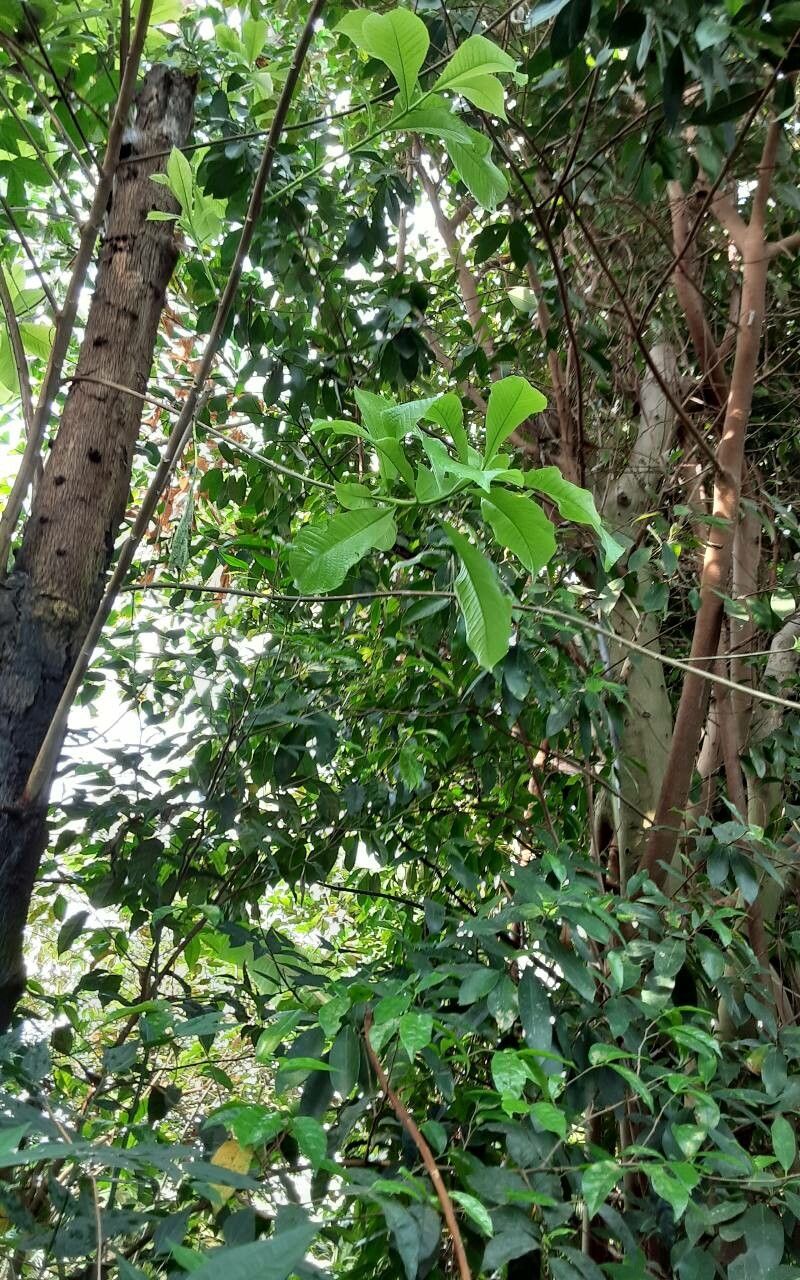
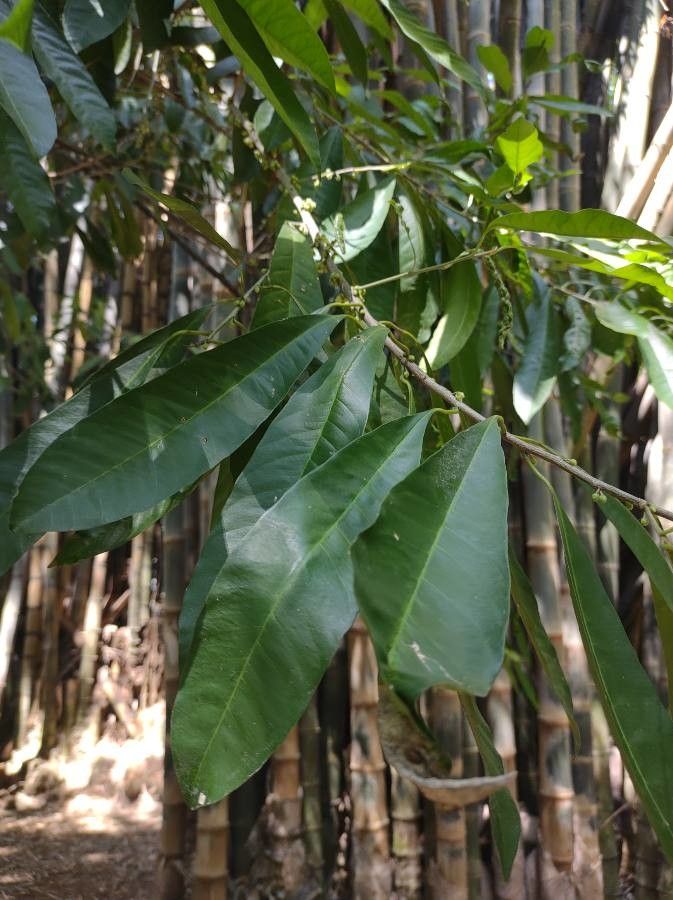
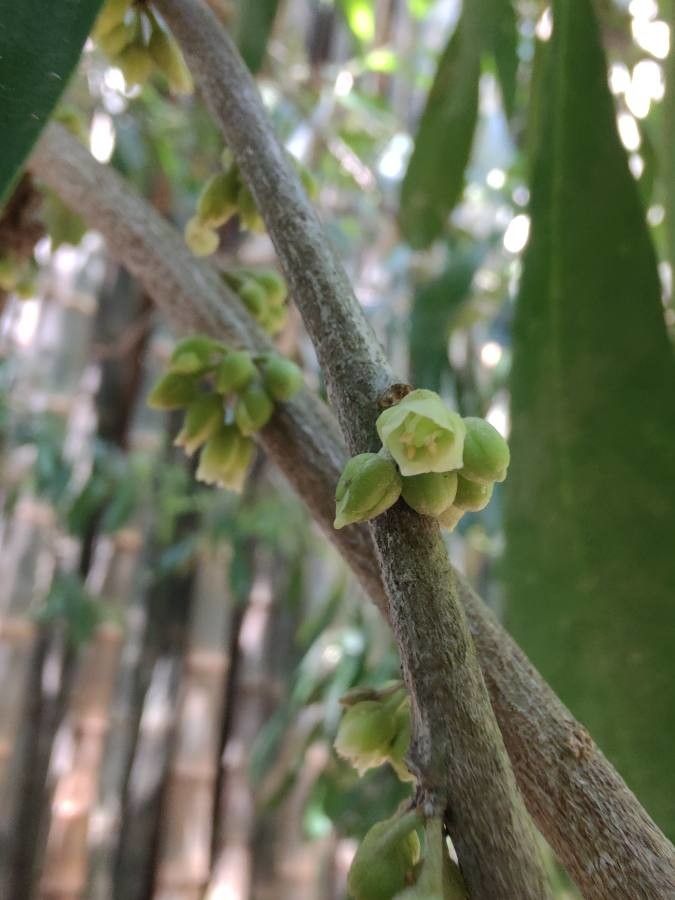
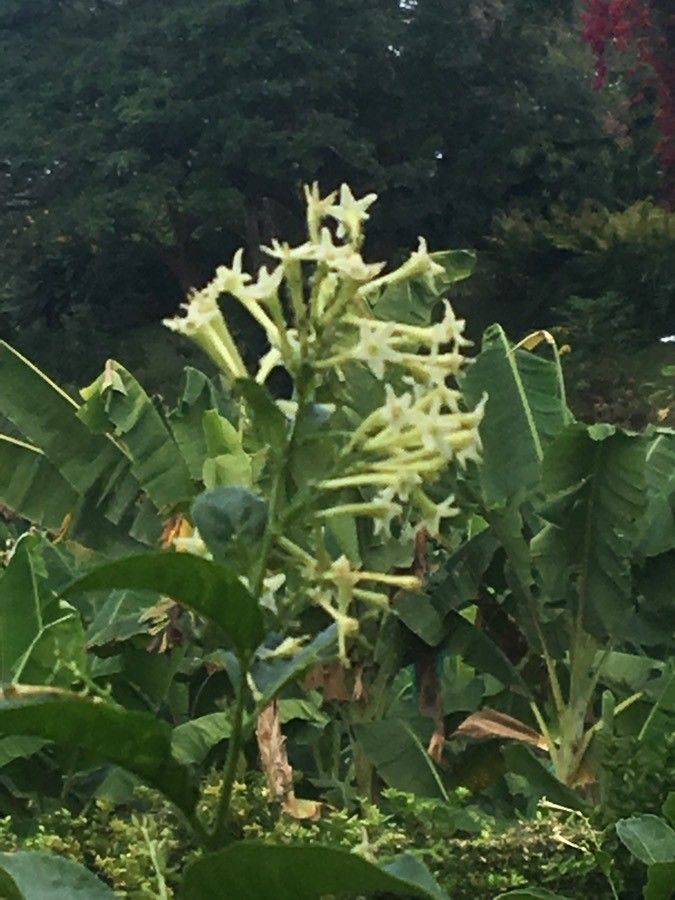
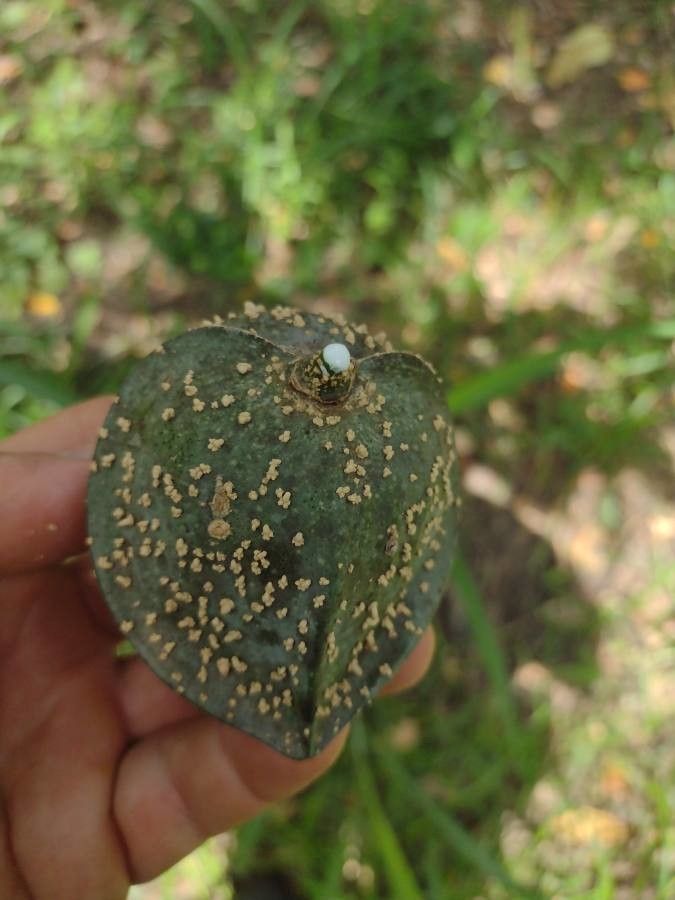
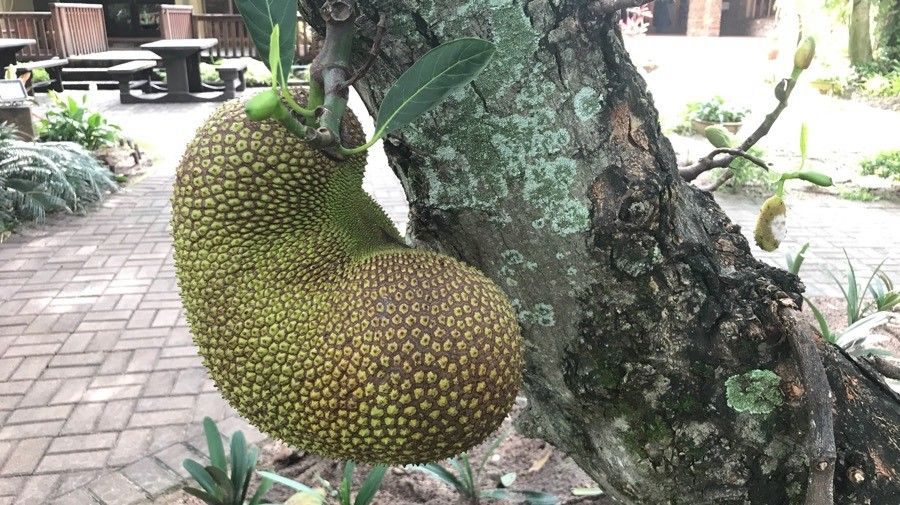
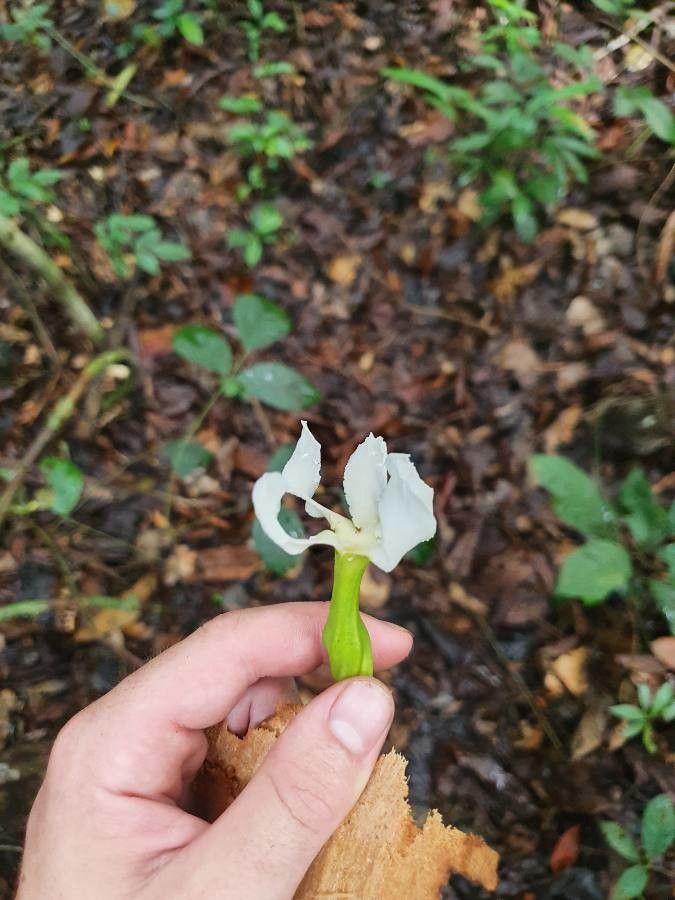
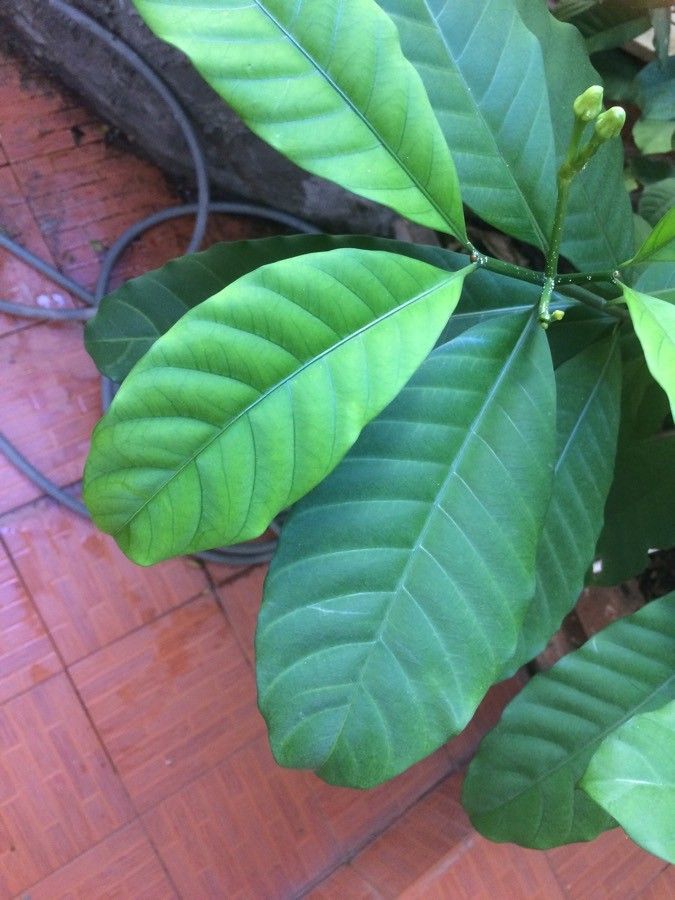
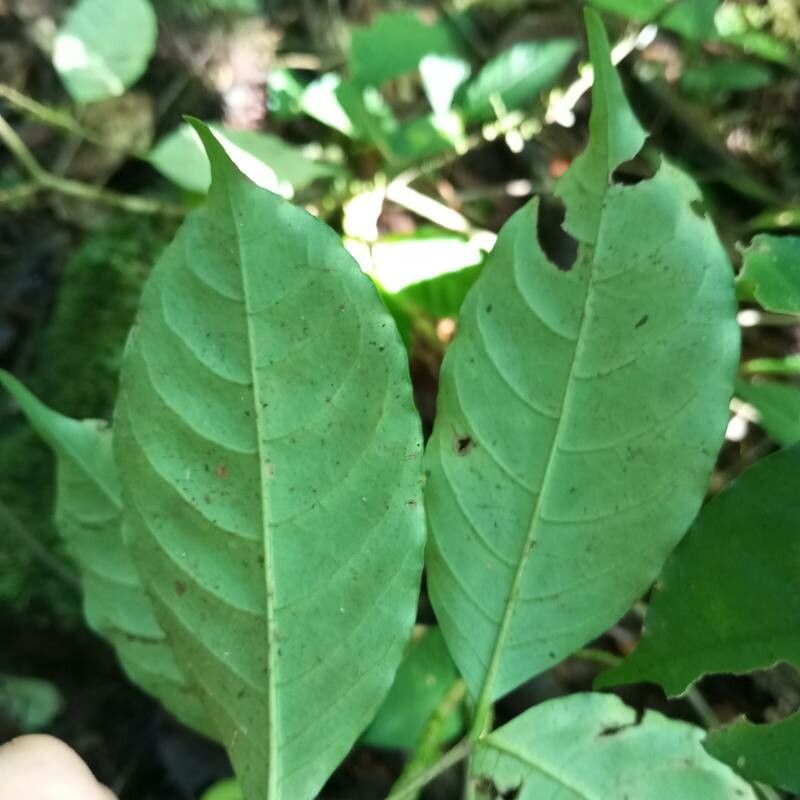
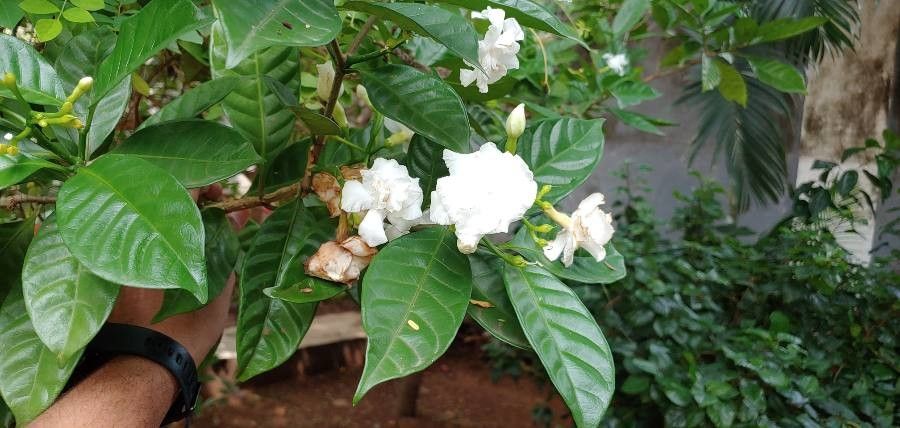
Tabernaemontana elegans is a tropical evergreen shrub from the Apocynaceae family, native to Southeast Asia. It can grow up to 3 meters tall and features glossy, dark green leaves arranged in whorls of three or four. The plant produces fragrant white flowers with yellow centers that bloom in clusters from late spring through summer. These flowers are followed by small, round fruits that transition from green to black as they ripen.
The shrub thrives in well-drained soil and partial shade but can also tolerate full sun, provided it receives adequate moisture. It is commonly used as an ornamental plant in gardens or as a hedge due to its attractive foliage and fragrant blooms. In traditional medicine, Tabernaemontana elegans has been utilized for its medicinal properties, including treating fever, coughs, headaches, and rheumatism, among other ailments.
However, it is important to note that all parts of Tabernaemontana elegans contain toxic alkaloids, which can be harmful if ingested by humans or animals. Therefore, caution should be exercised when handling this plant, especially around children or pets who might accidentally ingest it.
Botanical profile.
- Plant Type
- Shrub, Tree
- Life Cycle
- Perennial
- Genus
- Tabernaemontana
- Family
- Apocynaceae
- Hardiness Zone
- 10-12
- Mature Height
- 3.05 m to 4.88 m
- Mature Spread
- 2.13 m to 3.05 m
- Leaf Color
- Dark Green
- Leaf Type
- Evergreen
- Flower Color
- White
- Flower Size
- 3.05 cm to 5.08 cm
- Bloom Time
- Late spring, Summer, Early fall, Mid fall
- Planting Time
- Spring, Autumn
- Harvest Time
- Late summer, Fall, Early winter
- Native Area
- Malawi, Somalia, Mozambique, South Africa, Eswatini, Kenya, Tanzania, Zimbabwe
Other names.