Tabernaemontana pandacaqui
Windmillbush · Banana-bush · Dogbane
Description
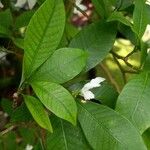
Source: leafsnapTabernaemontana pandacaqui, commonly known as the Philippine jasmine or banal-kahoy, is a small tree or shrub native to the Philippines. Belonging to the Apocynaceae family, it can grow up to 10 meters tall. This plant features glossy, dark green, oval-shaped leaves arranged in opposite pairs along its stems. The Philippine jasmine produces fragrant white flowers that bloom in clusters from late spring through early fall. These tubular flowers have five petals and a yellow center, measuring about 2-3 cm in diameter, and they attract butterflies and other pollinators. Due to its attractive foliage and fragrant flowers, the plant is often used for ornamental purposes. Additionally, it has medicinal applications, as it contains alkaloids like ibogaine, which possess anti-inflammatory properties. Tabernaemontana pandacaqui prefers well-drained soil with moderate moisture but can tolerate drought conditions once established. It thrives best in full sun but can also grow under partial shade. Overall, Tabernaemontana pandacaqui is a beautiful and versatile plant that enhances any garden or landscape design with its ornamental and medicinal qualities.
Care Guide
💧 Water Every 7 days
The windmill bush thrives in tropical climates where it can endure both heavy rainfall and dry spells. This drought-tolerant plant prefers well-draining soil and should be watered every two weeks. As an evergreen, it also benefits from occasional misting to maintain humidity, which mimics its natural environment.
☀️ Light Full sun
The Windmill bush flourishes optimally when it receives a generous amount of sunlight each day. It can still manage with only partial sun exposure. Nonetheless, its growth could be impeded by either inadequate or excessive sunlight. Typically, in its native habitat, it thrives in sunny conditions. Through different growth phases, a steady light source is essential.
What are the sun requirements for a Windmill bush?
The Windmill bush thrives best in environments that provide it with ample sunlight daily, making full sun exposure ideal, which entails more than 6 hours of direct sunlight. It can also grow in partial sun conditions, defined as about 3-6 hours of sunlight. When planning your garden or deciding where to place your Windmill bush, it's crucial to observe how sunlight moves across the area to ensure your plant receives the optimal balance of light and shade.
How important is sunlight for the growth of Windmill bush?
Sunlight is essential for the healthy growth of the Windmill bush. In its natural habitat, it grows best under sunny conditions. Throughout its growth stages, a consistent light source is crucial. In situations where natural sunlight is not sufficient, such as during winter or in less sunny spaces, artificial lighting can supplement growth. LED lights, which can be adjusted to provide specific wavelengths needed by plants, are recommended. The intensity of artificial light should be tailored to mimic the plant's natural conditions, with full sun plants requiring 30-50W/sq ft, partial sun plants 20-30W/sq ft, and full shade plants 10-20W/sq ft of artificial light.
What are the symptoms of insufficient lighting in Windmill bush?
When a Windmill bush does not receive adequate sunlight, it may exhibit a range of symptoms indicating light deficiency. These include the development of smaller new leaves, leggy or sparse growth, faster leaf drop, slower or halted growth, paler new leaves, chlorosis (yellowing leaves), sunscald, leaf curling, wilting, and leaf scorching. These signs can help identify when a Windmill bush is struggling due to poor lighting conditions.
What solutions can help Windmill bush get enough light?
To ensure your Windmill bush receives enough light, gradually move it to a sunnier location, aiming for at least 6 hours of direct sunlight daily. For indoor plants, use a south-facing window and keep curtains open for maximum exposure. Artificial lighting, such as desk or ceiling lamps kept on for at least 8 hours daily, or professional plant grow lights, can also help. When adjusting outdoor plants to more sunlight, do so gradually to avoid sunburn. If direct sunlight is lacking, consider reducing obstructions like pruning trees or even transplanting the bush to a sunnier spot. Remember, while parts of the plant affected by insufficient sunlight may not recover, new growth should be healthy with improved lighting.
How can artificial lighting be used for Windmill bush?
Artificial lighting can be a vital solution for Windmill bush growth, especially when natural sunlight is insufficient. Choose the right type of artificial light, such as LED lights, which can provide precise wavelengths needed by the plants. The lighting intensity should mimic natural conditions: full sun plants require 30-50W/sq ft, partial sun 20-30W/sq ft, and shade plants 10-20W/sq ft. The light source should be placed 12-36 inches above the plant to resemble natural sunlight and be kept on for 8-12 hours per day to mimic natural daylight hours.
🌡️ Temperature 20–35°C
The windmill bush naturally thrives in habitats with temperatures between 68 and 95 °F (20 to 35 ℃). This plant prefers such moderately warm situations, and any extreme temperatures could cause harm. If cultivated in places outside of its natural habitat, seasonal modifications should be undertaken to replicate these ideal conditions.
What is the ideal temperature range for Windmill bush?
Windmill bush thrives in its native environments with temperature ranges between 68 to 95 °F (20 to 35 °C). This plant favors moderate warm conditions to grow optimally. It's crucial to mimic these conditions seasonally if growing the plant in non-native environments, as extreme temperatures can cause damage. Although Windmill bush has some level of cold tolerance and generally doesn't require extra protection when temperatures are above 0°C, precautions should be taken if temperatures are expected to dip below freezing.
What should I do if the temperature drops below 0°C?
If the temperature is expected to drop below 0°C, it's necessary to protect the Windmill bush from the cold. Temporary measures such as wrapping the plant with plastic film, fabric, or other suitable materials can help shield it from frost damage. Once warmer temperatures return, these protective coverings should be removed to prevent any potential harm from overheating or restricted airflow.
How does Windmill bush react to low temperatures?
Windmill bush has a moderate tolerance to low temperatures but thrives best when the temperature remains above 20°C (68°F). During winter, it's advisable to keep the plant above 0°C to prevent damage. When temperatures fall below -5°C, the plant's leaves may start to droop; they can recover in mild cases, but in severe cases, the leaves will wilt and eventually fall off. To mitigate frost damage, trim off the frost-damaged parts and take preventive measures, such as wrapping the plant with non-woven fabric or cloth and erecting a wind barrier for added protection.
How does Windmill bush react to high temperatures?
During summer, it's important to keep Windmill bush below 35°C (95°F) to avoid stress. When temperatures climb above 38°C (100.4°F), the plant may exhibit signs of distress such as lighter leaf color, dry and withered leaf tips, curling leaves, and a heightened susceptibility to sunburn. To care for a Windmill bush in high temperatures, trim away the sunburned and dried-up parts of the plant. Also, move the plant to a shaded location or utilize a shade cloth to protect it from the midday and afternoon sun. Ensure the soil remains moist by watering the plant in the morning and evening.
What is the botanical name of Windmill bush?
The botanical name of Windmill bush is Tabernaemontana pandacaqui. This name helps distinguish it from similar plants and aids in research and care information specific to this species.
💨 Humidity
🪴 Soil 6-7
🌱 Fertilizer
It is important to time the fertilization of Windmill bushes appropriately. Apply fertilizer at the onset of spring and maintain the application on a monthly basis until the early part of summer. Fertilizer boosts the production of beautiful flowers and provides much-needed energy during both the dormant and active growth stages.
🪴 Pot & Repot
✂️ Pruning
The windmill bush is known for its ornamental foliage and fragrant flowers. To maintain its health and appearance, it benefits from strategic pruning during its dormant period, which occurs from early to late winter. Key pruning techniques include removing dead branches and shaping the plant to improve airflow. Proper pruning not only enhances the bush's health and aesthetic appeal but also boosts its ability to produce blooms, making it an essential practice for gardeners.
🌿 Propagating
🐛 Diseases & pets
☠️ Toxicity
Characteristics
- Plant Type
- Tree, Shrub
- Life Cycle
- Perennial
- Genus
- Tabernaemontana
- Family
- Apocynaceae
- Hardiness Zone
- 9
- Mature Height
- 14.02 m
- Mature Spread
- 20 cm
- Leaf Color
- Green, Blue
- Leaf Type
- Evergreen
- Flower Color
- White
- Flower Size
- 1.02 cm to 1.52 cm
- Bloom Time
- Late spring, Summer, Early fall, Mid fall
- Planting Time
- Spring, Summer, Autumn, Winter
- Harvest Time
- Late summer, Fall, Early winter
- Native Area
- Malaysia, Indonesia, Vietnam, Vanuatu, Philippines, Fiji, Thailand, China