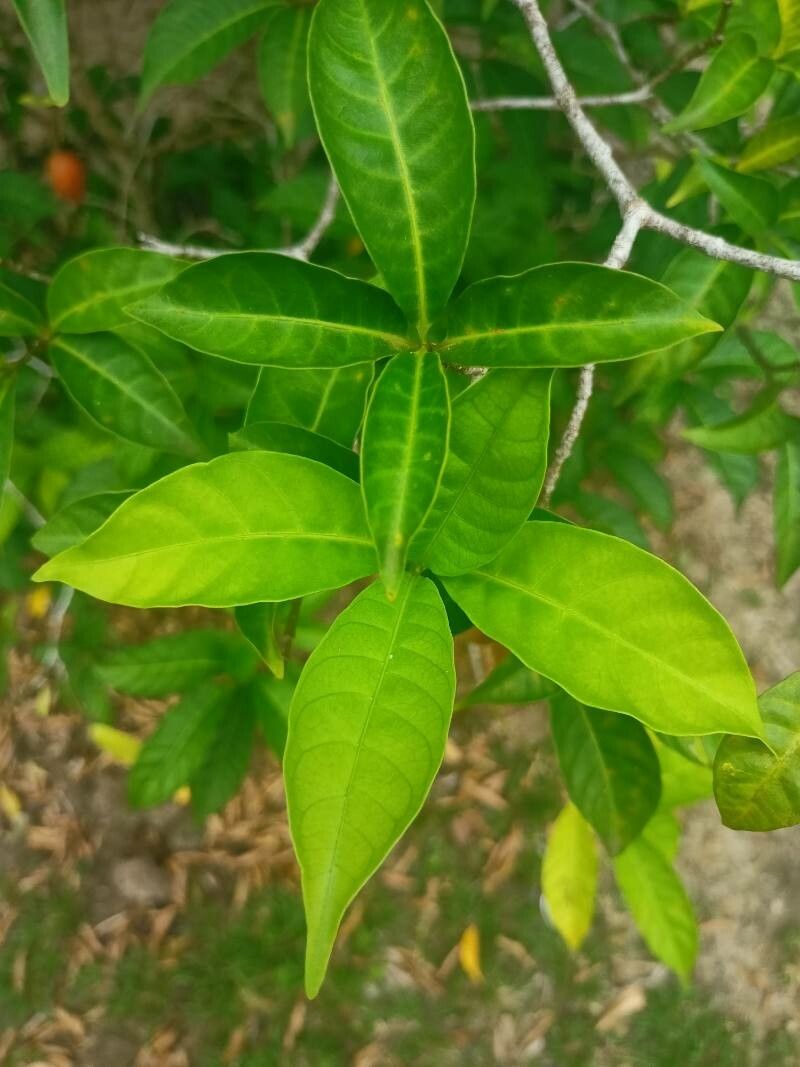
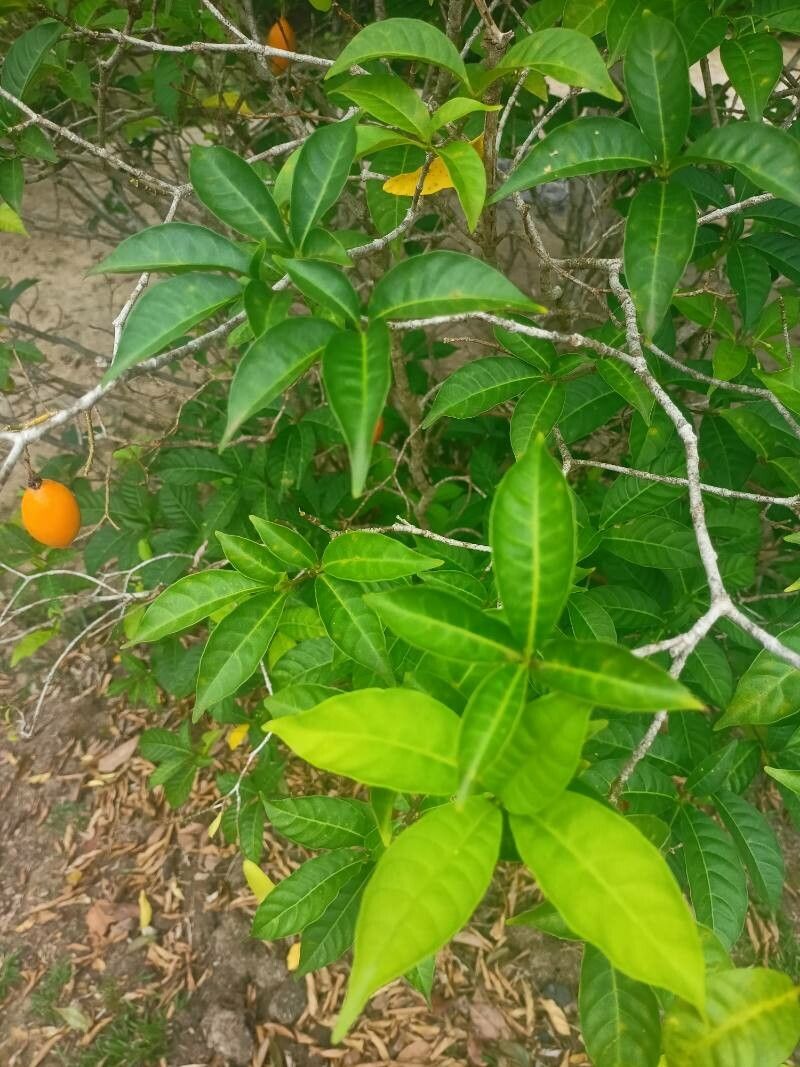
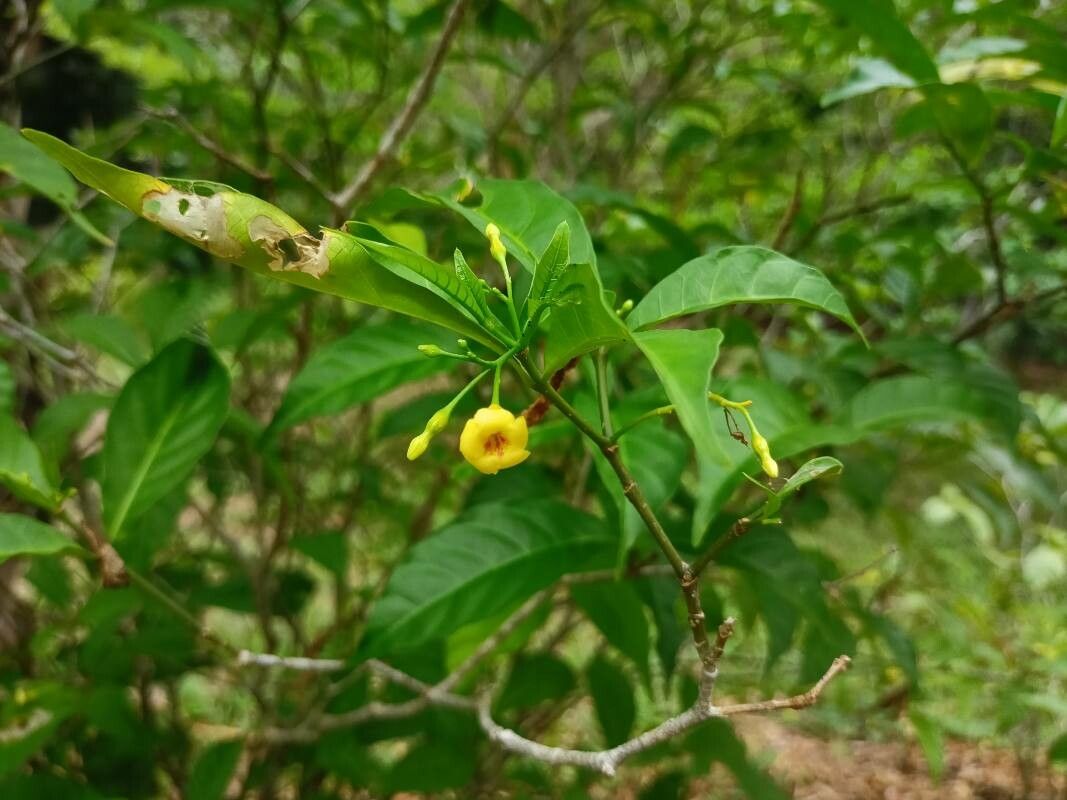
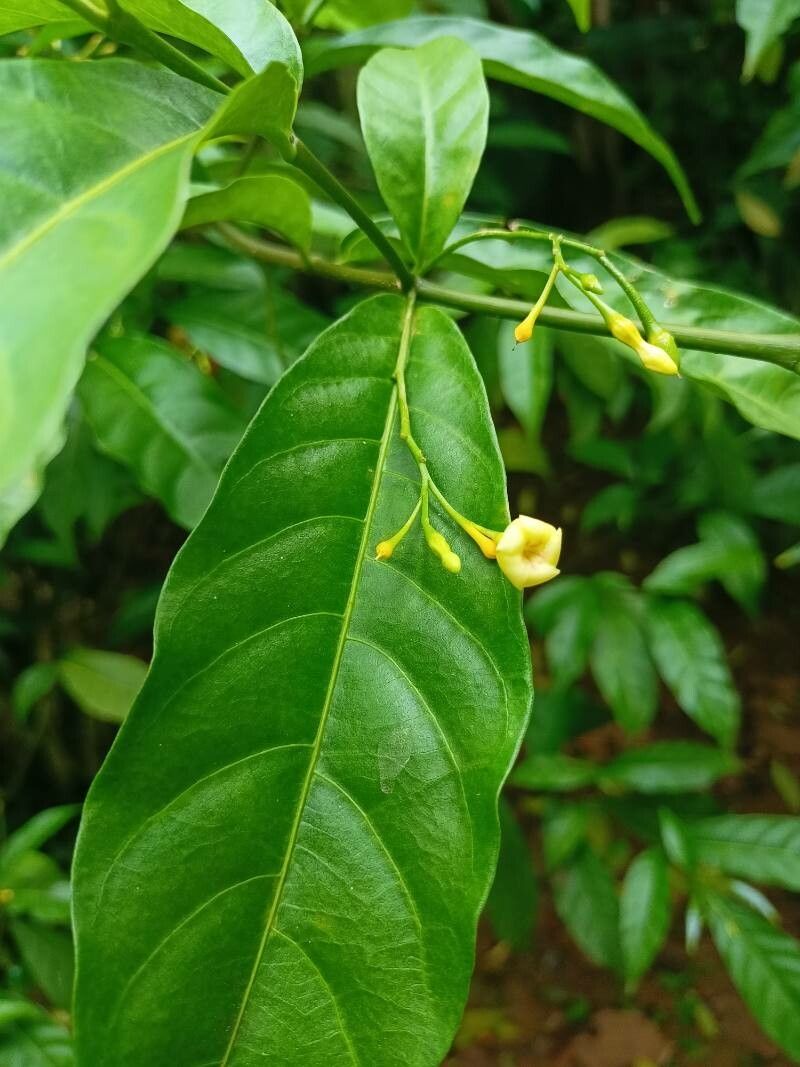
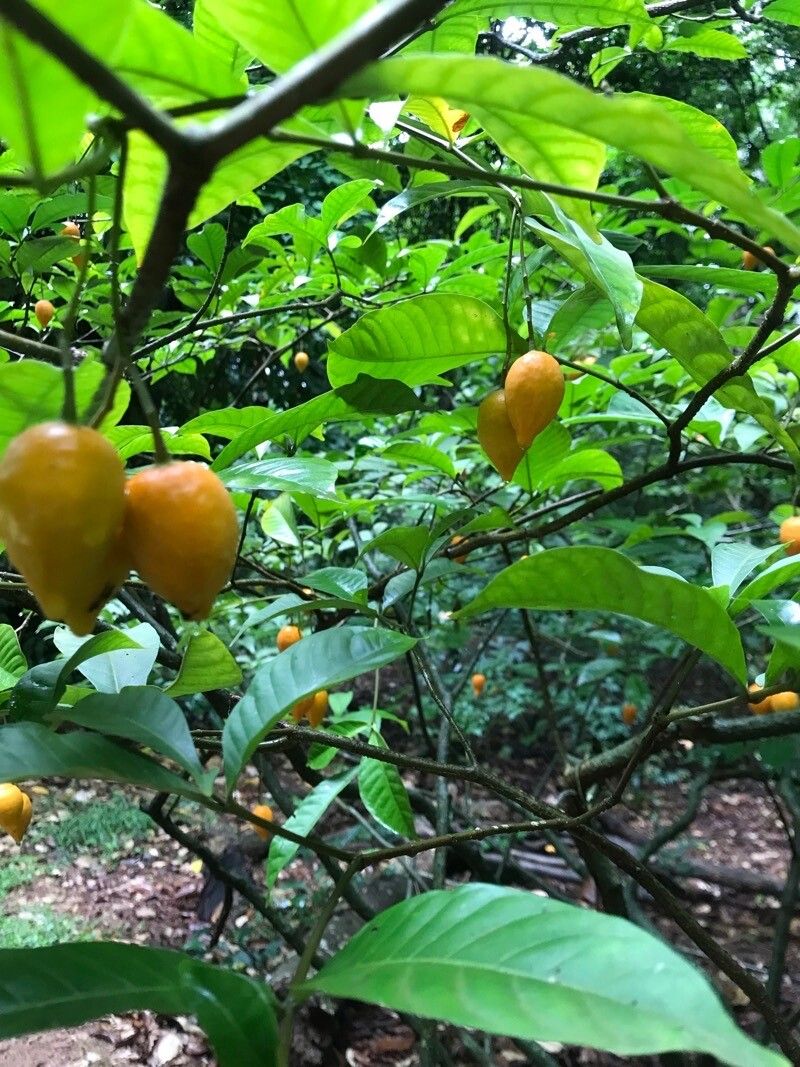
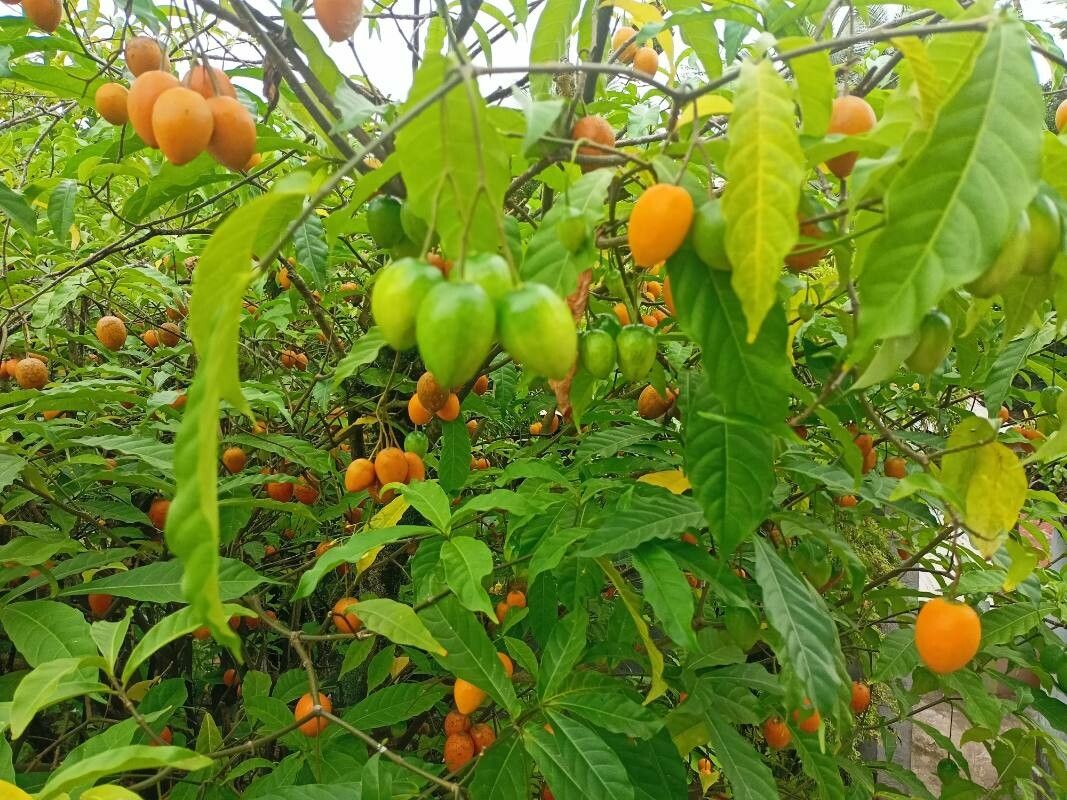
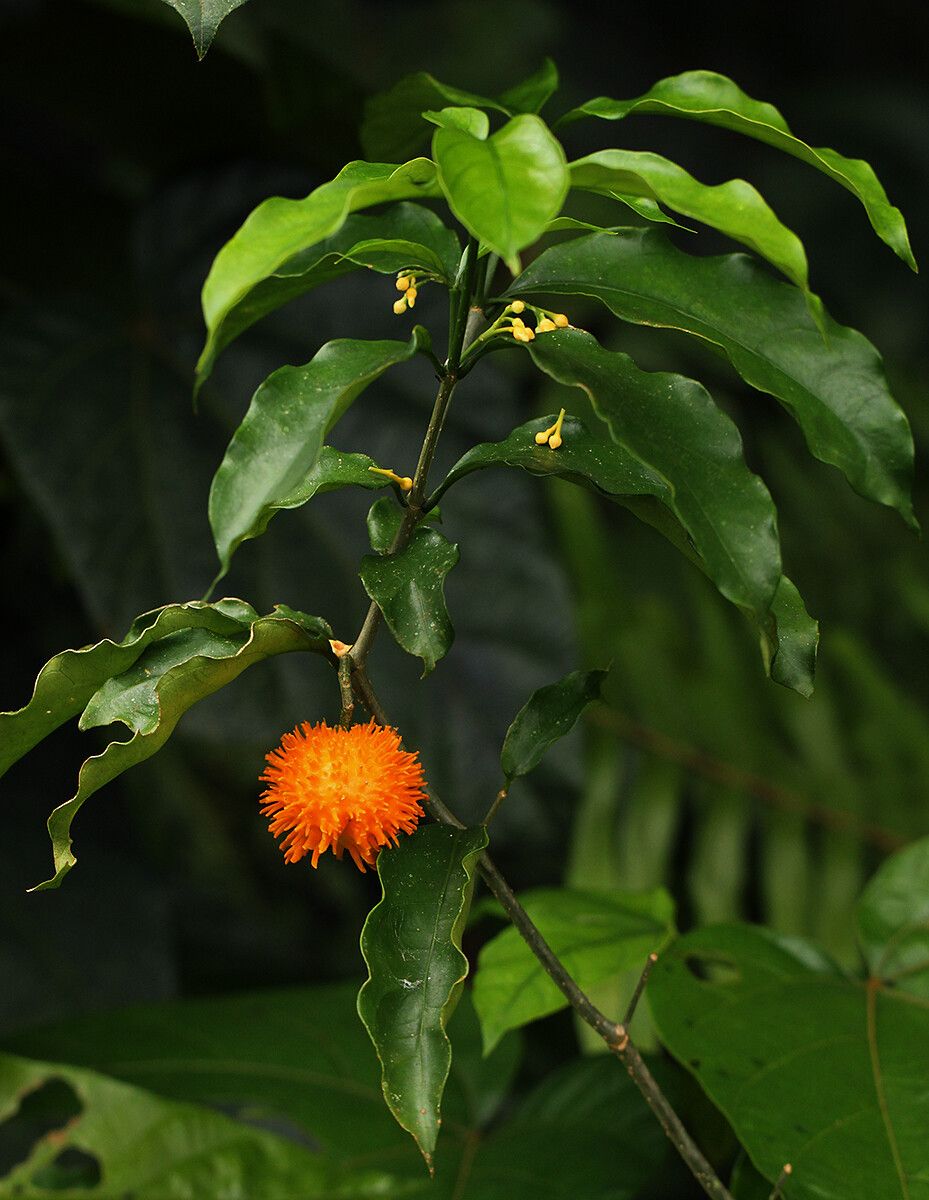
Tabernanthe iboga (iboga) is an evergreen rainforest shrub native to Central Africa. A member of the Apocynaceae family indigenous to Gabon, the Democratic Republic of Congo, and the Republic of Congo, it is cultivated across Central Africa for its medicinal and other effects. In African traditional medicine and rituals, the yellowish root or bark is used to produce hallucinations and near-death outcomes, with some fatalities occurring. In high doses, ibogaine is considered to be toxic, and has caused serious comorbidities when used with opioids or prescription drugs. The United States Drug Enforcement Administration (DEA) lists ibogaine as a controlled substance of the Controlled Substances Act.
Iboga has strong resistance to disease and is usually not susceptible to illnesses. Regarding care, this plant is fairly low-maintenance. When grown outdoors it needs only light watering, and larger specimens typically do not require pruning. Smaller plants, however, should be pruned after they have bloomed. Ibogat is suitable for anyone who has an outdoor area, such as a garden or a deck, and it does not demand extensive care experience.
How to keep Tabernanthe Iboga.
Light
Iboga is native to habitats like forest understories or rocky areas, where it grows in natural shade. It prefers partial sun but can adapt to full sun or full shade, showing its versatile and hardy nature.
Temperature
Iboga comes from tropical areas, where the climate is usually warm and humid. Consequently, it is suited to high heat and moisture. It does not tolerate sudden changes in temperature and prefers a steady thermal environment, so avoiding temperature swings indoors is important. It typically cannot endure cold conditions and needs warmer temperatures to grow. If the surrounding temperature falls too low, the plant may stop growing or even perish.
Fertilizer
The best time to fertilize an Iboga is in early spring, when it breaks dormancy. This supports overall growth and flower development. Fertilizing improves the foliage, stems, and branches, while encouraging large, vibrant, and long-lasting flowers. It also helps move nutrients from the roots to the blooms and enhances the plant's health and resistance to disease.
Botanical profile.
- Plant Type
- Shrub
- Life Cycle
- Perennial
- Genus
- Tabernanthe
- Family
- Apocynaceae
- Hardiness Zone
- 10-12
- Mature Height
- 0.91 m to 2.13 m
- Mature Spread
- 0.91 m to 1.52 m
- Leaf Color
- Dark Green
- Leaf Type
- Evergreen
- Flower Color
- White
- Flower Size
- 2.03 cm to 3.05 cm
- Bloom Time
- All year round
- Planting Time
- Spring, Summer
- Harvest Time
- All year round
- Native Area
- Angola, Cameroon, Congo, Gabon, Congo (DRC), Central African Republic
Other names.