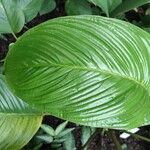
Tacca integrifolia
Batplant · Batflower · Cat's whiskers · White batflower · White bat lily
Description
Source: leafsnapTacca integrifolia, or the white batflower, is a tropical herb native to tropical and subtropical regions in Asia. White batflowers, considered one of the most unique species in the plant kingdom, are widely popular for their striking blooms during the spring through fall. The plant produces clusters of white or purple flowers from which thin, long bracts hang. Two wide, almost flared, white bracts rise above the flowers, giving the plant its signature 'batwing' appearance. White batflowers are certainly fascinating features for every garden or home.
Care Guide
💧 Water Every week
The white batflower thrives in the humid conditions of tropical rainforests, requiring consistent moisture. For optimal growth, water it weekly, though it can tolerate brief dry spells. Regular misting improves both the health of its foliage and its flowering potential, making the white batflower a popular choice for indoor ornamental displays.
☀️ Light Partial sun
The white batflower thrives in surroundings that offer strong, but not overly intense sunlight. The place where it originates has abundant sunshine, albeit with sporadic shaded locations. Excessively fierce or extremely weak sunlight can compromise its wellbeing. Even though it has resistance towards aggressive sunlight, a balanced amount of light is paramount for its best development.
What are the sunlight requirements for the White batflower?
The White batflower (Tacca integrifolia) thrives under conditions that mimic its native habitat, requiring vigorous yet not overwhelming sunlight exposure. It can tolerate both partial sun, which is about 3-6 hours of sunlight daily, and full sun, which is above 6 hours of sunlight daily. However, the plant’s health can be impaired by both too harsh or too dim sunlight. Hence, finding a perfect balance of light and shade is crucial for its happiness and optimal growth.
How can artificial lighting be used for indoor White batflower plants?
When natural sunlight is insufficient for indoor White batflower plants, especially in winter or less sunny spaces, artificial lighting serves as a vital solution. LED lights are recommended for being customizable to provide specific wavelengths needed for the plant's growth. For full sun plants, 30-50W/sq ft of artificial light is required, partial sun plants need 20-30W/sq ft, and full shade plants require 10-20W/sq ft. The artificial light source should be placed 12-36 inches above the plant to mimic natural sunlight, and most plants will need 8-12 hours of light per day.
What are the symptoms of inadequate light for a White batflower?
Symptoms of light deficiency in White batflowers may include small leaves, leggy or sparse growth, faster leaf drop, slower or no new growth, and lighter-colored new leaves. These symptoms indicate that the plant is not receiving sufficient sunlight for optimal growth. Additionally, conditions such as chlorosis, sunscald, leaf curling, wilting, and leaf scorching can occur both from inadequate light exposure and from overexposure to sunlight.
What solutions exist for light-related issues in White batflowers?
To address light-related issues in White batflowers, indoor plants can be gradually shifted to increasingly sunnier spots each week until they receive 3-6 hours of direct sunlight daily. For plants that are large or not easily movable, consider using artificial light, keeping a desk or ceiling lamp on for at least 8 hours daily, or investing in professional plant grow lights. For outdoor plants, gradually moving them to a spot that receives optimal sunlight can help them adapt without the risk of sunburn. Additionally, reducing obstructions such as pruning trees can allow more sunlight to reach the plants. Choosing the right time for transplanting, ideally during the plant's dormant period, can also help achieve better sunlight exposure.
🌡️ Temperature 20–37.8°C
The White batflower is naturally adapted to a temperature spectrum of 68 to 100 °F (20 to 38 ℃). Tuning the conditions to keep within this temperature range can be advantageous, especially across different seasons. Temperatures lower than this could potentially impact growth.
What is the ideal temperature range for a White Batflower?
The White Batflower (Tacca integrifolia) thrives in a temperature range of 68 to 100 °F (20 to 38 °C). To ensure healthy growth, it's important to adjust conditions to maintain this range across different seasons. This plant is heat-loving, and exposure to cold can harm it. During colder months, especially in autumn, it is recommended to bring the White Batflower indoors, placing it near a bright window but away from direct heat sources. Keeping the temperature above 20°C (68°F) during winter supports the plant's growth, while temperatures nearing 5°C (41°F) are harmful.
How do you care for a White Batflower in low temperatures?
The White Batflower requires warm conditions and does not tolerate low temperatures well. In winter, it's crucial to keep the environment above 20°C (68°F) and ideally above 5°C (41°F) to prevent damage. Exposure to temperatures below 1°C (34°F) can lead to leaf discoloration, where leaves may turn lighter and, following frost damage, gradually darken to brown or black. Signs of distress include wilting and drooping. To mitigate frost damage, trim off the affected parts and move the plant to a warmer, indoor location. Placing it near a south-facing window ensures adequate sunlight, but avoid direct exposure to heaters or air conditioning vents to prevent air dryness.
How do you care for a White Batflower in high temperatures?
During hot summer months, it's crucial to protect the White Batflower from extreme heat by keeping temperatures below 38°C (100°F). Exposure to temperatures above 43°C (109°F) can cause the leaves to lighten and increase susceptibility to sunburn. To address heat stress, remove sunburned or dried parts of the plant. Relocate it to a shaded area, especially away from intense midday and afternoon sun, and ensure the soil remains moist by watering in the morning and evening. Such measures help in maintaining the wellbeing of the White Batflower during periods of high temperature.
💨 Humidity
🪴 Soil 5-6
🌱 Fertilizer
The health and appearance of the White batflower greatly depend on appropriate fertilization. Over the course of summer, the White batflower should be fertilized monthly. These nutrients stimulate growth and sustain various parts of the plant. The flower display of a White batflower is amplified through fertilization, assuring outstanding bloom quality.
🪴 Pot & Repot 2-3 years
Repot the white batflower every 2-3 years in the spring, using a large pot with good drainage to support its growth. After repotting, place it in bright, indirect light and keep the soil consistently moist. This will help the plant develop its unique bat-like blooms. Make sure to give it exceptional care during this time for the best results.
✂️ Pruning
The white batflower is known for its distinctive bat-shaped blooms. To keep it healthy, it's important to prune away dead foliage. This should be done from late winter to early spring to enhance air circulation and prevent disease. Additionally, removing wilted blooms encourages more robust flowering. For detailed pruning techniques specific to tropical species like the white batflower, consult horticultural guides.
🌿 Propagating
🐛 Diseases & pets
☠️ Toxicity
White batflowers are potentially poisonous to humans and animals if consumed in large amounts. Although commonly harvested for traditional medicine in some regions, overdosing can result in severe toxicity and even death.
Characteristics
- Plant Type
- Herb
- Life Cycle
- Perennial
- Genus
- Tacca
- Family
- Dioscoreaceae
- Hardiness Zone
- 10-11
- Mature Height
- 0.61 m to 1.22 m
- Mature Spread
- 1.52 m
- Leaf Color
- Green, Blue
- Leaf Type
- Evergreen
- Flower Color
- White, Purple, Green, Brown
- Flower Size
- 15.24 cm to 30.48 cm
- Bloom Time
- Late spring, Summer, Early fall, Mid fall
- Planting Time
- Spring, Summer, Autumn
- Harvest Time
- Fall, Early winter
- Native Area
- Sri Lanka, India, Malaysia, Indonesia, Cambodia, Vietnam, Myanmar, Bhutan, Singapore, Bangladesh, Pakistan, Laos, Thailand, China