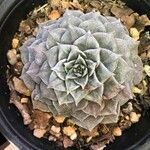
Tacitus bellus
Description
Source: leafsnapGraptopetalum bellum (syn. Tacitus bellus) is a species of flowering plant in the stonecrop family Crassulaceae, native to northern Mexico. It was discovered by Alfred Lau in 1972 in the states of Chihuahua and Sonora, at an altitude of 1,460 m (4,800 ft).It inhabits rocky terrain with moderate sun exposure. The Latin specific epithet bellum means "beautiful".
🌳 Although graptopetalum bellum may not be widely known for a range of traditional uses, it holds a distinctive place in ornamental horticulture. Its rosettes of waxy, opalescent leaves and star-shaped flowers enthrall enthusiasts, leading to its cultivation in gardens and homes for visual enjoyment. Its potential to enhance urban green spaces underscores an underappreciated, dynamic value that goes beyond mere decoration.
Care Guide
💧 Water Every 1-2 weeks
In the absence of natural rain, these plants only need occasional irrigation. Plants growing outdoors in full sun and summer temperatures will appreciate a weekly drink, while houseplants may only need watering every other week. Water indoor plants at soil level to prevent water from stagnating in the rosettes.
☀️ Light Partial sun
Graptopetalum bellum grows best with abundant sunlight, absorbing the light vigorously. Its preference for bright conditions comes from its native habitat, which is rich in sunlight. However, too much or too little light can harm its health and slow its growth.
🌡️ Temperature 20–37.8°C
Graptopetalum bellum does best in its native temperature range of 68 to 100 °F (20 to 38 ℃). It prefers warm climates, and conditions should be adjusted accordingly as the seasons change. Carefully moderate the temperature during the cooler months.
💨 Humidity
🪴 Soil 6-7
🌱 Fertilizer
Graptopetalum bellum requires only light fertilizer applications once or twice a year during the growing season. Avoid fertilizing in winter and in summer when it is dormant. Use less fertilizer for plants that have been repotted, and wait a couple of months after repotting before you fertilize. Fertilizing promotes healthy growth and encourages blooms.
🪴 Pot & Repot Every 2 years
For the repotting of Graptopetalum bellum, choose a pot that is marginally bigger than the current one and has effective drainage. Utilize a gritty, well-draining mixture meant for succulents or cacti. Gently take out the plant from its previous pot, clear away surplus soil, and reposition it at an identical depth. Hold off watering for a few days, to give any damage done to the roots enough time to recuperate. The optimal time to replant is during the spring or autumn seasons, and the plant should be placed in a well-lit area.
✂️ Pruning
When these plants produce new rosette pups, they do so on thick stems that can grow leggy over time. Depending on the look you're aiming for, these leggy offshoots can add to the charm of the plant, or begin to look scraggly. You can prune away the offshoots as they grow too long and replant the pups, share them with friends, or add them to the compost pile.
🌿 Propagating
🐛 Diseases & pets
☠️ Toxicity
According to the ASPCA, ghost plants are non-toxic to dogs, cats, and horses.
Characteristics
- Plant Type
- Succulent
- Life Cycle
- Perennial
- Genus
- Tacitus
- Family
- Crassulaceae
- Hardiness Zone
- 9-11
- Mature Height
- 8 cm
- Mature Spread
- 10 cm
- Leaf Color
- Green, Gray, Silver
- Leaf Type
- Evergreen
- Flower Color
- Pink, White
- Flower Size
- 2.54 cm
- Bloom Time
- Mid spring, Late spring
- Planting Time
- Spring, Autumn
- Harvest Time
- Early summer, Mid summer
- Native Area
- Mexico