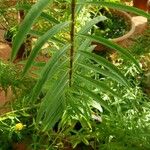
Tagetes lucida
Mexican mint marigold · Texas-tarragon · Mexican-tarragon · Sweet marigold · Sweet-mace
Description
Source: leafsnapTagetes lucida, commonly known as Mexican tarragon or sweet mace, is a perennial herbaceous plant that belongs to the Asteraceae family. Native to Mexico and Central America, it has been used for centuries in traditional medicine and culinary practices. The plant can grow up to 1 meter in height and features lance-shaped, dark green leaves. It produces small yellow or orange flowers that bloom from late summer to fall. Mexican tarragon has a sweet, anise-like flavor and is often used as a substitute for French tarragon in cooking. The leaves are commonly used fresh or dried as a seasoning for soups, stews, sauces, salads, and meat dishes. In traditional medicinal practices of Mexico and Central America, Tagetes lucida has been used to treat various ailments such as digestive issues, including stomach pain and diarrhea. The plant contains essential oils such as estragole, which have antifungal properties. Overall, Tagetes lucida is an attractive herb that offers both culinary and medicinal benefits, making it a valuable addition to any garden.
🌳 Although Mexican tarragon is well known for its flavoring qualities, it also has a lesser-known ability to serve as a natural insect repellent because of its strong aroma and essential oil content. Farmers have been known to plant Mexican tarragon as a companion crop to keep pests away from valuable plants. Unexpectedly, its vivid petals can be used to create a deep natural dye for textiles, offering an eco-friendly alternative to synthetic dyes. Moreover, its use as a biomonitor for soil health—particularly for detecting heavy metals—illustrates its useful contributions beyond food use.
Care Guide
💧 Water Every 3 days
Mexican tarragon flourishes in humid environments, needing consistent moisture and benefiting from weekly watering. However, it is sensitive to soil moisture, so during its active growing season, careful attention is required to provide adequate water while avoiding waterlogging.
How should I water my Mexican tarragon?
To ensure the health of your Mexican tarragon, it is recommended to use filtered water at room temperature for watering. Tap water can be harmful due to potential particles it may contain. Since Mexican tarragon originates from warm environments, it is important to avoid cold water as it may shock the plant. Furthermore, overhead watering should be avoided as it can lead to leaf issues. Instead, gently pour the filtered room temperature water onto the soil until it is completely soaked. This helps the roots absorb moisture and spread throughout the soil to collect necessary nutrients.
What should I do if I give my Mexican tarragon too much or too little water?
Both overwatering and underwatering can harm your Mexican tarragon, but overwatering is more likely to occur. Overwatering can cause wilting, yellowing leaves, and diseases like root rot, mold, and mildew. Underwatering is less common due to the plant's drought tolerance, but it can result in brittle, brown leaves. Detecting signs of overwatering is crucial as some diseases may not be reversible if not addressed promptly. Reduce watering if you observe early signs and consider replacing poorly draining soil with a loose, well-draining potting mix. If your Mexican tarragon lacks water, increase watering until signs of dehydration disappear.
How frequently should I give water to my Mexican tarragon?
If your Mexican tarragon is in a pot, you can check if it needs water by sticking your finger in the soil. If the top two to three inches of soil are dry, it's time to water it. If you're growing Mexican tarragon outdoors in the ground, you can use the same method. When the first few inches of soil are dry, it's time to water it. Usually, in the spring and early fall, watering once a week is enough. However, during extremely hot weather, you may need to water it twice a week or more. It's worth noting that mature Mexican tarragon has a remarkable ability to withstand drought.
How much water does my Mexican tarragon require?
When watering your Mexican tarragon, don't be afraid to give it a generous amount of water. Make sure the first two to three inches of soil are dry before watering, and then give it a good, long watering session. It's important to soak the soil completely, so add enough water to make it overflow through the drainage holes at the bottom of the pot. If you don't see excess water draining, you may not have given your plant enough water. However, be cautious not to let water accumulate inside the soil, as this can harm the plant. Additionally, if water doesn't drain properly from the pot, it may indicate that the soil doesn't drain well, which is not good for the plant's health. If your plant is outdoors, it generally only needs about 1 inch of rain per week.
How do I water my Mexican tarragon when it's growing at different stages?
The water needs of Mexican tarragon can vary at different growth stages. In the first few years and after transplanting, it requires more water as it focuses on developing new roots for future growth. These roots perform best with slightly higher moisture levels. As the plant matures, it will require less water. Additionally, during the bloom period, when the plant is developing flowers, it may need more water to support this process.
☀️ Light Full sun
Mexican tarragon does best when exposed to abundant light, which is commonly present in its native habitat. Its tolerance for strong illumination supports healthy growth. Still, it is adaptable and can tolerate lower light levels. Both excessive and insufficient light can negatively affect growth, potentially causing withered leaves in the former case and lackluster flowering in the latter.
What are the sunlight requirements for Mexican Tarragon?
Mexican Tarragon thrives best under full sun conditions, requiring above 6 hours of sunlight daily to flourish. However, it can also grow in partial sun, receiving about 3-6 hours of sunlight. It's crucial to observe the movement of sunlight in your garden to find spots that offer a suitable balance of light and shade, ensuring optimal growth and health of your plants. This careful placement helps in mimicking the robustness towards illumination observed in its native habitats, aiding its healthy growth while being adaptable to lower light levels.
How should I manage lighting for indoor Mexican Tarragon plants?
Indoor Mexican Tarragon requires adequate lighting for optimal growth. During seasons like winter or in spaces with less sunlight, artificial lighting becomes essential. LEDs are recommended as they can be adjusted to provide specific light wavelengths needed by plants. Full sun plants need 30-50W per square foot, partial sun plants require 20-30W per square foot, while full shade plants need 10-20W per square foot of artificial light. Position the light source 12-36 inches above the plant, simulating natural sunlight, and ensure it receives 8-12 hours of light per day for healthier growth.
What symptoms indicate insufficient or excessive sunlight in Mexican Tarragon?
Symptoms of insufficient sunlight include smaller new leaves, leggy or sparse growth, faster leaf drop, slower or halted growth, and lighter-colored or pale new leaves. Excessive sunlight may result in chlorosis, sunscald, leaf curling, wilting, and leaf scorching. These symptoms can affect the health and appearance of your Mexican Tarragon, indicating a need for adjusting the plant's exposure to light.
How can I address lighting issues for my Mexican Tarragon?
To enhance growth for indoor plants, gradually increase sunlight exposure to at least 6 hours daily, using a south-facing window or artificial lights for plants that are large or not easily movable. For outdoor plants, gradually move them to sunnier locations each week to prevent sunburn, ensuring adaptation to the change. Additionally, for ground planting, minimize obstructions by pruning or transferring the plant to a sunnier location with better soil drainage during its dormant period. While parts of the plant affected by inadequate light might not recover, new growth will be healthy with improved lighting.
🌡️ Temperature 15–37.8°C
Native to temperate regions, mexican tarragon does best in warm conditions, preferring temperatures from 68 to 100 °F (20 to 38 °C). When temperatures fall seasonally, adjustments may be needed to make sure mexican tarragon receives enough warmth to flourish.
What is Mexican tarragon?
Mexican tarragon, known botanically as Tagetes lucida, is native to temperate climates and is well-suited to warm environments. It thrives in temperatures ranging from 68 to 100 °F (20 to 38 °C). This plant has a high tolerance for cold and can generally withstand winter conditions without special frost protection measures. However, in extremely cold winters with temperatures dropping below -15°C, providing some cold protection is advisable. Proper care includes ensuring the soil stays moist before the first freeze of autumn to support the plant through winter and early spring.
How does Mexican tarragon react to low temperatures?
Mexican tarragon is cold-tolerant and performs best in temperatures above 20°C. During the winter months, it is important to keep the ambient temperature above 0°C to prevent damage. If temperatures fall below -15°C, the plant may not show immediate damage but could experience decreased sprouting or fail to sprout at all in the following spring. To address this, any non-sprouting parts should be removed at the start of the growing season.
What are the effects of high temperature on Mexican tarragon and how can they be mitigated?
In summer, it is crucial to ensure that the temperature surrounding Mexican tarragon does not exceed 38°C. Exposure to temperatures above 43°C may cause the plant's leaves to lighten in color, curl, become susceptible to sunburn, and lead to severe wilting or drying out of the plant. To mitigate these effects, trim sunburned or dried parts away, relocate the plant to a shaded area during midday and afternoon sun, or use a shade cloth. Additionally, watering the plant in the morning and evening can help maintain soil moisture and prevent damage.
💨 Humidity
🪴 Soil 6-7
🌱 Fertilizer
To maximize yield, Mexican tarragon does best with regular applications of a balanced fertilizer, especially one high in nitrogen. Apply fertilizer before planting, at planting, and when seedlings are 2 inches tall. Adding compost or manure also supplies a steady source of nutrients. If the soil lacks sufficient nutrients, leaves and stems will be underdeveloped, flavors will be inferior, stems will be thin, and the taste may become bitter.
Do I have to fertilize my Mexican tarragon?
Fertilization is necessary for Mexican tarragon for a few important reasons. Firstly, it provides essential nutrients that support the plant's growth both above and below the ground. However, Mexican tarragon generally requires lower amounts of fertilization compared to other plants. While it can survive without fertilization, annual fertilization can greatly benefit the plant by promoting its overall health and potentially enhancing the durability of its flowers. Therefore, if you want your Mexican tarragon to thrive and produce beautiful, long-lasting flowers, it is recommended to fertilize it annually.
When should I put fertilizer on my Mexican tarragon for the best results?
The best time to fertilize a Mexican tarragon is late winter to early spring when it is transitioning from dormancy to active growth. Fertilizing during this period promotes healthy growth and a strong start to the season. Although it is generally recommended to fertilize in early spring, it is also acceptable to fertilize in the fall. However, it is not advisable to fertilize during the summer or winter.
When is the best time to not put fertilizer on my Mexican tarragon?
To properly care for your Mexican tarragon, it is best to only fertilize it during late winter and early spring. This plant doesn't require a lot of fertilizer, so a single annual feeding is enough. Avoid fertilizing in spring, summer, and fall, as this can cause overfertilization and issues. However, if you forgot to fertilize in spring, it is okay to feed it in fall. Furthermore, there is no need to fertilize in winter when the plant is in a dormant phase and not growing.
What kind of fertilizer does my Mexican tarragon require?
When it comes to fertilizing Mexican tarragon, you have several options. Any general-purpose fertilizer with a balanced amount of the three main plant nutrients will work well. However, there are specific nutrient blends that can be even more beneficial. Some gardeners believe that higher levels of phosphorus promote stronger roots and better flowers. Since Mexican tarragon is a flowering plant, using a phosphorus-rich fertilizer may be the best choice. Whether you prefer granular or liquid fertilizers, just make sure they contain plenty of nutrients. In addition to manufactured fertilizers, you can also use organic methods to improve soil health. Compost, manure, and similar materials are great for creating a healthy growing environment for your Mexican tarragon.
How can I make my Mexican tarragon grow better?
To fertilize a Mexican tarragon, a common method is to use granular or pellet fertilizer. It is important to fertilize during the plant's active growth phase, which typically happens after its winter dormancy. In early spring, wait for shoots to emerge from the soil before applying fertilizer. Alternatively, some people prefer using a liquid fertilizer, which should be diluted with water before application. Whether using granular or liquid fertilizer, it is recommended to moisten the soil before, during, and after fertilization.
🪴 Pot & Repot 2-3 years
For optimal growth, repot Mexican tarragon every 2 to 3 years during the spring. Use a medium-sized pot with good drainage. After repotting, ensure the plant receives full sunlight and water it regularly, being careful not to oversaturate the soil. This approach will enhance both its growth and flavor.
✂️ Pruning
Mexican tarragon benefits from regular pruning, particularly in early to late spring. To encourage new growth and maintain a bushy shape, trim back leggy stems and remove any dead blooms. This not only improves the plant's appearance but also promotes healthier and more vigorous growth, preventing it from becoming too woody.
🌿 Propagating
🐛 Diseases & pets
☠️ Toxicity
Characteristics
- Plant Type
- Herb
- Life Cycle
- Perennial, Annual
- Genus
- Tagetes
- Family
- Asteraceae
- Hardiness Zone
- 7-11
- Mature Height
- 46 cm
- Mature Spread
- 30 cm
- Leaf Color
- Green
- Leaf Type
- Semi-evergreen
- Flower Color
- Gold, Yellow
- Flower Size
- 2.54 cm
- Bloom Time
- Mid summer, Late summer
- Planting Time
- Spring
- Harvest Time
- Late summer, Early fall
- Native Area
- El Salvador, Honduras, Mexico, Guatemala