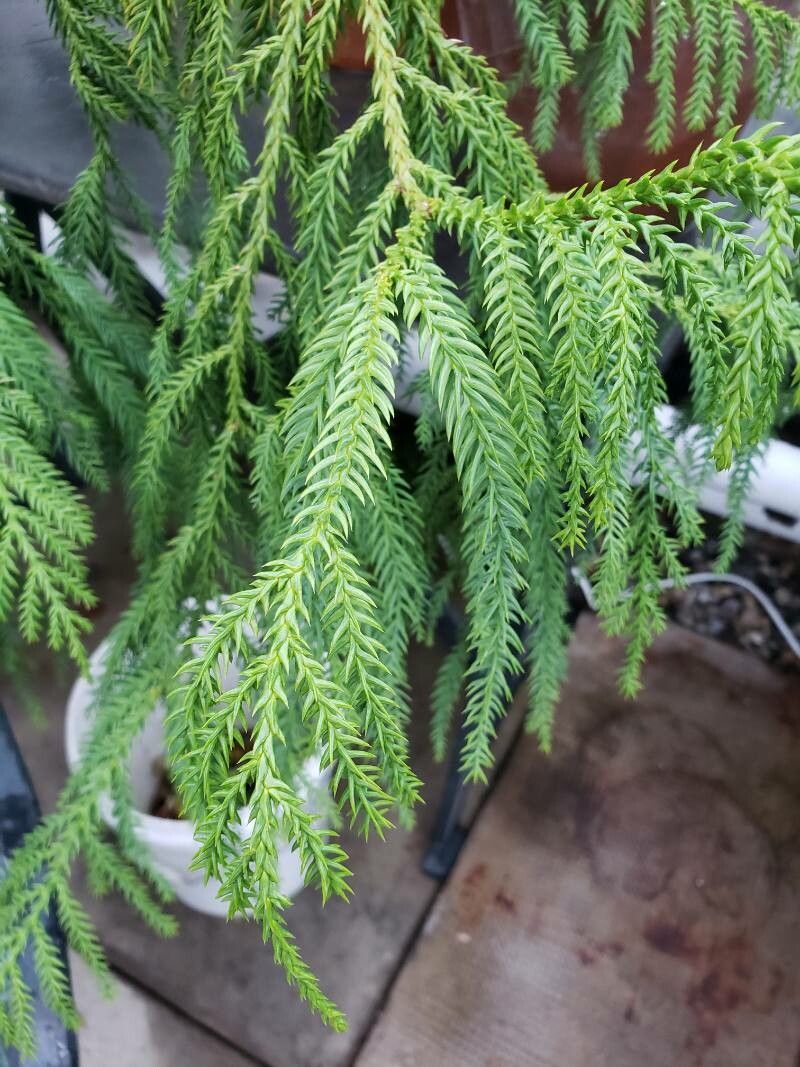
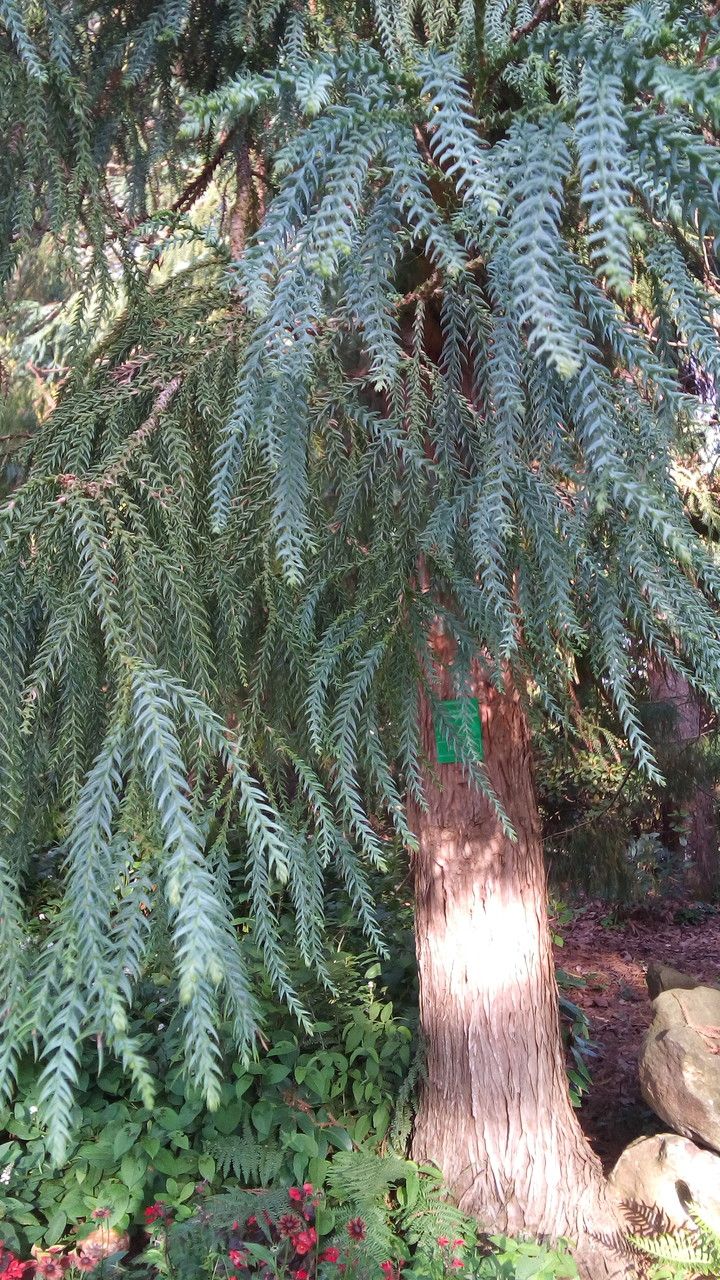
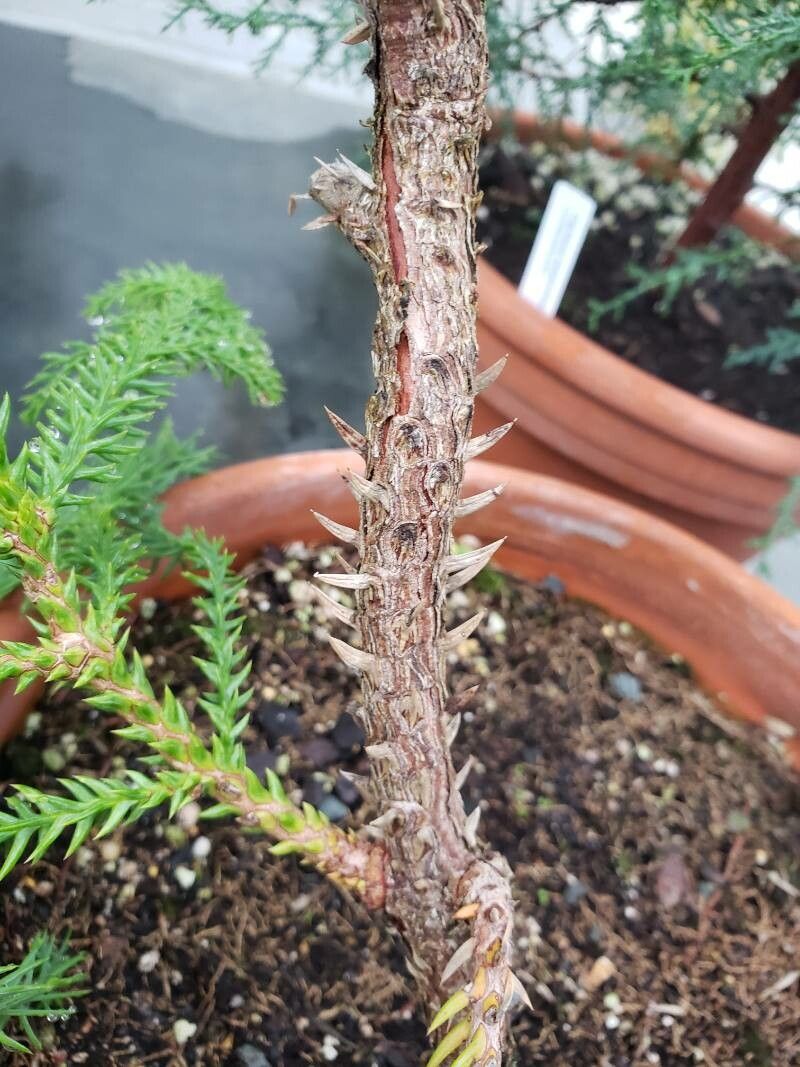
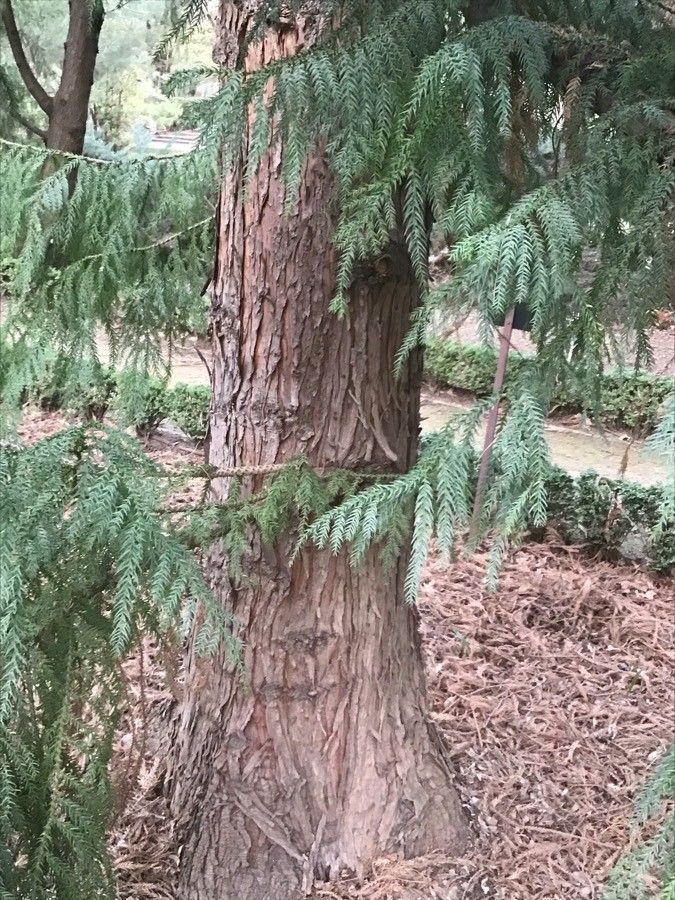
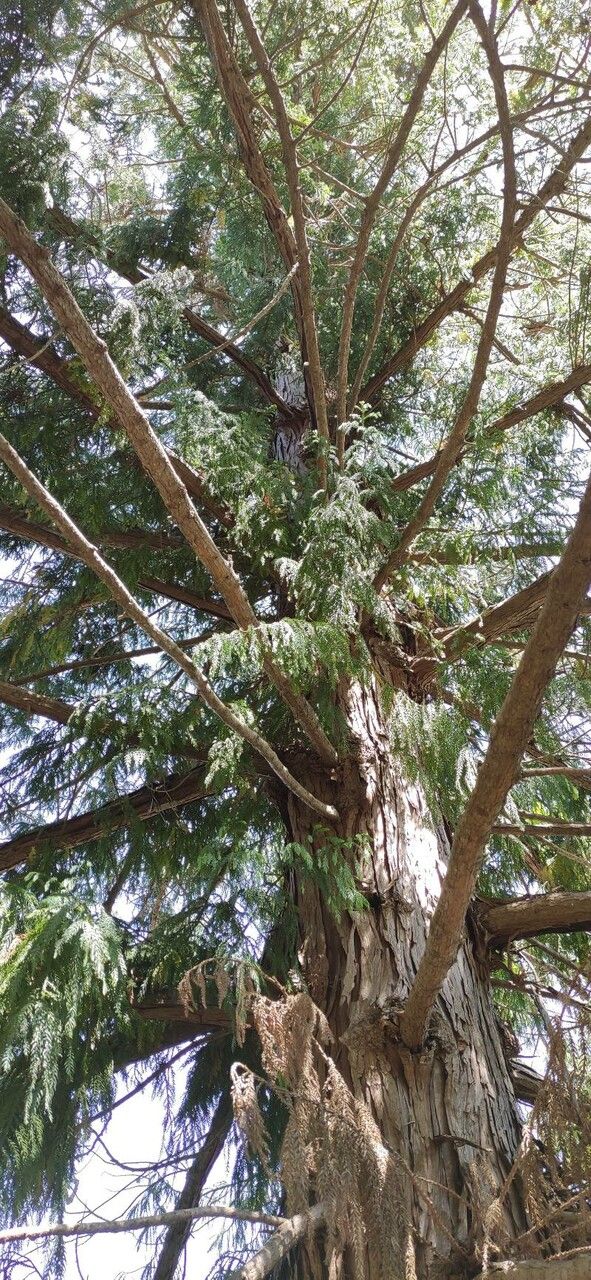
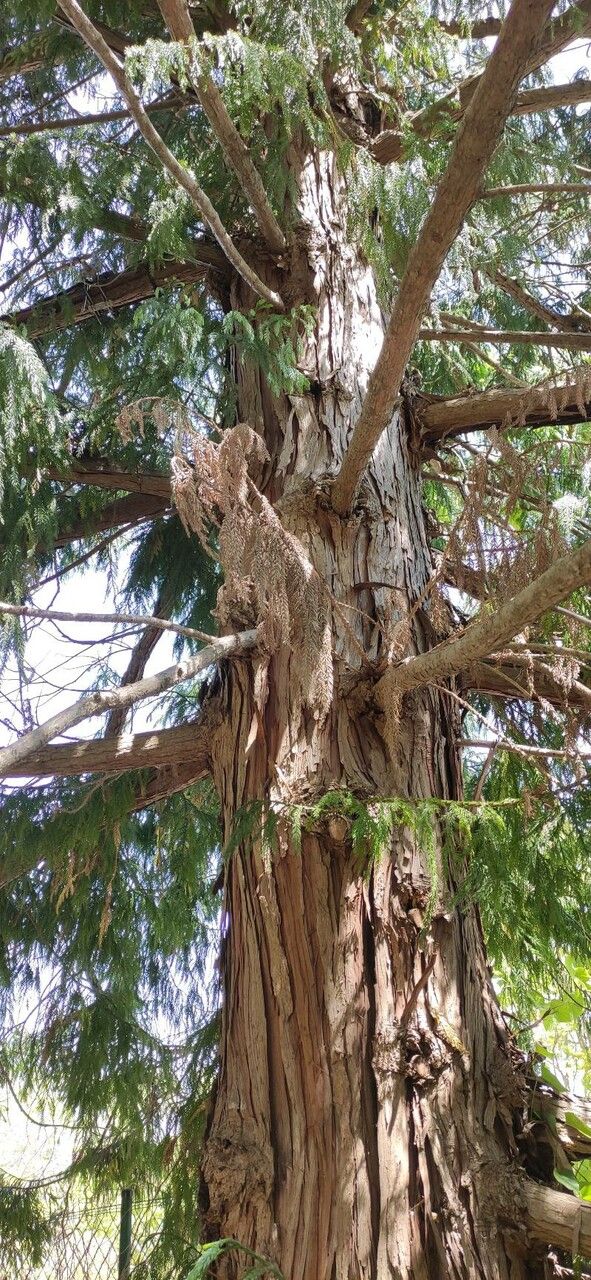
Taiwania cryptomerioides is a large evergreen conifer native to Taiwan. Belonging to the Cupressaceae family, this tree can reach heights of up to 70 meters and have a trunk diameter of up to 3 meters. It features a conical shape with horizontal branches adorned with scale-like leaves, which are green on the upper surface and white on the lower surface.
This tree is an important timber species in Taiwan, where it has been extensively logged for its valuable wood. The timber of Taiwania cryptomerioides is highly prized for its durability, strength, and resistance to decay.
Beyond its economic significance, Taiwania cryptomerioides plays a crucial ecological role by providing habitat for various bird and mammal species. Additionally, it helps regulate water flow in mountainous regions by absorbing water during the rainy season and releasing it gradually during dry periods.
Due to overexploitation over the years, Taiwania cryptomerioides has become endangered in many parts of Taiwan. Conservation efforts by both government agencies and non-governmental organizations are underway to protect this valuable species from extinction.
The Chinese coffintree is highly resistant to disease and usually does not get sick easily. Regarding care, this plant is fairly low-maintenance. When grown outdoors it needs only occasional watering, and larger specimens typically do not need pruning. Smaller plants, however, should be pruned after they finish blooming. The Chinese coffintree is appropriate for anyone with an outdoor area, such as a garden or deck, and does not demand much care experience.
How to keep Taiwania Cryptomerioides.
Light
The chines e coffintree prospers when it receives uninterrupted sunlight throughout the day, replicating its original growing conditions. At every stage of growth, it does best with plentiful sun exposure. By contrast, inadequate sunlight or its absence greatly impedes the tree's healthy development.
Water
The Chinese coffintree originates from high-altitude forests and prefers consistently moist, well-drained soil. Water it every 1-2 weeks, allowing the soil to partially dry out in between. While it is typically grown outdoors, the Chinese coffintree thrives best when natural rainfall patterns match its native growth cycles.
Temperature
Chinese coffintree is native to climates where temperatures range from 59 to 100 °F (15 to 38 ℃). It flourishes best within this moderate temperature band. Summer heat should not surpass the upper limit, while winters should be kept temperate.
Fertilizer
The Chinese coffintree has specific nutrient needs and does not require heavy fertilization. Spring is the best time to fertilize to achieve optimal growth. Providing nutrients enhances its health, increases its resistance to pests and diseases, and helps maintain its long lifespan.
Pruning
The Chinese coffintree, known for its tall trunk and needle-like leaves, requires pruning between early and late winter. During this time, remove any dead wood and shape the tree to improve air circulation. Pruning while the tree is dormant reduces stress, encourages growth, and minimizes the risk of fungal diseases. Always make sure to sanitize your tools to prevent infections.
Botanical profile.
- Plant Type
- Tree
- Life Cycle
- Perennial
- Genus
- Taiwania
- Family
- Cupressaceae
- Hardiness Zone
- 8-11
- Mature Height
- 30.48 m to 54.86 m
- Mature Spread
- 9.14 m to 14.94 m
- Leaf Color
- Green, Blue
- Leaf Type
- Evergreen
- Flower Color
- Yellow, Brown
- Flower Size
- 0.20 cm to 0.25 cm
- Bloom Time
- Early spring, Mid spring
- Planting Time
- Summer, Autumn
- Harvest Time
- Late summer, Early fall, Mid fall
- Native Area
- Myanmar, China
Other names.
Reader questions.
How should I water my Chinese coffee tree?
If you choose to water your Chinese coffintree, you will find that it is a simple task. The best way to water is slowly soaking the soil using a garden hose. This works well for mature trees that need a lot of water. However, smaller trees can also be watered with a watering can or other small tool. It is important to avoid getting the leaves wet, as too much moisture can cause disease, especially in young trees.
Why should I put fertilizer on my Chinese coffee tree?
To promote the healthy growth of Chinese coffee trees, it is recommended to fertilize them in the spring. Keep in mind that these trees have a long lifespan and therefore require support. By adding nutrients to the soil, you can enhance the tree's overall health, helping it withstand and fight off common pests and diseases that may hinder its growth or shorten its lifespan.
What are the sunlight requirements for a Chinese coffintree?
The Chinese coffintree requires full sun, meaning it should be exposed to more than 6 hours of sunlight per day to flourish properly. It's essential to observe the movement of sunlight through your garden to choose the best spots that provide an ideal balance of light and shade. This practice ensures that your plants receive the illumination they need for healthy growth, mimicking the tree's original growing conditions. Insufficient sunlight can significantly impair the tree's development throughout its growth stages.
What is the native climate for the Chinese coffintree?
The Chinese coffintree, botanically known as Taiwania cryptomerioides, is native to climates where temperatures range between 59 to 100 °F (15 to 38 °C). It thrives best in moderate temperature bands, with ideal conditions avoiding extreme summer heat beyond 38°C and ensuring winters remain temperate. The tree has some degree of cold tolerance, generally not requiring additional cold protection measures if temperatures stay above -5°C. However, in colder conditions below -5°C, temporary protection measures like wrapping the plant in plastic film, fabric, or other materials are recommended, which should be removed once temperatures rise.
What should I do if I give my Chinese coffintree too much water or too little water?
Overwatering your Chinese coffintree can be caused by poor soil that doesn't allow water to drain effectively. If this happens, you can either improve the soil's drainage or move the plant to a better location. If you're growing the tree in a pot, you may need to repot it with looser soil that drains better. Overwatering can also lead to diseases in the plant, so it's important to treat any issues promptly. On the other hand, if your Chinese coffintree is underwatered, simply increase the frequency of watering and it should recover. To determine if your tree is overwatered, check the foliage, particularly the new growth. If it appears discolored or easily breakable, it may be suffering from too much moisture. Standing water or slow drainage in the growing area can also indicate excessive moisture. Underwatered trees will have sparse, brown leaves. If you notice these symptoms, consider whether there has been excessive rainfall or consistently high temperatures as possible causes.
When should I fertilize my Chinese coffee tree to get the best results?
Chinese coffintree is unique because it doesn't need a lot of extra nutrients like other garden plants. However, it's important to fertilize it in the spring before new growth starts, as the growing medium may not provide enough nutrients for healthy growth.
How do I ensure my indoor Chinese coffintree receives enough light?
Indoor Chinese coffintrees require adequate lighting for optimal growth, especially when natural sunlight is insufficient. During periods of limited sunlight, such as winter or in less sunny spaces, artificial lighting can be a crucial solution. For optimal growth under artificial lights, choose LED lights as they can be customized to meet your plants' specific light wavelength needs. Full sun plants need 30-50W/sq ft, partial sun plants 20-30W/sq ft, and full shade plants 10-20W/sq ft of artificial light. Position the light source 12-36 inches above the plant, mimicking natural daylight as closely as possible, and ensure the plants receive 8-12 hours of light daily for the best results.
How does the Chinese coffintree react to low temperatures?
The Chinese coffintree possesses moderate tolerance to low temperatures, thriving optimally when the temperature is above 15°C. During winter, it is crucial to ensure the temperature remains above -5°C to prevent damage. Should the temperature dip below -10°C, the tree's leaves may begin to droop and, depending on the severity, could either recover or wilt and eventually fall off. In the event of frost damage, the recommended solution is to trim off the frost-damaged parts, wrap the plant with non-woven fabric or cloth before the arrival of low temperatures again, and possibly construct a wind barrier to shield it from cold winds.
How frequently should I water my Chinese coffee tree?
A mature Chinese coffintree is drought tolerant and can survive with just rainfall. During the hottest months, you may need to water it once a week, but in other seasons, watering may not be necessary. Newly planted trees should be watered regularly to help the roots establish themselves. However, it's important to note that Chinese coffintrees do not tolerate standing water, so it's better to not water it if you're unsure rather than overwatering it.
When should I not give fertilizer to my Chinese coffee tree?
Chinese coffintree does not require a lot of extra nutrients, unlike some other plants that benefit from monthly or weekly fertilization. In fact, applying too much fertilizer can actually cause it to start dying back. To keep the tree healthy, it is best to apply fertilizer only in the spring, and avoid doing so in the summer, fall, and winter. Additionally, refrain from adding any organic matter to the soil during these seasons.
What symptoms indicate my Chinese coffintree is not getting enough light?
If your Chinese coffintree isn't receiving enough light, it may show several symptoms including smaller new leaves, leggy or sparse growth, premature dropping of older leaves, slower or halted growth, pale or irregularly colored new leaves, and symptoms such as chlorosis, sunscald, leaf curling, wilting, and leaf scorching. These signs indicate that the plant is struggling with light deficiency and is trying to adapt by conserving resources or protecting itself from excessive sunlight.
What should be done if the Chinese coffintree experiences high temperatures?
During the summer, it's essential to keep the Chinese coffintree under 38°C to avoid stress from high temperatures. Temperatures exceeding 43°C can lead to lighter leaf coloration, drying and withering of leaf tips, curling of leaves, and increased susceptibility to sunburn. If these symptoms are noticed, sunburned and dried parts should be trimmed away. To protect the plant, it's advisable to move it to a shaded location or use a shade cloth to provide relief from the midday and afternoon sun, and ensure the soil is kept moist by watering in the morning and evening.