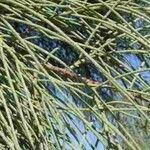
Tamarix aphylla
گز شاهی، کورگز، شورگز · Athel tamarisk · Athel-pine · Atheltree · Desert tamarix
Description
Source: leafsnapTamarix aphylla, commonly known as the Athel tree or salt cedar, is a deciduous shrub or small tree belonging to the Tamaricaceae family. Native to the arid regions of North Africa and the Middle East, this plant has been introduced and naturalized in many parts of the world. The Athel tree can reach up to 10 meters in height, featuring a spreading crown and thin branches adorned with small, scale-like leaves. These gray-green, needle-like leaves are arranged alternately along the stem. From late spring through summer, Tamarix aphylla produces small pink flowers that bloom in dense clusters at the tips of its branches. Highly tolerant of drought conditions and capable of thriving in saline soils, this plant is an excellent choice for landscaping projects in arid regions. In traditional medicine, Tamarix aphylla has been used for its medicinal properties, including the treatment of skin diseases and fever reduction. Overall, Tamarix aphylla is an attractive ornamental plant with unique features that make it particularly suitable for landscaping projects in harsh, arid climates where other plants may struggle to survive.
🎭 Expulsion of spirits, safeguarding
Care Guide
💧 Water Every 7 days
Adapted to arid environments, athel tamarisk thrives with minimal moisture due to its high drought tolerance. It requires watering only every 2 to 3 weeks and flourishes outdoors in hot climates by making the most of rare rain showers during its active growing season.
How should I water my Athel tamarisk for best results?
Your Athel tamarisk is a low-maintenance plant when it comes to watering. You can use any common watering tool, like watering cans, hoses, or even cups. It is important to water the plant by applying water directly to the soil, making sure to evenly moisten all areas of the soil to give the root system the water it needs. Filtering the water is recommended to avoid harmful particles from tap water. Additionally, using water at or slightly above room temperature is ideal, as colder or hotter water may shock the plant. However, the Athel tamarisk is generally tolerant of different types of water.
What do I need to do if I give too much or too little water to my Athel tamarisk?
Outdoor plants, especially newly planted ones or seedlings, can be prone to lack of watering. Make sure to water them enough for a few months when they're small or just planted. Once the roots are established, Athel tamarisk can rely on rain most of the time. When your Athel tamarisk is in pots, overwatering is more likely. If you accidentally overwater your plant, take immediate action to fix the situation. Stop watering the plant right away to minimize the impact of overwatering. Then, remove the Athel tamarisk from its pot to check its roots. If no root rot is found, you can return the plant to the container. If root rot is present, trim the affected roots and consider applying a fungicide to prevent further damage. Finally, repot the Athel tamarisk in well-draining soil. In the case of underwatering, simply water the Athel tamarisk more frequently. This is often an easy fix. If you underwater, the plant's leaves will droop, dry out, and fall off. Once it receives sufficient watering, the leaves will quickly regain their fullness. Please adjust your watering frequency as soon as you notice underwatering.
How frequently do I need to water my Athel tamarisk?
If your area doesn't get much rainfall, you'll need to water your outdoor plants on a regular basis. During the spring and fall, watering every 2 weeks should be enough, but in the summer you'll need to water more often. In the winter, you can water less frequently or even not at all. If you have a young or newly planted Athel tamarisk, you'll need to water it more often to help it establish and grow. For potted plants, there are two main approaches to determining how often to water your Athel tamarisk. The first is to set a schedule, such as once a week or every other week. However, this may not always be accurate for your specific plant and environment. Another option is to check the soil moisture and wait until the top two to four inches have dried out before watering again. This method can be more effective, especially during the summer when the plant needs more water.
How much water does my Athel tamarisk plant need?
Watering your Athel tamarisk may not always require a lot of water. If only a few inches of soil have dried since the last watering, giving the plant about five to ten ounces of water will support healthy growth. You can also determine the water volume based on soil moisture. Take note of how many inches of soil have dried between waterings. To ensure the plant gets enough moisture, water until all the dry soil layers are moistened. If more than half of the soil has dried, consider giving more water and continue until there is excess water draining from the pot's holes. If the plant is in an area with sufficient rain, it may not need additional watering. When the Athel tamarisk is young or recently planted, make sure it receives 1-2 inches of rain per week. As it grows, it can rely on rainwater, but in hot weather with no rainfall for 2-3 weeks, consider giving a full watering to prevent stress.
"How can I know if I am giving enough water to my Athel tamarisk?"
The Athel tamarisk commonly suffers from overwatering, which can be identified by yellowing leaves, leaf drop, shriveled plant structure, and potential root rot. Underwatering, on the other hand, causes wilting, brown or brittle leaves. In either case, it is important to intervene and restore the health of your Athel tamarisk.
☀️ Light Full sun
Athel tamarisk flourishes when fully exposed to the sun. Sunlight is necessary for its strong growth, supporting vital processes such as photosynthesis. Originating in habitats with abundant light, its growth may be affected if sunlight is insufficient. Nevertheless, Athel tamarisk tolerates intense light conditions well.
How many hours of sunlight does Athel tamarisk need each day to grow healthy?
To ensure healthy growth, it is important for Athel tamarisk to be exposed to at least 3–6 hours of sunlight each day. Meeting this requirement is actually the minimum, as plants that can tolerate partial sunlight usually thrive in full sunlight as well. However, since they need less light for photosynthesis, they are more adaptable compared to plants that specifically need either full sunlight or partial shade.
What kind of sunlight does Athel tamarisk need?
Athel tamarisk thrives with full or partial sun exposure. It flourishes when it receives direct morning light, but during summer, it requires protection from the intense afternoon sun. In temperate environments, excessive hot afternoon sun can scorch the leaves, negatively affecting the plant's appearance and overall health.
Can sunlight harm Athel tamarisk? How do you keep Athel tamarisk from getting damaged by the sun and heat?
When transitioning athel tamarisk plants from indoors to outdoors, it's important to be cautious of direct sunlight, as it can cause damage. To prevent sunburns, gradually move the pots from a shaded area to a brighter spot. However, even plants acclimated to the summer sun can still be harmed by excessive heat. During a heatwave, it's crucial to keep the soil consistently moist to help the plants cope with the high temperatures. To further protect sensitive athel tamarisks during extreme weather, consider moving container plants to areas with afternoon shade or using a shade cloth to provide additional shade.
Should Athel tamarisk be kept away from sunlight? / Do I need to shield Athel tamarisk from the sun?
To help the Athel tamarisk thrive, it needs bright morning sun and some full sun exposure. However, it cannot tolerate the harsh, hot midday sun in summer. If you plant it in the ground, it can gradually adapt to the increasing intensity of the summer sun. But if it has been indoors or in a protected spot, it may get damaged if suddenly exposed to the intense summer sun. To prevent this, place the plant in a location with shade during the hottest part of the day, such as under taller trees or buildings.
What will happen if Athel tamarisk doesn't get enough sunlight?
If an Athel tamarisk doesn't get enough sunlight, it may turn a pale green color and have drooping, yellow leaves. While it's normal for some leaves to drop, it's a bad sign if they're falling off but no new ones are growing. If an Athel tamarisk is not getting enough light, any new growth it does have will likely be weak, pale, and attract bugs. By noticing these signs and adjusting the lighting, you can make a big improvement for the plant.
🌡️ Temperature 0–32.2°C
Athel tamarisk is naturally suited to a temperature range of 32 to 90 °F (0 to 32 ℃) and prospers within that interval. Seasonal adjustments may be required for optimal growth, particularly in warmer areas where moderating temperatures can be helpful.
What temperature range is ideal for Athel tamarisk?
Athel tamarisk is naturally adapted to a temperature range of 32 to 90°F (0 to 32°C), and thrives within this range. It possesses strong cold resistance, implying that special frost protection measures aren't usually necessary. However, for temperatures expected to drop below -35°C, cold protection by wrapping the trunk and branches is recommended. Prior to the first autumn freeze, abundant watering is advised to maintain soil moisture through winter and early spring.
How does low temperature affect Athel tamarisk, and what are the solutions?
Athel tamarisk is quite cold-tolerant, best thriving above 0°C and should remain above -30°C during winter. At temperatures below -35°C, the branches may turn brittle and dry by spring, with no new shoots emerging. To mitigate this, any dead branches that fail to produce new leaves in spring should be pruned away.
How does high temperature affect Athel tamarisk, and what are the solutions?
During the summer, it is best for Athel tamarisk to remain below 32°C. Should temperatures exceed 35°C, the plant's leaves may lighten in color, tips might dry or wither, and susceptibility to sunburn increases. Solutions include trimming away sunburned and dried-up parts, relocating the plant to a shaded area during midday and afternoon sun, or installing a shade cloth. Additionally, watering in the morning and evening helps keep the soil moist.
What is the botanical name of Athel tamarisk?
The botanical name of Athel tamarisk is Tamarix aphylla.
💨 Humidity
🪴 Soil 7-8
🌱 Fertilizer
Timing is important when fertilizing Athel tamarisk. Apply fertilizer in early spring and continue once a month until early summer. Fertilizer promotes lovely blooms and supplies energy during both dormant and active growth phases.
Why is it necessary to fertilize my Athel tamarisk plant?
Fertilizing your Athel tamarisk is important for several reasons. One obvious reason is that it helps the plant produce beautiful blooms. To ensure excellent flowers in the spring, it is best to fertilize in early spring. Additionally, fertilizer provides the plant with energy that it can store in the ground during dormant growth phases. By providing your Athel tamarisk with extra nutrients during fall planting or late spring, it will have more energy to use when active growth resumes.
When should I fertilize my Athel tamarisk for best results?
To effectively fertilize Athel tamarisk, timing is crucial. Applying fertilizer too early, during the dormant period, is not effective as it will be washed away by rainwater, resulting in waste and pollution. The first application of fertilizer should be in early spring, followed by monthly fertilizing until early summer.
When is the best time to not fertilize my Athel tamarisk?
To ensure optimal growth and blooms for Athel tamarisk, it is important to be mindful of the nitrogen content in the fertilizer. Excessive nitrogen can result in an abundance of leaves but limited blooms. Therefore, select a fertilizer with a lower nitrogen level compared to other nutrients. Avoid fertilizing Athel tamarisk after early autumn, as this can cause excessive growth just before winter. Additionally, refrain from fertilizing during hot and dry periods, as dry soil does not effectively deliver the fertilizer and stimulating growth during this time requires additional water that may not be readily available. It is advisable to apply fertilizer earlier in the season when temperatures are cooler. Lastly, take caution with nearby plants or lawns that have received fertilizer, as Athel tamarisk can absorb this fertilized and inadvertently receive a double-dose.
What kind of fertilizer should I use for my Athel tamarisk?
To ensure healthy growth and blooming of an Athel tamarisk, it is recommended to use a fertilizer with a balanced mix of the three main plant nutrients, with slightly more phosphorus. Alternatively, adding organic materials like compost, worm castings, and manure can improve the soil quality. Experienced gardeners may choose to supplement with water-soluble fertilizers containing phosphorus when the flower buds start to appear, as this can enhance flower development and longevity. Fertilizers can come in various forms, but liquid or powdered forms tend to be most effective for Athel tamarisk. Regardless of the form chosen, it is essential to dilute the fertilizer and apply it while watering the plant.
How do I give food to my Athel tamarisk plant?
To ensure proper fertilization for your Athel tamarisk, always follow the specific instructions provided by the fertilizer manufacturer. It is important to avoid using too much fertilizer, so determining the correct amount is crucial. A general guideline is to use the age of the tree or the trunk's diameter to estimate how much fertilizer to apply. Typically, one-tenth of a pound of fertilizer per year or per inch of trunk is recommended, with a maximum of one pound. To apply granular or organic fertilizers like blood meal, sprinkle the substance around the tree's base, extending to the drip line (the outermost branches). Remember to keep the fertilizer away from the trunk. Over time, the granules break down and filter into the soil, where they can be absorbed by the roots. Once you have fertilized, spread a layer of compost that is approximately one inch deep around the tree's base and water thoroughly.
🪴 Pot & Repot
✂️ Pruning
The Athel tamarisk is characterized by its slender branches and dense foliage. To encourage healthy growth and maintain its shape, it is best to prune the plant from early to late winter. Be sure to remove any dead branches and thin out crowded areas to improve air circulation. Regular trimming helps prevent diseases and manage its rapid growth, allowing you to maintain a balanced form.
🌿 Propagating
🐛 Diseases & pets
☠️ Toxicity
Characteristics
- Plant Type
- Tree
- Life Cycle
- Perennial
- Genus
- Tamarix
- Family
- Tamaricaceae
- Hardiness Zone
- 3-8
- Mature Height
- 6.1 m to 18.29 m
- Mature Spread
- 7.62 m to 14.94 m
- Leaf Color
- Green, Gray
- Leaf Type
- Evergreen
- Flower Color
- Pink
- Flower Size
- 2.54 cm
- Bloom Time
- Summer, Early fall
- Planting Time
- Autumn, Winter
- Harvest Time
- Late summer, Fall
- Native Area
- Libya, Somalia, Egypt, India, Djibouti, United Arab Emirates, Eritrea, Pakistan, Morocco, Yemen, Kenya, Niger, Tanzania, Mali, Iraq, Jordan, Oman, Ethiopia, Qatar, Saudi Arabia, Tunisia, Sudan, Mauritania, Chad, Afghanistan, Syria, Senegal, Iran, Algeria, Kuwait