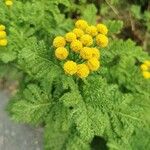
Tanacetum bipinnatum
Lake Huron tansy · Camphor tansy · Dwarf tansy · Northern dune tansy
Care Guide
💧 Water
Lake Huron tansy thrives in well-drained soils that have moderate moisture levels. It prefers to be watered every 1-2 weeks, allowing the soil to dry slightly between waterings. This plant benefits from rainwater, which provides the ideal pH and nutrients it requires. Additionally, Lake Huron tansy is naturally drought-resistant.
☀️ Light Full sun
Lake Huron tansy flourishes with abundant or maximal hours of sunlight. It can also adapt to sites with moderate sun exposure. Excessive shade may impede its peak growth, while too much sun does not harm it much. In the wild, it is found in locations that are lavishly sunlit.
What are the sunlight requirements for Lake Huron Tansy?
Lake Huron Tansy requires abundant or maximal hours of solar exposure to thrive, adjusting to areas with moderate solar exposure as well. It can grow in full sun, which is above 6 hours of sunlight, or partial sun, about 3-6 hours of sunlight. Too much shadow might hinder its peak growth, but excess sun does not significantly harm it. In its natural habitat, it grows in areas that are lavishly lit by the sun. It's essential to watch how sunlight moves through your garden, choosing spots that offer a perfect balance for the plants.
How can artificial lighting be used for Lake Huron Tansy indoors?
When natural sunlight is insufficient, especially during winter or in less sunny spaces, artificial lighting becomes crucial for Lake Huron Tansy's growth. LED lights, providing specific wavelengths of light, are recommended. For full sun plants, 30-50W/sq ft., for partial sun plants 20-30W/sq ft., and for full shade plants 10-20W/sq ft. The light source should be placed 12-36 inches above the plant, mimicking natural sunlight, and maintained for 8-12 hours per day to promote faster, healthier growth.
What are the symptoms of improper lighting for Lake Huron Tansy?
Symptoms of light deficiency in Lake Huron Tansy may include smaller new leaves, leggy or sparse growth, faster leaf drop, slower or no new growth, pale new leaves, chlorosis, sunscald, leaf curling, wilting, and leaf scorching. These indicate that the plant might be receiving either too little or too much light, affecting its health and growth.
What solutions are available for improving light conditions for Lake Huron Tansy?
To optimize growth, gradually increase sun exposure to at least 6 hours daily, using a south-facing window and keeping curtains open for natural light. For plants that are large or not easily movable, consider artificial lighting for at least 8 hours daily. Outdoors, move plants gradually to sunnier locations to avoid sudden changes and potential sunburn. Reducing obstructions such as pruning obstructive branches can help, and for smaller plants, consider transplanting during the plant's dormant period to a sunny location with good drainage.
🌡️ Temperature 0–35°C
Lake Huron tansy is native to moderate climates and prefers temperatures of 32 to 95 °F (0 to 35 °C). Because of this wide temperature range, the plant does well in all seasons. Some adjustments may be necessary for extreme climates.
What is the native climate for Lake Huron Tansy?
Lake Huron Tansy, botanically known as Tanacetum bipinnatum, is native to moderate climates and prefers temperatures ranging from 32 to 95 °F (0 to 35 °C). It thrives in all seasons due to its broad temperature tolerance, although special adjustments might be required for extreme climate conditions. The plant exhibits strong cold resistance, often negating the need for frost protection measures in winter. However, in areas where winter temperatures are anticipated to plunge below -35°C, it's crucial to provide cold protection by covering the plant with insulating materials like soil or straw. Additionally, watering the plant abundantly before the first freeze of autumn is recommended to ensure the soil remains moist and freezes in that state, which helps prevent drought and water scarcity during the colder months.
How does Lake Huron Tansy handle low temperatures?
Lake Huron Tansy demonstrates remarkable cold tolerance, functioning optimally when temperatures stay above 0°C and should be maintained above -30°C during winter. In instances where the mercury dips below -35°C, there might not be noticeable adverse effects during the winter. However, such extreme cold can lead to reduced sprouting or failure to sprout come spring. To mitigate this, removing any parts that have failed to sprout in the spring is advisable for maintaining plant health and encouraging new growth.
What should be done if Lake Huron Tansy experiences high temperatures?
During the warmer months, it's critical to ensure that the Lake Huron Tansy remains below 35°C. Temperatures soaring above 38°C can lead to a noticeable lightening of the leaves, make them prone to curling, increase susceptibility to sunburn, and, in extreme cases, cause the entire plant to wilt and dry out. To counteract such effects, trimming away the sunburned and dried-up parts is recommended. Shifting the plant to a shaded area or utilizing a shade cloth to protect it from the midday and afternoon sun can prevent further damage. Moreover, watering the plant during the cooler times of the morning and evening helps maintain the necessary soil moisture for the plant's survival in high temperatures.
💨 Humidity
🪴 Soil 6-7
🌱 Fertilizer
For Lake huron tansy, the best time to fertilize is in early spring as the flowers begin to form. The appropriate fertilizer promotes stronger blooms and helps Lake huron tansy produce attractive flowers. Fertilizing in early spring ensures great flowers throughout the season and supplies energy for dormant growth phases.
🪴 Pot & Repot 2-3 years
When repotting Lake huron tansy, choose a pot 1-2 inches (2.5–5.1 cm) larger with ample drainage. Use a well-draining potting mix. Repot in spring or fall, ensuring that the root ball is slightly lower than the rim of the flower pot. Water thoroughly after repotting and place it in a warm spot with indirect sunlight.
✂️ Pruning
Lake Huron tansy is known for its feathery foliage and yellow, button-like flowers. To boost its vitality and manage its spread, prune the plant in early to mid-spring before new growth begins. Regular pruning encourages growth and flowering, but be careful not to over-prune, as this can inhibit blooming. Additionally, consult local guidelines to ensure the plant is suited to your region's climate and soil conditions.
🌿 Propagating
🐛 Diseases & pets
☠️ Toxicity
Characteristics
- Plant Type
- Herb
- Life Cycle
- Perennial
- Genus
- Tanacetum
- Family
- Asteraceae
- Hardiness Zone
- 3-9
- Mature Height
- 5 cm to 76 cm
- Mature Spread
- 20 cm to 49 cm
- Leaf Color
- Dark Green, Olive Drab
- Leaf Type
- Deciduous
- Flower Color
- White, Yellow
- Flower Size
- 0.76 cm to 2.29 cm
- Bloom Time
- Summer
- Planting Time
- Spring, Summer, Autumn
- Harvest Time
- Late summer, Early fall, Mid fall