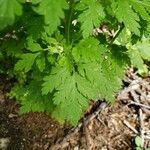
Tanacetum parthenium
Feverfew · Common Feverfew · Feather-leaved Tansy · Featherfew · Featherfoil
Description
Source: leafsnapTanacetum parthenium, commonly known as feverfew, is a perennial herb in the Asteraceae family. Native to the Balkan Peninsula, it has been widely naturalized across Europe and North America. The plant typically grows to about 60 cm in height, featuring a bushy appearance with deeply lobed, aromatic green leaves. Feverfew is known for its small, daisy-like flowers, which have yellow centers surrounded by white petals. These flowers bloom from mid-summer to early autumn, attracting bees and butterflies. For centuries, feverfew has been used in traditional medicine for its anti-inflammatory properties. It has been particularly valued for treating headaches, migraines, arthritis pain, reducing fevers, and managing menstrual cramps. The plant contains various compounds, such as parthenolide, which are believed to contribute to its medicinal benefits. In addition to its medicinal uses, feverfew is also utilized in cosmetics for its anti-inflammatory effects on the skin, which can help alleviate redness and irritation caused by acne or eczema. Overall, Tanacetum parthenium, or feverfew, is an attractive herbaceous perennial that enhances both beauty and wellness. Its multifaceted benefits make it a valuable addition to any garden or landscape design.
💡 Parthenolide, one of the active chemical compounds found in feverfew, has caught the attention of the scientific community. Research has demonstrated that it can kill certain cancer cells grown in laboratory settings.
🌳 Feverfew possesses a lesser-known ability to act as a bioindicator of heavy metal contamination in soil, especially lead. This offers an eco-friendly and low-cost method to evaluate environmental pollution without relying on complex equipment. Cultivating it in habitats could therefore serve a dual role: monitoring health and the environment.
🎭 Protection and healing; you brighten my life.
Care Guide
💧 Water Every 7 days
Feverfew grows best in well-drained soil and needs regular watering, but it should not be over-watered. Water the plant once a week to keep it healthy. During its active growth period, feverfew benefits from natural rainfall, maintaining a balance of moderate moisture. It does not do well in very humid or extremely dry conditions.
When should I water my feverfew?
Watering your feverfew appropriately is key to its growth, health, and flower production. You should water feverfew when the top 1 to 2 inches of soil around the plant feels dry. Signs that your feverfew needs watering include wilted, lackluster, or curling leaves, yellowing or browning of leaves, drooping stems, light pots indicating dry soil, and drooping flower heads. Feverfew requires more water during the pre-flowering stage, warm temperatures, and periods of high sunlight exposure. Avoid watering too early when the soil is still moist to prevent risks such as root rot, and avoid watering too late to prevent wilting or even death from dehydration.
How should I water my feverfew?
Feverfew should be watered deeply and thoroughly, making sure the water reaches the root zone while avoiding waterlogged conditions. A narrow-spout watering can is recommended for precise watering at the base, avoiding excess moisture on foliage to reduce the risk of fungal diseases. Employing bottom-watering by placing the pot in a water-filled tray allows the plant to absorb moisture from the bottom up. Utilizing a moisture meter can help ensure feverfew is adequately hydrated without being overwatered by monitoring the soil's moisture content.
How much water does feverfew really need?
Feverfew's watering needs depend on keeping its soil consistently moist but not waterlogged, considering its shallow root system that extends around 6-8 inches deep. The specific amount of water depends on several factors such as pot size, root depth, and the plant's size, but generally, the top inch of soil should feel slightly dry before watering again. Properly hydrated feverfew will display lush leaves and sturdy stems, and the soil should be evenly moist after watering. Overwatering leads to root rot and fungal diseases, while underwatering can cause stress, stunted growth, and reduced flowering.
What kind of water is best for feverfew?
The best kind of water for feverfew is distilled water because it's pure and free from contaminants. Rainwater is also suitable as long as it's clean and free of pollutants. Filtered water can be used if other sources aren't available, but ensure harmful contaminants are removed. Tap water is an option but may contain chlorine, which can harm the plant. It's advised to let tap water sit for 24 hours before use to evaporate chlorine or use a water filter to remove impurities. Feverfew prefers moderately warm water around room temperature, between 68-72°F (20-22°C).
How do feverfew's watering needs change with the seasons?
Seasonal changes significantly impact feverfew's watering needs. In spring, with increased sunlight and temperatures, water when the top soil layer feels dry. Avoid overwatering to prevent root deterioration. In summer, ensure consistently moist soil due to increased watering demands from peak growth. Use mulch to retain soil moisture. During autumn, as feverfew's growth slows, reduce watering frequency, allowing the soil to dry out fully before watering again. In winter, water minimally, just enough to prevent soil from completely drying out, particularly in harsh, frosty conditions.
☀️ Light Full sun
Feverfew does best with plenty of light, as it typically receives in its native settings. It can, however, tolerate mildly shaded conditions. Both excessive and insufficient light can be harmful, so providing a balanced amount of exposure is important for its healthy growth.
What are the sunlight requirements for Feverfew?
Feverfew requires full sun, defined as more than 6 hours of sunlight daily, to thrive optimally. It can also survive in partial sun, which entails about 3-6 hours of sunlight each day. It's important to observe how sunlight moves through your garden throughout the day to find spots that offer a healthy balance of light and shade, ensuring the plants' well-being.
How does Feverfew perform in different lighting conditions?
Feverfew is well-adapted to flourish under abundant light, mimicking its native environment. However, it can also tolerate slightly shaded areas. The key is to find a balance in light exposure, as too much or too little light can negatively affect the plant’s health. Inadequate lighting conditions can lead to symptoms such as smaller leaves, leggy growth, premature leaf drop, halted growth, paler new leaves, and conditions like chlorosis and sunscald. It's crucial to manage the light exposure to prevent these symptoms and ensure healthy growth.
Can artificial lighting be used for Feverfew, and how?
Yes, artificial lighting can be beneficial for Feverfew, especially for indoor plants or during seasons with insufficient natural sunlight. Optimal growth is achieved with proper artificial lighting, which can be a substitute for or a supplement to natural sunlight. LED lights are recommended due to their efficiency and the ability to customize the wavelength according to the plants' needs. For plants that require full sun, 30-50W/sq ft of artificial light is suitable, while partial sun plants need 20-30W/sq ft, and full shade plants require 10-20W/sq ft. The light source should be placed 12-36 inches above the plant, and the artificial light should be kept on for 8-12 hours per day to mimic natural daylight conditions.
What symptoms indicate Feverfew is not receiving enough light?
Symptoms of inadequate light for Feverfew include the development of smaller new leaves, leggy or sparse growth, increased leaf drop, slowed or halted growth, and lighter-colored or yellowing new leaves. These signs suggest the plant is struggling with the light conditions and is in survival mode, prioritizing limited resources for new growth. Chlorosis and sunscald are additional conditions that can occur with improper lighting, leading to reduced health and vitality of the plant.
What solutions can help improve Feverfew's light conditions?
To enhance light conditions for Feverfew, gradually relocate the plant to a sunnier spot, ensuring at least 6 hours of direct sunlight daily. This can be done by utilizing south-facing windows or reducing obstructions that block sunlight. For indoor or less mobile plants, artificial lighting such as desk lamps or professional grow lights can provide the necessary light exposure for 8 hours daily. If the plant is outdoors, it's crucial to relocate it gradually to prevent shock and sunburn. Pruning nearby trees and transplanting smaller plants to sunnier locations can also help improve sunlight access. It's important to note that while affected parts of the plant may not recover, new growth following increased light exposure will be healthy.
🌡️ Temperature 5–35°C
Feverfew favors the pleasant warmth of 68 to 95°F (20 to 35℃), characteristic of its native temperate habitat. Although it can withstand brief cold snaps, it does well with a cozy covering in chillier conditions. In summer it needs close monitoring to prevent overheating.
What are the ideal temperature conditions for growing Feverfew?
Feverfew thrives in temperatures ranging from 68 to 95°F (20 to 35°C), which reflects its preference for the temperate climate of its native region. It can withstand slight cold snaps but benefits from added protection when temperatures drop. In summer, it's important to keep the plant from overheating by monitoring the temperatures closely. Although Feverfew possesses strong cold resistance and does not usually require special frost protection, if winter temperatures drop below the plant's growth limit, it's crucial to guard against cold by covering it with soil or straw. Adequate watering before the first freeze in autumn ensures the soil remains moist, helping to prevent drought and water scarcity during winter and early spring.
How does Feverfew react to low temperatures?
Feverfew is quite tolerant of low temperatures and generally thrives when the thermometer stays above its minimum suitable growth temperature. Throughout winter, keeping it above a certain minimal tolerable growing temperature is key. If temperatures dip below a certain critical growth limit, Feverfew may not show immediate signs of distress during winter, but you might notice a decrease in springtime sprouting or possibly no sprouting at all. To mitigate this, it's recommended to remove any parts of the plant that haven't sprouted in spring.
What should I do if Feverfew is exposed to high temperatures?
During the hot summer months, it's critical to ensure that Feverfew's exposure to temperatures remains below its maximum suitable growth temperature. If the temperature climbs above the maximum tolerable growing temperature, you may observe that the leaves become lighter, are prone to curling, suffer from sunburn, and in extreme cases, the entire plant might wilt and dry out. The solution includes trimming away sunburned or dried parts of the plant, relocating it to a shaded area during the most intense sun of midday and afternoon, or using a shade cloth for protection. Additionally, watering the plant in the morning and evening helps keep the soil adequately moist.
💨 Humidity normal (40-60%)
This plant will thrive in moderate humidity, which is probably the level in your home. However, misting it a few times a week can be very beneficial. Make sure the room has good ventilation.
🪴 Soil 6-7
🌱 Fertilizer
A single spring application of fertilizer is generally enough for Feverfew, though multiple feedings can maximize its growth. Feed it about once every month to every month and a half. Fertilizing improves the leaves' appearance and function, maintaining even color and a healthy texture. It also encourages root development and better nutrient uptake, supporting long-term plant health.
Why is it important to add fertilizer to my Feverfew plant?
The main structure of the Feverfew plant is made up of its leaves. Fertilization is an important way to ensure that these leaves look great and fulfill their purpose. Proper fertilization will result in consistent color and a healthy texture of the leaves. Additionally, fertilization benefits the plant below the soil's surface by promoting the growth of new roots and maintaining existing roots. This not only keeps the plant healthy in the present but also improves its ability to absorb nutrients from the soil in the future.
When should I add fertilizer to my Feverfew plant?
If you grow Feverfew outdoors, it will send out new growth in early spring. This is a sign to fertilize the plant. Usually, one round of fertilization is sufficient, but if you want to maximize growth, you can feed it multiple times in the spring and early summer. In this case, feed the plant every month to a month and a half.
When should I not use fertilizer on my Feverfew?
During the late fall and winter, your Feverfew will go into a dormant phase and stop producing new growth. It is advised to avoid fertilizing your Feverfew during this time. In the spring and summer, if you choose to fertilize multiple times, start reducing the fertilization rate as summer approaches because the growth rate of your Feverfew will also slow down. It is always unwise to fertilize your Feverfew when the weather is unusually hot or the soil is excessively dry as it can cause stress and premature death of your plant.
What kind of fertilizer does my Feverfew plant need?
Choosing the best fertilizer for a Feverfew is actually quite simple. These plants do well with a general-purpose garden fertilizer that has equal amounts of nitrogen, phosphorus, and potassium. Look for a fertilizer with a ratio of 10-10-10 or something similar, as this will be highly effective. It's important to steer clear of fertilizers with high nitrogen levels if unsure. Granular fertilizers are the most recommended for Feverfew, specifically those that are slow-release for easy application to the soil. Additionally, feeding your Feverfew with organic soil amendments like compost can also be beneficial.
How do I make my Feverfew plant grow better?
To ensure successful growth of your Feverfew, wait until its first leaves appear in early spring. Once this happens, apply a balanced formula granular slow-release fertilizer to the soil around the base of the plant. You can repeat this process later in the season if desired. When reapplying fertilizer, focus on the soil at the base of the plant rather than directly on the plant itself. Occasionally, you may need to move some leaves to access the soil above the roots. It's also beneficial to water your Feverfew before and after fertilizing.
🪴 Pot & Repot 2-3 years
When repotting Feverfew, select a pot 1-2 inches (2.5–5.1 cm) larger with good drainage. Use a well-draining potting mix. Repot in spring or fall, making sure the root ball sits slightly below the rim of the flower pot. Water thoroughly after repotting and place the pot in a warm spot with indirect sunlight.
✂️ Pruning
Feverfew showcases delicate white flowers and aromatic leaves. From early to late spring, you should prune the plant by removing any damaged stems and thinning out crowded branches. Deadheading the faded flowers encourages continued blooming, while trimming up to one-third of the plant promotes bushier growth. Regular pruning not only enhances the plant's appearance but also improves its overall health.
🌿 Propagating
🐛 Diseases & pets
☠️ Toxicity
Tanacetum parthenium has no toxic effect reported.
Characteristics
- Plant Type
- Herb
- Life Cycle
- Perennial, Annual, Biennial
- Genus
- Tanacetum
- Family
- Asteraceae
- Hardiness Zone
- 5-9
- Mature Height
- 20 cm to 91 cm
- Mature Spread
- 61 cm
- Leaf Color
- Green
- Leaf Type
- Deciduous
- Flower Color
- White, Yellow
- Flower Size
- 3.05 cm to 4.06 cm
- Bloom Time
- Early summer, Mid summer
- Planting Time
- Spring
- Harvest Time
- Mid summer
- Native Area
- Turkey, Czech Republic, Slovakia, Montenegro, Cyprus, Pakistan, Bulgaria, Greece, Armenia, Lebanon, Serbia, Afghanistan, Iraq, Iran, Albania, Azerbaijan