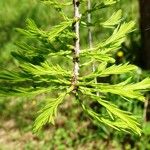
Taxodium distichum
دار تالاب · Bald cypress · Swamp-cypress · White Cypress · Tidewater Red Cypress
Description
Source: leafsnapTaxodium distichum, commonly known as the bald cypress, is a deciduous conifer native to the southeastern United States. This tree can reach heights of up to 120 feet, featuring a conical shape with a broad base and a narrow crown. The bark is gray-brown and fibrous, while its leaves are needle-like and arranged in two rows along the branches. The bald cypress thrives in wetland environments such as swamps, floodplains, and riverbanks. It has adapted to these conditions by developing "knees" – woody projections that grow out of its roots above water level. These knees are believed to aid in oxygen exchange for the roots. The wood of Taxodium distichum is highly valued for its durability and resistance to decay. It has been used in various construction projects, including building boats, houses, bridges, and furniture. In addition to its economic importance, bald cypresses provide habitats for various wildlife species, including birds like wood ducks, mammals such as beavers, reptiles like alligators, amphibians like frogs, fish such as catfish, and insects like dragonflies. Overall, Taxodium distichum plays a critical ecological role in wetland ecosystems while also being valued by humans both economically and culturally. Its unique characteristics and properties make it one of America's most iconic trees.
🌳 Bald cypress wood had an eerie historical use: its water resistance made it ideal for making coffins, earning it the nickname "Wood Eternal." That same durability also made it popular for building long-lasting items like doors and marine structures, and it was even used in the Panama Canal's locks. In addition, bald cypress adapts well to bonsai, with its distinctive "knee roots" providing a miniature tree with a pronounced, ancient-looking character.
🎭 Long life, Recovery, Solace, grief
Care Guide
💧 Water Every 7 days
The bald cypress thrives in humid environments, typically near water, and generally needs watering every one to two weeks. While it has moderate drought tolerance, it will enter dormancy during dry seasons, which reduces its water requirements. This makes it well-suited as an outdoor deciduous tree.
When Should I Water My Bald Cypress?
Watering your bald cypress is crucial for its health and growth. You should water the plant when the top few inches of the soil are dry to the touch, particularly during the spring and summer growing phases. Observe the plant for signs such as changes in leaf color, leaf droppage, or stunted growth, which can indicate a need for water. However, be cautious of overwatering, as it can cause root rot, characterized by darker leaves and mushy bark. Underwatering is equally harmful and can lead to browning and curling of leaves or even death. Regularly monitoring the plant and responding to these signs promptly can ensure a thriving bald cypress.
How Should I Water My Bald Cypress?
Watering bald cypress effectively involves considering its need for moist but well-draining soil. Bottom-watering, where the plant absorbs water from a tray or saucer, is beneficial for ensuring that the roots receive moisture without saturating the soil's surface. Use a watering can with a narrow spout to direct water to the base of the plant, and avoid wetting the foliage to reduce the risk of fungal diseases. Employing a moisture meter can help you determine the perfect watering times by measuring soil moisture levels. Regularly adjust the watering frequency based on environmental conditions, ensuring the soil's top inch dries out before the next watering session.
How Much Water Does Bald Cypress Really Need?
Bald cypress requires a significant amount of water, reflecting its natural wetland habitat. The optimal watering quantity varies depending on several factors, but as a rule, a mature plant in a large pot may need about 4-6 liters per session. Signs of adequate hydration include vibrant green foliage, firm leaves, and an absence of yellowing leaves or root rot. Both over and underwatering can lead to severe issues, such as waterlogged soil or stress on the plant. Mimic the plant's natural conditions using well-draining soil, adequate drainage, and regular checks of soil moisture to ensure it receives the correct amount of water.
What Kind of Water is Best for Bald Cypress?
Bald cypress shows moderate sensitivity to water type, with rainwater being the most beneficial due to its natural composition and balanced pH. Filtered water is a good alternative, especially if it removes harmful contaminants. Tap water can be used but may need to be treated to remove chlorine and fluoride, to which bald cypress is also moderately sensitive. Letting tap water sit for 24 hours or using a filter can help make it more suitable. The plant generally prefers water at room temperature (68-72°F or 20-22°C), avoiding extremes that could shock the system.
How Do Bald Cypress's Watering Needs Change with the Seasons?
Bald cypress's watering needs vary significantly with the seasons. In spring, maintain moist soil as the plant enters a growth phase, being careful of overwatering. Summer demands increased hydration to support active growth, possibly necessitating additional watering in dry climates or heatwaves. As growth slows in autumn, reduce your watering frequency, preparing the plant for dormancy. Winter watering depends largely on your climate; in wet, cold regions, natural rainfall may suffice, while in milder climates, occasional watering may be beneficial, always guarding against overwatering during dormancy.
☀️ Light Full sun
Bald cypress does best in places that get plenty of light each day. It can tolerate spots with lower light, but those conditions can limit its growth. It comes from environments marked by abundant sunlight. Both too much and too little light can negatively affect the plant's health.
What are the sunlight requirements for Bald Cypress?
Bald Cypress, or Taxodium distichum, flourishes best in areas that receive full to partial sun exposure. Full sun requires above 6 hours of sunlight daily, while partial sun is about 3-6 hours of sunlight. It's important to observe the movement of sunlight through your garden and position plants where they can enjoy the ideal balance of light and shade, ensuring their optimal growth and health.
How does Bald Cypress react to different lighting conditions?
Bald Cypress is naturally adapted to thrive in ample sunlight, indicative of its origins in sun-rich habitats. While it can tolerate less intense light, growth may be slower in such conditions. Both excessive and insufficient light exposure can negatively impact the plant's health. When natural light is inadequate, especially during winter or in less sunny spaces, it's beneficial to supplement with artificial lighting. Using artificial lights, like LED, to mimic natural sunlight can promote healthier and faster plant growth. It's recommended to provide 30-50W/sq ft for full sun plants, 20-30W/sq ft for partial sun plants, and 10-20W/sq ft for full shade plants, adjusting the light's distance and duration to suit the plant's needs.
What are the signs of inadequate lighting for Bald Cypress?
When Bald Cypress is grown indoors or in conditions of poor lighting, it may exhibit symptoms indicating light deficiency. These can include smaller new leaves, leggy or sparse growth, a faster rate of leaf drop, halted or slowed growth, pale or irregularly colored new leaves, chlorosis, sunscald, leaf curling, wilting, and leaf scorching. These symptoms reflect the plant's struggle with inadequate sunlight and can impact its overall health and appearance.
How can I address lighting issues for my Bald Cypress?
To optimize growth, gradually introduce your Bald Cypress to a sunnier location, aiming for at least 6 hours of direct sunlight daily. For indoor plants, consider using a south-facing window or artificial grow lights to ensure they receive sufficient light. When adjusting outdoor plants to brighter conditions, do so gradually to avoid sunburn. Removing obstructions that block sunlight and, for smaller plants, considering transplanting to a sunnier spot can also help. It's important to note that parts of the plant affected by insufficient sunlight may not recover, but new growth should be healthy with improved lighting conditions.
🌡️ Temperature 15–37.8°C
Bald cypress, a temperate woody species, prefers temperatures from 15 to 38℃ (59 to 100℉). In its native range it grows where the mean annual temperature is 12 to 20℃ (54 to 68℉) and tolerates occasional winter frost. In colder areas it copes by shedding its leaves in fall to reduce water loss and conserve energy.
What are the ideal temperature conditions for a Bald Cypress?
Bald cypress thrives in temperate conditions, preferring temperatures between 15°C (59°F) to 38°C (100°F). It naturally grows in areas with a mean annual temperature of 12°C (54°F) to 20°C (68°F) and has the capability to tolerate occasional winter frost. This plant exhibits some level of cold tolerance, typically not requiring special care if temperatures stay above -5°C. However, for colder climates where it loses its leaves in the fall, additional measures are advised if temperatures are expected to fall below -5°C to protect it from the cold.
How does the Bald Cypress respond to low temperatures, and what measures should be taken?
At temperatures below -10°C, the Bald Cypress may show signs of distress with leaves beginning to droop, a condition which can either recover in mild cases or lead to wilting and leaf fall in severe scenarios. It has moderate tolerance to low temperatures, ideally staying above -5°C during winter. To protect the Bald Cypress from cold damage, it's recommended to trim off the frost-damaged parts and wrap the plant with insulating materials such as non-woven fabric or cloth, in addition to setting up a wind barrier for further protection against cold winds.
How does the Bald Cypress cope with high temperatures, and what are the suggested care measures for such conditions?
During the summer months, maintaining the Bald Cypress below 38°C is crucial to its wellbeing. Exposure to temperatures above 43°C can lead to symptoms such as lighter leaf color, dry and withered leaf tips, curling leaves, and increased susceptibility to sunburn. To mitigate these effects, it's advisable to trim away the sunburned and dried parts of the plant, move it to a shaded location especially during midday and afternoon, or use a shade cloth for protection. Ensuring the soil remains moist through morning and evening watering routines can also help the plant manage high-temperature stress.
💨 Humidity normal (40-60%)
This plant will thrive in moderate humidity, which is probably the level in your home. However, misting it a few times a week can be very beneficial. Make sure the room has good ventilation.
🪴 Soil
🌱 Fertilizer
For optimal growth, bald cypress trees do not need extra fertilizer when planted in fertile areas. However, if the soil is less fertile, apply a diluted balanced fertilizer with an N-P-K ratio of 20-20-20 every month during the first year. For trees older than five years, you can fertilize them either once or twice a year. It is best to apply the fertilizer in the cooler hours of the morning or evening.
🪴 Pot & Repot Every 12 months
✂️ Pruning
The bald cypress features feathery, deciduous foliage and a pyramid-like shape. To keep it healthy, prune it in early spring by removing any dead branches and thinning out crowded areas to improve air circulation. This helps maintain its structure, encourages healthier growth, and prevents disease. Be sure to use sterilized tools to avoid spreading infections.
🌿 Propagating
🐛 Diseases & pets
☠️ Toxicity
The absence of this plant from a poisonous plant database does not imply that it is fully non-toxic. However, with a plant as common and well-known as bald cypress, the fact that it is not listed as hazardous is a very positive indicator. If you're worried about your dog, you might gather up as many cones as you can and throw them away.
Characteristics
- Plant Type
- Tree
- Life Cycle
- Perennial
- Genus
- Taxodium
- Family
- Cupressaceae
- Hardiness Zone
- 8-11
- Mature Height
- 14.94 m to 49.99 m
- Mature Spread
- 6.1 m to 9.14 m
- Leaf Color
- Green, Yellow, Brown
- Leaf Type
- Deciduous
- Flower Color
- Green, Yellow
- Flower Size
- 2.54 cm
- Bloom Time
- Late spring, Early summer
- Planting Time
- Spring, Summer, Autumn, Winter
- Harvest Time
- Mid summer, Late summer, Early fall
- Native Area
- Venezuela