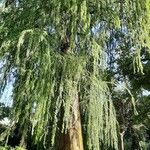
Taxodium mucronatum
Montezuma bald cypress · Montezuma-cypress · Mexican-cypress · Montezuma baldcypress · Montezume bald cypress
Description
Source: leafsnapTaxodium mucronatum, commonly known as Montezuma cypress or ahuehuete, is a large deciduous tree native to Mexico and Central America. As a member of the cypress family, it can grow up to 40 meters tall, with a trunk diameter reaching up to 4 meters. The tree features an appealing conical shape and dense foliage that turns reddish-brown in the fall before shedding its leaves for the winter. Montezuma cypress is renowned for its impressive longevity, with some specimens living for over 1,000 years. In Mexican indigenous cultures, it is revered as a sacred tree and symbol of longevity. The bark of Taxodium mucronatum is thick and fibrous, providing protection against wildfires common in its natural habitat. The wood of this species is highly valued for its durability and resistance to decay. Beyond its use as an ornamental plant in parks and gardens worldwide, Taxodium mucronatum also plays an important ecological role. It provides habitat for wildlife, including birds and insects. Its roots help stabilize riverbanks against erosion while filtering pollutants from water sources. Overall, Taxodium mucronatum stands out as an impressive species both aesthetically and ecologically. Its significant stature and remarkable longevity make it one of nature's wonders, worth preserving.
🌳 Montezuma bald cypress has fulfilled more than an aesthetic or ecological purpose over time. Indigenous peoples, in particular, used the hollow trunks of mature Montezuma bald cypress as water tanks, collecting and storing rainwater for dry seasons. In addition, the wood’s resistance to decay made it an ideal material for building aqueducts and other water management structures. This relatively obscure use underscores the ingenuity of using natural resources for survival.
🎭 Endurance, Restoration, Ease
Care Guide
💧 Water Every 7 days
The Montezuma bald cypress thrives in consistently moist environments, making it ideal for wetlands and areas prone to periodic flooding. To ensure optimal growth, it's important to water the tree every two weeks. Typically grown outdoors, the Montezuma bald cypress is an essential component of riparian ecosystems. It helps regulate the water cycle and supports local biodiversity.
☀️ Light Full sun
Montezuma bald cypress does best with continuous, intense sun exposure. It naturally grows in locations where sunlight is abundant throughout the day. This supports healthy growth and development. Too little sun can cause weaker growth, while too much may stress the plant but generally does not severely harm it.
What are the sunlight requirements for Montezuma bald cypress?
Montezuma bald cypress thrives on constant, intense exposure to sunlight, requiring full sun, which is above 6 hours of sunlight daily, for healthy growth and development. Partial sun, about 3-6 hours of sunlight, can also suffice, but the plant's growth might not be as robust. It's important to observe your garden to find spots that offer a balance of light and shade to ensure optimal conditions for your plants. Inadequate sunlight can lead to weaker growth, while too much sun might stress the plant without causing severe damage.
How does artificial lighting support Montezuma bald cypress growth indoors?
Indoor Montezuma bald cypress plants require adequate lighting to grow optimally, especially when natural sunlight is insufficient. Artificial lights, such as LED lights, are vital as they can be customized to provide specific wavelengths needed by plants. For plants needing full sun, 30-50W per square foot of artificial light is recommended, whereas partial sun plants need 20-30W, and full shade plants require 10-20W. The light source should be placed 12-36 inches above the plant, mimicking the natural daylight hours, with most plants needing 8-12 hours of light per day.
What are the symptoms of light deficiency in Montezuma bald cypress?
Montezuma bald cypress can exhibit several symptoms when experiencing light deficiency, often growing indoors with insufficient light. These symptoms include smaller new leaves, leggy or sparse growth, faster leaf drop, slower or no new growth, lighter-colored new leaves, and conditions like chlorosis, sunscald, leaf curling, wilting, and leaf scorching. These symptoms indicate inadequate sunlight leading to various growth and health problems in the plant.
How can you alleviate light deficiency symptoms in Montezuma bald cypress?
To alleviate light deficiency symptoms in Montezuma bald cypress, gradually increase the plant's exposure to sunlight. For indoor plants, move them to a sunnier location each week until they receive at least 6 hours of direct sunlight, utilizing a south-facing window for maximum exposure. If the plant is large or not easily movable, consider using artificial light, keeping a desk or ceiling lamp on for at least 8 hours daily. For outdoor plants, gradually move them to sunnier spots to avoid shock. Removing obstructive elements or transplanting the plant to a sunnier location are also effective strategies. It's essential to note that parts of the plant already affected may not recover, but new growth should be healthy with improved light conditions.
🌡️ Temperature 20–37.8°C
The Montezuma bald cypress originates from regions where temperatures run from 68 to 100°F (20 to 38°C). It performs well in warmer climates but can adjust to mild winters. In cooler locations, placing it to receive the most sunlight can be advantageous.
What is the native temperature range for Montezuma bald cypress?
Montezuma bald cypress, scientifically known as Taxodium mucronatum, is native to regions that experience temperatures ranging from 68 to 100°F (20 to 38°C). This species is particularly suited to warmer climates but shows adaptability to areas with mild winters. In regions with cooler temperatures, it's beneficial to position the plant strategically to maximize sun exposure to thrive effectively. It is crucial to maintain an environment conducive to the Montezuma bald cypress's growth by ensuring temperatures stay above 20°C, especially during the winter months, to prevent harm from colder conditions.
What should I do if my Montezuma bald cypress is exposed to low temperatures?
If your Montezuma bald cypress is exposed to temperatures below its preferred range, especially if temperatures fall below 20°C or, worse, approach 0°C, it's essential to take immediate action to protect the plant. This tree is not tolerant of low temperatures and may exhibit symptoms such as leaves lightening in color or, after frost damage, turning brown or black, alongside wilting and drooping. To counteract the effects of frost damage, trim off the affected parts and move the plant to a warmer indoor setting, ideally near a south-facing window for ample sunlight. However, ensure the plant is not positioned directly near heaters or air conditioning vents to avoid air that is too dry.
How should I care for my Montezuma bald cypress during high temperatures?
During the summer months, when temperatures soar, it is pivotal to keep the Montezuma bald cypress's temperature below 38°C to prevent heat stress. Should the temperature exceed 43°C, the tree's leaves may lighten and become prone to sunburn. To mitigate high temperature effects, promptly trim away any sunburned or dried parts and relocate the plant to a shadier spot, especially away from the harsh midday and afternoon sun. Additionally, to ensure the plant remains healthy, water it during the cooler parts of the day, such as in the morning and evening, to maintain adequate soil moisture.
💨 Humidity
🪴 Soil
🌱 Fertilizer
If planted in fertile soil, Montezuma bald cypress trees do not require additional fertilizer. However, if the soil is less than ideal, apply a diluted 20-20-20 fertilizer each month during the first year after transplanting. For trees older than five years, fertilize once a year or every two years. It's best to apply fertilizer in the cooler hours of the evening or morning.
🪴 Pot & Repot
✂️ Pruning
Montezuma bald cypress benefits from pruning between early to late winter, which helps promote growth and shape the tree. To improve air circulation, remove any dead or crossing branches. Light and regular pruning will maintain the tree's form and vitality, but heavy pruning should be avoided to prevent stress.
🌿 Propagating
🐛 Diseases & pets
☠️ Toxicity
Characteristics
- Plant Type
- Tree
- Life Cycle
- Perennial
- Genus
- Taxodium
- Family
- Cupressaceae
- Hardiness Zone
- 9-11
- Mature Height
- 39.93 m
- Mature Spread
- 7.01 m to 10.97 m
- Leaf Color
- Green
- Leaf Type
- Evergreen, Semi-evergreen
- Flower Color
- Yellow, Brown
- Flower Size
- 2.54 cm
- Bloom Time
- Late spring, Early summer
- Planting Time
- Spring, Autumn
- Harvest Time
- Mid summer, Late summer
- Native Area
- Honduras, Mexico, Guatemala