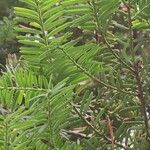
Taxus brevifolia
Pacific yew · Western yew · Canadian Yew · American Yew
Description
Source: leafsnapTaxus brevifolia, commonly known as the Pacific yew, is a coniferous tree native to the Pacific Northwest region of North America. This slow-growing evergreen can reach heights of up to 20 meters and features a narrow crown with drooping branches. The tree's bark is reddish-brown and has a scaly texture. The leaves of Taxus brevifolia are dark green, glossy, and needle-like, tapering to pointed tips. The plant produces small, inconspicuous flowers that develop into fleshy red berries, each containing one or two seeds. Historically, indigenous peoples have utilized Taxus brevifolia for medicinal purposes, thanks to its high concentration of taxol, a compound used in chemotherapy treatments for cancer patients. However, it is important to note that the plant also contains toxic compounds, such as taxine, which can be harmful if ingested. In addition to its medicinal properties, the wood of Taxus brevifolia was traditionally used by Native Americans to make bows, prized for their strength and flexibility. Today, the Pacific yew is often used in landscaping as an ornamental shrub or small tree due to its attractive foliage. Overall, Taxus brevifolia plays a significant cultural and ecological role in the Pacific Northwest, where it grows naturally.
🌳 The Pacific yew is a striking tree that enhances gardens with its beauty and ability to attract wildlife. Young trees can be used as excellent shrub-like hedges, while mature ones serve as intriguing border trees along garden paths in informal and woodland settings. Its evergreen foliage provides year-round interest to any garden. Additionally, birds are drawn to the tree for its seeds and berries.
🎭 Sadness
Care Guide
💧 Water Every 7 days
The Pacific yew, native to the forests of the Pacific Northwest, thrives in high-humidity environments and requires moderate watering, ideally every 1-2 weeks. This tree prefers cooler climates and benefits from being grown outdoors. Mulching can help retain soil moisture, effectively mimicking its natural habitat.
How should I water my Pacific yew plant?
Your Pacific yew is not particular about how you water it. You can use any common watering tool such as watering cans, hoses, or even cups. Just make sure to water the plant by directly applying the water to the soil. It is important to evenly moisten all areas of the soil to ensure that the entire root system receives the necessary water. Using filtered water is recommended to avoid harmful particles found in tap water. Additionally, it is best to use water that is at or slightly above room temperature, as extremely cold or hot water may shock the Pacific yew. However, this plant typically responds well to any type of water you give it.
What should I do if I give too much or too little water to my Pacific yew?
Outdoor plants, especially newly planted ones or plant seedlings, can suffer from lack of watering. When the tree is small or just planted, it is critical to water it consistently for several months. Once the roots are established, Pacific yew can rely on rain for hydration most of the time. However, if your Pacific yew is in a pot, overwatering becomes more likely. In the event of accidental overwatering, act promptly to address the issue. Stop watering the plant immediately to minimize the impact. Then, remove the Pacific yew from its pot and inspect the roots. If no root rot is found, it may be safe to return the plant to its container. However, if you identify signs of root rot, trim the affected roots and consider applying a fungicide. Finally, repot the Pacific yew in well-draining soil. In the case of underwatering, simply increase the frequency of watering. This problem is usually easily resolved as the plant's leaves will droop, dry out, and fall off when underwatered. They will quickly regain fullness after sufficient watering. Remember to adjust your watering schedule as soon as you notice any signs of underwatering.
How frequently should I water my Pacific yew tree?
Most plants can grow naturally with rainfall, but if your area lacks rainfall, you should water them every 2 weeks in spring and fall, and more frequently in the summer. In winter, when plants need less water, you can water them less often or not at all. However, if your Pacific yew is young or newly planted, it may need more frequent watering to help it establish. For potted plants, there are two main ways to determine how often to water your Pacific yew. The first is to have a predetermined watering schedule, such as once a week or once every other week. However, this may not always work well because it doesn't consider the specific conditions of your Pacific yew's environment. Another approach is to base your watering frequency on the moisture level of the soil. It's best to wait until the top two to four inches of soil (about ⅓ to ½ depth of the pots) have completely dried out before watering again. This method allows you to adjust your watering frequency according to the season, as the plant's water needs will be highest in summer.
How much water does my Pacific yew tree need?
When watering your Pacific yew, you might be surprised to learn that it doesn't always require a large amount of water. If only a few inches of soil have dried since your last watering, you can promote healthy growth by giving it about five to ten ounces of water each time. You can also gauge the amount of water needed by checking the moisture levels in the soil. Take note of how many inches of soil have dried out between waterings. To ensure your Pacific yew receives enough moisture, water it enough to wet all the soil layers that have dried out since the last watering. If more than half of the soil is dry, you may need to provide extra water. In this case, continue watering until you see excess water draining from the pot's drainage holes. If your Pacific yew is planted in an area that receives plenty of rain, it may not require additional watering. However, when the Pacific yew is young or still establishing, make sure it gets 1-2 inches of rain per week. As it grows and becomes established, it can rely solely on rainwater, unless the weather is hot and there's no rainfall for 2-3 weeks, in which case give it a full watering to prevent stress.
How do I know if I'm giving my Pacific yew enough water?
Overwatering is a common problem for the Pacific yew. There are signs to look for when overwatering occurs. A Pacific yew that is overwatered will have yellowing leaves and may drop some leaves. Overwatering can also cause the overall structure of the plant to shrivel and may lead to root rot. On the other hand, an underwatered Pacific yew will begin to wilt and may have brown or brittle leaves. If you see signs of either overwatering or underwatering, take action to restore the health of your Pacific yew.
☀️ Light Partial sun
The pacific yew grows best with moderate sunlight, although it can tolerate a wide range of light levels, from full sun to complete shade. Both too much and too little sunlight can harm its growth, reflecting the variable light conditions of its native habitat where it evolved.
What are the sunlight requirements for Pacific Yew?
The Pacific Yew thrives best under moderate solar exposure but can adapt to a variety of lighting conditions, from full sun to full shade. It requires about 3-6 hours of sunlight daily for partial sun conditions and more than 6 hours for full sun or shade. It's crucial to observe the movement of sunlight through your garden to locate the ideal balance of light and shade, ensuring the plant's well-being.
How does artificial lighting support Pacific Yew's growth?
Artificial lighting becomes essential when natural sunlight is insufficient, especially during winter or in spaces with less sunlight. It promotes faster, healthier growth by providing adequate lighting. LED lights, which can be tailored to offer the necessary wavelengths of light, are recommended. For full sun plants, 30-50W/sq ft; for partial sun plants, 20-30W/sq ft; and for full shade plants, 10-20W/sq ft of artificial light is needed. The light source should be placed 12-36 inches above the plant, simulating natural sunlight for about 8-12 hours per day.
What symptoms indicate insufficient light for Pacific Yew?
Symptoms of insufficient light in Pacific Yew include smaller new leaves, leggy or sparse growth, faster leaf drop, slower or halted new growth, lighter-colored new leaves, chlorosis, sunscald, leaf curling, wilting, and leaf scorching. These symptoms reflect the plant's struggle under poor light conditions, indicating the need for adjusting the lighting environment.
What can be done to optimize Pacific Yew's light exposure?
To optimize light exposure for Pacific Yew, gradually adapt the plant to changing light conditions by shifting it to sunnier spots each week until it receives the desired amount of direct sunlight. For indoor plants not easily moved or too large, consider using artificial light such as desk or ceiling lamps for at least 8 hours daily, or invest in professional plant grow lights. Outdoors, move plants to sunnier locations gradually to prevent sunburn. Minimize obstructions by pruning trees or moving plants to locations with ample sunlight and good drainage.
🌡️ Temperature 10–35°C
The pacific yew favors a temperate climate and grows best in temperatures between 50 and 95 ℉ (10 and 35 ℃). In summer, it is advisable to keep temperatures below 85 ℉ (29 ℃) and provide some shade to prevent heat stress. In winter, its preferred temperature range decreases to 32 to 68 ℉ (0 to 20 ℃).
What temperatures are best for the Pacific yew?
The Pacific yew thrives in a temperate environment, with optimal temperatures ranging from 50 to 95 °F (10 to 35 °C). During the summer, it's advisable to maintain temperatures below 85 °F (29 °C) and provide some shade to protect the plant from heat stress. In winter, the yew prefers temperatures between 32 to 68 °F (0 to 20 °C). Despite its strong cold resistance, protection from extreme cold should be considered if temperatures are expected to fall significantly. This includes wrapping the plant's trunk and branches with non-woven fabric or cloth and ensuring the soil is moist before the first freeze.
How does the Pacific yew respond to temperature extremes?
The Pacific yew is cold-tolerant and generally does well when temperatures remain within its preferred range. In extreme cold, below its tolerance level, the plant may not show immediate distress, but come spring, the branches could turn brittle and fail to produce new shoots. To mitigate this, pruning the dead branches in spring is suggested. Conversely, when temperatures rise above its comfort zone, the plant's leaves may lighten in color, and tips might dry out and wither, indicating heat stress and susceptibility to sunburn. To address this, trim away the damaged parts, relocate the plant to a shaded area or use a shade cloth, and ensure the soil is kept moist.
💨 Humidity dry (<40%)
This plant prefers dry conditions, so don't mist it. However, watering it less often can also thrive in higher humidity.
🪴 Soil 5-7
🌱 Fertilizer
The Pacific yew has specific nutrient needs and does not require heavy fertilization. Spring is the best time to apply fertilizer for optimal growth. Supplying nutrients enhances its health, increases its resistance to pests and diseases, and helps support its long lifespan.
Why should I put fertilizer on my Pacific yew?
Fertilizing Pacific yew in the spring is important for promoting healthy growth and supporting its long lifespan. Adding nutrients to the soil can enhance the plant's health, helping it to resist common pests and diseases that can hinder growth or reduce its lifespan.
What is the best time to fertilize my Pacific yew tree?
The growing medium doesn't always have enough nutrients for healthy growth, but Pacific yew is different. It doesn't need a lot of extra nutrients and the best time to fertilize it is in the spring before new growth starts.
When should I not add fertilizer to my Pacific yew?
While some plants benefit from regular fertilization, the Pacific yew is not one of them. This particular plant does not require excessive nutrients, and over-fertilization can actually harm it, causing it to decline. To ensure its health, only apply fertilizer during the spring season, abstaining from adding any in the summer, fall, and winter. Additionally, avoid introducing any organic matter to the soil during these seasons as well.
What kind of fertilizer does my Pacific yew tree need?
The age of your plant is important when choosing fertilizer. However, Pacific yew plants do not need excessive nutrients. Look for a well-balanced plant food that promotes healthy root development and growth. Avoid fertilizers with high nitrogen levels.
How can I properly fertilize my Pacific yew plant?
Pacific yew should be fertilized in the spring. It is important to apply the fertilizer around the base of the plant and avoid getting any fertilizer on the trunk. If you are using granulated fertilizer, cover the pellets with a light layer of soil to help ensure absorption into the soil.
🪴 Pot & Repot 2-3 years
When repotting Pacific yew, select a pot 1-2 inches (2.5–5.1 cm) larger with ample drainage. Use a well-draining potting mix. Repot in spring or fall, making sure the root ball sits slightly lower than the rim of the flower pot. Water thoroughly after repotting and place in a warm spot with indirect sunlight.
✂️ Pruning
Pacific yew is known for its reddish-brown bark and needle-like leaves. To keep the tree healthy and attractive, it's best to prune it carefully from early to late winter. Start by removing any dead branches to improve air circulation, but avoid making large cuts. Light pruning will help maintain the tree's shape and promote new growth, which boosts its resilience and ornamental appeal.
🌿 Propagating
🐛 Diseases & pets
☠️ Toxicity
Characteristics
- Plant Type
- Tree
- Life Cycle
- Perennial
- Genus
- Taxus
- Family
- Taxaceae
- Hardiness Zone
- 6-9
- Mature Height
- 10.06 m to 14.94 m
- Mature Spread
- 3.05 m to 6.1 m
- Leaf Color
- Green, Yellow, Blue, Gold
- Leaf Type
- Evergreen
- Flower Color
- Yellow, Green, Gold
- Flower Size
- 0.25 cm to 0.51 cm
- Bloom Time
- Mid spring, Late spring
- Planting Time
- Spring, Summer, Autumn
- Harvest Time
- Mid summer, Late summer, Early fall
- Native Area
- Western, central and southern Europe, northwest Africa, northern Iran, and southwest Asia