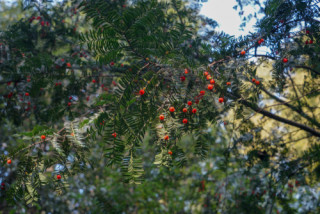
Taxus chinensis
Chinese yew
Description
Source: leafsnapTaxus chinensis, or Chinese yew, is an evergreen tree native to China and Vietnam. This needled coniferous evergreen produces red cones that appear like berries. The fruit-like cones have become a beautiful attraction that even tempts some people to eat them. The Chinese yew can grow up to 60 feet tall once fully mature, although it is common to trim it into shrub-like form.
Care Guide
💧 Water 1 to 2 times a week
Your Chinese yew will need regular watering in the initial few years after planting. Depending on your climate, your tree will do well with watering once every 7 to 10 days. Once well-established, your tree will only need watering during prolonged dry spells.
☀️ Light
🌡️ Temperature
The Chinese yew is hardy in USDA zones 5 through 9. It thrives in climates around 68 degrees Fahrenheit (20 degrees Celsius) so long as adequately watered. The tree can withstand cold temperatures down to 23 degrees Fahrenheit (-5 degrees Celsius) but will struggle once it drops to -13 degrees Fahrenheit (-25 degrees Celsius).
💨 Humidity
🪴 Soil
🌱 Fertilizer
Typically, Chinese yews do not need regular fertilizing. After at least a year from planting, you may feed your tree with a conifer or fir fertilizer to encourage a healthy, flourishing plant. You can apply this once per year, thoroughly watering it after every application.
🪴 Pot & Repot
✂️ Pruning
The Chinese yew is very hardy and responds well to pruning. You can prune your tree 1 to 2 times per year in the early spring or late summer. Do not cut the top of your tree unless it has reached the height that you want. Instead, trim on all sides to maintain your desired shape. Wear protective gear, long sleeves and gloves when handling this plant as most parts are considered toxic.
🌿 Propagating
🐛 Diseases & pets
☠️ Toxicity
Characteristics
- Plant Type
- Needled evergreen tree often trimmed to be shrub-like
- Hardiness Zone
- 5 to 7
- Bloom Time
- Not grown for its flower
- Native Area
- China and Vietnam