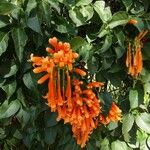
Tecoma capensis
Cape honeysuckle · Tecomaria · Cock-a-doodle-do · Cape Honey Suckle · Marsh horsetail
Description
Source: leafsnapTecoma capensis, the Cape honeysuckle, is a species of flowering plant in the family Bignoniaceae, native to southern Africa. Despite its common name, it is not closely related to the true honeysuckle.
💡 A scientific study has demonstrated that cape honeysuckle contains valuable compounds capable of killing disease-causing fungi such as Candida albicans, which is responsible for thrush and yeast infections. Additionally, the plant exhibits anti-inflammatory and anti-cancer properties. These compounds can be isolated through extraction from cape honeysuckle leaves. This might explain why traditional healers have historically used the plant to relieve pain.
🌳 The bark of Cape honeysuckle has historically been used to brew a health-promoting tea. Recently the plant has drawn attention for its orange-red pigments, which are useful for dyes and inks. Its flowers, interestingly, produce an oil that could act as a natural insect deterrent and might inspire eco-friendly pest control methods.
🎭 Subconscious force of truth, sincere intention
Care Guide
💧 Water
Cape honeysuckle originates from areas with moderate moisture and thrives in environments with balanced humidity. It requires weekly watering to maintain regular hydration, but it's important not to oversaturate the soil. As an evergreen, cape honeysuckle prospers outdoors, especially during its growth period, when it needs plenty of water. However, make sure the soil has proper drainage to prevent root rot.
What is the most effective way to water my Cape honeysuckle?
To ensure excellent root development in your plants, consider these watering tips: 1. Place a garden hose at the base of the plant instead of directly spraying the leaves. 2. If your plants are outdoors and exposed to direct sunlight, keep in mind that the leaves will need more water. 3. Utilize bubblers or soaker hoses to moisten the roots of each plant. 4. When adding or removing plants, use soaker hoses that cover the entire garden or bed to encourage deep root growth. 5. After watering, make sure to drain any excess water and allow the soil to dry before watering again. 6. Water at ground level to prevent diseases. 7. Consider spraying the entire bush with water on a sunny day. 8. Whether potted or in-ground, keep in mind that Cape honeysuckle prefers deep watering instead of light sprinkling.
What should I do if I give Cape honeysuckle too much or too little water?
An overwatered Cape honeysuckle will exhibit several signs of distress. The leaves may turn yellow, drop off, and become wilted. The plant itself may have a dull and unhealthy appearance, with mushy stems. When these signs become apparent, it is essential to adjust your watering schedule accordingly. Additionally, wilting can also be an indication of under watering. In this case, the leaves will appear crispy and dry rather than soft and wilted. To address this issue, check the soil for dryness and if necessary, provide a thorough watering. However, even with enough water, the Cape honeysuckle may still exhibit dryness and yellow leaves due to damage to the root system. Once the plant returns to normal, the yellowing of leaves will cease. If you have a Cape honeysuckle indoors, it is crucial to monitor moisture levels to avoid overwatering. Look out for black spots, and if present, allow the soil to dry by refraining from watering for a few days. Overwatering can lead to root rot, which can be addressed by transferring the plant to a different pot if discolored and slimy roots are observed. It is important to prevent root rot by avoiding overly soggy soil. When planting a Cape honeysuckle outdoors, dig a bit deeper and use your fingers to check for dry soil, which may indicate underwatering. In such cases, adequate watering is necessary to facilitate plant recovery.
How frequently do I need to water my Cape honeysuckle?
The Cape honeysuckle prefers deep, infrequent watering. When planted in pots, make sure to soak them with a gallon of water to account for limited water storage and faster drying soil. In cold regions, water every 3 to 5 days, preferably in the morning when the soil is dry. You can check if watering is needed by assessing the top 2-3 inches of soil; if it's dry, give the plant a thorough watering. During hot days, monitor the moisture daily as the soil in the pot can dry out quickly. For gardens, irrigation is necessary, with once-a-week watering recommended in hot climates. Only water when about 2 to 3 inches of soil become too dry. Avoid watering if there is already abundant rainfall to prevent root rot. To conserve water outdoors, add 3 to 4 inches of mulch. Sandy soil requires more frequent watering, while clay soil needs less watering to avoid root rot. Mark the watering dates on a calendar and pay attention to drooping leaves as a sign that you need to water soon.
How much water should I give my Cape honeysuckle?
The Cape honeysuckle needs approximately a gallon of water on a regular basis. For potted plants, it's best to water them deeply until you can see water dripping from the bottom of the pot. Then, wait for the soil to dry before watering again. You can use a water calculator or moisture meter to determine how much water you've given your plant in a week. During the flowering period, it's important to provide plenty of water, but allow the moisture to evaporate afterward to prevent root rot. If you have planted the Cape honeysuckle outdoors and there is sufficient rainfall, you may not need to water it additionally. However, if the Cape honeysuckle is young or newly planted, it should receive 1-2 inches of rain per week. As the plant grows, it can rely on rainfall alone. Only in extremely hot weather or prolonged periods without rainfall should you consider giving the Cape honeysuckle a thorough watering during cooler times of the day to prevent heat damage. Additional watering may be necessary during extended dry spells.
Should I change how often I water my Cape honeysuckle depending on the time of year or the kind of weather?
The Cape honeysuckle needs rain when grown outdoors, but only needs to be watered during persistently dry weather. During the spring and fall growing seasons, the soil should be kept moist but not soggy. Alternating dry and moist soil conditions promote healthy growth. In the summer, hot weather can cause rapid evaporation of water, so watering should be increased if there is a lack of rainfall. In winter, the Cape honeysuckle needs less water as it drops its leaves and goes dormant. Well-draining soil is ideal during this period. Once it starts leafing out in spring, watering can be skipped as it can rely on fall and winter rains. Good drainage is crucial at all times and especially during winter to prevent ponding. When planted in pots, the Cape honeysuckle has limited root growth, so regular watering is necessary, particularly during summer. Deep soaking once or twice a week is recommended, avoiding shallow sprinkles that only reach the leaves. Dryness should be avoided even during dormancy. Overwatering and poor soil drainage should be avoided, as they can cause plant death in winter. Applying mulch is beneficial for reducing stress, conserving water, and promoting healthy blooms.
☀️ Light Full sun
Cape honeysuckle flourishes with abundant sunlight yet can tolerate moderate light levels. Native to areas that receive plenty of sun, it depends on this ample light for healthy growth. Too little light can reduce flower production, while too much can scorch the leaves.
What are the sunlight requirements for Cape honeysuckle?
Cape honeysuckle thrives in conditions that offer abundant sunlight. It requires full sun, which means above 6 hours of sunlight per day, to ensure healthy growth and flower production. However, it can also tolerate partial sun—about 3 to 6 hours of sunlight. It's essential to monitor the way sunlight moves through your garden to select spots that offer an ideal balance of light and shade, ensuring the plants' well-being. The plant originates from environments with generous sunlight exposure, utilizing this light for robust growth. Lack of sufficient light may affect flower production adversely, while too much exposure can lead to leaf scorching.
How can artificial lighting benefit indoor Cape honeysuckle plants?
For indoor Cape honeysuckle plants, especially in conditions of insufficient natural sunlight such as during winter or in spaces that receive less natural light, artificial lighting serves as a crucial solution for optimal growth. Choosing the right type of artificial light, like LED lights, is important as they can provide specific wavelengths that plants need. The intensity of light required varies with the plant's natural sunlight needs: 30-50W/sq ft for full sun plants, 20-30W/sq ft for partial sun plants, and 10-20W/sq ft for full shade plants. The light source should ideally be placed 12-36 inches above the plant to imitate natural sunlight. Furthermore, mimicking natural daylight hours, most plants thrive with 8-12 hours of light per day.
What are the symptoms of light deficiency in Cape honeysuckle?
When Cape honeysuckle is cultivated indoors or under insufficient lighting, it might display several symptoms indicating light deficiency. These include smaller new leaves, leggy or sparse growth due to increased spacing between leaves or stems, accelerated leaf drop as the plant conserves resources, a halt in new leaf production indicating the plant has entered a survival mode, lighter-colored or irregularly patterned new leaves due to a lack of chlorophyll, and symptoms of too much light could include chlorosis (leaves turning yellow), sunscald (damage from intense light), leaf curling, wilting, and leaf scorching.
How can you improve light conditions for Cape honeysuckle?
Improving light conditions for Cape honeysuckle involves several strategies, depending on whether the plant is grown indoors, outdoors, or in the ground. Indoors, gradually moving plants to sunnier locations to receive at least 6 hours of direct sunlight daily is recommended, alongside using artificial light sources such as desk or ceiling lamps for at least 8 hours daily, or investing in professional grow lights. Outdoors, it’s crucial to acclimatize plants to brighter spots gradually to prevent sunburn. This may involve moving them weekly to sunnier areas. For plants in the ground, reducing obstructions like pruning branches from trees that block sunlight, or transplanting smaller plants during their dormant period to locations with more sunlight and good drainage, are effective methods. Note that while parts of the plant previously affected by insufficient light might not recover, new growth will be healthy after improving light exposure.
🌡️ Temperature 20–37.8°C
The natural growth conditions for cape honeysuckle call for a minimum temperature of 20 ℃ (68 ℉), although it can tolerate temperatures up to 38 ℃ (100.4 ℉). With a preferred temperature range of 20 to 38 ℃ (68 to 100.4 ℉), it is appropriate for cultivation in warm-climate areas. In winter, the plant needs cooler temperatures to promote metabolic activities, which can be achieved by positioning it in a cooler location or by reducing how often it is watered.
What is the ideal growth temperature for Cape Honeysuckle?
Cape Honeysuckle thrives in warm climates, with an ideal temperature range of 20 to 38°C (68 to 100.4°F). It is extremely heat-loving, making it suitable for growth in regions with warm climates. During the winter season, cooler temperatures promote metabolic activities, which can be achieved by placing the plant in a cooler environment or by reducing watering frequency. It's important to maintain temperatures above 20°C during winter to benefit plant growth, as temperatures approaching 0°C can be detrimental.
How should Cape Honeysuckle be cared for in low temperatures?
In colder temperatures, Cape Honeysuckle, which prefers warmth and does not tolerate low temperatures well, may experience color lightening in its leaves below -5°C, eventually turning brown or black after frost damage, with symptoms like wilting and drooping. To care for it in low temperatures, you should trim off the frost-damaged parts and move the plant indoors to a warm environment for protection against the cold. Positioning it near a south-facing window can ensure it receives enough sunlight. Additionally, keep the plant away from heaters or air conditioning vents to avoid excessively dry air.
What should be done if Cape Honeysuckle experiences high temperatures?
During the summer, when temperatures might exceed its tolerance, it's crucial to keep Cape Honeysuckle below 38°C. Exposure to temperatures over 43°C can cause the leaves to lighten in color and make the plant susceptible to sunburn. To protect the plant in such conditions, trim away sunburned and dried parts, and relocate it to a spot shaded from midday and afternoon sun. Watering the plant in the morning and evening will help keep the soil moist and assist in cooling.
💨 Humidity normal (40-60%)
This plant will thrive in moderate humidity, which is probably the level in your home. However, misting it a few times a week can be very beneficial. Make sure the room has good ventilation.
🪴 Soil 6-7
🌱 Fertilizer
Fertilization is essential for caring for Cape honeysuckle. Consistent feeding during the growing season maintains the energy needed for its showy leaves and supports overall growth. Failing to fertilize can lead to unhealthy leaves, reduced ornamental value, and stunted or weak growth that is prone to breakage.
Why is it necessary to fertilize my Cape honeysuckle?
Cape honeysuckle requires regular fertilization because it needs a lot of energy to produce and maintain its showy leaves. This poses a challenge because the plant must allocate enough energy not only for its leaves but also for the growth of its stems, branches, roots, and other important structures. If you neglect fertilization, there are two likely outcomes. Firstly, the leaves will lose their natural color and texture, looking unhealthy and diminishing the plant's ornamental appeal. Secondly, the overall growth of the plant will slow down, and it may produce weak growth that is susceptible to breakage.
When should I fertilize my Cape honeysuckle?
To ensure the health of your Cape honeysuckle, occasional feedings are beneficial. This means you do not have to stick to a strict feeding schedule when planting one of these plants. A simple way to fertilize your Cape honeysuckle is by applying fertilizer while watering it occasionally. It is important to water your Cape honeysuckle regularly during the growing season. For optimal growth, you can feed the plant every two to three weeks, consistently throughout the period when it is producing new growth.
When is it not a good time to add fertilizer to my Cape honeysuckle?
For most of the year, you can regularly fertilize your Cape honeysuckle. This is especially true during the active growing season of spring, summer, and early fall. However, during winter, it's important to avoid fertilizing the plant. This is because Cape honeysuckle enters a dormant growth phase during this time. In this phase, the plant doesn't produce much or any new growth. As a result, the plant uses less energy overall, leading to no need for fertilization.
What kind of fertilizer does my Cape honeysuckle need?
To provide the best nutrition for a Cape honeysuckle, a fertilizer blend with specific nutrients is needed. The ideal fertilizer should have a ratio of 3 parts nitrogen, 1 part phosphorus, and 2 parts potassium (N-P-K ratio of 3-1-2). However, a general-purpose fertilizer that has an even blend of nutrients can also work well in some cases. It's important to note that even when using a balanced fertilizer, the volume of each nutrient should be at 3 or lower. There are two types of fertilizers you can use: granular or liquid-based. If you opt for a liquid-based fertilizer, it is usually recommended to dilute the strength by half. While granular fertilizer doesn't have many disadvantages, using liquid fertilizer is often more practical, especially if you water your Cape honeysuckle while feeding it.
How can I fertilize my Cape honeysuckle?
One easy way to fertilize a Cape honeysuckle is to feed it whenever you water it. Here's how: You'll need a watering can or similar container, as well as your fertilizer. Start by diluting the fertilizer by mixing it with water. Then, pour the diluted fertilizer onto the soil around the plant, making sure it reaches the roots. Another option is to use a granular fertilizer. Simply sprinkle some of the granules onto the soil where your Cape honeysuckle is planted. Granular fertilizers are slow-release, so you won't need to fertilize as often as with liquid fertilizers. Remember to water the plant while you're feeding it, as this will help the fertilizer absorb into the soil.
🪴 Pot & Repot 2-3 years
Repot Cape honeysuckle in early spring into a pot only slightly larger than the current one that has adequate drainage. Use a well-draining potting mix and position the root ball at the same level as before. Gently loosen any root-bound roots. After repotting, water generously and place the plant in a warm, shady spot. Regular pruning maintains its size and encourages new growth.
✂️ Pruning
Cape honeysuckle produces vibrant, trumpet-shaped flowers and benefits greatly from early spring pruning. To promote healthy growth, remove any dead or diseased wood and thin out crowded branches to improve air circulation. Occasionally, perform hard pruning to rejuvenate the plant. Always use clean, sharp tools to prevent damage and reduce the risk of disease.
🌿 Propagating
🐛 Diseases & pets
☠️ Toxicity
Cape honeysuckle is generally non-toxic to humans and pets However, it may cause digestive symptoms, like upset stomach and nausea, if ingested.
Characteristics
- Plant Type
- Vine
- Life Cycle
- Perennial
- Genus
- Tecoma
- Family
- Bignoniaceae
- Hardiness Zone
- 9-11
- Mature Height
- 2.13 m to 3.05 m
- Mature Spread
- 2.13 m to 3.05 m
- Leaf Color
- Green
- Leaf Type
- Evergreen
- Flower Color
- Orange, Red, Yellow
- Flower Size
- 2.54 cm to 5.08 cm
- Bloom Time
- All year round
- Planting Time
- Spring, Autumn
- Harvest Time
- All year round
- Native Area
- Malawi, Lesotho, Angola, Mozambique, South Africa, Zambia, Eswatini, Congo (DRC), Tanzania, Central African Republic